 ‧ julia.nenyukova ‧
March 11, 2026
‧ julia.nenyukova ‧
March 11, 2026  1100 ‧
 0
0
Substack has quietly become one of the most talked-about platforms for writers looking to earn real money from their work. By 2025, the platform had surpassed 35 million active subscribers and was paying out millions of dollars every month to independent creators. If you’ve been searching for how to make money on Substack, you’re asking exactly the right question – at exactly the right time.
Quick answer: You make money on Substack primarily by converting free readers into paid subscribers. Most successful newsletters charge $5–$10/month. Once you reach 200–500 paying subscribers, you can realistically earn $1,000–$4,000/month before platform fees.
The honest version, though? It takes most writers 60–90 days of consistent publishing before they see any meaningful traction. The platform rewards patience and consistency more than it rewards cleverness or a pre-existing large following. The good news: the path is predictable, and this guide maps it out clearly.
Whether you’re starting completely from scratch or you already have a handful of free subscribers and want to flip the monetization switch, the strategies below are grounded in what’s actually working for Substack writers in 2026.
What is Substack?
Substack is an email newsletter platform that lets you publish content directly to subscribers – no algorithm deciding who sees your work, no advertisers to answer to, no social media performance anxiety. You write, it lands in your readers’ inboxes. That’s the entire model.
What sets Substack apart from older email tools is its built-in payment layer. You can run a completely free newsletter for as long as you like, or activate paid subscriptions and charge readers a monthly or annual fee for access to premium content. Substack takes a 10% cut of subscription revenue; Stripe adds roughly 3% for payment processing. There are no upfront costs at all – you only pay when you earn.
The platform has grown well beyond newsletters in recent years. Substack now supports podcasts, video posts, discussion threads, and a built-in Recommendations feature that lets writers suggest each other’s publications to their audiences. It’s a genuinely effective discovery mechanism – and one of the most underused growth tools on the platform. In 2026, Substack is a full publishing ecosystem, not just a mailing list manager.
Writers in virtually every niche have found paying audiences here – from personal finance and geopolitics to parenting, horror fiction, local journalism, and highly specific cooking topics. The platform doesn’t favour any particular category. If you can write about something people care about, there’s an audience waiting.
How much can you realistically earn on Substack?
Let’s skip the vague “some writers make six figures!” framing and look at actual numbers broken down by stage.
Your Substack income comes down to three levers: total subscriber count, your conversion rate from free to paid (typically 3–8% of your free list), and your subscription price. Most writers price between $5 and $10/month or $50–$100/year. Here’s how the math plays out across monetization approaches:
Most beginner newsletters sit in that first row for three to six months while building a free audience. Crossing 100 paid subscribers is usually the psychological turning point – and it’s a realistic target within 6–9 months for someone publishing weekly and promoting their work actively.
One note on earning potential: The high end of this table reflects established newsletters with thousands of paying subscribers and multiple income streams. Treat early income projections as direction, not destination – and plan for a 6–12 month runway before significant revenue starts coming in.
How to get started on Substack
The setup process is genuinely quick. What takes time is the work that happens after setup.
Choose your niche with real specificity
This is the step most beginners rush past. Your niche isn’t just your topic – it’s the specific angle and voice you bring to that topic. “Personal finance” is a broad category. “Personal finance for freelancers in their 30s who hate spreadsheets” is a niche. The more specific you are, the easier it is to attract the right readers and convert them into paying subscribers.
A useful test: can you describe your newsletter in a single sentence that immediately tells someone whether they’re your target reader? If not, narrow it further before you launch.
Set up your publication
Creating a Substack account takes about five minutes. You’ll choose a name, write a brief publication description, and set up a welcome email for new subscribers. Spend real time on that description – it’s the first thing potential subscribers see, and it needs to answer “why should I subscribe to this?” quickly and clearly.
You don’t need to activate paid subscriptions on day one. Most successful newsletters spend 30–60 days publishing free content before introducing a paywall. This gives you time to demonstrate value before you ask for money.
Publish your first few issues before promoting
Aim to have at least three issues live before you start promoting your newsletter anywhere. New visitors who land on an empty publication leave immediately. Having a small back catalogue signals that you’re committed – not just testing the waters. A weekly publishing cadence is the sweet spot for most newsletters; more frequent risks subscriber fatigue, while less frequent slows your growth noticeably.
Why this works in 2026: Substack’s Recommendations feature means every new subscriber you gain can potentially be exposed to other writers’ audiences through mutual recommendations – compounding your growth significantly faster than older newsletter platforms ever could.
How to grow your Substack subscribers
Growth is the engine that makes Substack income possible. Without subscribers, even the most compelling writing doesn’t translate into revenue. Here’s what actually moves the needle.
Use Substack’s built-in Recommendations system
The Recommendations feature is one of the most underused growth tools on the platform. When you recommend another newsletter and they recommend yours in return, their new subscribers see your publication suggested at the moment of sign-up. Building genuine relationships with writers in adjacent niches – and setting up mutual recommendations – can drive 20–50 new subscribers per month from a single well-matched pairing.
Show up where your readers already are
Pick one or two platforms where your target readers spend time – Reddit, LinkedIn, X, Instagram, niche Facebook groups, or specific online communities – and show up there consistently. You don’t need to be everywhere. You need to be genuinely helpful in the spaces your future subscribers already inhabit. Share excerpts from your newsletter as standalone posts, add your Substack link to your profile bio, and engage with comments in your niche.
Run newsletter swaps with other writers
A newsletter swap – where you feature another writer’s publication in your issue and they feature yours in theirs – can add 50–200 new subscribers in a single week if both audiences are relevant to each other. It costs nothing except a short, honest write-up. One well-matched swap per month can dramatically accelerate your early growth.
Earning potential: Every 100 new free subscribers you add increases your potential monthly income by approximately $35–$70/month once your conversion rate kicks in. That compounds quickly over 12–18 months of consistent growth.
Monetization strategies that actually work
The paid subscription model is Substack’s core income mechanism – but it’s far from the only option. Here’s a breakdown of what writers are using effectively in 2026.
Paid subscriptions
This is the foundation. Offer your deepest, most valuable content behind a paywall while keeping your free content genuinely good – think of free issues as a permanent sales page for the paid tier. A common structure is two or three free emails per month alongside one or two paid-only deep dives. The free content needs to be strong enough to build trust; the paid content needs to be clearly worth the upgrade.
Founding member tiers
A founding member or supporter tier – typically priced at $100–$200/year – is a surprisingly effective add-on for writers with engaged early audiences. People who discovered your newsletter early and genuinely love your work often want a way to support you beyond the standard subscription price. Offer a small, authentic perk (a personal thank-you, an exclusive monthly thread, early access to posts) and you’ll convert a meaningful share of your most loyal readers.
Newsletter sponsorships
Once you have at least 1,000–2,000 subscribers and open rates consistently above 40%, you can start approaching relevant brands about sponsored placements. A single sponsored post in a niche newsletter with 2,000 highly engaged readers can command $200–$500. The key word is niche – a tightly defined audience with shared interests is far more attractive to sponsors than a generic, broad-topic list of the same size.
Selling your own products or services
Your subscriber list is a direct line to people who already trust your perspective. Writers routinely use Substack to sell digital products (templates, ebooks, mini-courses), consulting calls, or coaching packages. Conversion rates from your own subscriber list are dramatically higher than from cold traffic – making this one of the highest-ROI monetization options available, even with a relatively small but engaged audience.
Common mistakes Substack writers make
The writers who stall out on Substack almost always make one of these mistakes.
Turning on paid subscriptions too early
Launching a paywall before you’ve built trust – or before you have enough published content to show what paid subscribers are actually buying – is the most common reason early newsletters fail to convert. A good rule of thumb: publish free content for 60–90 days first. Earn the right to charge before you charge.
Prioritising quality over consistency
Some writers publish less frequently because they believe every issue needs to be a major, polished piece of work. This is the wrong instinct. Consistency builds subscriber trust faster than occasional brilliance. A solid, useful weekly issue outperforms a masterpiece published once a month every time – in terms of both open rates and paid conversion.
Ignoring the analytics
Substack provides open rate and click data for every issue you send. Most writers barely glance at it. Your analytics are a direct signal of what your audience actually cares about. When open rates spike on certain topics or formats, write more of that. When rates drop consistently, something needs to change – subject line format, topic choice, length, or sending frequency.
Important: A healthy Substack newsletter typically maintains open rates of 40–60%. If yours drops below 30% consistently, prioritise list quality and re-engagement over list size.
Legal and ethical considerations
Making money on Substack is straightforward, but there are a few things worth getting right from the beginning – both for legal compliance and for protecting the trust you’re working to build.
Key principle: Be fully transparent about sponsored content. If a post is paid or partially sponsored, label it clearly at the top. Readers can sense when something feels like an ad, and losing their trust costs far more than any single sponsored placement is worth.
On the tax side: Substack income is self-employment income in most jurisdictions. Keep records from day one. Once you’re earning consistently, set aside 20–30% of revenue for taxes and consider working with an accountant familiar with freelance or creator income.
Email compliance rules – GDPR in Europe and CAN-SPAM in the US – apply to newsletter publishers. Substack handles the technical compliance side automatically (unsubscribe links, address requirements), but you’re responsible for how you collect subscriber data. Never import email lists from other platforms without clear opt-in consent, and never share your subscriber list with third parties.
Important: Avoid publishing unedited AI-generated content. Substack readers subscribe for a human voice and perspective. AI-assisted drafting is widely used and perfectly fine – but publishing content with no original thought or editing will erode subscriber trust and retention faster than almost anything else.
Final thoughts – which approach is right for you?
Substack is a legitimate income stream for writers willing to commit to it consistently. The path is clear, the tools are accessible, and the platform has proven it can sustain careers – not just side income. But it’s not passive, and it’s not fast.
Here’s how to approach it based on where you’re starting from.
As a complete beginner: choose one specific niche, publish free content weekly for at least 90 days before turning on paid subscriptions, and focus entirely on building 200–300 free subscribers before thinking about monetization. Patience and publishing consistency are your two biggest assets at this stage.
As an intermediate or part-time writer: you probably already have some subscribers and a feel for what resonates. Now is the time to activate paid subscriptions, test your pricing, and actively pursue newsletter swaps and cross-promotions. Set a concrete target – 100 paid subscribers within six months – and work backwards from it.
For a full-time income goal: treat Substack like a business from day one. Track your metrics weekly, invest real time in promotion, build a content calendar, and start exploring sponsorships once your list crosses 1,000–2,000 subscribers. Combining paid subscriptions with your own digital products and occasional sponsorships is the fastest path to a stable $3,000–$8,000/month within 18–24 months.
Learning how to make money on Substack is really about learning how to build an audience that genuinely trusts you – and then finding sustainable ways to serve that audience well. Everything else follows from that.
AliDropship: Your complete all-in-one solution for starting dropshipping in 2026
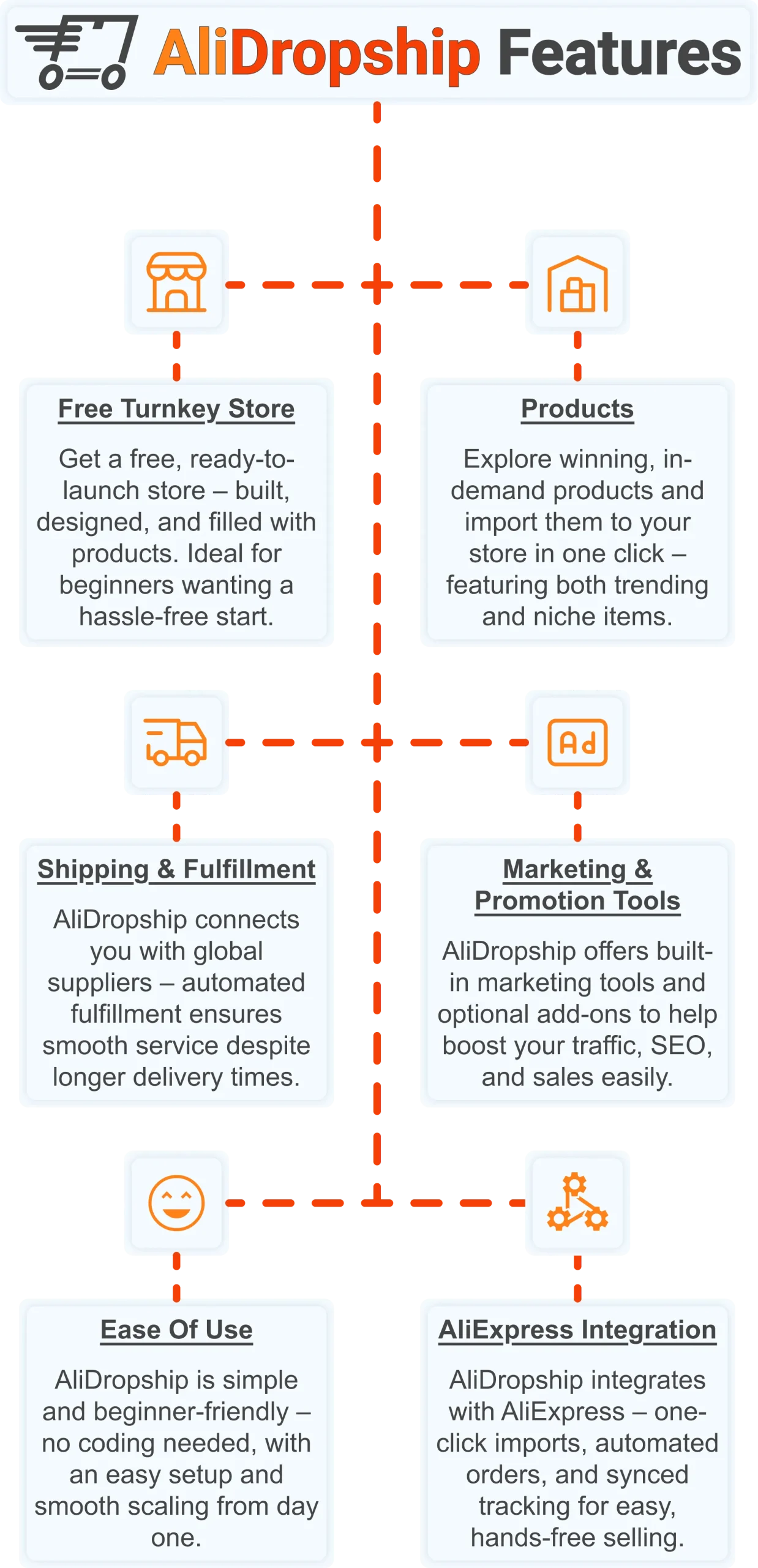
If you want the simplest possible way to start dropshipping – especially if you’re brand new – AliDropship remains one of the most beginner-friendly tools available in 2026. It brings together store creation, product imports, automation, and marketing into a single streamlined system designed to help you launch quickly and grow confidently.
Free turnkey store ️
Get a free turnkey store – built, designed, and filled with products. Ideal for beginners wanting a hassle-free start, the store comes fully optimized to attract customers right away, saving you time on setup. Plus, it includes professional design elements to give your business a polished, trustworthy look from day one. This ready-made foundation makes it easy to move seamlessly into product selection.
Products
Once your store is set up, you can explore winning, in-demand products and import them in one click – featuring both trending and niche items. This wide selection lets you cater to diverse customer interests and test what works best. Regular updates ensure you always have fresh products, keeping your store competitive and relevant. With great products in place, smooth shipping becomes the next essential step.
Shipping & fulfillment
AliDropship connects you with global suppliers, and automated fulfillment ensures seamless order processing despite international delivery times. Customers receive real-time tracking updates, which builds confidence and trust in your store. Once shipping is handled reliably, you can focus on promoting your store and attracting traffic.
Marketing & promotion tools
To maximize sales, AliDropship offers built-in marketing tools and optional add-ons that help boost traffic, SEO, and conversions. From email campaigns and discounts to social media integration, these tools empower you to reach and retain customers without needing prior marketing experience. With promotion strategies in place, managing your business becomes simpler and more efficient.
Ease of use
AliDropship is beginner-friendly – no coding needed, with an intuitive dashboard that guides you through every step. Easy setup and smooth scaling let you expand your store without stress. As your business grows, adding new features, products, and marketing campaigns remains hassle-free, giving you more time to focus on sales.
AliExpress integration
Finally, AliDropship integrates seamlessly with AliExpress, enabling one-click imports, automated orders, and synced tracking. Your inventory stays up-to-date with the latest products and prices, while automated order processing frees you from manual tasks. Combined with the turnkey setup, reliable shipping, and built-in marketing tools, this integration ensures your dropshipping business is fully equipped for growth and success.
Frequently Asked Questions
How much can you realistically make on Substack?
Paid subscriptions with 100 to 500 paying subscribers typically generate 500 to 3,500 a month, while combining subscriptions with sponsorships and your own products can reach 2,000 to 15,000 a month or more. Most writers price their newsletter between 5 and 10 a month, or 50 to 100 a year. Crossing 100 paid subscribers is usually the psychological turning point and is a realistic target within 6 to 9 months of weekly publishing. Substack takes a 10 percent cut of subscription revenue, and Stripe adds roughly 3 percent for payment processing on top.
How long does it take to start earning money on Substack?
Most writers need 60 to 90 days of consistent publishing before seeing meaningful traction, since the platform rewards patience over a large pre-existing following. Most successful newsletters spend 30 to 60 days publishing free content before turning on a paywall. Beginner newsletters typically stay in the audience-building phase for three to six months before converting to paid subscribers. A realistic target for the first 90 days as a complete beginner is 200 to 300 free subscribers before thinking about monetization.
How much of my Substack revenue goes to platform fees?
Substack takes a 10 percent cut of subscription revenue, and Stripe adds an additional 3 percent for payment processing, meaning your net payout is roughly 87 percent of what subscribers pay. There are no upfront costs to start a Substack, so you only pay these fees once you are actually earning. This fee structure applies whether you are earning 500 a month or 15,000 a month. Writers are advised to factor these combined fees into their subscription pricing from the start.
What is a founding member tier on Substack and how much does it cost?
A founding member or supporter tier is typically priced at 100 to 200 a year and works as an add-on for writers with engaged early audiences. It rewards readers who discovered a newsletter early and want to support the writer beyond the standard subscription price. Writers commonly offer a small, authentic perk like a personal thank-you or an exclusive monthly thread in exchange. This tier converts a meaningful share of a newsletter’s most loyal readers without requiring new content creation.
Can you make money on Substack through newsletter sponsorships?
Yes, once a newsletter reaches 1,000 to 2,000 subscribers with open rates consistently above 40 percent, writers can approach relevant brands about sponsored placements. A single sponsored post in a niche newsletter with 2,000 highly engaged readers can command 200 to 500 dollars. A healthy Substack newsletter typically maintains open rates of 40 to 60 percent, and a tightly defined niche audience is more attractive to sponsors than a broad, generic list of the same size. Transparency about sponsored content is required, with paid posts clearly labeled at the top.
Building a Substack income stream takes time – and a dropshipping store built with AliDropship is the perfect way to earn while your newsletter grows. Claim your free store and $100 voucher to get started today.
 Previous post
