 ‧ julia.nenyukova ‧
March 11, 2026
‧ julia.nenyukova ‧
March 11, 2026  465 ‧
465 ‧
 0
0
Pay per click advertising generated over $190 billion in global ad spend in 2024 – and a growing share of that money is accessible to individual earners, not just big corporations. If you’ve been researching how to make money with pay per click, the honest answer is: it works. But it works very differently depending on your approach, and most beginners get that approach wrong from day one.
Quick Answer: You can make money with pay per click by running PPC campaigns that send traffic to your own online store, affiliate offers, or lead generation pages – or by becoming a PPC specialist who manages ad campaigns for clients as a paid service.
The good news is you don’t need a massive budget to start. Some PPC earners run profitable campaigns on $15–$30 a day. Others build freelance businesses managing ads for multiple clients at $1,500–$3,000 per client per month. The path you choose depends on your goals, available time, and how seriously you’re willing to study the craft before spending real money.
What separates the people who consistently profit from PPC and those who burn through their budget in two weeks? Strategy – not spend. PPC platforms reward relevance and optimization over raw budget. That’s actually good news if you’re just getting started and working with limited funds.
What is pay per click advertising?
Pay per click (PPC) is an online advertising model where you pay a fee each time someone clicks on your ad. Rather than waiting months for organic search traffic to build, you’re buying direct access to an audience – one click at a time.
The most widely used PPC platform is Google Ads, which places your ad in search results when users search for specific keywords. But PPC extends well beyond Google. Meta Ads (Facebook and Instagram), Microsoft Advertising (Bing), TikTok Ads, and Pinterest Ads all operate on similar auction-based models – each with its own audience profile and average cost per click.
How PPC actually works
Here’s the basic flow. You create an ad – text, image, or video. You choose the keywords or audience signals that should trigger it. You set a maximum bid for each click. When a user’s search or browsing behavior matches your targeting, your ad enters a real-time auction. Win the auction, your ad appears. User clicks, you pay.
What determines whether you win the auction? Not budget alone. Google uses a Quality Score system that weighs your bid against your ad’s relevance to the search query and its expected click-through rate. A well-crafted, relevant ad from a smaller advertiser can consistently outrank a competitor spending five times more.
Important note: PPC platforms reward relevance. The more closely your ad matches what the user is actually searching for, the less you pay per click – and the more profit margin you keep on every sale.
How much can you realistically earn with pay per click?
This is where most guides skip the honest part. Let’s not. Your earnings from PPC depend entirely on what you’re using it to promote – and what’s waiting for the user on the other side of that click.
These ranges reflect realistic outcomes reported across communities like Reddit’s r/PPC and r/Entrepreneur – not best-case scenarios. Most people spend 2–3 months learning and testing before they see consistently positive returns.
One note on the earning figures: The numbers above assume you’ve passed the initial learning curve. In your first 30–60 days, it’s entirely normal to spend more than you earn while you test ad copy, audiences, and landing pages. Budget for that phase from the start rather than treating it as failure.
How to get started with PPC in 2026: a step-by-step path
You don’t need to be a developer or a marketing expert to launch your first PPC campaign. But you do need a clear plan. Here’s a practical route that works for beginners.
Step 1: choose your platform
Start with one platform and learn it thoroughly before expanding. Google Ads is the strongest option for search intent – users are actively looking for what you’re selling. Meta Ads (Facebook and Instagram) work better for visual products and impulse-driven purchases. TikTok Ads are growing fast in 2026 and typically offer lower average CPCs, making them worth testing if you’re targeting a younger demographic.
If you’re selling physical products through a dropshipping store, Google Shopping campaigns and Meta Ads are a natural starting point. If you’re running PPC for affiliate offers, check which platforms the merchant allows first – some programs explicitly prohibit paid search traffic.
Step 2: define what you’re driving traffic to
PPC is a traffic tool. It’s only as effective as what you send people to. Before you spend a cent on ads, make sure you have a clear, optimized destination – a product page, a dedicated landing page, or a lead capture form that’s built to convert. Sending paid traffic to a generic homepage is one of the fastest ways to lose money in PPC.
Step 3: conduct keyword research before you spend anything
Keyword research is the foundation of any PPC campaign that wants to make money with pay per click rather than simply generate clicks. Use Google Keyword Planner (free with a Google Ads account) or tools like SEMrush to find terms your potential customers are actively searching. Focus on keywords with clear buying intent – phrases that include “buy,” “best,” “review,” or specific product names – and note the estimated cost per click for each.
Don’t just chase high-volume keywords. A lower-volume term with strong purchase intent can be far more profitable than a popular keyword attracting browsers with no intention to buy.
Step 4: write ads that actually earn clicks
Your headline is everything in a text ad. It needs to match the keyword the user searched and immediately communicate a benefit or solve a problem. Include a specific call to action – “Shop now,” “Get a free quote,” “Try it free today” – and speak directly to what the user wants, not just what you’re selling.
For image or video ads on Meta or TikTok, lead with the product or the result in the first two seconds. Attention is short on social platforms. Don’t bury your value proposition in the third sentence of a caption.
Step 5: set a test budget and track every conversion
Start with a daily budget of $10–$20 and treat the first 2–4 weeks as a data-gathering phase. Resist the urge to optimize too early – let campaigns run long enough to collect meaningful data before making changes.
Connect Google Analytics or your platform’s tracking pixel to your landing page before you launch. Without conversion tracking, you genuinely don’t know what’s working. You need data on which keywords and ads are generating actual sales or sign-ups – not just clicks.
Step 6: optimize based on what the data tells you
Once you have real data, act on it. Pause keywords with zero conversions after a fair spend. Test two or three ad copy variations and pause the underperformer. Raise bids on your best-converting keywords. Build out a negative keyword list to block irrelevant searches eating your budget. Optimization is ongoing – campaigns that get “set and forget” almost always degrade over time.
Earning potential: $30–$150/day from a well-optimized PPC campaign driving traffic to your own store – achievable within 60–90 days of consistent testing and iteration.
Tips to make your PPC campaigns actually profitable
Getting clicks is the easy part. Getting profitable clicks is the skill. These tips consistently separate campaigns that break even from ones that generate real income.
Use negative keywords from the very first day
Negative keywords tell your ads which searches not to appear for. If you’re selling premium running shoes, you don’t want to pay for clicks from people searching “free running shoes” or “kids running shoes.” A solid negative keyword list built before launch can save 20–30% of your budget from completely wasted clicks.
Match your landing page to your ad copy exactly
This is called message match, and it’s one of the most overlooked conversion factors in PPC. If your ad promises “50% off hiking boots,” your landing page better show those boots at that discount – not a general sale banner or a category page. Every gap between the ad promise and the landing page experience increases bounce rate and destroys your conversion rate.
Test one variable at a time
A/B testing is essential, but only works if you isolate variables. Change the headline and the image in the same test and you won’t know which one drove the result. Test the headline first, then the image, then the call to action. Systematic, incremental testing gives you clean data and compounds into major improvements over time.
Take mobile performance seriously
More than 60% of Google searches happen on mobile devices. If your landing page loads slowly or requires pinch-zooming to navigate, you’re converting a fraction of the clicks you’re paying for. Run your page through Google’s PageSpeed Insights and treat mobile load time as a top priority – not an afterthought.
Set up retargeting early
Retargeting ads reach people who’ve already visited your site or interacted with your content. They consistently outperform cold-audience campaigns because the user already recognizes your brand. Even a simple retargeting campaign running alongside your main ads can meaningfully lift your overall conversion rate without a proportional increase in ad spend.
Common mistakes that drain your PPC budget
Most of the money beginners lose on PPC isn’t lost to bad luck – it’s lost to specific, preventable mistakes. These are the ones that come up again and again.
Launching without conversion tracking
Running pay per click campaigns without conversion tracking is like driving at night with no headlights. You’re spending money with no idea what’s actually working. Set up conversion tracking before a single ad goes live – connect your Google Ads account or Meta pixel to a purchase confirmation page, a “thank you” form submission page, or any other defined conversion event.
Targeting too broadly too early
Broad match keywords and wide audience targeting feel safer to beginners because they generate more impressions. In practice, they generate more irrelevant clicks that consume budget without converting. Start with phrase match or exact match keywords and tightly defined audience targeting. You can widen your targeting once you know what converts – not before.
Ignoring Quality Score on Google Ads
A low Quality Score means you’re paying more per click than you should. The three factors that drive Quality Score are ad relevance, expected click-through rate, and landing page experience. Improving any one of these can reduce your cost per click significantly and give you a meaningful edge over competitors with bigger budgets but poorly optimized accounts.
Pulling the plug too early
PPC algorithms need data to optimize. Pausing a campaign after two or three days because it hasn’t generated sales is one of the most common beginner mistakes. Give campaigns at least 7–14 days and a spend of $100–$200 before drawing meaningful conclusions. Decisions based on small data sets are almost always wrong – and expensive to reverse.
Legal and ethical considerations in PPC
PPC is a fully legitimate advertising channel – but there are rules that apply to both the platforms and your wider obligations as an advertiser. Cutting corners here can get your account suspended or expose you to legal risk.
Platform advertising policies are non-negotiable
Every major PPC platform restricts certain industries, claims, and content types. Google Ads prohibits deceptive claims, specific financial products without certification, and certain health-related keywords. Meta has its own list of restricted categories – particularly around financial services, weight loss, and political content. Violating these policies can result in account suspension, sometimes permanently. Read the policies for your platform before you start building campaigns.
Be honest in your ad copy
Key principle: Your ad should accurately represent what the user will find when they click. Misleading headlines that overpromise results, fabricate urgency, or misrepresent pricing aren’t just policy violations – they generate low-quality traffic that won’t convert. Honest, specific ad copy consistently outperforms hype in both click-through rate and conversion rate.
Affiliate PPC – understand the terms before you bid
If you’re running PPC to promote affiliate offers, verify whether the merchant permits paid search traffic and whether you’re allowed to bid on their brand name as a keyword. Many affiliate programs explicitly prohibit brand bidding. Violating those terms can remove you from the program and forfeit any unpaid commissions – a common and costly mistake for beginners in affiliate PPC.
Disclosure obligations
Paid search ads are labeled automatically by platforms – that part is handled for you. But if you’re sending PPC traffic to a blog, review site, or any content that earns you affiliate commissions, you need a clear disclosure statement that meets FTC guidelines (or the equivalent in your region). This is a legal requirement in most markets, not an optional courtesy.
Final thoughts: which PPC path is right for you?
There’s no single best way to make money with pay per click. The right path depends entirely on where you’re starting from and what kind of income you’re trying to build.
If you’re a complete beginner, the most sustainable starting point is learning PPC to drive traffic to your own dropshipping store or a single, well-chosen affiliate offer. Keep your daily budget under $20 until you understand your conversion data. Expect to invest 60–90 days in testing mode before you see consistently positive returns. Don’t scale spend until the numbers clearly support it.
If you’re at an intermediate level – you’ve run a few campaigns, you understand the basics, and you’ve had at least some conversions – focus your energy on reducing your cost per acquisition and building out retargeting. This is where most of the profit improvement happens. Consider expanding to a second platform once your first channel is solidly profitable.
If your goal is full-time income, the fastest path is often building a small client base as a PPC freelancer while simultaneously running your own campaigns. One client paying $1,500–$2,000/month for campaign management gives you a stable income base while your own store or affiliate campaigns grow independently. PPC specialists with 2–3 active clients can realistically earn $4,000–$8,000/month within 12–18 months of focused work.
Whatever route you take, free resources from Google’s Skillshop, Meta Blueprint, and communities like r/PPC on Reddit will get you further than almost any paid course. The learning is free. The income comes from applying it consistently.
AliDropship: Your complete all-in-one solution for starting dropshipping in 2026
If you want the simplest possible way to start dropshipping – especially if you’re brand new – AliDropship remains one of the most beginner-friendly tools available in 2026. It brings together store creation, product imports, automation, and marketing into a single streamlined system designed to help you launch quickly and grow confidently.
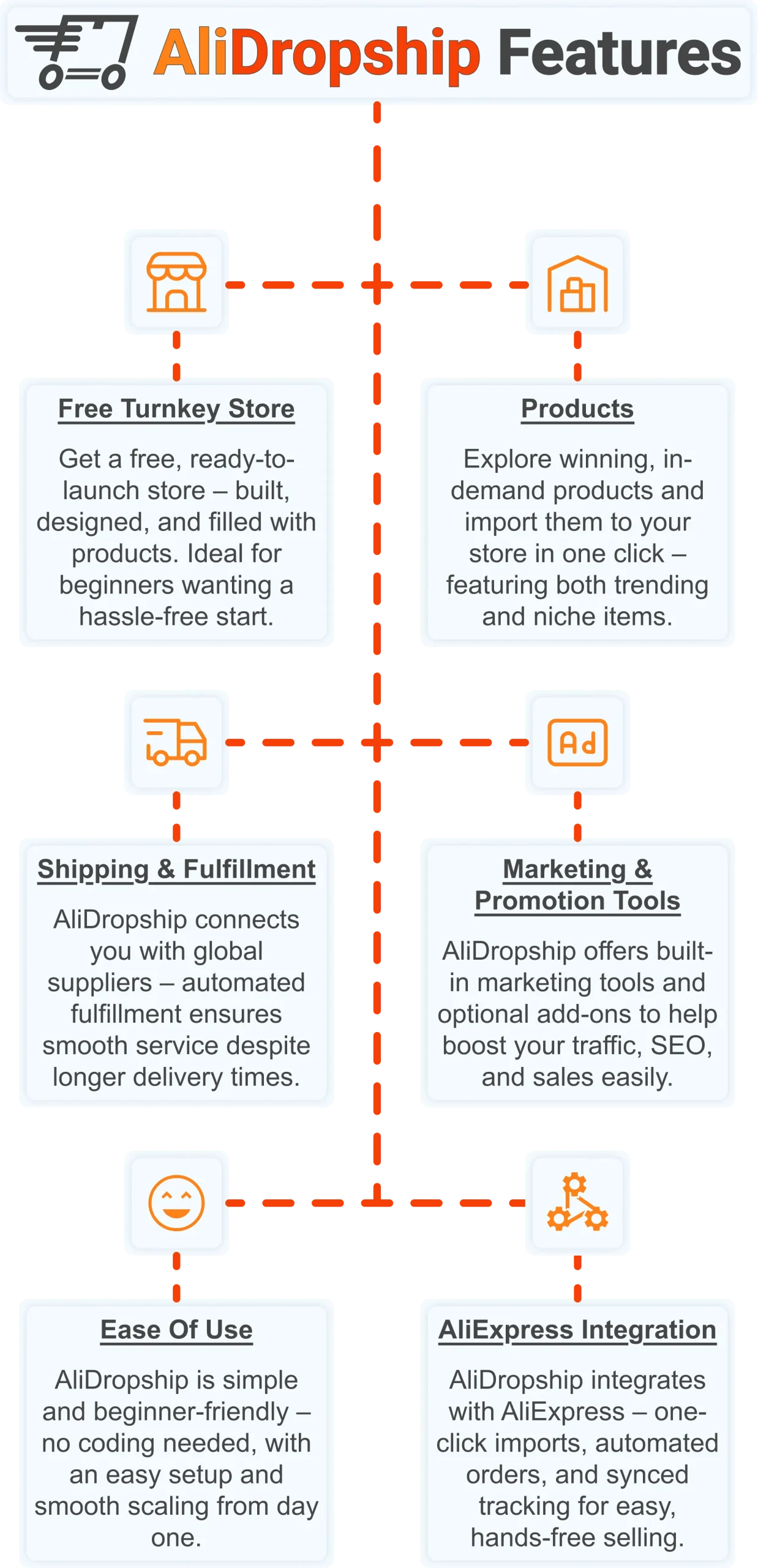
Free turnkey store ️
Get a free turnkey store – built, designed, and filled with products. Ideal for beginners wanting a hassle-free start, the store comes fully optimized to attract customers right away, saving you time on setup. Plus, it includes professional design elements to give your business a polished, trustworthy look from day one. This ready-made foundation makes it easy to move seamlessly into product selection.
Products
Once your store is set up, you can explore winning, in-demand products and import them in one click – featuring both trending and niche items. This wide selection lets you cater to diverse customer interests and test what works best. Regular updates ensure you always have fresh products, keeping your store competitive and relevant. With great products in place, smooth shipping becomes the next essential step.
Shipping & fulfillment
AliDropship connects you with global suppliers, and automated fulfillment ensures seamless order processing despite international delivery times. Customers receive real-time tracking updates, which builds confidence and trust in your store. Once shipping is handled reliably, you can focus on promoting your store and attracting traffic.
Marketing & promotion tools
To maximize sales, AliDropship offers built-in marketing tools and optional add-ons that help boost traffic, SEO, and conversions. From email campaigns and discounts to social media integration, these tools empower you to reach and retain customers without needing prior marketing experience. With promotion strategies in place, managing your business becomes simpler and more efficient.
Ease of use
AliDropship is beginner-friendly – no coding needed, with an intuitive dashboard that guides you through every step. Easy setup and smooth scaling let you expand your store without stress. As your business grows, adding new features, products, and marketing campaigns remains hassle-free, giving you more time to focus on sales.
AliExpress integration
Finally, AliDropship integrates seamlessly with AliExpress, enabling one-click imports, automated orders, and synced tracking. Your inventory stays up-to-date with the latest products and prices, while automated order processing frees you from manual tasks. Combined with the turnkey setup, reliable shipping, and built-in marketing tools, this integration ensures your dropshipping business is fully equipped for growth and success.
Frequently Asked Questions
How much can you realistically earn with pay per click advertising?
Running PPC for your own store or products can generate 30 to 150 dollars a day after 60 to 90 days of testing. PPC affiliate marketing earns 20 to 100 dollars a day, though results are highly variable and require a dedicated test budget. PPC freelancing or agency work pays 1,500 to 5,000 dollars a month per client once you are skilled, and specialists managing 2 to 3 clients can realistically earn 4,000 to 8,000 a month within 12 to 18 months. Most people spend 2 to 3 months learning and testing before seeing consistently positive returns.
How much budget do I need to start making money with pay per click?
Some PPC earners run profitable campaigns on as little as 15 to 30 dollars a day once they have passed the initial learning curve. Beginners are advised to start with a daily test budget of 10 to 20 dollars and treat the first 2 to 4 weeks as a data-gathering phase. It is normal to spend more than you earn during the first 30 to 60 days while testing ad copy, audiences, and landing pages. Campaigns generally need at least 7 to 14 days and a spend of 100 to 200 dollars before drawing meaningful conclusions.
What mistakes cause people to lose money with pay per click?
Launching a campaign without conversion tracking is one of the most common and costly mistakes, since it leaves you with no idea what is actually working. Targeting too broadly too early generates irrelevant clicks that drain budget without converting, and pulling the plug on a campaign after just two or three days is another frequent error. A solid negative keyword list built before launch can save 20 to 30 percent of your budget from wasted clicks. Ignoring Quality Score on Google Ads also means paying more per click than necessary for the same traffic.
Can pay per click advertising work well for a dropshipping store?
Yes, Google Shopping campaigns and Meta Ads are considered a natural starting point for sellers running physical products through a dropshipping store. A well-optimized PPC campaign driving traffic to your own store can generate 30 to 150 dollars a day within 60 to 90 days of consistent testing and iteration. Matching your landing page exactly to your ad copy, a practice known as message match, is one of the most overlooked factors in converting that traffic into sales. Retargeting ads aimed at previous visitors also consistently outperform cold-audience campaigns at a similar spend.
Is running PPC campaigns for other businesses a viable full-time income path?
Yes, PPC freelancers managing campaigns for clients can charge 1,500 to 3,000 dollars per client per month once they have developed real skill. Specialists with 2 to 3 active clients can realistically earn 4,000 to 8,000 dollars a month within 12 to 18 months of focused work. This path works well alongside running your own PPC campaigns, since one client’s payment can provide stable income while your own store or affiliate campaigns grow. Free resources like Google’s Skillshop and Meta Blueprint are commonly recommended over paid courses for building this skill set.
PPC works best when it drives traffic to a store you actually own – and that store can be up and running today at zero cost. Claim your free AliDropship store and a $100 voucher to start turning your ad spend into real profit.
 Previous post
