 ‧ julia.nenyukova ‧
March 11, 2026
‧ julia.nenyukova ‧
March 11, 2026  829 ‧
829 ‧
 0
0
Copywriting is one of the most in-demand skills on the internet right now – and it doesn’t require a degree, a fancy office, or years of experience to get started. Businesses of every size need writers who can sell with words. That means real opportunities for anyone willing to put in the work.
Quick Answer: You can make money copywriting by writing persuasive content for businesses – ads, emails, landing pages, and product descriptions. Beginners typically earn $20–$50 per hour, while experienced copywriters charge $100–$200+ per hour or $500–$5,000+ per project.
But before you start imagining a six-figure income from your laptop, it’s worth being honest. Copywriting takes real skill, and building a client base takes time. Most people earn a modest side income in the first 60–90 days before growing it into something more substantial. This guide breaks down exactly how to make money copywriting in 2026 – what skills you need, where to find work, and how to price yourself properly.
What is copywriting?
Copywriting is the craft of writing text designed to persuade people to take action. That action might be buying a product, signing up for a service, clicking a link, or simply staying on a page long enough to convert. Unlike content writing – which informs or entertains – copywriting is always built around a specific commercial goal.
You’ll find copy everywhere: product descriptions on Amazon, subject lines in your inbox, ads on Instagram, sales pages for online courses, and the headlines on every landing page you’ve ever clicked. Someone wrote all of that. And someone paid them to do it.
The demand for skilled copywriters hasn’t slowed down. If anything, the rise of ecommerce, AI-driven ads, and email marketing has made persuasive writing more valuable, not less. Knowing how to make money copywriting in 2026 means understanding that this is a skill businesses will always need – regardless of what AI tools are doing around it.
How much can you realistically earn?
Income varies a lot depending on your experience, your niche, and how you position yourself. Here’s a realistic breakdown of what the different approaches actually pay:
Freelance platforms are the most accessible entry point – they help you build early reviews and a basic portfolio. Direct client work is where the real money lives, but it requires more confidence and consistent outreach effort. Retainer arrangements with a small number of steady clients are the goal most full-time copywriters aim for.
One note on these figures: Reaching the higher end of any range takes 6–18 months of consistent work, deliberate skill-building, and smart positioning. Most beginners realistically earn $500–$1,500/month in their first 90 days.
Building the skills you need to get paid
You don’t need a journalism degree to make money copywriting. But you do need to develop a specific set of skills that clients are actually paying for. Here’s where to focus your energy first.
Persuasive writing fundamentals
The core of copywriting is understanding what makes people act. That means learning psychological triggers – social proof, urgency, benefit-focused language, and clear calls to action. Start with foundational books like The Adweek Copywriting Handbook by Joseph Sugarman or Influence by Robert Cialdini. Study real ads that converted. Understand why they worked before you try to copy the format.
SEO basics
Most online copywriting jobs require at least a working knowledge of search engine optimization. You need to understand how to incorporate keywords naturally, structure content with proper headings, and write meta descriptions that earn clicks. Google’s own Search Central documentation is a solid and completely free starting point.
Research and audience analysis
Great copy comes from deep research. Before you write a single word, you need to understand your client’s audience, their pain points, and what competing products are already saying. Writers who skip this step consistently produce weaker results – and lose clients faster.
Time management and communication
Clients hire copywriters who deliver on time and communicate clearly. Missing a deadline or going quiet for three days will cost you repeat business faster than almost anything else. A simple Trello board or even a shared Google Sheet is enough to stay organized across multiple projects.
Why this works in 2026: Businesses are increasingly relying on content to drive traffic and sales, but the majority don’t have in-house writers. That gap is exactly where freelance copywriters slot in.
Finding your copywriting niche
One of the most effective moves you can make early on is to pick a niche. Generalist copywriters compete with everyone. Specialists get hired faster, command higher rates, and build reputations that attract inbound work.
A niche is simply a specific industry or content type you focus on. Some examples worth considering:
- Ecommerce product descriptions and email sequences
- Health and wellness brands
- SaaS and tech startups
- Financial services and fintech
- Real estate listings and landing pages
To find yours, think about industries you already understand – from previous work experience, education, or genuine interest. A former nurse who moves into copywriting has a natural edge writing for medical brands. A tech enthusiast makes a credible SaaS copywriter from day one. That existing knowledge is a real shortcut to sounding authoritative.
Niche copywriters also command higher rates because they bring something a generalist can’t: genuine industry fluency. That’s worth real money to clients who want copy that converts, not just copy that reads well.
Earning potential: Specialist copywriters in high-value niches like finance or SaaS typically earn $80–$200+ per hour, compared to $25–$50 for generalists just starting out.
Where to find copywriting jobs and clients
Once you have the basics down, the next challenge is finding work. There are two main routes – platforms and direct outreach – and most copywriters use both, especially in the early stages.
Freelance platforms
Upwork, Fiverr, and Freelancer are the most widely used entry points. They give you access to a large pool of clients and let you build reviews quickly. The downside is competition – rates are often driven down by low-cost bidders from lower-cost markets. Use these platforms to land your first 5–10 clients and a set of honest reviews, then start transitioning away.
Job boards
LinkedIn, Indeed, and remote-specific boards like We Work Remotely and ProBlogger regularly post copywriting roles ranging from one-off projects to full-time positions. Job boards are better for finding stable, ongoing work rather than quick gigs.
Cold outreach
This is the most underused method – and often the most profitable. Identify businesses in your niche that have weak copy. Look for vague headlines, no clear value propositions, and uninspiring email campaigns. Then send a short, specific email explaining what you noticed and how you could improve it. A 3–5% response rate is realistic, and a single new client from this approach can pay for months of outreach effort.
Networking
Join communities on Reddit (r/copywriting is active and refreshingly honest), LinkedIn groups, and Slack communities for marketers. Many copywriting jobs are filled through referrals before they’re ever posted publicly. Being visible in the right places puts you in the path of those opportunities.
Setting your rates as a freelance copywriter
Pricing is where a lot of new copywriters undercharge and stay stuck. Here’s a practical framework for setting rates that reflect your actual value.
Research the market first
Before you set a number, look at what other copywriters in your niche are charging. The American Writers and Artists Institute (AWAI) publishes annual rate surveys worth bookmarking. Rates vary widely by industry and deliverable – a single email might go for $150–$300, while a full sales page can command $1,500–$5,000.
Charge by project, not by the hour
Hourly rates punish you for getting faster and better. As you improve, you’ll write stronger copy in less time – and hourly pricing means you earn less for doing better work. Project-based pricing decouples your income from your hours and rewards quality over speed.
Value-based pricing
For clients where you can directly tie your copy to revenue – say, a landing page that converts at 5% instead of 2% – you can justify significantly higher fees. A page generating an extra $50,000 per year is worth far more than a $500 writing fee. Not every client will go for this framing, but the ones who do are usually worth keeping long-term.
Package your services
Tiered packages make it easier for clients to say yes without a long negotiation. A basic package might cover a short email sequence, while a premium package includes a full welcome series and a landing page rewrite. Packages also make your service feel more concrete and easier to compare than an open-ended hourly quote.
Building a portfolio that wins clients
Your portfolio is your most important sales tool. It doesn’t need to be long – but it needs to be relevant and, ideally, results-focused.
If you’re starting from scratch, don’t wait for paid work to build it. Write spec pieces – sample copy for real brands you admire. Rewrite a live landing page and show the before and after. Create a mock email sequence for a product in your niche. These pieces demonstrate your thinking, your voice, and your understanding of what copy is actually supposed to do.
Once you have real client work, prioritize pieces that include measurable outcomes. “Rewrote product page – conversion rate increased from 1.8% to 3.4%” is far more compelling than a link to a nice-looking page with no context around it.
Host your portfolio on a simple personal website. A free Carrd page or a basic WordPress site works perfectly well. Keep it updated, make it easy to navigate, and always include a clear way to contact you.
Important note: Quality beats quantity every time. Five strong, niche-relevant samples will consistently outperform fifteen generic ones when you’re pitching to a specific type of client.
Legal and ethical considerations
Copywriting is a legitimate professional service – but there are a few practices that can get you into trouble if you’re not careful about them.
Be honest in the copy you write
The FTC in the US – and equivalent regulators in other countries – has clear guidelines on advertising claims. Copy that makes exaggerated or unsubstantiated claims, especially in health, finance, or weight loss categories, can expose both you and your client to legal risk. Write persuasively, but write honestly. If a claim can’t be backed up with evidence, don’t write it.
Always use a contract
Use a written contract for every client engagement. It doesn’t need to be elaborate – even a one-page agreement covering project scope, payment terms, revision rounds, and ownership transfer is enough to prevent most disputes. Sites like Bonsai and AND.CO offer free freelance contract templates that are good enough for most situations.
Understand intellectual property basics
When you write copy for a client, the default legal position in most countries is that you own the copyright until you sign it over. Make sure your contracts are clear about when ownership transfers – typically on receipt of full payment. And never lift copy directly from a competitor’s website for a client brief. That creates real liability for everyone involved.
Key principle: Writing persuasively and writing ethically are not in conflict. The best copy is honest about what it’s selling and who it’s selling to.
Final thoughts – which path is right for you?
How to make money copywriting looks different depending on where you’re starting from. Here’s a practical summary by reader profile:
Complete beginner: Start with freelance platforms like Upwork or Fiverr to land early work and reviews. Build 3–5 spec pieces in a chosen niche before pitching to direct clients. A realistic first-90-day target is $500–$1,500/month while you develop the craft.
Intermediate / part-time: Begin transitioning off platforms and toward direct client outreach. Narrow your niche, raise your rates, and work toward one or two retainer clients who give you reliable monthly income. A realistic target at this stage is $2,000–$4,000/month working part-time hours.
Advanced / full-time goal: Specialize deeply, build a personal brand, and focus on high-value deliverables – sales pages, email sequences, and launch copy. Full-time copywriters in premium niches regularly earn $6,000–$15,000+/month once they have a strong roster of clients and a solid track record to show for it.
The common thread across all three paths is consistency. Copywriting is a skill that compounds. The more you write, the faster you improve. The faster you improve, the more you can charge. And the more you charge, the fewer clients you need to build a genuinely solid income.
AliDropship: Your complete all-in-one solution for starting dropshipping in 2026
If you want the simplest possible way to start dropshipping – especially if you’re brand new – AliDropship remains one of the most beginner-friendly tools available in 2026. It brings together store creation, product imports, automation, and marketing into a single streamlined system designed to help you launch quickly and grow confidently.
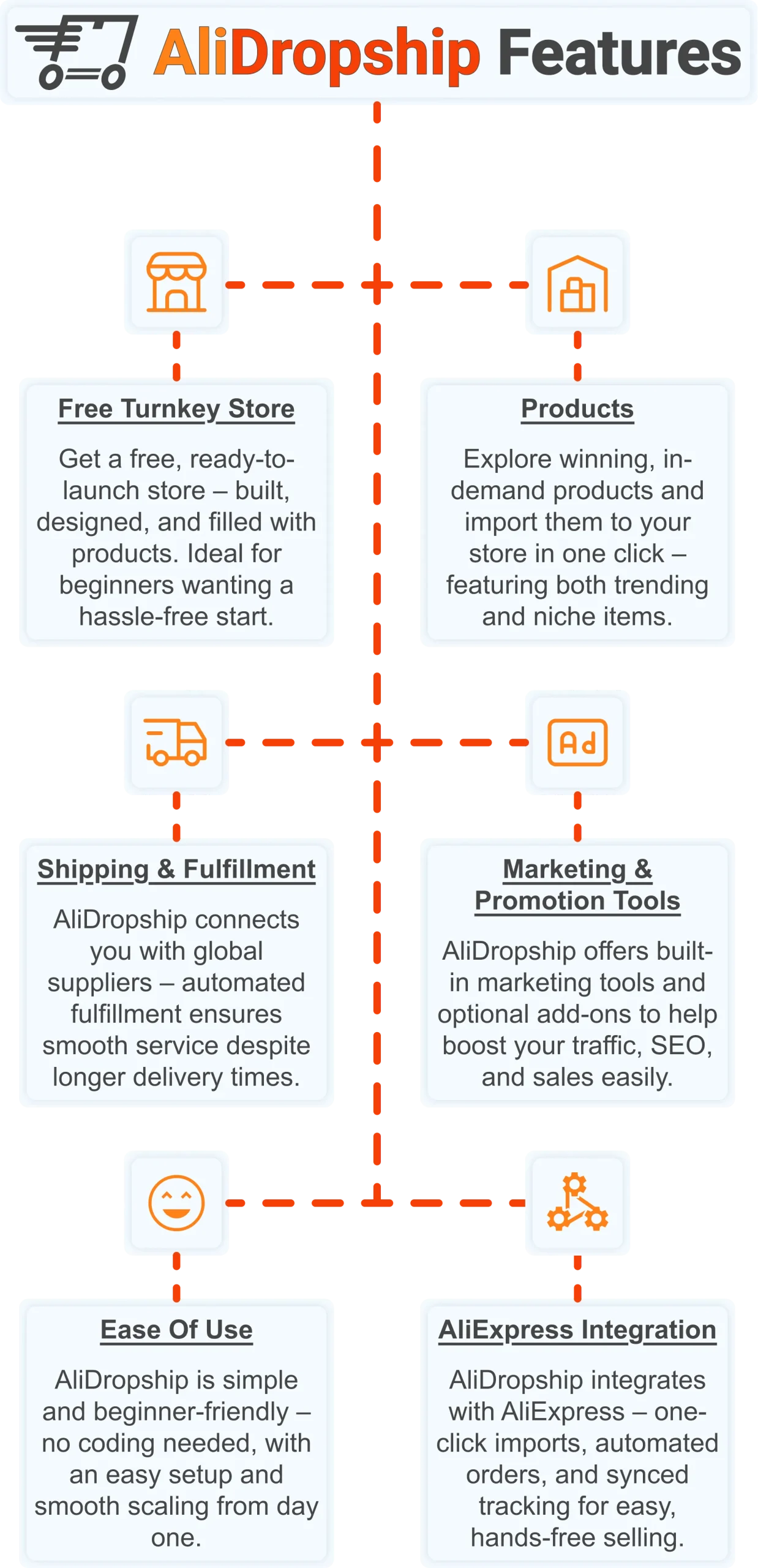
Free turnkey store ️
Get a free turnkey store – built, designed, and filled with products. Ideal for beginners wanting a hassle-free start, the store comes fully optimized to attract customers right away, saving you time on setup. Plus, it includes professional design elements to give your business a polished, trustworthy look from day one. This ready-made foundation makes it easy to move seamlessly into product selection.
Products
Once your store is set up, you can explore winning, in-demand products and import them in one click – featuring both trending and niche items. This wide selection lets you cater to diverse customer interests and test what works best. Regular updates ensure you always have fresh products, keeping your store competitive and relevant. With great products in place, smooth shipping becomes the next essential step.
Shipping & fulfillment
AliDropship connects you with global suppliers, and automated fulfillment ensures seamless order processing despite international delivery times. Customers receive real-time tracking updates, which builds confidence and trust in your store. Once shipping is handled reliably, you can focus on promoting your store and attracting traffic.
Marketing & promotion tools
To maximize sales, AliDropship offers built-in marketing tools and optional add-ons that help boost traffic, SEO, and conversions. From email campaigns and discounts to social media integration, these tools empower you to reach and retain customers without needing prior marketing experience. With promotion strategies in place, managing your business becomes simpler and more efficient.
Ease of use
AliDropship is beginner-friendly – no coding needed, with an intuitive dashboard that guides you through every step. Easy setup and smooth scaling let you expand your store without stress. As your business grows, adding new features, products, and marketing campaigns remains hassle-free, giving you more time to focus on sales.
AliExpress integration
Finally, AliDropship integrates seamlessly with AliExpress, enabling one-click imports, automated orders, and synced tracking. Your inventory stays up-to-date with the latest products and prices, while automated order processing frees you from manual tasks. Combined with the turnkey setup, reliable shipping, and built-in marketing tools, this integration ensures your dropshipping business is fully equipped for growth and success.
Frequently Asked Questions
How much money can you make copywriting as a beginner?
Beginners using freelance platforms like Upwork or Fiverr typically earn 20 to 60 dollars an hour while building initial reviews and a portfolio. A realistic first-90-day target for most beginners is 500 to 1,500 dollars a month while developing the craft. Direct client outreach pays considerably more at 50 to 150 dollars an hour but requires more confidence and consistent effort. Reaching the higher end of any copywriting income range generally takes 6 to 18 months of consistent work and skill-building.
How much can experienced copywriters earn per hour or per project?
Experienced copywriters typically charge 100 to 200 dollars an hour or more, or 500 to 5,000 dollars or more per project depending on the deliverable. A single email might sell for 150 to 300 dollars, while a full sales page can command 1,500 to 5,000 dollars. Niche specialists on retainer with a small number of steady clients can earn 3,000 to 10,000 dollars a month or more. Full-time copywriters in premium niches regularly earn 6,000 to 15,000 dollars a month or more once they have a strong client roster.
Does specializing in a niche increase copywriting income?
Yes, specialist copywriters in high-value niches like finance or SaaS typically earn 80 to 200 dollars an hour or more, compared to 25 to 50 dollars for generalists just starting out. Niche specialists bring genuine industry fluency that generalists cannot offer, which clients are willing to pay real money for. Common high-value niches include ecommerce, health and wellness, SaaS, financial services, and real estate. Prior work experience, education, or genuine interest in an industry gives a natural credibility advantage when choosing which niche to pursue.
Should copywriters charge by the hour or by the project?
Charging by project rather than by the hour is recommended because hourly pricing punishes copywriters for becoming faster and better at their craft over time. Value-based pricing, where fees are tied directly to revenue impact, can justify significantly higher fees, since a landing page converting at 5 percent instead of 2 percent may generate 50,000 dollars a year in extra revenue. Tiered service packages also make it easier for clients to say yes without lengthy negotiation. A single well-written landing page under value-based pricing can be worth far more than a flat 500 dollar writing fee.
How can new copywriters find their first clients?
Freelance platforms like Upwork and Fiverr are the most accessible entry point, useful for landing the first 5 to 10 clients and a set of honest reviews. Cold outreach is considered the most profitable underused method, with a realistic response rate of 3 to 5 percent, and even a single new client from this approach can pay for months of outreach effort. Job boards like LinkedIn, Indeed, and We Work Remotely tend to offer more stable, ongoing work rather than quick gigs. Networking in communities like Reddit’s r/copywriting also surfaces referral-based work before it is posted publicly.
If you’re building your copywriting income and want a second revenue stream that runs on autopilot, dropshipping with AliDropship is the most beginner-friendly way to start. Claim your free store and $100 voucher today.
 Previous post
