 ‧ julia.nenyukova ‧
March 16, 2026
‧ julia.nenyukova ‧
March 16, 2026  566 ‧
566 ‧
 0
0
Blogging has quietly turned into one of the most flexible income models on the internet. And if you’ve been wondering how to make money blogging – not the hype version, but what actually works and what it realistically pays – you’re in the right place.
Quick Answer: You can make money blogging through affiliate marketing, display ads, sponsored posts, digital products, memberships, and freelance services. Most bloggers see meaningful income within 6–12 months if they stay consistent with content and SEO. Full-time income typically takes 18–36 months.
This guide covers every major monetization method – what each one involves, how much you can realistically earn, and which approach makes the most sense for where you are right now. No vague advice, no unrealistic promises. Just a clear breakdown of how blogging for profit actually works in 2026.
What does making money from a blog actually mean?
At its core, blogging for money means building a content-driven website that attracts a regular audience – and then converting that audience into income through one or more channels. The blog itself is really just the traffic engine. It attracts readers through search engines and social media, and those readers become the foundation for everything else.
In 2026, blogging remains one of the most accessible entry points into online income. You don’t need a massive audience to start earning. You need a focused niche, consistent publishing, and a clear plan for how your content converts readers into revenue. Once that system is in place, much of it runs on autopilot.
Important note: Blogging is not a get-rich-quick model. It rewards patience, quality, and strategic thinking over shortcuts. The people earning serious money from their blogs have almost always been at it for at least a year.
How much can you realistically earn from blogging?
Blogging income varies enormously depending on niche, traffic, and which monetization methods you use. Here’s a practical breakdown of what different strategies typically pay:
Most new bloggers earn very little in their first 3–6 months. Realistic income in months 6–12 sits around $200–$800/month with consistent effort. Full-time income ($3,000+/month) typically takes 18–36 months of focused, strategic work.
Affiliate marketing: the most scalable way to earn
Affiliate marketing is one of the most talked-about methods for how to make money blogging – and for good reason. You promote someone else’s product, a reader buys through your tracking link, and you earn a commission. No product creation, no inventory, no customer support on your end.
How it works in practice
You join an affiliate program – Amazon Associates, ShareASale, Impact, or programs run directly by brands in your niche – embed unique links in your content, and earn a percentage of every resulting sale. Commission rates range from 1–2% on physical goods up to 30–50% on digital products and SaaS tools.
The content that converts best is designed around buying decisions. Product reviews, comparison articles, “best of” roundups, and tutorials that recommend specific tools all rank well in search engines and reach readers at the exact moment they’re ready to purchase.
What makes affiliate content actually work
- Target buyer-intent keywords – “best budget coffee maker” ranks and converts far better than “coffee maker”
- Be genuinely honest in reviews – readers trust real experience over obvious hype
- Always disclose affiliate relationships clearly – it’s legally required in most countries
- Build topical authority in your niche before chasing competitive terms
Why this works in 2026: Search intent is shifting toward specific, problem-solving queries. Bloggers who match content tightly to buying intent are pulling in consistent affiliate revenue even with modest traffic.
Earning potential: $100–$10,000+/month depending on traffic volume, niche, and commission rates. Finance, software, and health niches tend to pay the highest commissions.
Display ads: the simplest passive income stream
Display ads are the most hands-off form of blog monetization. You sign up with an ad network, add a small snippet of code to your site, and earn money based on how many people view or click the ads. The heavy lifting is in building the traffic – the earning side is largely passive once that’s done.
Which ad networks to use
Google AdSense is the standard entry point for new bloggers. It has a low barrier to join, but the payouts are relatively modest – around $3–$8 per 1,000 page views. Once your blog hits 25,000–50,000 monthly sessions, you can apply to Mediavine or Raptive (formerly AdThrive), which can pay $15–$35 per 1,000 views depending on your niche and audience geography.
Important: Display ads only become meaningful at volume. Don’t treat them as a primary income source until you’re consistently pulling 30,000–50,000 monthly page views or more.
Placement tips that balance revenue and experience
The most effective ad placements are within the content body, in the sidebar, and near the top of the page. That said, too many ads hurt user experience and increase your bounce rate – which ultimately damages your SEO. Keep it balanced. Premium ad networks like Mediavine actually manage placement for you, which removes most of the guesswork.
Earning potential: $3–$25 per 1,000 page views. A blog with 100,000 monthly visitors can realistically earn $1,500–$2,500/month from ads alone.
Sponsored posts: getting paid directly to create content
Sponsored posts let brands pay you to feature their products or services inside your content. It’s one of the fastest ways to make money with a blog once you have a defined audience, because the payment is per post – not tied to traffic volume. A smaller but highly engaged niche audience can command just as much (or more) than a large general one.
How to land sponsorships
You don’t have to wait for brands to come to you. Most successful bloggers proactively pitch companies in their niche. Put together a simple media kit that covers your monthly page views, email subscriber count, social following, and two or three examples of your strongest content. Even a blog with 5,000 focused monthly readers can land paid partnerships if the audience is engaged and niche-specific.
Platforms like AspireIQ, Collabor8, and IZEA can also connect you with brands actively looking for content creators – useful if you’re just getting started with outreach.
What brands actually want from you
Brands want authentic content that fits naturally into your blog’s voice. A forced or overly promotional sponsored post damages your credibility with readers – and brands notice that too. Treat it like any other piece of content, just one that also highlights a specific product or service.
Earning potential: $50–$5,000 per sponsored post, depending on audience size and niche authority. Lifestyle, health, and parenting blogs in particular tend to attract consistent brand deals.
Selling digital products: the highest margins in blogging
If you want the best profit margins in blogging for profit, digital products are the answer. eBooks, online courses, templates, printables, and swipe files can be created once and sold indefinitely – zero inventory, zero shipping, near-zero overhead. Every sale after the first is almost pure margin.
What kinds of digital products sell well
The best-performing digital products solve a very specific problem for a very specific audience. An eBook on “30-day meal planning for new moms” outsells a generic nutrition guide every time. An email template kit for freelancers beats a broad business writing course. Think narrow, useful, and immediately actionable.
- eBooks and guides: Good for established bloggers with proven expertise in a topic. Price range typically $10–$49.
- Online courses: Higher price point ($100–$500+), more production work upfront, but excellent long-term passive income once launched.
- Templates and printables: Lower price ($5–$30 each), but high volume potential with the right Pinterest or SEO strategy.
How to sell them from your blog
You don’t need a complex eCommerce setup. Tools like Gumroad, Lemon Squeezy, or Podia let you sell digital products directly with minimal setup. Link your product pages from your highest-traffic blog posts and build an email list to promote new releases to a warm audience.
Earning potential: $500–$5,000+/month once you have consistent traffic and a growing subscriber list. Some bloggers earn six figures annually from digital products alone.
Memberships and subscriptions: building recurring income
A membership program shifts your blogging income model in a powerful direction. Instead of earning from third parties – advertisers, affiliate networks, brand deals – you earn directly from your most engaged readers on a recurring basis. They pay monthly or annually in exchange for exclusive content, community access, or premium resources.
What works inside a membership
Exclusive deep-dive tutorials, a private community or Discord, monthly live Q&A sessions, downloadable resource packs, or early access to your content – any of these can justify a recurring subscription if your free content already has a loyal following. The key word is “exclusive.” If people can get the same thing elsewhere for free, they won’t pay for it.
Platforms like Patreon, MemberPress (for WordPress), or Substack (if your focus is newsletters) make setup and management straightforward.
Important note: Don’t launch a membership until you have a loyal, active free audience. A program with 20 random subscribers doesn’t generate enough revenue to sustain the ongoing effort. Aim for 50–100 dedicated engaged readers before launching.
Earning potential: $500–$3,000+/month with a well-engaged audience. A $15/month membership with 200 subscribers generates $3,000/month in predictable recurring income.
Consulting and freelance services: the fastest path to real income
If you need to earn money from your blog sooner than SEO timelines allow, offering services is the fastest route. Your blog acts as a living portfolio and lead generator – every article you publish demonstrates your expertise and can funnel readers toward a “work with me” page.
What services bloggers typically offer
Freelance writing, content strategy, SEO consulting, social media management, web design, coaching – whatever your background or niche expertise is, there are businesses willing to pay for it. The blog’s job is to show them why you’re the right person to hire.
This works because trust is already built through your content. A reader who’s spent time with 10 of your articles is far closer to hiring you than a cold lead from LinkedIn. That’s the real strategic value of a content-driven blog as a business development tool.
How to position your services effectively
- Create a dedicated services or “work with me” page with clear deliverables and pricing
- Link to it from your most relevant blog posts and from your email signature
- Use case studies or testimonials from past clients to add credibility
- Offer a low-cost discovery call to reduce the barrier for potential new clients
Earning potential: $50–$300+/hour depending on niche and experience. Freelance writing typically pays $0.10–$0.30 per word; specialized consulting can easily reach $150–$250/hour.
Legal and ethical considerations every blogger should know
Making money from a blog comes with real responsibilities. Ignoring them can damage your reputation, get you penalized by Google, or create legal exposure – none of which you want after putting in months of work.
Disclosure requirements
In the US, the FTC requires bloggers to clearly disclose any material connection to brands – this covers paid sponsorships, gifted products, and affiliate links. Disclosures need to be prominent and placed before the first affiliate link in a post, not buried at the bottom in small print. Most other countries have comparable regulations.
Key principle: If you received payment or a free product in exchange for coverage, tell your readers upfront. It’s legally required, and it protects the trust you’ve worked hard to build.
What to avoid completely
Don’t promote products you haven’t verified just because the commission is attractive. Don’t buy fake traffic or followers to inflate your media kit – ad networks and brands catch this, and it can permanently destroy your credibility. Don’t reproduce other bloggers’ content, even heavily paraphrased. Build your own original perspective and voice.
Privacy and data collection
If you collect email addresses or use analytics tools – which almost every blog does – you need a privacy policy and likely a cookie consent banner, especially if you have European readers. Tools like Termly or Iubenda make this quick and affordable to set up, so there’s no excuse to skip it.
Final thoughts: which blogging income method is right for you?
There’s no single best answer to how to make money blogging – the right method depends entirely on where you are in your journey. Here’s a breakdown by reader profile:
Complete beginner
Spend the first 60–90 days focused on content and SEO. Pick one niche, publish consistently, and build a library of 20–30 solid articles. Once traffic starts coming in, add affiliate links to existing posts. Display ads can follow once you hit a few thousand monthly visitors. Don’t try to do everything at once.
Intermediate / part-time blogger
If you’re already seeing 5,000–20,000 monthly visitors, it’s time to diversify. Launch a simple digital product – an eBook or a template pack – and test response from your existing audience. Pitch one or two brands for sponsored content. Start building an email list if you haven’t already. This is the phase where blogging income starts to feel real.
Advanced / full-time goal
Stack multiple income streams deliberately: high-converting affiliate content, a premium course or membership, a curated newsletter, and selective brand partnerships. The bloggers earning $5,000–$20,000+/month aren’t relying on one source. They’ve built a content ecosystem that generates revenue from multiple directions simultaneously.
The honest reality is that most blogs don’t reach serious income – not because blogging doesn’t work, but because most people quit before the compounding effect kicks in. Consistent effort over 12–24 months is usually what separates blogs that earn from blogs that don’t. The question is whether you’re prepared to play that long game.
AliDropship: your complete all-in-one solution for starting dropshipping in 2026
If you want the simplest possible way to start dropshipping – especially if you’re brand new – AliDropship remains one of the most beginner-friendly tools available in 2026. It brings together store creation, product imports, automation, and marketing into a single streamlined system designed to help you launch quickly and grow confidently.
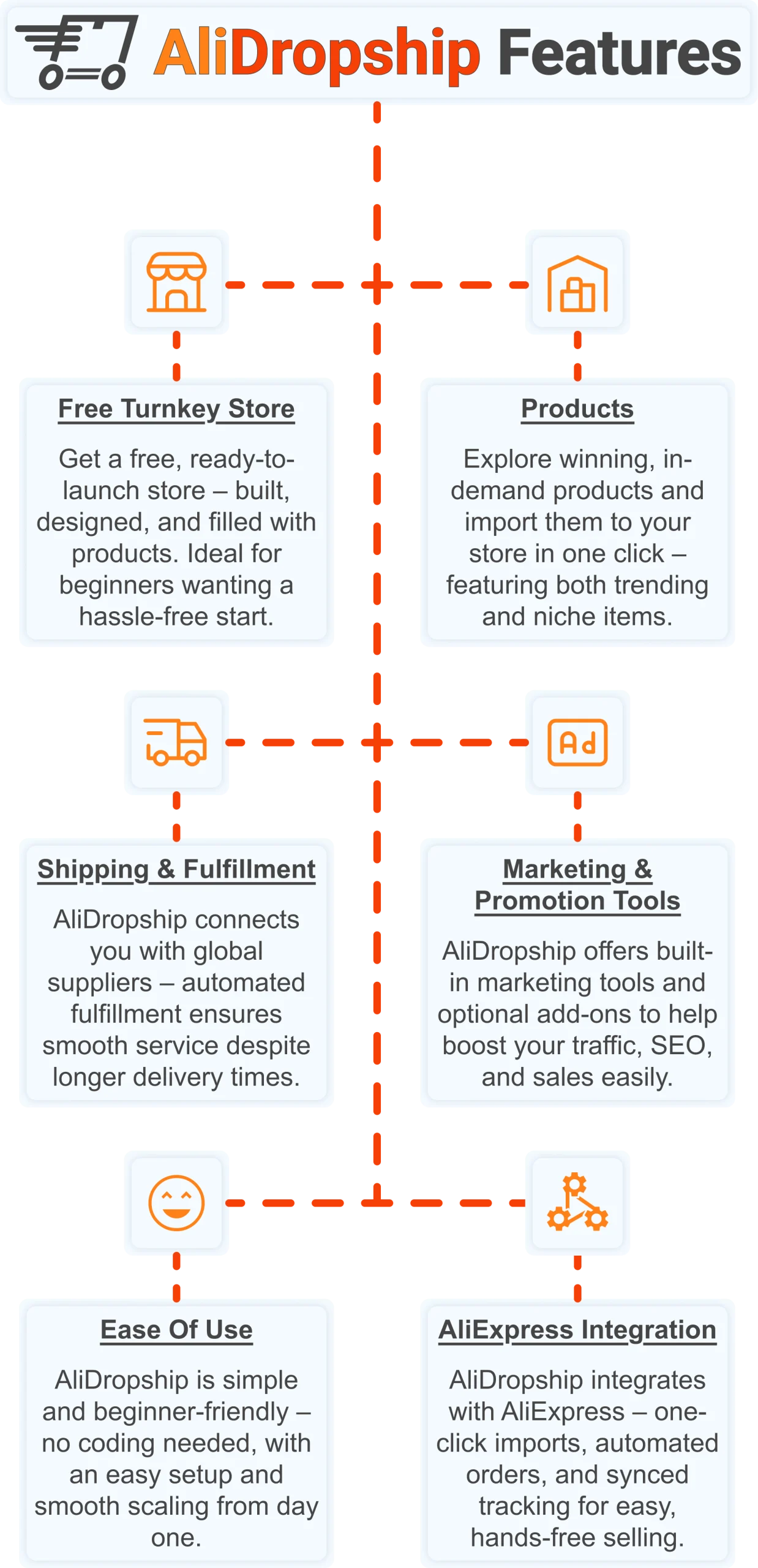
Free turnkey store ️
Get a free turnkey store – built, designed, and filled with products. Ideal for beginners wanting a hassle-free start, the store comes fully optimized to attract customers right away, saving you time on setup. Plus, it includes professional design elements to give your business a polished, trustworthy look from day one. This ready-made foundation makes it easy to move seamlessly into product selection.
Products
Once your store is set up, you can explore winning, in-demand products and import them in one click – featuring both trending and niche items. This wide selection lets you cater to diverse customer interests and test what works best. Regular updates ensure you always have fresh products, keeping your store competitive and relevant. With great products in place, smooth shipping becomes the next essential step.
Shipping & fulfillment
AliDropship connects you with global suppliers, and automated fulfillment ensures seamless order processing despite international delivery times. Customers receive real-time tracking updates, which builds confidence and trust in your store. Once shipping is handled reliably, you can focus on promoting your store and attracting traffic.
Marketing & promotion tools
To maximize sales, AliDropship offers built-in marketing tools and optional add-ons that help boost traffic, SEO, and conversions. From email campaigns and discounts to social media integration, these tools empower you to reach and retain customers without needing prior marketing experience. With promotion strategies in place, managing your business becomes simpler and more efficient.
Ease of use
AliDropship is beginner-friendly – no coding needed, with an intuitive dashboard that guides you through every step. Easy setup and smooth scaling let you expand your store without stress. As your business grows, adding new features, products, and marketing campaigns remains hassle-free, giving you more time to focus on sales.
AliExpress integration
Finally, AliDropship integrates seamlessly with AliExpress, enabling one-click imports, automated orders, and synced tracking. Your inventory stays up-to-date with the latest products and prices, while automated order processing frees you from manual tasks. Combined with the turnkey setup, reliable shipping, and built-in marketing tools, this integration ensures your dropshipping business is fully equipped for growth and success.
Frequently Asked Questions
How can you make money blogging in 2026?
You can make money blogging through affiliate marketing, display ads, sponsored posts, digital products, memberships, and freelance services. Most bloggers see meaningful income within 6 to 12 months if they stay consistent with content and SEO. Full time income typically takes 18 to 36 months to reach. Realistic income in months 6 to 12 sits around 200 to 800 per month with consistent effort.
How much can affiliate marketing earn on a blog?
Affiliate marketing can earn 100 to 10000 or more per month depending on traffic volume, niche, and commission rates. Commission rates range from 1 to 2 percent on physical goods up to 30 to 50 percent on digital products and SaaS tools. Finance, software, and health niches tend to pay the highest commissions. Content built around buyer intent keywords, like specific product comparisons, converts far better than generic topics.
How much do display ads pay on a blog?
Display ads typically pay 3 to 25 dollars per 1000 page views depending on the ad network and niche. Google AdSense pays around 3 to 8 dollars per 1000 views, while premium networks like Mediavine or Raptive can pay 15 to 35 dollars per 1000 views once a blog hits 25000 to 50000 monthly sessions. A blog with 100000 monthly visitors can realistically earn 1500 to 2500 per month from ads alone. Display ads only become meaningful at volume, so they should not be a primary income source below a few thousand monthly visitors.
How much can bloggers earn selling digital products?
Digital products can earn 500 to 5000 or more per month once a blogger has consistent traffic and a growing subscriber list. eBooks and guides typically price between 10 and 49 dollars, while online courses can price from 100 to 500 dollars or more. Templates and printables are priced lower, usually 5 to 30 dollars each, but can generate high volume through Pinterest or SEO strategies. Some bloggers earn six figures annually from digital products alone.
What legal disclosure rules apply to blog monetization?
In the US, the FTC requires bloggers to clearly disclose any material connection to brands, covering paid sponsorships, gifted products, and affiliate links. Disclosures need to be prominent and placed before the first affiliate link in a post, not buried at the bottom in small print. Most other countries have comparable disclosure regulations for bloggers. Blogs that collect email addresses or use analytics tools also need a privacy policy and likely a cookie consent banner for European readers.
Blogging builds an audience – and dropshipping gives you a proven way to monetize that audience with real products and predictable margins. Claim your free AliDropship store and $100 voucher to launch your online business today.
 Previous post
