 ‧ Agnes Kazaryan ‧
March 01, 2026
‧ Agnes Kazaryan ‧
March 01, 2026  641 ‧
641 ‧
 0
0
So you’ve been wondering how much does YouTube pay per view. You’ve probably seen headlines claiming creators rake in thousands from a single viral video – and you want to know if the numbers are real. The short answer? Yes, YouTube pays. But not in the clean, per-view way most people expect.
Quick answer: YouTube doesn’t pay a fixed rate per view. Most creators earn between $1 and $5 per 1,000 views (RPM) – which works out to roughly $0.001–$0.005 per individual view, after YouTube’s cut.
The actual figure depends on your niche, your audience’s location, video length, and how many of your views actually trigger an ad. In this article, we’ll break down all the real numbers, explain the metrics that matter, and show you how to push your earnings higher.
What is YouTube monetization and how does it work?
YouTube monetization is the system that lets creators earn money from their content. The main route is ad revenue through the YouTube Partner Program (YPP). To qualify in 2026, you need at least 1,000 subscribers and either 4,000 valid public watch hours in the past 12 months or 10 million public Shorts views in the last 90 days. You also need a linked AdSense account and to be in a country where monetization is available.
Once you’re in YPP, you unlock ad revenue sharing. When ads run on your videos, advertisers pay YouTube, and YouTube gives creators 55% of that revenue. The remaining 45% stays with YouTube. This split is well-documented in YouTube’s own support documentation.
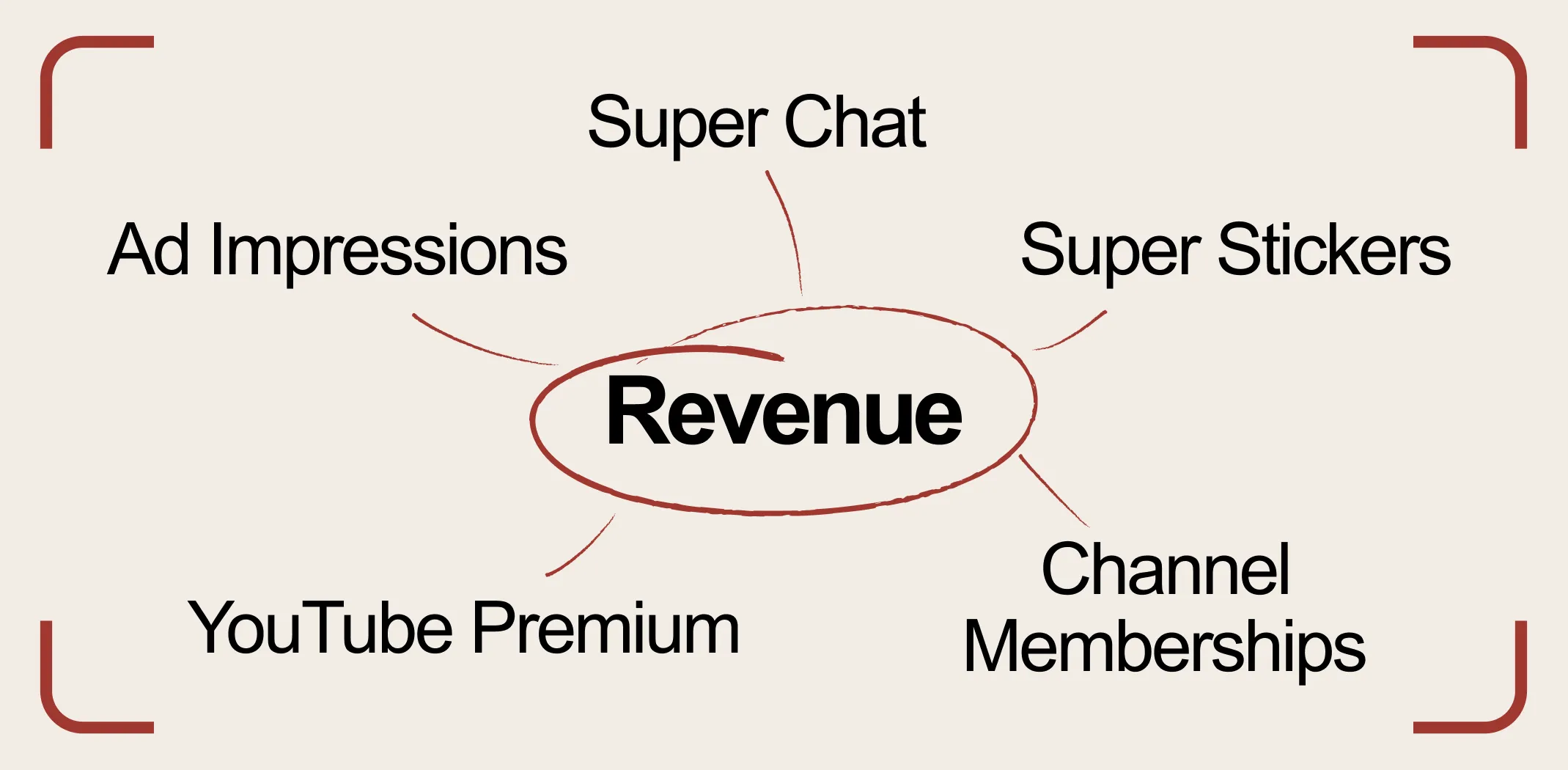
Beyond ads, you can also earn from YouTube Premium revenue (a share of subscription fees based on watch time), channel memberships, Super Chat, Super Stickers, and the merch shelf. These all feed into your total earnings alongside ad income.
How much does YouTube pay – realistic earning ranges
Before jumping to the table below, here’s the key thing to understand: YouTube doesn’t pay per raw view. It pays based on monetized ad impressions – so not every view earns you anything. With that in mind, here’s a realistic breakdown by creator type.
RPM (Revenue Per Mille) is what you actually take home per 1,000 total views – after YouTube’s cut and including unmonetized views. Finance and business channels consistently see the highest RPM because advertisers in those niches pay more per impression.
Important note: These figures assume a US-heavy audience. Channels with large audiences in lower-CPM regions will typically earn less, even with the same view count.
Key metrics: RPM, CPM, and monetized playbacks
If you want to understand how much YouTube pays, you need to speak the language. Three terms do most of the heavy lifting.
RPM (Revenue Per Mille)
RPM is the number you actually care about. It’s what you earn per 1,000 total views – after YouTube takes its cut, and counting all views, even the ones that didn’t show an ad. If your RPM is $3 and you got 500,000 views this month, you earned $1,500. Most creators land between $1 and $5 RPM, though high-CPM niches like finance can push well above that.
CPM (Cost Per Mille)
CPM is what advertisers pay for 1,000 ad impressions – before YouTube’s cut. A high CPM in your niche means advertisers are competing hard to reach your audience, which trickles down into a higher RPM for you. Finance and insurance niches routinely see CPMs of $10–$40. Gaming can sit as low as $2–$5.
Monetized playbacks
This is the percentage of your total views that actually triggered an ad. Ad blockers, content flags, region restrictions, and low advertiser demand all reduce this number. You might have 200,000 views but only 60,000 monetized playbacks. The gap between total views and monetized views is one of the main reasons the “YouTube pays $0.01 per view” claim feels off – it assumes every view earns, which it doesn’t.
What affects how much YouTube pays per view
There’s no single answer to how much does YouTube pay per view because your earnings are shaped by several overlapping factors. Here’s what actually moves the needle.
Niche and topic
Finance, investing, insurance, B2B software, and legal content consistently attract higher-paying advertisers. Gaming, general entertainment, and reaction content tend to sit at the lower end. You don’t have to abandon your passion – but even a slight pivot toward a higher-value sub-topic can lift your RPM noticeably.
Audience location
Views from the US, UK, Canada, and Australia typically bring in higher ad revenue. Views from regions with lower advertiser demand yield less – sometimes significantly less. If a large share of your traffic comes from lower-CPM countries, your overall RPM will reflect that even if your content quality is high.
Video length and ad placement
Videos over 8–10 minutes unlock mid-roll ads – ads that play in the middle of the video. More ad slots means more revenue opportunities per view. Short videos are limited to pre-roll ads, which reduces your ceiling. Ad format also plays a role: non-skippable ads generally pay more per impression than skippable ones.
Viewer engagement and watch time
YouTube rewards videos that hold people’s attention. Longer watch time means more ads served and signals to YouTube that your content is worth showing quality ad inventory. High skip rates or early drop-offs work against you here.
Channel history and content safety
Channels with clean track records, consistent uploads, and no policy violations tend to receive better ad inventory. Content that’s flagged as advertiser-unfriendly – covering sensitive topics, using strong language, or containing copyrighted material – can be partially or fully demonetized, cutting your earnings even on popular videos.
Seasonality
Ad spend isn’t flat throughout the year. Q4 (October through December) is consistently the highest-earning period because advertisers increase budgets ahead of the holidays. January often sees a sharp RPM dip as budgets reset. Timing your best uploads around high-spend periods can meaningfully boost earnings.
What “per view” actually means – and why the number is misleading
The phrase “how much does YouTube pay per view” implies a fixed, predictable rate. In reality, revenue is calculated across multiple streams – ad impressions, YouTube Premium watch time shares, memberships, and more – then divided by your total view count. That’s your effective per-view rate, and it varies constantly.
Some views earn nothing at all. Ad blockers remove ads entirely. Demonetized videos earn zero from ads no matter how many people watch. Videos in low-demand niches or regions may have a near-zero fill rate. When you factor all of this in, the effective per-view rate most creators see is closer to $0.001–$0.003 – well below the $0.01 figure that gets repeated everywhere.
One note on the per-view figure: The $0.01–$0.03 estimate you see quoted online is often the CPM-based gross rate before YouTube’s cut and before accounting for unmonetized views. Your actual take-home per view is usually lower.
The better question isn’t “how much per view?” – it’s “what’s my RPM and how do I improve it?” That’s the number you can actually influence.
How to increase how much YouTube pays you
Improving your earnings isn’t about gaming the system. It’s about making smarter content choices that align with how YouTube and its advertisers actually work.
1. Move toward higher-CPM sub-niches
You don’t have to abandon your niche entirely. Within almost every category, there are sub-topics that attract higher-paying advertisers. “Personal finance for first-time investors” earns more than “money saving hacks.” “B2B software reviews” earns more than “tech unboxing.” Research which angles within your space command higher CPMs and lean into them gradually.
2. Make longer videos and use mid-rolls strategically
Once your videos hit 8–10 minutes, you can place mid-roll ads. Don’t force them awkwardly – insert them at natural pauses or chapter breaks. Viewers tolerate mid-rolls much better when they don’t interrupt a sentence mid-way through. More ad slots, when placed well, increase revenue without damaging retention.
3. Improve retention and watch time
Hook viewers in the first 10–15 seconds. Use open loops, short previews of what’s coming, and a clear reason to keep watching. Every extra minute a viewer stays means more ad impressions served and a stronger signal to YouTube’s algorithm that your content is worth distributing.
4. Target content toward high-CPM regions
You can’t control where viewers come from, but you can influence it. Adding English captions, optimizing titles and thumbnails for international search, and covering topics that resonate with US, UK, and Australian audiences all help shift your traffic toward higher-earning regions over time.
5. Enable all ad formats
Turn on skippable ads, non-skippable ads, display ads, and bumper ads where eligible. Some creators disable certain formats thinking it improves the viewer experience, but the revenue difference is real. Test it on a few videos and check your analytics – many audiences tolerate ads more than creators assume.
6. Diversify beyond ad revenue
Ad revenue is a baseline, not a ceiling. Channel memberships, Super Chat during livestreams, affiliate links in video descriptions, sponsorships, and digital products can all outperform ad income once your channel has a loyal audience. Treat AdSense as one income stream, not the whole business.
7. Upload consistently and protect your content’s eligibility
Channels with steady upload schedules tend to get better ad inventory over time. Clean content – no copyright claims, no policy flags, no sensitive topics handled carelessly – keeps your monetization intact and builds the kind of channel reputation advertisers want to appear on.
8. Use analytics to find your best-performing RPM videos
YouTube Studio shows your RPM by video. Look at which videos outperform your channel average and ask why. Was it the topic? The length? The audience demographic? Replicate those patterns deliberately rather than guessing what works.
Earning potential: $1–$15+ RPM depending on niche, audience location, and content strategy – most mid-size channels realistically land between $2–$5 RPM with consistent effort over 6–12 months.
Limitations, risks, and realistic expectations
YouTube ad revenue can be a genuine income stream – but it comes with real constraints that are worth understanding before you invest serious time into it.
CPMs fluctuate constantly. Advertiser budgets are tied to economic conditions, seasonal spending, and platform competition. A month where your RPM is $4 can be followed by one where it drops to $1.50 for no reason you control. YouTube can also demonetize individual videos – or entire channels – if content is flagged, copyright claims stack up, or policy guidelines change.
Algorithm shifts affect views too. Channels that rely entirely on recommended traffic can see a 50–70% drop in views overnight if YouTube adjusts how it surfaces content. That directly hits earnings.
Most creators who make a full-time income from YouTube are not doing it on ad revenue alone. They use YouTube as a platform to drive income from multiple sources – courses, merchandise, affiliate programs, brand deals, and other online businesses. Ad revenue is often what gets the ball rolling, but it’s rarely the whole story.
Key principle: Treat YouTube ad income as one input in a diversified online income strategy – not as a standalone business model.
Final thoughts – how to approach YouTube earnings by experience level
The question of how much does YouTube pay doesn’t have one answer. But it does have a useful framework depending on where you’re starting from.
If you’re a complete beginner: focus on getting to 1,000 subscribers and 4,000 watch hours first. Don’t worry about RPM yet – build the habit of consistent uploads and learn what your audience responds to. Earnings will be minimal at this stage, and that’s normal.
If you’re intermediate or part-time: you’re in YPP and getting some ad revenue. Now’s the time to look at your analytics seriously. Find your highest-RPM videos, double down on those formats, and start adding a second income stream – affiliate links or a simple digital product work well here.
If your goal is full-time income: you need to think beyond ads from day one. Build toward sponsorships, memberships, or your own products in parallel with growing your channel. A channel making $3,000/month from ads alone typically needs 1–3 million monthly views, which takes years to build. Combining ad revenue with other income sources gets you there faster.
The creators who earn consistently well from YouTube aren’t lucky – they understand the mechanics, play to their niche’s strengths, and don’t put all their income in one basket.
AliDropship: Your complete all-in-one solution for starting dropshipping in 2026
If you want the simplest possible way to start dropshipping – especially if you’re brand new – AliDropship remains one of the most beginner-friendly tools available in 2026. It brings together store creation, product imports, automation, and marketing into a single streamlined system designed to help you launch quickly and grow confidently.
Free turnkey store ️
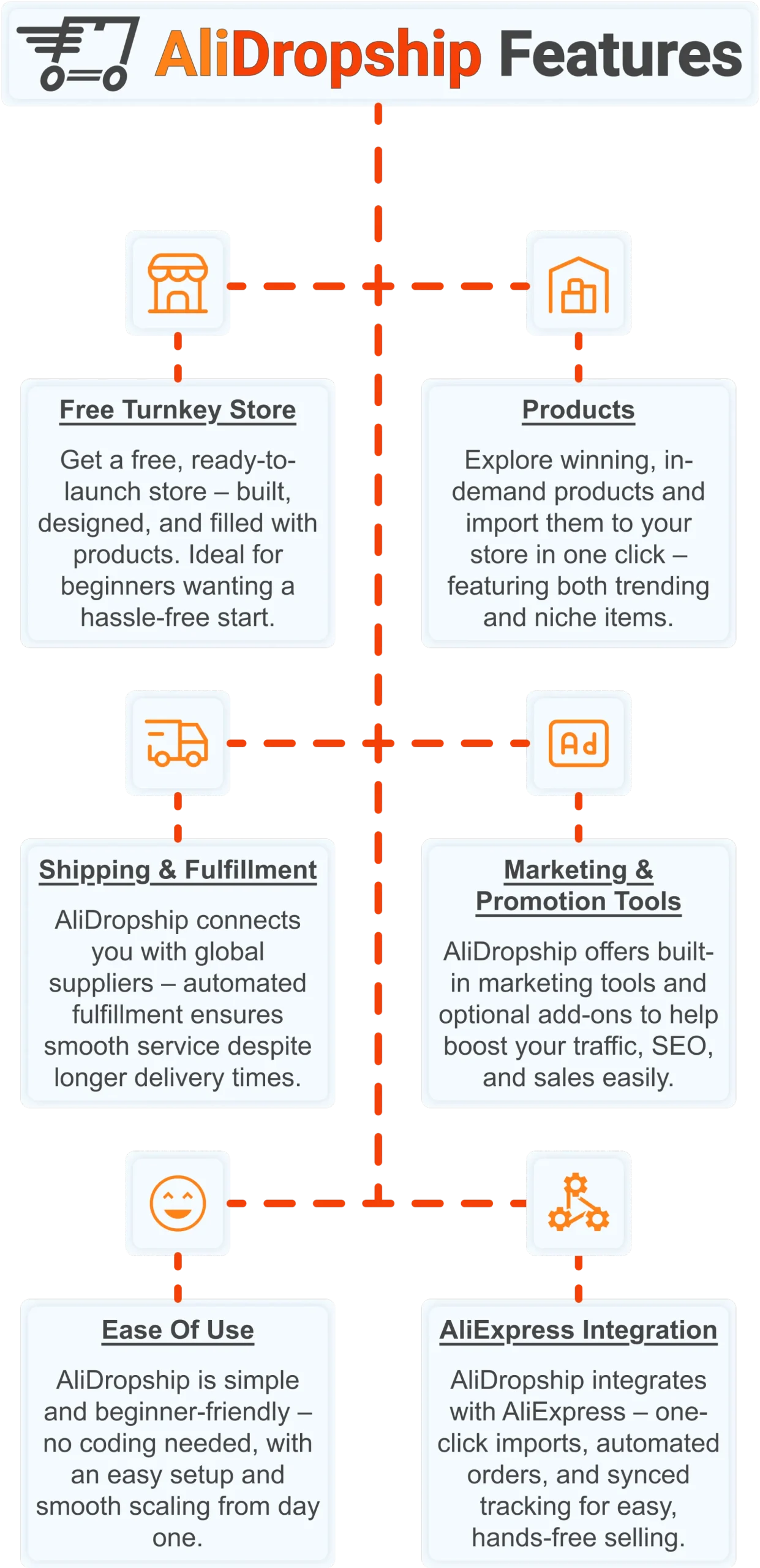
Get a free turnkey store – built, designed, and filled with products. Ideal for beginners wanting a hassle-free start, the store comes fully optimized to attract customers right away, saving you time on setup. Plus, it includes professional design elements to give your business a polished, trustworthy look from day one. This ready-made foundation makes it easy to move seamlessly into product selection.
Products
Once your store is set up, you can explore winning, in-demand products and import them in one click – featuring both trending and niche items. This wide selection lets you cater to diverse customer interests and test what works best. Regular updates ensure you always have fresh products, keeping your store competitive and relevant. With great products in place, smooth shipping becomes the next essential step.
Shipping & fulfillment
AliDropship connects you with global suppliers, and automated fulfillment ensures seamless order processing despite international delivery times. Customers receive real-time tracking updates, which builds confidence and trust in your store. Once shipping is handled reliably, you can focus on promoting your store and attracting traffic.
Marketing & promotion tools
To maximize sales, AliDropship offers built-in marketing tools and optional add-ons that help boost traffic, SEO, and conversions. From email campaigns and discounts to social media integration, these tools empower you to reach and retain customers without needing prior marketing experience. With promotion strategies in place, managing your business becomes simpler and more efficient.
Ease of use
AliDropship is beginner-friendly – no coding needed, with an intuitive dashboard that guides you through every step. Easy setup and smooth scaling let you expand your store without stress. As your business grows, adding new features, products, and marketing campaigns remains hassle-free, giving you more time to focus on sales.
AliExpress integration
Finally, AliDropship integrates seamlessly with AliExpress, enabling one-click imports, automated orders, and synced tracking. Your inventory stays up-to-date with the latest products and prices, while automated order processing frees you from manual tasks. Combined with the turnkey setup, reliable shipping, and built-in marketing tools, this integration ensures your dropshipping business is fully equipped for growth and success.
Frequently Asked Questions
How much does YouTube actually pay per 1,000 views?
Most creators earn between 1 and 5 dollars per 1,000 views through RPM, which works out to roughly 0.001 to 0.005 dollars per individual view after YouTube cut. Finance, business, and tech channels see the highest RPM, often 5 to 15 dollars or more, while gaming and entertainment channels typically see 1 to 3 dollars. These figures assume a US-heavy audience, since channels with viewers in lower-CPM regions generally earn less at the same view count. YouTube gives creators 55 percent of ad revenue, keeping the remaining 45 percent for itself.
What are the requirements to join the YouTube Partner Program?
To qualify in 2026, creators need at least 1,000 subscribers and either 4,000 valid public watch hours in the past 12 months or 10 million public Shorts views in the last 90 days. A linked AdSense account is also required, along with being located in a country where monetization is available. Once approved, creators unlock ad revenue sharing along with access to channel memberships, Super Chat, and the merch shelf. Building toward these thresholds is typically the first milestone for anyone starting a monetization-focused channel.
Why does video length affect how much YouTube pays?
Videos over 8 to 10 minutes unlock mid-roll ads, which play in the middle of the video and create more revenue opportunities per view. Shorter videos are limited to pre-roll ads only, which lowers their earning ceiling. Non-skippable ad formats generally pay more per impression than skippable ones, adding another lever creators can adjust. Placing mid-rolls at natural pauses rather than mid-sentence helps preserve viewer retention while still capturing this additional revenue.
Why is the per-view earning figure often misleading?
Not every view actually triggers an ad, since ad blockers, demonetized content, and low advertiser demand in certain regions all reduce what is called the monetized playback rate. A channel might have 200,000 total views but only 60,000 monetized playbacks. When accounting for this gap, the effective per-view rate most creators see lands closer to 0.001 to 0.003 dollars, well below the 0.01 dollar figure often quoted online. RPM, which reflects total views including unmonetized ones, is considered a more accurate number for creators to track.
How much monthly income can YouTube ad revenue realistically generate?
A channel earning 3,000 dollars per month from ads alone typically needs 1 to 3 million monthly views, which usually takes years to build. Most creators who reach full-time income are not relying on ad revenue alone, instead combining it with channel memberships, sponsorships, affiliate links, and their own digital products. Algorithm shifts can also cause a 50 to 70 percent drop in views overnight if YouTube changes how it surfaces content, directly affecting earnings. Treating ad income as one part of a diversified strategy rather than a standalone business model is the more realistic approach.
If YouTube’s long road to ad income isn’t the pace you’re looking for, dropshipping gives you a faster lane to building real online revenue. Claim your free store and $100 voucher and get started today.
 Previous post
