 ‧ Agnes Kazaryan ‧
March 03, 2026
‧ Agnes Kazaryan ‧
March 03, 2026  532 ‧
532 ‧
 0
0
There are now hundreds of stock apps competing for your attention – and your money. Some are genuinely excellent. Others look the part but come with hidden fees, clunky interfaces, or features that only make sense once you already know what you’re doing. So which ones are actually worth using in 2026?
Quick Answer: The best stock apps in 2026 include Robinhood and Acorns for beginners, TD Ameritrade and E*TRADE for active traders, and Vanguard and Betterment for long-term investors. The right pick depends entirely on your goals, experience level, and how hands-on you want to be.
This guide cuts through the noise. You’ll get a clear breakdown of the top platforms by investor type, an honest look at what each one does well (and where it falls short), and a simple framework for choosing the best stock app for your specific situation.
What are stock apps and why do they matter in 2026?
Stock apps are mobile or desktop platforms that let you buy, sell, and manage investments without going through a traditional broker or financial advisor. Most are commission-free, beginner-accessible, and designed to work entirely from your phone.
What’s changed in recent years is the depth of tools on offer. The best stock apps in 2026 aren’t just trading terminals – they come with built-in research, AI-assisted insights, automated portfolio management, and real-time alerts. Whether you want to invest $5 or $50,000, there’s a platform built for exactly that use case.
The market has also matured. Apps that were once dismissed as “gamified” investing tools have evolved into serious platforms used by millions of retail investors. That said, not all of them are equal – and choosing the wrong one can cost you in fees, missed features, or a steep learning curve you weren’t expecting.
How much can you realistically earn with stock apps?
This depends heavily on your strategy, starting capital, and time horizon. To give you a realistic picture, here’s a simple comparison of the most common approaches:
Long-term passive investing in index funds has historically delivered the most consistent returns for most people. Active trading can yield faster gains, but studies consistently show that the majority of retail day traders lose money over a 12-month period. Start with realistic expectations and a clear strategy before you commit capital.
Important note: All investing carries risk. Past returns do not guarantee future performance. Never invest more than you can afford to lose.
Best stock apps for beginners
If you’re new to investing, the most important thing is finding a platform that doesn’t make you feel out of your depth. You want clear navigation, low (or no) minimum deposits, and ideally some educational content to help you make sense of what you’re doing. These three apps consistently top the list for new investors.
Robinhood
Robinhood is probably the most recognizable name in retail investing, and for good reason. The app strips out the complexity and gives you a clean, easy-to-use interface with commission-free trades on stocks, ETFs, options, and crypto. There’s no account minimum, and you can buy fractional shares – so you can invest in high-priced stocks for as little as $1.
It’s not without criticism. Robinhood has faced scrutiny over its order routing practices and its role in the 2021 meme stock saga. But for a beginner who wants to get started quickly and cheaply, it remains one of the most accessible options available.
Earning potential: Entirely dependent on your portfolio choices – but low fees mean more of your money stays invested and compounding over time.
Acorns
Acorns takes a genuinely different approach. Instead of asking you to pick stocks, it rounds up your everyday card purchases to the nearest dollar and automatically invests the difference into a diversified portfolio. It’s almost invisible – your money grows in the background while you go about your day.
The trade-off is a monthly fee ($3–$5 depending on your plan) which can eat into small balances. But for someone who struggles to save or invest consistently, Acorns removes the friction almost entirely.
Earning potential: $10–$50/month from spare change alone – more if you set up recurring deposits alongside the round-ups.
Stash
Stash sits somewhere between Acorns and Robinhood. You can start with as little as $5, choose from a curated selection of themed portfolios (“Clean and Green”, “American Innovators”, etc.), and access a decent library of educational content. It’s built around the idea that learning and investing should happen together.
Like Acorns, it charges a monthly subscription fee rather than per-trade commissions – so it suits investors who plan to stay consistent over time rather than trade actively.
Earning potential: Modest short-term, but Stash is designed for steady long-term portfolio growth over 2–5 years.
Best stock apps for active traders
Active trading means making frequent buy and sell decisions based on market movements, technical analysis, or news. You need speed, depth of data, and tools that can keep up with fast-moving markets. These three platforms are built for exactly that.
TD Ameritrade
TD Ameritrade’s thinkorswim platform is widely regarded as one of the most powerful trading tools available to retail investors. It offers professional-grade charting, a massive library of technical indicators, real-time market scanning, and paper trading (practice trading with virtual money) – all for free. TD Ameritrade was acquired by Charles Schwab, so accounts now operate under the Schwab umbrella, though the thinkorswim platform continues to run as a standalone product.
It has a steeper learning curve than beginner apps, but if you’re serious about active trading, it’s hard to beat the depth of tools on offer.
Earning potential: Highly variable – skilled active traders can target $100–$500/day, but this requires significant experience and a disciplined risk management strategy.
E*TRADE
E*TRADE is another industry veteran with a strong mobile app and a well-designed desktop platform. It’s particularly good for options trading, with an intuitive options chain display and a dedicated options screener. If you trade equities, options, and ETFs in one place and want a clean, fast experience, E*TRADE is a solid choice.
It also offers strong educational resources, which makes it a reasonable middle ground for investors who are transitioning from beginner to intermediate level.
Earning potential: $50–$300/day realistic for experienced options traders with a consistent strategy and adequate capital.
Fidelity
Fidelity is one of the most well-rounded platforms available. It offers zero-commission trades, excellent research tools (including access to third-party analyst reports), strong retirement account options, and a reliable mobile app. It’s less flashy than some competitors but consistently rates highly on Trustpilot and Reddit communities like r/personalfinance for customer service and reliability.
If you want a platform you can grow with – from your first trade through to full retirement planning – Fidelity is worth serious consideration.
Earning potential: Excellent for long-term wealth building; active traders can also access the tools they need, though the platform skews more toward research than rapid-fire execution.
Best stock apps for mobile trading
Not everyone is sitting at a desk when the market moves. If you want to trade on the go – from your phone, during a commute, between meetings – you need an app that’s fast, stable, and doesn’t sacrifice features for screen size. These three are the most reliable options for mobile-first traders in 2026.
Webull
Webull is built with mobile in mind. The app is highly rated on both iOS and Android, and it packs in advanced charting, real-time level 2 quotes, and zero-commission trading – features you’d normally only find on desktop platforms. It’s a strong choice for intermediate traders who want professional-grade tools in their pocket.
One caveat: the interface can feel dense if you’re new to investing. But if you’re comfortable reading charts and market data, Webull’s mobile experience is genuinely impressive.
Earning potential: $30–$200/day for disciplined swing traders using Webull’s technical tools effectively.
Merrill Edge
Merrill Edge is especially compelling if you already bank with Bank of America. The integration between your bank account and brokerage is seamless – you can transfer funds instantly and even qualify for commission-free trades based on your combined banking and investing balance. The mobile app is clean, fast, and packed with research tools.
It’s not the best standalone option if you’re not already in the BofA ecosystem, but for existing customers it’s one of the smartest all-in-one financial apps available.
Earning potential: Solid across both active and passive strategies; particularly strong for dividend investors and those building long-term wealth.
TradeStation
TradeStation is a step up in complexity – it’s designed for serious traders who want institutional-grade tools on a retail platform. Its mobile app supports custom screeners, real-time alerts, automated trading strategies, and deep technical analysis. If you know what you’re doing and want the most powerful mobile trading experience available, TradeStation is worth exploring.
Earning potential: Targets experienced traders – realistic daily targets of $100–$500+ with a well-defined strategy, though risk is proportionally higher.
Best stock apps for long-term investors
Long-term investing is about patience, consistency, and minimizing the fees and decisions that erode your returns over time. These apps are designed to make it easy to stay the course – whether you’re building a retirement nest egg, saving for a house, or simply growing wealth over a 10–20 year horizon.
Vanguard
Vanguard is the gold standard for passive, long-term investing. The company pioneered the index fund and has built its entire business model around low-cost investing – its expense ratios on index funds are consistently among the lowest in the industry. If you want to invest in a diversified portfolio of index funds or ETFs and largely forget about it, Vanguard is the obvious starting point.
The app itself is functional rather than flashy, and it doesn’t cater to active traders. But if you’re thinking in decades rather than days, that’s probably a feature, not a bug.
Earning potential: 7–10% avg. annual return historically for broad market index fund investors – compounding significantly over 10–30 years.
Betterment
Betterment is a robo-advisor, which means it manages your portfolio for you based on your goals, risk tolerance, and time horizon. You answer a few questions, deposit money, and the platform does the rest – rebalancing your portfolio automatically and optimizing for tax efficiency through tax-loss harvesting.
It charges a small annual management fee (0.25% of assets under management), which is reasonable given the automation and financial planning tools it provides. For investors who want a hands-off approach without giving up control entirely, Betterment is one of the best options available.
Earning potential: 5–8% avg. annual return depending on risk profile – consistent and predictable over a 5–10 year horizon.
Wealthfront
Wealthfront is Betterment’s closest competitor and offers a very similar service – automated portfolio management, tax-loss harvesting, and a path account that functions as a high-yield savings product. One area where Wealthfront stands out is its financial planning tools: the app’s built-in planning features let you model scenarios like “what if I buy a house in 5 years?” or “am I on track to retire at 60?” with more depth than most competitors.
Earning potential: Comparable to Betterment – 5–8% avg. annual return with the added value of sophisticated financial planning features.
What to watch out for when choosing a stock app
The best stock apps are largely safe, regulated products – but there are still some pitfalls worth knowing about before you commit your money.
Key principle: Always verify that any platform you use is registered with the SEC and FINRA, and that your account is covered by SIPC insurance (up to $500,000 in securities).
Beyond regulatory basics, here’s what to check before opening an account:
- Hidden fees: Commission-free trading doesn’t mean the platform is free. Watch for account maintenance fees, withdrawal fees, and charges for premium features or data.
- Order flow practices: Some apps, including Robinhood, generate revenue through payment for order flow – a practice that has drawn regulatory scrutiny. It’s legal in the US but worth understanding.
- Leverage and margin: Several platforms offer margin trading (borrowing money to invest). This amplifies both gains and losses. Never use margin unless you fully understand the risks involved.
- Gamification: Some apps are designed to encourage frequent trading through push notifications, leaderboards, and reward mechanisms. More trading generally means more fees for the platform and lower returns for you.
Important: If you’re a beginner, stick to platforms that are clearly designed for long-term investing rather than fast-paced trading. Getting started right matters more than getting started fast.
Final thoughts – how to choose the best stock app for you
There’s no single best stock app that works for everyone. The right choice depends on where you’re starting from and where you want to go. Here’s a quick guide by investor profile:
Complete beginner: Start with Acorns or Robinhood. Acorns is ideal if you want totally automated investing with zero decisions. Robinhood works better if you want to choose your own stocks and learn as you go. Either way, keep your expectations realistic for the first 60–90 days.
Intermediate / part-time investor: Fidelity or E*TRADE give you the depth of tools to level up your strategy without overwhelming you. Both have strong educational resources and customer support.
Advanced / full-time goal: thinkorswim (via TD Ameritrade/Schwab) or TradeStation are the professional-grade options. They’re genuinely powerful – but only useful once you’ve built a consistent strategy and understand risk management.
Long-term wealth builder: Vanguard, Betterment, or Wealthfront. Choose Vanguard if you want to manage your own index fund portfolio. Choose Betterment or Wealthfront if you’d rather a robo-advisor handle it for you.
Whatever platform you choose, the most important thing is starting. Time in the market consistently beats timing the market – and the best stock app is the one you’ll actually use consistently.
AliDropship: Your complete all-in-one solution for starting dropshipping in 2026
If you want the simplest possible way to start dropshipping – especially if you’re brand new – AliDropship remains one of the most beginner-friendly tools available in 2026. It brings together store creation, product imports, automation, and marketing into a single streamlined system designed to help you launch quickly and grow confidently.
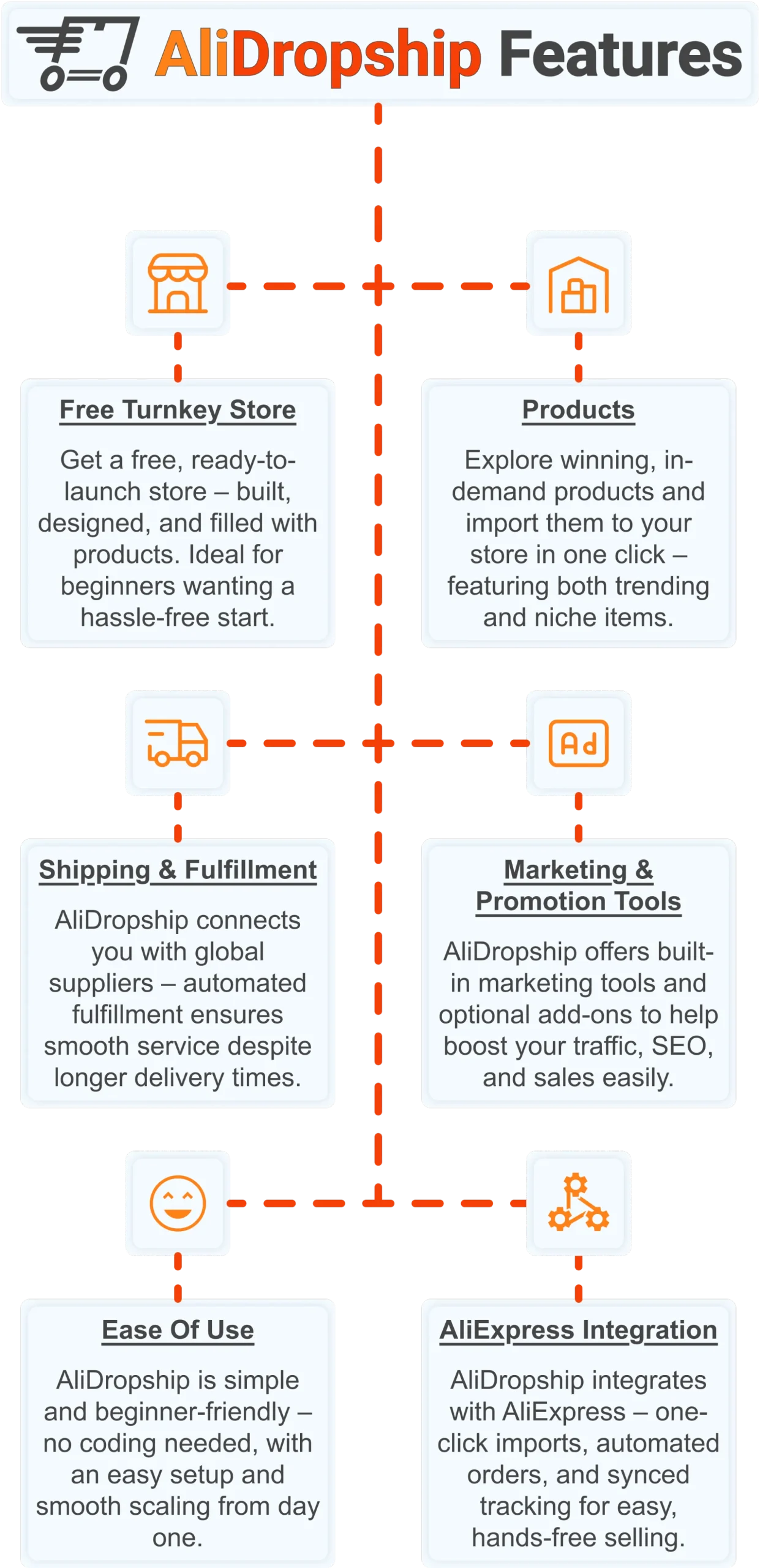
Free turnkey store ️
Get a free turnkey store – built, designed, and filled with products. Ideal for beginners wanting a hassle-free start, the store comes fully optimized to attract customers right away, saving you time on setup. Plus, it includes professional design elements to give your business a polished, trustworthy look from day one. This ready-made foundation makes it easy to move seamlessly into product selection.
Products
Once your store is set up, you can explore winning, in-demand products and import them in one click – featuring both trending and niche items. This wide selection lets you cater to diverse customer interests and test what works best. Regular updates ensure you always have fresh products, keeping your store competitive and relevant. With great products in place, smooth shipping becomes the next essential step.
Shipping & fulfillment
AliDropship connects you with global suppliers, and automated fulfillment ensures seamless order processing despite international delivery times. Customers receive real-time tracking updates, which builds confidence and trust in your store. Once shipping is handled reliably, you can focus on promoting your store and attracting traffic.
Marketing & promotion tools
To maximize sales, AliDropship offers built-in marketing tools and optional add-ons that help boost traffic, SEO, and conversions. From email campaigns and discounts to social media integration, these tools empower you to reach and retain customers without needing prior marketing experience. With promotion strategies in place, managing your business becomes simpler and more efficient.
Ease of use
AliDropship is beginner-friendly – no coding needed, with an intuitive dashboard that guides you through every step. Easy setup and smooth scaling let you expand your store without stress. As your business grows, adding new features, products, and marketing campaigns remains hassle-free, giving you more time to focus on sales.
AliExpress integration
Finally, AliDropship integrates seamlessly with AliExpress, enabling one-click imports, automated orders, and synced tracking. Your inventory stays up-to-date with the latest products and prices, while automated order processing frees you from manual tasks. Combined with the turnkey setup, reliable shipping, and built-in marketing tools, this integration ensures your dropshipping business is fully equipped for growth and success.
Frequently Asked Questions
What are the best stock apps in 2026?
The best stock apps in 2026 include Robinhood and Acorns for beginners, TD Ameritrade and E*TRADE for active traders, and Vanguard and Betterment for long-term investors. The right pick depends on your goals, experience level, and how hands on you want to be. Most of these apps are commission free and now include AI assisted insights and automated portfolio management. Investing carries risk, and past returns do not guarantee future performance.
What is the best stock app for beginners?
Robinhood and Acorns are the most commonly recommended stock apps for beginners. Robinhood has no account minimum and lets you buy fractional shares for as little as 1. Acorns rounds up everyday card purchases and automatically invests the difference, though it charges a monthly fee of 3 to 5 depending on the plan. Stash is another option, letting you start investing with as little as 5 through themed portfolios.
How much can you realistically earn using stock apps?
Passive index investing has historically delivered an average annual return of 7 to 10 percent over the long term. Robo advisors like Betterment and Wealthfront typically return 5 to 8 percent annually depending on risk profile. Active trading can produce 50 to 500 dollars a day in gains, but studies consistently show that most retail day traders lose money over a 12 month period. Realistic expectations and a clear strategy matter more than chasing fast returns.
What is the best stock app for active traders?
TD Ameritrade, ETRADE, and Fidelity are the top choices for active traders in 2026. TD Ameritrade’s thinkorswim platform offers professional grade charting and free paper trading for practicing with virtual money. ETRADE stands out for options trading with a dedicated options screener. Fidelity offers zero commission trades and consistently rates highly on Trustpilot and Reddit for customer service and reliability.
What should you watch out for when choosing a stock app?
Always verify that a platform is registered with the SEC and FINRA and that your account is covered by SIPC insurance up to 500000 in securities. Commission free trading does not mean a platform is free, so watch for account maintenance fees, withdrawal fees, and charges for premium data. Some apps, including Robinhood, generate revenue through payment for order flow, a legal but scrutinized practice. Margin trading amplifies both gains and losses and should only be used once you fully understand the risks involved.
Just as the best stock apps make investing accessible from your phone, AliDropship makes building an online business just as straightforward. Claim your free store and $100 voucher today and take your first step toward financial independence.
 Previous post
