 ‧ Agnes Kazaryan ‧
March 13, 2026
‧ Agnes Kazaryan ‧
March 13, 2026  551 ‧
551 ‧
 0
0
Over 4.6 million active stores run on Shopify right now. It is consistently ranked as the most popular ecommerce platform in the world – and yet a huge number of people considering it still have no clear picture of what it actually does. Does it host your website? Handle payments? Do you need to know how to code? The answers are yes, yes, and absolutely not.
Quick answer: Shopify is a subscription-based ecommerce platform that gives you everything you need to build and run an online store. You choose a plan, add products, connect a payment method, and start selling. Shopify manages the hosting, checkout, and order processing in the background – no technical skills required.
This guide breaks down exactly how Shopify works in 2026 – from signing up and understanding Shopify pricing to running a dropshipping operation and what to realistically expect in your first few months. If you are serious about selling online, getting this picture clear before spending a cent is the smartest move you can make.
Shopify has evolved considerably over the past few years. AI-powered product description tools, faster native checkouts, and deeper integrations with social commerce channels like TikTok and Instagram have all been added to the platform recently. The fundamentals, though, remain the same – and understanding how those pieces connect is what this guide is for.
What is Shopify and how does the platform work?
Shopify is a cloud-based ecommerce platform that bundles everything a seller needs into a single monthly subscription. Instead of piecing together a separate website host, payment processor, shopping cart, and inventory tool, Shopify handles all of it in one place.
You log in through a browser or the Shopify mobile app, manage everything from a central dashboard, and the platform takes care of the underlying infrastructure without you touching a single line of code.
At its core, the flow works like this: you list products, a customer finds your store, adds something to their cart, and checks out. Shopify processes the payment, routes the order to you – or directly to your supplier if you are dropshipping – updates your inventory, and sends an automatic confirmation to the buyer. The whole operation can be run from a laptop and a phone.
Shopify also connects to an App Store with over 8,000 apps, letting you add functionality as your business grows. Email marketing, loyalty programs, product reviews, upsells, and advanced analytics are all available as plug-in additions. Think of the platform as a solid base layer you build on top of, rather than a finished product you switch on and walk away from.
Why this works in 2026: Global ecommerce revenue is projected to exceed $6 trillion this year, and Shopify continues to capture market share by lowering the barrier to entry with better automation, faster checkout flows, and AI tools that cut the time it takes to build and populate a store.
How much can you realistically earn with a Shopify store?
This is the question most people have before they commit – and the honest answer is that it varies a lot. A part-time dropshipping store run by a beginner might generate $200–$500/month after 60–90 days of consistent effort. A well-established niche store with tested products and a clear advertising strategy can reach $5,000–$15,000/month. The gap between those two figures is mostly time, testing, and consistency – not some secret that experienced sellers are keeping from you.
The figures above reflect realistic ranges for established stores – not what a beginner should expect in month one. Dropshipping is the most accessible entry point, but it requires consistent attention to product testing and margins. Private label offers higher profit per unit but demands a larger upfront investment in inventory and branding.
One note on the upper figures: Stores reaching $10,000+/month typically have 6–12 months of testing data behind them, at least a handful of proven winning products, and a defined advertising budget. For most beginners, a realistic first-quarter target is $30–$80/day in total revenue. Profitability depends on gross margin – aim for at least 30% before ad spend.
Running a Shopify store full-time means daily attention to product research, ad performance, customer support, and store improvements. It is closer to running a small business than earning passive income. That is not a reason to avoid it – it is just the framing you need so your expectations match what the work actually involves.
How to set up a Shopify store – a step-by-step walkthrough
Learning how to set up a Shopify store is more straightforward than most beginners expect. The dashboard is well-organized, the onboarding flow is guided, and the decisions you face are mostly about product selection and design – not technical configuration. Here is how the process works from the very beginning.
Step 1 – Create your account and choose a plan
Go to shopify.com and enter your email address. Shopify walks you through a short onboarding quiz about your goals and prior experience, then pre-configures your dashboard based on your answers.
As of 2026, new accounts typically get a 3-day free trial followed by a $1/month promotional period – often lasting 1–3 months – before the chosen plan starts billing at full price. That window is more than enough time to build a complete store before spending anything meaningful.
Important: Your store is fully functional for building and testing during the trial – but customers cannot complete purchases until you activate a paid plan and connect a payment provider. Do not drive paid traffic to your store before that step is done.
For most Shopify beginners, the Basic plan ($39/month billed monthly, or around $29/month on annual billing) is the right starting point. It covers unlimited product listings, two staff accounts, basic reporting, and access to Shopify Payments – which removes the additional 2% third-party transaction fee.
The Shopify plan ($105/month) adds professional reports and lower card processing rates, which becomes relevant as order volumes increase. The Advanced plan ($399/month) is built for high-volume stores with complex analytics requirements.
Step 2 – Pick a theme and build your storefront
Shopify’s Theme Store offers around 12 free themes and 80+ paid options. The free themes – particularly Dawn, Refresh, and Sense – are clean, mobile-first, and built to convert. Paid themes range from $180–$380 and add features like advanced product filtering, mega menus, and video sections.
For most new stores, starting with a free theme is the smarter call. You can always upgrade later without losing your product data or content structure.
Step 3 – Add products to your store
Products are managed through the Products section of the Shopify dashboard. For each listing, you upload images, write a description, set a price, add variants like size or color, and configure inventory tracking.
If you are running a Shopify dropshipping store, apps like DSers or AutoDS connect your store to AliExpress suppliers and import product listings automatically – including images, descriptions, and base cost. You set your own retail price on top of the supplier cost and keep the margin.
Earning potential: Product pages with at least 5 high-quality images and a description that addresses common buyer questions typically convert at 2–4x the rate of basic listings with one photo and a short title.
Step 4 – Set up payments and checkout
Shopify Payments is the native option and the simplest to activate. It supports credit and debit cards, Apple Pay, Google Pay, and Shop Pay – and does not add an extra transaction fee on qualifying plans.
If your country is not supported by Shopify Payments (available in around 20 countries as of 2026), you can connect PayPal, Stripe, or one of over 100 third-party gateways. Using a non-native gateway on the Basic plan adds a 2% transaction fee per sale on top of whatever your payment processor charges.
Shopify pricing – what does it actually cost to run a store?
Shopify pricing is one of the most searched sub-topics around this platform – and for good reason. The monthly plan fee is only one part of the total cost picture. Understanding the full structure before you launch is how you avoid building a store that looks busy but consistently loses money.
Here is an honest breakdown of what a beginner store on the Basic plan actually costs in 2026:
- Basic plan: $39/month (or ~$29/month on annual billing)
- Custom domain: $14–$20/year (roughly $1.50/month)
- Apps: $0–$50+/month depending on what you install
- Transaction fees: 0% with Shopify Payments; 2% per sale with a third-party gateway
- Paid theme: Optional – $180–$380 as a one-time cost
- Ad spend: Variable – most beginners start at $5–$20/day on Meta or TikTok Ads
A lean starter store on the Basic plan with a free theme, a domain, and a couple of essential apps costs roughly $45–$65/month in fixed overhead before any advertising. That is the realistic floor. As you scale and add functionality, those costs rise – which is why tracking cost-per-acquisition from your very first sale matters as much as total revenue.
Important note: Shopify pricing changes periodically. Always verify current plan rates directly at shopify.com before committing – the figures here reflect the pricing structure as of early 2026.
One thing beginners consistently underestimate is app accumulation – the gradual layering of paid apps that each seem minor ($9/month, $14/month, $19/month) but add up to $60–$100/month before you realize it. Before installing any paid app, ask whether it solves a problem you already have – not one you might have someday. Only pay for what is actively contributing to revenue.
Shopify dropshipping – how it works and what to expect
Shopify dropshipping is the most popular model for beginners learning how Shopify works, and it is easy to see why. You do not hold inventory upfront, you do not handle shipping, and your starting costs are low.
When a customer orders from your store, the request routes to your supplier, who packs and ships the product directly to the buyer – often without any branding that reveals the supplier’s identity. You keep the margin between what the customer pays and what the supplier charges.
How dropshipping connects to Shopify
The most common setup uses Shopify as the storefront connected to AliExpress suppliers through a fulfillment app. DSers, AutoDS, and Zendrop are the most widely used options in 2026. Once connected, you browse supplier catalogs, import products into your store in one click, and the app routes orders automatically when a sale comes in.
The whole operation runs from a laptop – no warehouse, no packing materials, no minimum order quantities.
The main trade-off is thinner margins and longer delivery windows compared to holding your own inventory. AliExpress shipping to the US or UK typically takes 7–20 days, which is acceptable to many buyers as long as your store is transparent about it upfront. Being clear about delivery timelines in your product descriptions and at checkout significantly reduces disputes and chargebacks.
What to realistically expect in your first 90 days
Most new Shopify dropshipping stores take 30–60 days to generate their first sale. That is not because the model is flawed – it is because product testing, ad creative development, and audience targeting take time to dial in.
Stores that launch with one product and no paid traffic tend to wait the longest. Stores that start with a modest daily ad budget of $5–$15/day, test 3–5 products simultaneously, and adjust based on real data find traction much faster.
By month three, a store with consistent daily attention should be generating $200–$800/month in revenue. The stores that push past $1,000/month have typically identified one or two strong products and doubled down on them rather than spreading effort across dozens of untested listings.
Earning potential: A focused Shopify dropshipping store with a defined niche and a modest ad budget can reach $500–$2,000/month in revenue within 90 days of consistent testing and optimization.
Legal and ethical considerations when selling on Shopify
Running an ecommerce store comes with legal obligations that are easy to overlook when you are focused on products and traffic. Getting these right from the start protects your store, your payment accounts, and your reputation over the long term.
Key principle: Transparency with customers is a legal requirement in most markets – not just good practice. Stores that hide return policies, misrepresent shipping timelines, or use deceptive pricing face chargebacks, account suspensions, and in some cases consumer protection fines.
Here is what every new Shopify seller should have in place before going live:
- Return and refund policy: Shopify includes a built-in policy generator – use it, but customize the output to reflect your actual process. A policy that promises 30-day returns when your supplier does not accept them will create serious friction fast.
- Accurate shipping disclosures: If your products ship from overseas and take 15–25 days to arrive, state that clearly on the product page and at checkout. Hiding delivery times to appear more competitive is one of the top causes of disputes among new stores.
- Counterfeit and branded goods: Selling items carrying trademarks you have no rights to – whether a designer logo or a licensed character – leads directly to a Shopify store suspension and a frozen payment account.
- Data privacy compliance: Selling to EU customers means GDPR applies. California customers bring CCPA obligations. At minimum you need a cookie consent notice, a privacy policy, and a clear explanation of how customer data is handled.
Important: Purchasing fake reviews violates Shopify’s terms of service, FTC endorsement guidelines in the US, and UK consumer protection regulations. The short-term credibility boost is not worth losing your store or your payment processing account.
The better path is a post-purchase email sequence. Shopify Email, included free on all plans, lets you send automated follow-up messages 7–10 days after expected delivery asking buyers for honest feedback. A steady flow of genuine reviews builds far more durable trust than any purchased batch.
Final thoughts – which Shopify path fits your situation?
Shopify is a capable platform that genuinely works for online selling – but the right approach depends entirely on where you are starting from and how much you are willing to commit. Here is a breakdown by reader profile to help you work out your first real move.
Complete beginner
If you are new to ecommerce and trying to understand how Shopify works before spending money, start with the $1/month trial and spend your first week exploring the dashboard without pressure.
Build a test store around one product category, go through the full checkout flow as a customer, and connect a test payment account to see how orders process. Do not pay for apps or premium themes until you understand what you actually need. Month one is about deep platform familiarity – not revenue.
Intermediate / part-time
If you have some digital marketing experience or have dabbled in online selling before, Shopify dropshipping is a solid model for building reliable side income. Focus on a specific niche rather than a broad product mix, allocate $50–$100/month for paid ad testing, and treat it as a minimum 6-month project. Consistent part-time effort at this level realistically produces $300–$800/month after 90–120 days of active iteration.
Advanced / full-time goal
If replacing a salary with ecommerce income is the goal, plan for a 9–12 month runway before hitting consistent full-time revenue. That means running the store like a business: weekly financial reviews, systematic product testing, defined customer profiles, and reinvesting profit into what is already working.
Stores that reach $5,000–$10,000/month in profit typically have 3–5 proven winning products, a reliable fulfillment setup, and a clear paid or content-driven traffic strategy. It is achievable in 2026 – but it requires treating it as a primary focus, not a background experiment.
AliDropship: Your complete all-in-one solution for starting dropshipping in 2026
If you want the simplest possible way to start dropshipping – especially if you’re brand new – AliDropship remains one of the most beginner-friendly tools available in 2026. It brings together store creation, product imports, automation, and marketing into a single streamlined system designed to help you launch quickly and grow confidently.
Free turnkey store ️
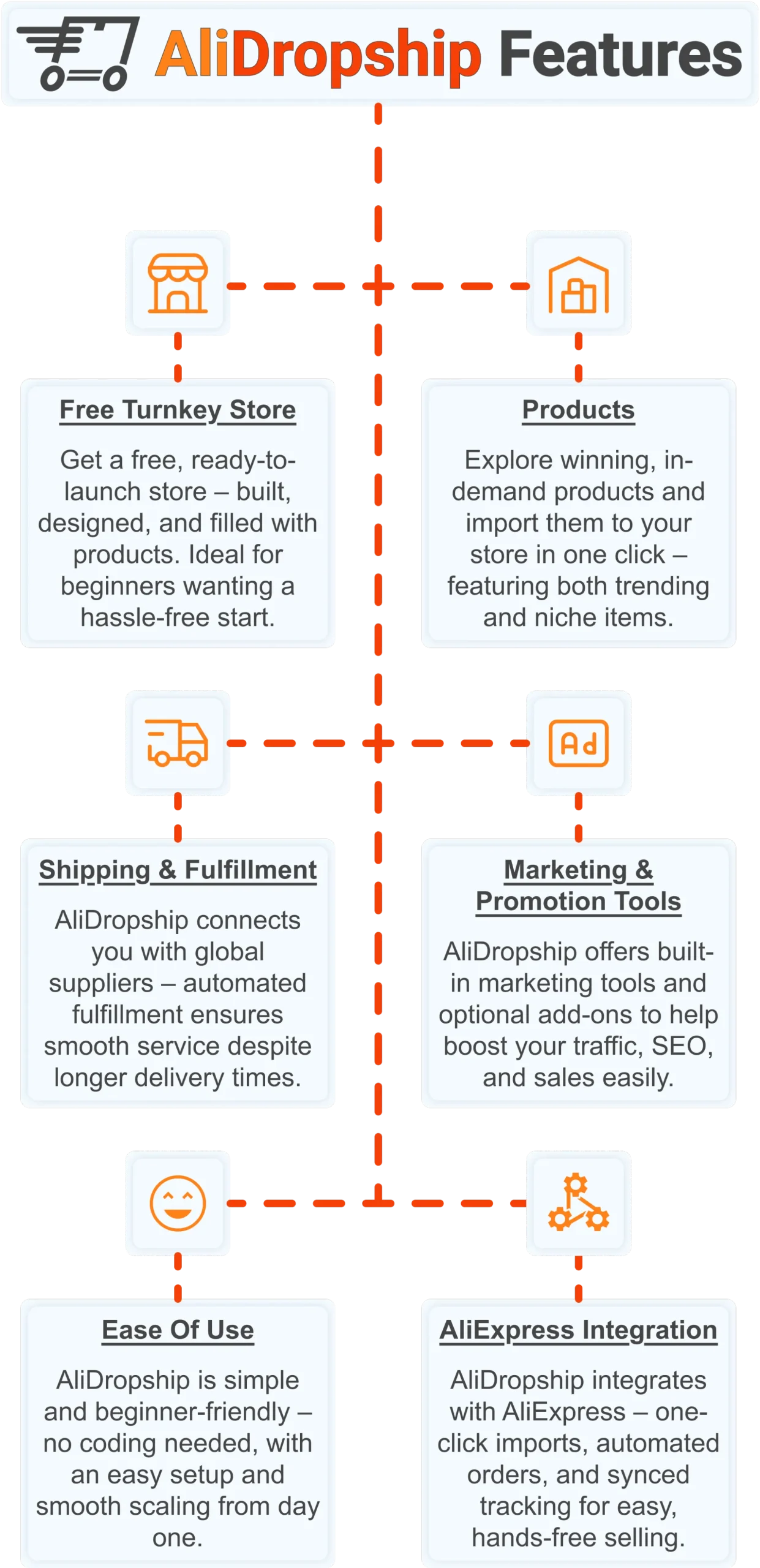
Get a free turnkey store – built, designed, and filled with products. Ideal for beginners wanting a hassle-free start, the store comes fully optimized to attract customers right away, saving you time on setup. Plus, it includes professional design elements to give your business a polished, trustworthy look from day one. This ready-made foundation makes it easy to move seamlessly into product selection.
Products
Once your store is set up, you can explore winning, in-demand products and import them in one click – featuring both trending and niche items. This wide selection lets you cater to diverse customer interests and test what works best. Regular updates ensure you always have fresh products, keeping your store competitive and relevant. With great products in place, smooth shipping becomes the next essential step.
Shipping & fulfillment
AliDropship connects you with global suppliers, and automated fulfillment ensures seamless order processing despite international delivery times. Customers receive real-time tracking updates, which builds confidence and trust in your store. Once shipping is handled reliably, you can focus on promoting your store and attracting traffic.
Marketing & promotion tools
To maximize sales, AliDropship offers built-in marketing tools and optional add-ons that help boost traffic, SEO, and conversions. From email campaigns and discounts to social media integration, these tools empower you to reach and retain customers without needing prior marketing experience. With promotion strategies in place, managing your business becomes simpler and more efficient.
Ease of use
AliDropship is beginner-friendly – no coding needed, with an intuitive dashboard that guides you through every step. Easy setup and smooth scaling let you expand your store without stress. As your business grows, adding new features, products, and marketing campaigns remains hassle-free, giving you more time to focus on sales.
AliExpress integration
Finally, AliDropship integrates seamlessly with AliExpress, enabling one-click imports, automated orders, and synced tracking. Your inventory stays up-to-date with the latest products and prices, while automated order processing frees you from manual tasks. Combined with the turnkey setup, reliable shipping, and built-in marketing tools, this integration ensures your dropshipping business is fully equipped for growth and success.
Frequently Asked Questions
How much does it actually cost to run a Shopify store each month?
A lean starter store on the Basic plan with a free theme, a domain, and a couple of essential apps costs roughly 45 to 65 per month in fixed overhead before advertising. The Basic plan itself runs 39 per month, or around 29 per month on annual billing. A custom domain adds 14 to 20 per year, roughly 1.50 per month. Most beginners also budget 5 to 20 per day for ad spend on Meta or TikTok Ads.
How long does it take to make a first sale with Shopify dropshipping?
Most new Shopify dropshipping stores take 30 to 60 days to generate their first sale. Stores that launch with one product and no paid traffic tend to wait the longest before seeing results. Stores that start with a modest daily ad budget of 5 to 15 dollars and test 3 to 5 products simultaneously find traction much faster. By month three, a store with consistent daily attention should be generating 200 to 800 per month in revenue.
What does the free trial and early pricing look like when starting a Shopify store?
New accounts typically get a 3 day free trial followed by a 1 dollar per month promotional period, often lasting 1 to 3 months, before the chosen plan bills at full price. The store is fully functional for building and testing during the trial, but customers cannot complete purchases until a paid plan is activated. The Basic plan at 39 per month is the right starting point for most beginners, covering unlimited product listings and Shopify Payments access. The Shopify plan at 105 per month adds professional reports and lower card processing rates for growing stores.
How much can a Shopify dropshipping store realistically earn per month?
A part time dropshipping store run by a beginner might generate 200 to 500 per month after 60 to 90 days of consistent effort. Shopify dropshipping overall has an earning potential of 500 to 3000 per month with medium effort. A focused Shopify dropshipping store with a defined niche and modest ad budget can reach 500 to 2000 per month in revenue within 90 days. A well established niche store with tested products and a clear advertising strategy can reach 5000 to 15000 per month.
Does Shopify charge extra fees for using a payment gateway other than Shopify Payments?
Using a non native gateway on the Basic plan adds a 2 percent transaction fee per sale on top of whatever the payment processor charges. Shopify Payments supports credit and debit cards, Apple Pay, Google Pay, and Shop Pay without an extra transaction fee on qualifying plans. Shopify Payments is available in around 20 countries as of 2026, so unsupported countries must connect PayPal, Stripe, or another third party gateway. Over 4.6 million active stores currently run on Shopify as of 2026.
Now that you understand how Shopify works, the next step is taking action – and AliDropship makes that start as simple as it gets. Get your free turnkey store today and start selling without the monthly subscription.
 Previous post
