 ‧ Agnes Kazaryan ‧
March 14, 2026
‧ Agnes Kazaryan ‧
March 14, 2026  438 ‧
438 ‧
 0
0
Most marketing fails not because the product is wrong, but because the message reaches the wrong person at the wrong time. That’s the problem customer segmentation exists to solve. Instead of sending the same ad to everyone and hoping something sticks, you break your audience into smaller, focused groups – and then tailor your approach to each one.
It sounds simple. And in principle it is. But done well, customer segmentation can dramatically improve your conversion rates, cut your ad spend, and help you build the kind of loyal customer base that keeps coming back.
Quick Answer: Customer segmentation is the process of dividing your customer base into distinct groups based on shared characteristics – like age, location, buying behavior, or lifestyle. It lets you target each group more effectively, which leads to higher sales and lower marketing costs.
This guide covers what customer segmentation actually means, the main types you need to know, how to apply it to your dropshipping store, and which tools make the whole process easier in 2026.
What is customer segmentation?
Customer segmentation is the practice of splitting a broad customer base into smaller sub-groups that share specific traits. Those traits could be demographic (age, gender, income), geographic (country, city, neighborhood), behavioral (purchase history, browsing habits), or psychographic (values, interests, lifestyle).
The goal is straightforward: instead of marketing to everyone in the same way, you market to each group in a way that actually resonates with them. A 22-year-old who discovered your store through TikTok needs a very different message than a 45-year-old who found you through Google. Treating them identically is a missed opportunity at best – and a waste of budget at worst.
Customer segmentation is used across the entire business, not just in advertising. It informs product development, pricing strategy, email campaigns, customer service, and even the way you write product descriptions. In ecommerce and dropshipping specifically, it’s one of the most reliable ways to get more out of every dollar you spend.
Why customer segmentation matters for your dropshipping store
When you’re running a dropshipping business, your margins depend heavily on efficiency. You can’t outspend larger competitors – but you can outsmart them by targeting more precisely. That’s where segmentation gives you a real edge.
Here’s a quick comparison of the main business benefits and how impactful they tend to be:
Every one of these benefits compounds over time. The longer you run your store with solid segmentation in place, the more data you collect – and the more precise your targeting becomes.
Important note: Segmentation doesn’t require a massive budget or an enterprise analytics platform. Even basic segmentation – separating first-time visitors from repeat buyers, for example – can meaningfully improve your results.
The four main types of customer segmentation
Most segmentation strategies are built on four core models. You don’t have to use all four at once – especially when you’re starting out. Pick the one that best matches the data you already have, and build from there.
Demographic segmentation
This is the most common starting point. Demographic segmentation divides your audience based on measurable characteristics: age, gender, income level, education, occupation, marital status, and family size.
For a dropshipping store selling home décor, for example, knowing that 70% of your buyers are women aged 28–44 with household incomes above $50,000 tells you a lot. It tells you which platforms to advertise on, what tone to use in your copy, and which products are worth promoting more aggressively.
Demographic data is easy to collect through your store analytics, customer surveys, or ad platform audience insights. It’s a practical first layer of segmentation for any store owner.
Geographic segmentation
Geographic segmentation organizes your customers by where they are – country, state, city, or even neighborhood. For dropshippers, this one is particularly relevant because shipping times, costs, and product demand vary significantly by region.
A customer in the United States expects faster delivery than one in a more remote market. A product trending in Australia might be months away from peaking in Europe. Geographic segmentation lets you respond to those differences instead of ignoring them.
It’s also useful for running location-specific promotions – offering free shipping to a particular region during a slow sales period, for instance, or targeting warm-weather products to customers in summer zones while winter products reach colder ones.
Behavioral segmentation
Behavioral segmentation looks at what customers actually do. Purchase frequency, average order value, products browsed, cart abandonment patterns, response to email campaigns – all of this behavior tells a story about what a customer wants and how close they are to buying.
This is arguably the most actionable type of segmentation for ecommerce stores. Some practical examples:
- Customers who bought once but haven’t returned – target them with a win-back campaign and a discount code
- Customers who abandoned their cart – send a reminder sequence within 24–48 hours
- High-value repeat buyers – give them early access to new products or exclusive loyalty perks
- First-time visitors – introduce your brand story and bestsellers before pitching a sale
Why this works in 2026: Behavioral data is more available than ever – your email platform, ad analytics, and store backend all capture it automatically. The stores that use it win more consistently than those that don’t.
Psychographic segmentation
Psychographic segmentation goes deeper than demographics. Instead of asking “who are they?”, it asks “what do they care about?” Values, hobbies, lifestyle choices, attitudes, and personal identity all play a role here.
This type of segmentation is harder to measure but often produces the strongest emotional connection. A brand selling eco-friendly home products that identifies and speaks directly to environmentally conscious buyers will consistently outperform one that markets the same products to “everyone.”
You can gather psychographic data through post-purchase surveys, social media listening, or by looking closely at what content your customers engage with. Over time, you start to build a clear picture of what your best customers actually believe in – and you can build your messaging around that.
How to build a customer segmentation strategy for your store
Knowing the theory is one thing. Actually building a working segmentation strategy for your dropshipping store is another. Here’s a practical process you can follow, regardless of how much data you currently have.
Step 1 – Collect the right data
Start with what you already have. Your store’s order history, Google Analytics or similar traffic data, email open and click rates, and any ad platform audience reports are all useful starting points.
For customer segmentation analysis, data falls into two categories. Attributes are static characteristics – age, location, language, device type. Events are actions customers have taken – a page visit, a purchase, an email click, a cart abandonment.
Combining both gives you richer segments. Instead of “customers aged 25–34,” you can build segments like “customers aged 25–34 who visited your store on mobile and purchased in the last 30 days.” That’s a group you can speak to with real precision.
Step 2 – Define your segments
Once you have data, look for natural groupings. Are there clusters of customers with similar purchase patterns? Are certain products popular with a specific age group or geography? Do your repeat buyers behave differently from one-time shoppers?
Important: Keep your segments practical. If a segment requires more than three descriptors to define, it’s probably too narrow to be useful. The goal is to create groups large enough to market to effectively.
Step 3 – Tailor your messaging
Each segment you define should get messaging that reflects their specific needs and motivations. This doesn’t mean writing entirely different content from scratch for every email or ad. It means adjusting the angle – the headline, the lead image, the offer – so it resonates with that particular group.
A new visitor gets a trust-building message. A repeat buyer gets a loyalty reward. A cart abandoner gets a gentle nudge with a clear reason to come back. None of these need to be complicated – but each one should feel relevant to the person receiving it.
Step 4 – Test and refine
Segmentation is not a one-time setup. Your customer base changes, buying patterns shift, and new segments emerge as your store grows. Build in regular checkpoints – every 60–90 days is a reasonable cadence – to review which segments are performing and which need adjusting.
Pro Tip: Start with behavioral segmentation if you’re overwhelmed by options. Separating active buyers from lapsed ones is a simple, high-impact first step that almost any store can implement immediately.
Customer segmentation tools worth knowing in 2026
You don’t need expensive enterprise software to run effective customer segmentation. The tools most dropshippers already use have segmentation features built in – you just need to know where to look.
Email marketing platforms
Tools like Klaviyo, Mailchimp, and Omnisend all support list segmentation natively. You can segment by purchase history, engagement level, location, and more. Klaviyo in particular is well-regarded in the ecommerce community for its depth of behavioral segmentation options – it connects directly with WooCommerce and Shopify stores and updates segments in real time.
Google Analytics and ad platforms
Google Analytics 4 (GA4) lets you build audience segments based on behavior, traffic source, device, and custom events. These segments can then be imported into Google Ads for more targeted campaigns. Facebook and TikTok ad platforms offer similar audience-building tools, including lookalike audiences built from your best existing customer segments.
AI-assisted segmentation
AI-based tools are increasingly accessible to small store owners in 2026. Platforms like Klaviyo and some Shopify apps use machine learning to automatically identify high-value customers, predict churn risk, and recommend segment-specific offers. You don’t need to understand the algorithm – you just need to act on what it surfaces.
Important note: No tool does the thinking for you. The value of any segmentation platform depends on how clearly you’ve defined what you’re trying to learn about your customers. Start with a question – “who are my most loyal buyers?” – and let the tool help you answer it.
Common customer segmentation mistakes to avoid
Segmentation done poorly can waste just as much time and money as no segmentation at all. Here are the mistakes that trip up most store owners – and how to avoid them.
Making segments too narrow
The more specific a segment, the smaller its audience. If you over-segment, you end up with groups too small to market to efficiently. As a rule of thumb: if a segment needs more than three characteristics to define it, simplify it. Focus on the two or three traits that matter most.
Collecting data but not using it
Many store owners have access to rich behavioral data through their email platform or store analytics – and never look at it. Data only creates value when it changes how you act. Schedule a regular review of your segmentation performance and make sure what you’re learning is informing your actual campaigns.
Treating segmentation as a one-time task
Customer behavior changes. What worked six months ago may not reflect how your audience behaves today. Build segmentation into an ongoing process, not a one-off setup. Check in every quarter, update your segments as needed, and retire ones that are no longer relevant.
Ignoring smaller high-value segments
It’s tempting to focus only on your biggest customer group. But smaller segments – like VIP repeat buyers who spend 3–5x more than average – often deserve their own dedicated strategy. A small, high-spending segment can contribute a disproportionate share of your revenue if you treat them right.
Final thoughts – choosing the right approach for your store
Customer segmentation isn’t a tactic reserved for big brands with large marketing teams. It’s a practical framework any dropshipper can use – regardless of budget or technical skill – to spend smarter, sell more, and build a more loyal customer base.
The right approach depends on where you are in your business journey:
- Complete beginner: Start with geographic and demographic segmentation. Use the data your store already captures – country, device type, order history – to create basic audience groups. Even splitting your email list into “new subscribers” and “past buyers” is a meaningful first step.
- Intermediate / part-time store owner: Layer in behavioral segmentation. Set up automated email flows for cart abandoners, lapsed customers, and repeat buyers. Use your email platform’s built-in segmentation tools to personalize each sequence.
- Advanced / full-time dropshipper: Add psychographic segmentation and explore AI-assisted tools. Run segment-specific ad campaigns on Facebook and TikTok, build lookalike audiences from your highest-value customer segments, and review your segmentation data quarterly to refine your targeting as your store scales.
Start simple. Build on what works. Your customer base will tell you what it needs – you just have to listen to the data.
AliDropship: Your complete all-in-one solution for starting dropshipping in 2026
If you want the simplest possible way to start dropshipping – especially if you’re brand new – AliDropship remains one of the most beginner-friendly tools available in 2026. It brings together store creation, product imports, automation, and marketing into a single streamlined system designed to help you launch quickly and grow confidently.
Free turnkey store ️
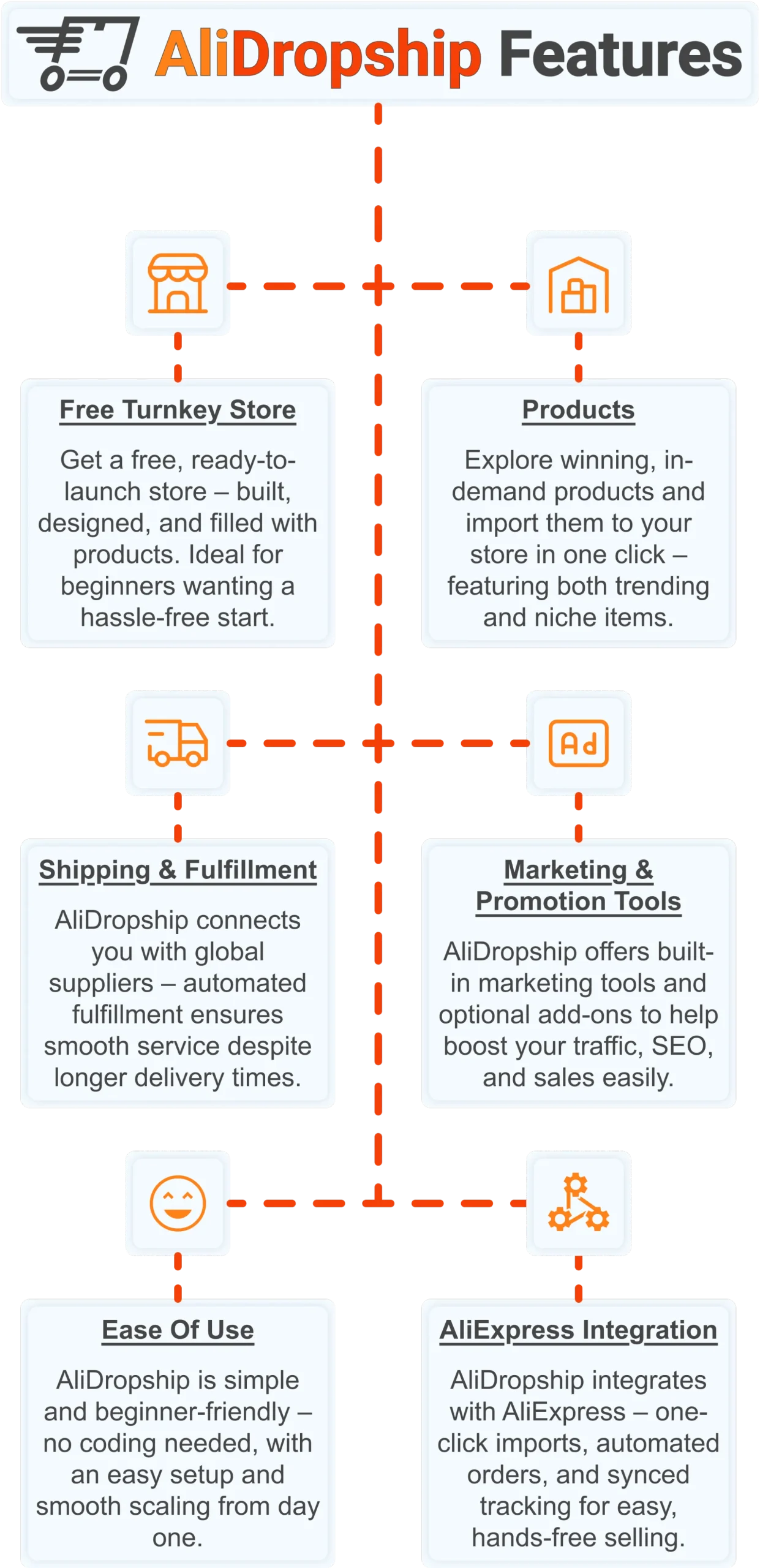
Get a free turnkey store – built, designed, and filled with products. Ideal for beginners wanting a hassle-free start, the store comes fully optimized to attract customers right away, saving you time on setup. Plus, it includes professional design elements to give your business a polished, trustworthy look from day one. This ready-made foundation makes it easy to move seamlessly into product selection.
Products
Once your store is set up, you can explore winning, in-demand products and import them in one click – featuring both trending and niche items. This wide selection lets you cater to diverse customer interests and test what works best. Regular updates ensure you always have fresh products, keeping your store competitive and relevant. With great products in place, smooth shipping becomes the next essential step.
Shipping & fulfillment
AliDropship connects you with global suppliers, and automated fulfillment ensures seamless order processing despite international delivery times. Customers receive real-time tracking updates, which builds confidence and trust in your store. Once shipping is handled reliably, you can focus on promoting your store and attracting traffic.
Marketing & promotion tools
To maximize sales, AliDropship offers built-in marketing tools and optional add-ons that help boost traffic, SEO, and conversions. From email campaigns and discounts to social media integration, these tools empower you to reach and retain customers without needing prior marketing experience. With promotion strategies in place, managing your business becomes simpler and more efficient.
Ease of use
AliDropship is beginner-friendly – no coding needed, with an intuitive dashboard that guides you through every step. Easy setup and smooth scaling let you expand your store without stress. As your business grows, adding new features, products, and marketing campaigns remains hassle-free, giving you more time to focus on sales.
AliExpress integration
Finally, AliDropship integrates seamlessly with AliExpress, enabling one-click imports, automated orders, and synced tracking. Your inventory stays up-to-date with the latest products and prices, while automated order processing frees you from manual tasks. Combined with the turnkey setup, reliable shipping, and built-in marketing tools, this integration ensures your dropshipping business is fully equipped for growth and success.
Customer segmentation is one of the most effective ways to grow a dropshipping store – and AliDropship gives you the platform to act on everything you learn about your audience. Claim your free store and $100 voucher to get started today.
Frequently asked questions
What is customer segmentation and why does it matter?
Customer segmentation is the practice of dividing a broad customer base into smaller groups that share traits such as age, location, buying behavior, or lifestyle. Instead of sending the same message to everyone, a store can tailor its approach to each group and get more out of every dollar spent. A 22 year old customer who found a store through TikTok needs a different message than a 45 year old who arrived through Google. This targeted approach touches product development, pricing, email campaigns, and customer service across the entire business.
What are the four main types of customer segmentation?
The four core models are demographic, geographic, behavioral, and psychographic segmentation. Demographic segmentation groups customers by traits such as age, gender, income, and occupation, and for a home decor store this might reveal that 70 percent of buyers are women aged 28 to 44. Geographic segmentation accounts for differences in shipping times and product demand across regions, while behavioral segmentation tracks actions such as cart abandonment or purchase frequency. Psychographic segmentation goes deeper, focusing on values and lifestyle choices rather than measurable characteristics alone.
How do you build a customer segmentation strategy for a dropshipping store?
The process starts with collecting existing data from order history, Google Analytics, email open rates, and ad platform reports. Attributes such as age or device type get combined with events such as a purchase or cart abandonment to create more precise segments. A segment that needs more than three descriptors to define is usually too narrow to be useful. Most stores benefit from reviewing their segments every 60 to 90 days to see what is working and what needs adjusting.
Which tools help small stores with customer segmentation?
Email marketing platforms such as Klaviyo, Mailchimp, and Omnisend support list segmentation by purchase history, engagement level, and location. Google Analytics 4 lets store owners build audience segments based on behavior and traffic source, which can then feed directly into Google Ads campaigns. Facebook and TikTok ad platforms offer similar tools, including lookalike audiences built from the best existing customers of a store. AI-assisted tools increasingly help identify high-value customers and predict churn risk without requiring the owner to understand the underlying algorithm.
What mistakes should store owners avoid with customer segmentation?
Segments that require more than three descriptors to define are usually too narrow to market to effectively. Collecting behavioral data through an email platform or store analytics only creates value once it actually changes campaign decisions. Treating segmentation as a one-time task is a common error, since customer behavior shifts and segments should be reviewed every quarter. Smaller high-value segments, such as repeat buyers who spend 3 to 5 times more than average, often deserve their own dedicated strategy.
 Previous post
