 ‧ Agnes Kazaryan ‧
March 15, 2026
‧ Agnes Kazaryan ‧
March 15, 2026  786 ‧
786 ‧
 0
0
Millions of people Google “how to make money from a website” every month. Most of them end up on listicles stuffed with vague advice and zero real numbers. This article is different. Whether you already have a site or you’re starting from scratch, here’s an honest, practical breakdown of what actually works in 2026 – what each method pays, how long it takes, and which one fits where you are right now.
Quick answer: You can make money from a website through display advertising, affiliate marketing, selling digital or physical products, sponsored content, and subscription models. Most beginners earn $30–$80/month within 60–90 days of consistent effort. Full-time income typically takes 12–24 months.
The good news is that you don’t need to pick just one method. Most successful site owners layer two or three income streams together. That’s what turns a hobby website into a real business – and the roadmap below shows you exactly how to do it.
What is website monetization?
Website monetization is the process of turning your site’s content and traffic into consistent revenue. It sounds simple enough, but it covers a surprisingly wide range of approaches – from placing ads and earning affiliate commissions, to running a full ecommerce store alongside your existing content.
In 2026, knowing how to make money from a website matters more than it ever did. Content competition has intensified, readers have higher expectations, and Google’s algorithm rewards depth and trust above almost everything else. But the flip side is just as true: the tools available to independent website owners have never been more accessible or affordable.
You don’t need a developer or a media team. You don’t need a big budget. What you do need is a clear strategy – one that matches your niche, your audience size, and the amount of time you’re prepared to invest. Some methods reward high traffic. Others perform brilliantly with a small but targeted readership. And some – like running a dropshipping store – can generate meaningful income without massive traffic at all.
How much can you realistically earn from a website?
Let’s get into real numbers. The table below covers the most common monetization methods, how much work each one requires, and what you can actually expect to earn at different stages.
Advertising is the easiest entry point but pays the least at low traffic volumes. Affiliate marketing and ecommerce offer the best scalability. A membership model delivers predictable recurring income but requires a genuinely engaged audience to work.
One note on the ceiling figures: The high-end numbers above represent established sites with solid traffic, an optimised funnel, and months of iteration behind them. If you’re starting out, set your sights on $30–$80/month in the first 60–90 days, then build from there. The ceiling is real – but it takes time to reach it.
Advertising-based ways to make money from a website
Display advertising (Google AdSense, Ezoic, Mediavine)
Display ads are the most accessible way to earn money from a website – no product, no complex setup. You sign up with an ad network, place a small code snippet on your site, and the network serves relevant ads to your visitors. You earn every time someone views or clicks.
Google AdSense is the standard starting point. It accepts most content sites and pays per click or per thousand impressions. For sites with 10,000+ monthly sessions, networks like Ezoic and Mediavine offer significantly higher payouts – sometimes 3–5x what AdSense delivers for the same traffic. The jump is worth chasing once you hit that threshold.
Earning potential: $5–$50/month on low-traffic sites; $500–$5,000+/month with 100,000+ monthly pageviews.
Why this works in 2026: Programmatic ad technology keeps improving, meaning networks can serve higher-value, more relevant ads even on smaller niche sites – so your RPM climbs as your content matures.
Native advertising and sponsored placements
Native advertising integrates promotional content directly into your editorial flow – think “recommended articles” or “partner posts” that blend naturally with your content. Networks like Taboola and Outbrain connect publishers with advertisers for this type of placement and pay on a cost-per-click basis.
For smaller sites that don’t yet qualify for premium ad networks, native ads are a solid supplementary option. They work best on content-heavy sites with strong engagement, where readers are already in browse mode.
Earning potential: $20–$200/month for mid-sized content sites, depending on niche and click-through rates.
Affiliate marketing as a website income stream
How affiliate marketing works
Affiliate marketing is one of the most scalable ways to make money from a website. You partner with a brand or retailer, get a unique tracking link, and earn a commission every time a reader clicks through and makes a purchase. The commission comes from the merchant – your reader pays nothing extra.
Amazon Associates is the most common starting point, paying 1–10% depending on product category. Dedicated affiliate networks like ShareASale, Impact, and CJ Affiliate connect you with hundreds of brands across every niche – many paying 10–30% commissions on digital products and software. A well-written review or comparison post can keep generating commissions for years after it’s published.
Earning potential: $50–$500/month for beginners with growing traffic; $3,000–$10,000+/month for established content sites targeting commercial search intent.
How to build an affiliate site that actually converts
Successful affiliate content is built around what people search right before buying – “best X for Y”, “X vs Y”, “does X work?”. These buyer-intent queries convert far better than broad informational content.
To get started: pick a niche you understand, identify 20–50 product-focused keywords, write honest in-depth reviews, and apply to the relevant affiliate programmes. Organic traffic takes 3–6 months to build through SEO, so consistency in publishing is what separates sites that earn from those that don’t.
Pro tip: Don’t apply to every affiliate programme at once. Start with one or two that match your niche closely, build a track record of conversions, then expand.
Selling digital products from your website
What counts as a digital product
Digital products – ebooks, templates, online courses, stock photos, spreadsheet tools, Notion dashboards – are one of the best passive income options for website owners. You create the product once and it can sell indefinitely with no shipping, no inventory, and near-zero marginal cost per sale.
Platforms like Gumroad, Lemon Squeezy, and Payhip let you sell directly from your own site with a simple checkout embed. For course-based products, Teachable and Thinkific are the go-to options. Selling through your own site means you keep the full customer relationship – no algorithm, no marketplace taking a cut of your margin.
Earning potential: $100–$2,000+/month once your product is validated and you have consistent traffic or an email list behind it.
How to validate your first digital product
Before building a 200-page ebook or full video course, validate demand first. Check your blog comments, relevant Reddit threads, and email replies for questions your audience keeps asking. A $17–$27 template or checklist is a low-commitment product that still generates real revenue – and tells you exactly what your readers will pay for before you invest weeks in something bigger.
Important: A failed $27 product teaches you more about your audience than six months of publishing content alone. Validate small, then scale.
Selling physical products and dropshipping through your website
Adding an ecommerce store to your existing site
If your website already attracts traffic around a specific interest – fitness, home decor, pet care, outdoor gear – adding a store can significantly increase revenue per visitor. Instead of sending readers to Amazon via an affiliate link and earning 3%, you become the seller and keep the full margin.
Dropshipping makes this practical for content site owners with no interest in managing inventory. You list products in your store, a customer orders, and your supplier ships directly to them. You never touch the stock. Profit margins typically run 20–40% depending on niche and supplier.
Earning potential: $200–$3,000+/month with consistent traffic and a well-matched product selection. Niche stores that convert existing blog audiences often see early results within 30–60 days of launching.
Why this works in 2026: Consumer comfort with buying from independent online stores continues to grow. Niche stores that speak directly to a specific audience consistently outperform generic shops on conversion rates – and a content site already has that audience trust built in.
Sponsored content and brand partnerships
How sponsorships work for website owners
Sponsored posts are an underrated income stream for niche websites. A company pays you to publish a review, a roundup mention, or a feature article about their product – typically with a contextual link included. Rates depend on your domain authority, niche relevance, and traffic.
A site with 5,000 monthly visitors in a specialised niche can command $100–$300 per post because the audience is tightly targeted. You don’t need massive traffic – you need the right traffic. A sustainable beauty site with 8,000 loyal readers is more valuable to the right brand than a general lifestyle blog with 50,000 casual ones.
To attract sponsors, put together a simple media kit – a one-page PDF summarising your audience demographics, monthly visits, and social reach – and reach out directly to brands whose products already appear naturally in your content.
Earning potential: $50–$500 per post for niche blogs with 2,000–20,000 monthly sessions; $1,000+/post for established authority sites.
Membership sites and subscription models
Turning free content into premium access
If your site publishes content people genuinely rely on – detailed tutorials, niche research, analysis, or tools – a membership model can create recurring, predictable income. Platforms like Memberful, Patreon, or a simple Stripe integration let you gate premium content behind a monthly fee.
The model works best when there’s a clear reason someone would pay: exclusive content, community access, early releases, or tools not available elsewhere. A $15/month membership with 100 paying members generates $1,500/month – from the same traffic that was previously only producing modest ad revenue.
Earning potential: Scales directly with subscriber count. $500–$5,000+/month is realistic for sites with an established, engaged audience that already trusts your expertise.
Important: A membership only works if your free content is already exceptional. The free stuff is the sales page. If readers aren’t coming back on their own, paid access won’t fix that.
Legal and ethical considerations for website monetization
Making money from a website is completely legitimate – but only if you stay transparent with your audience and follow the rules. A few guardrails are worth knowing before you scale any strategy.
Key principle: Disclose every paid or affiliate relationship clearly and visibly. This is both a legal requirement under FTC guidelines and a basic trust signal your readers will respect.
Affiliate links must be declared – either inline near the link or in a site-wide disclosure statement. Sponsored content must be labelled as such, clearly and upfront. Fake reviews, artificial link schemes, and misleading earnings claims don’t just violate platform terms – they erode the audience trust that makes your site worth anything in the first place.
GDPR and CCPA compliance matters too. If your site collects email addresses or uses ad cookies, you need a privacy policy, a cookie consent banner, and clear opt-in flows for users in the EU and California. Tools like Termly or iubenda make this affordable and straightforward to implement.
On the content side: never copy competitor articles, inflate traffic stats in a media kit, or accept sponsorships for products you haven’t genuinely tested. These shortcuts damage your domain reputation and, eventually, your search rankings.
What to do instead: build slowly, cite real sources, write honest reviews, and only promote what you’d actually recommend to a friend. This approach takes longer – but it compounds reliably and survives algorithm updates that wipe out sites cutting corners.
How to choose the right method to make money from your website
There’s no single right answer to how to make money from a website. The right method depends entirely on where you are now and where you want to go. Here’s a breakdown by reader profile.
Complete beginner
If your site is new or still building traffic, start with affiliate marketing. It has zero upfront cost, rewards good writing, and teaches you a lot about what your audience actually buys. Apply to Amazon Associates or one niche-specific programme, and focus on writing 10–20 high-quality product review or comparison articles before layering in anything else.
Display ads are fine to add early – AdSense accepts most sites – but don’t expect meaningful income until you’re regularly hitting 5,000–10,000 monthly sessions. Use the ad setup as a learning exercise, not a primary income stream.
Intermediate – part-time focus
If your site already gets consistent traffic and you’re earning something from ads or affiliate links, it’s time to add a second stream. A simple digital product – a template, a swipe file, a focused mini-guide – can convert existing readers without requiring new traffic. Price it modestly ($17–$37), validate demand with a pre-sale or waitlist, then build from there.
This is also the stage where sponsored content becomes realistic. Start reaching out to 2–3 relevant brands per month with a short pitch email and your media kit. One confirmed sponsorship per month pays more than most beginners earn from ads in three months.
Advanced – full-time income goal
At this level, the move that changes your revenue most dramatically is adding ecommerce to your site. You already have the traffic and the audience trust – converting even a fraction of your readers into paying customers through a well-placed product store can double or triple monthly income without requiring a single new piece of content.
Dropshipping is the most practical ecommerce model for content site owners because it requires no inventory investment. With tools like AliDropship, you can have a fully operational store running alongside your existing content site within days.
The websites that build full-time income in 2026 aren’t doing one thing – they’re stacking affiliate revenue, digital products, and ecommerce together into a diversified model that doesn’t collapse when one channel has a slow month. That’s the real long game.
AliDropship: Your complete all-in-one solution for starting dropshipping in 2026
If you want the simplest possible way to start dropshipping – especially if you’re brand new – AliDropship remains one of the most beginner-friendly tools available in 2026. It brings together store creation, product imports, automation, and marketing into a single streamlined system designed to help you launch quickly and grow confidently.
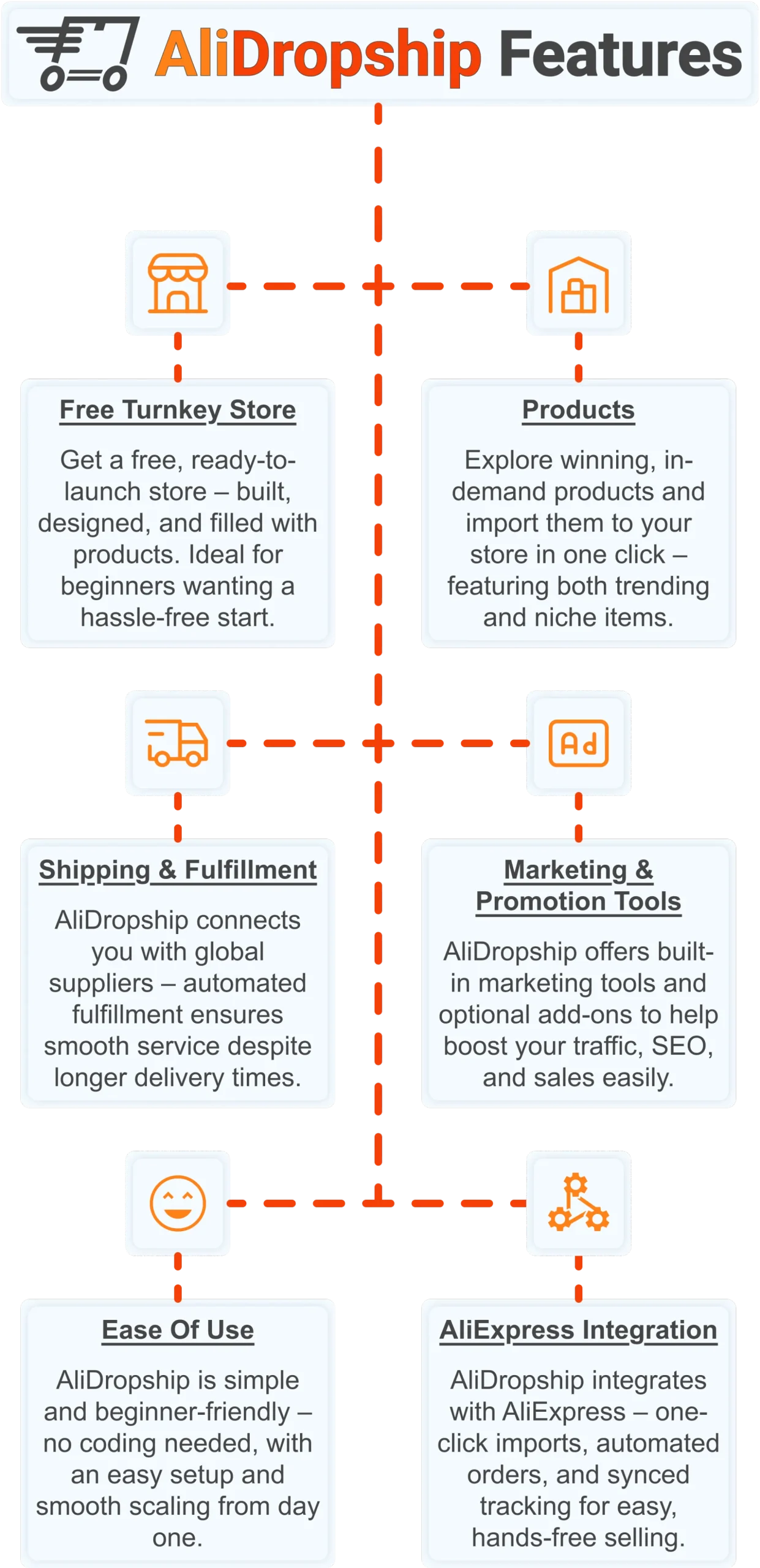
Free turnkey store ️
Get a free turnkey store – built, designed, and filled with products. Ideal for beginners wanting a hassle-free start, the store comes fully optimized to attract customers right away, saving you time on setup. Plus, it includes professional design elements to give your business a polished, trustworthy look from day one. This ready-made foundation makes it easy to move seamlessly into product selection.
Products
Once your store is set up, you can explore winning, in-demand products and import them in one click – featuring both trending and niche items. This wide selection lets you cater to diverse customer interests and test what works best. Regular updates ensure you always have fresh products, keeping your store competitive and relevant. With great products in place, smooth shipping becomes the next essential step.
Shipping & fulfillment
AliDropship connects you with global suppliers, and automated fulfillment ensures seamless order processing despite international delivery times. Customers receive real-time tracking updates, which builds confidence and trust in your store. Once shipping is handled reliably, you can focus on promoting your store and attracting traffic.
Marketing & promotion tools
To maximize sales, AliDropship offers built-in marketing tools and optional add-ons that help boost traffic, SEO, and conversions. From email campaigns and discounts to social media integration, these tools empower you to reach and retain customers without needing prior marketing experience. With promotion strategies in place, managing your business becomes simpler and more efficient.
Ease of use
AliDropship is beginner-friendly – no coding needed, with an intuitive dashboard that guides you through every step. Easy setup and smooth scaling let you expand your store without stress. As your business grows, adding new features, products, and marketing campaigns remains hassle-free, giving you more time to focus on sales.
AliExpress integration
Finally, AliDropship integrates seamlessly with AliExpress, enabling one-click imports, automated orders, and synced tracking. Your inventory stays up-to-date with the latest products and prices, while automated order processing frees you from manual tasks. Combined with the turnkey setup, reliable shipping, and built-in marketing tools, this integration ensures your dropshipping business is fully equipped for growth and success.
If you’re serious about learning how to make money from a website, adding a dropshipping store is one of the highest-leverage moves you can make in 2026. Claim your free turnkey store and start selling today.
Frequently asked questions
How can you make money from a website in 2026?
You can make money from a website through display advertising, affiliate marketing, selling digital or physical products, sponsored content, and subscription models. Most beginners earn 30 to 80 dollars a month within 60 to 90 days of consistent effort, with full time income typically taking 12 to 24 months. Most successful site owners layer two or three income streams together rather than relying on just one. Some methods reward high traffic, while others, like running a dropshipping store, can generate meaningful income without massive traffic.
How much can display advertising and affiliate marketing earn from a website?
Display advertising typically earns 5 to 50 dollars a month on low traffic sites, rising to 500 to 5000 dollars or more monthly with 100000 or more monthly pageviews. Networks like Ezoic and Mediavine can pay 3 to 5 times what AdSense delivers for the same traffic once a site reaches 10000 or more monthly sessions. Affiliate marketing tends to earn more per visitor, generating 50 to 500 dollars a month for beginners and 3000 to 10000 dollars or more monthly for established content sites. Amazon Associates typically pays 1 to 10 percent commission, while dedicated networks like ShareASale can pay 10 to 30 percent on digital products and software.
How much can selling digital or physical products earn from a website?
Selling digital products such as ebooks, templates, or online courses can generate 100 to 2000 dollars or more a month once a product is validated and paired with consistent traffic or an email list. A 17 to 27 dollar template or checklist is often used as a low commitment product to test what an audience will actually pay for. Adding a dropshipping store to an existing content site can generate 200 to 3000 dollars or more a month with consistent traffic and a well matched product selection, and profit margins typically run 20 to 40 percent. Niche stores that convert existing blog audiences often see early results within 30 to 60 days of launching.
How much can sponsored content and membership subscriptions earn from a website?
Sponsored content typically pays 50 to 500 dollars per post for niche blogs with 2000 to 20000 monthly sessions, rising to 1000 dollars or more per post for established authority sites. A site with 5000 monthly visitors in a specialized niche can command 100 to 300 dollars per post because the audience is tightly targeted. Membership models scale directly with subscriber count, with 500 to 5000 dollars or more a month realistic for sites with an established, engaged audience. A 15 dollar a month membership with 100 paying members generates 1500 dollars a month from the same traffic that previously only produced modest ad revenue.
What legal rules apply to monetizing a website?
Affiliate links must be declared either inline near the link or in a site wide disclosure statement, and sponsored content must be labelled as such clearly and upfront under FTC guidelines. If a site collects email addresses or uses ad cookies, GDPR and CCPA compliance requires a privacy policy, a cookie consent banner, and clear opt in flows for users in the EU and California. Copying competitor articles, inflating traffic stats in a media kit, or accepting sponsorships for products never actually tested are described as practices that damage domain reputation and search rankings. Tools like Termly or iubenda are mentioned as affordable ways to implement required privacy and cookie consent features.
 Previous post
