 ‧ Agnes Kazaryan ‧
March 16, 2026
‧ Agnes Kazaryan ‧
March 16, 2026  845 ‧
845 ‧
 0
0
Most people searching for assets that make money are really asking one question: how do I stop trading every hour of my day for income? The honest answer is that no single asset fixes that overnight – but the right combination, built consistently over 60–90 days, can change what your finances look like by the end of the year.
Quick answer: Assets that make money include dividend stocks, rental properties, REITs, ecommerce stores, digital products, content channels, and bonds. The best choice depends on your starting capital, available time, and income goals – most people build two or three together for a diversified income base.
This guide covers the most accessible income-generating assets available in 2026, what each one realistically earns, and how to get started without overselling what is possible. Figures are based on what real people report across communities like Reddit and Trustpilot – not best-case projections.
What are assets that make money?
An asset that makes money is anything you own or control that generates income over time – actively, passively, or somewhere in between. In personal finance these are often called income-generating assets or cash-flowing assets. The key word is generate: the asset does the work, not just your hours.
In 2026, the definition has expanded well beyond stocks and real estate. Digital assets – ecommerce stores, content channels, online courses, digital product libraries – have become legitimate income vehicles for people who never had access to traditional investment capital. You do not need $100,000 to start. Some of the most scalable assets today can be launched for under $100.
The core categories break down into three groups: financial assets (stocks, bonds, REITs), physical assets (rental property), and digital assets (online stores, content, intellectual property). Each carries a different risk profile, startup cost, and time commitment. Most financially independent people own a mix across all three.
How much can you realistically earn from income-generating assets?
This is the question most guides dodge, so let us address it directly. Earning potential varies enormously by asset type, starting capital, and how much active effort you put in. The table below gives you a realistic comparison based on what people actually report – not ceiling figures from exceptional cases.
The ranges above reflect realistic outcomes for people operating at a part-time to full-time effort level. A dividend portfolio earning $500/month typically requires $150,000 or more invested. An ecommerce store can reach similar numbers with a fraction of the capital – but it requires active effort in the first 60–90 days.
One note on ceiling figures: The high-end numbers in the table assume consistent effort, smart selection, and time in the game. No income-generating asset delivers results on autopilot from day one. Most people find the best results by combining one financial asset with one digital asset for a diversified income base.
Financial assets that generate income
Dividend stocks
Dividend stocks are shares in companies that pay out a portion of their profits to shareholders on a regular schedule – usually quarterly. They are one of the oldest and most reliable assets that make money for people with capital to invest. Blue-chip dividend payers like Johnson & Johnson, Coca-Cola, and Realty Income have paid consistent dividends for decades.
The yield on most dividend stocks sits between 2% and 6% annually. On a $50,000 portfolio, that translates to $1,000–$3,000 per year – roughly $83–$250 per month. Not life-changing on its own, but compounded over 10–20 years it becomes a serious income engine.
To get started, open a brokerage account with a low-fee platform like Fidelity or Schwab, research dividend aristocrats – companies that have raised their dividend every year for 25 or more consecutive years – and build a diversified portfolio across sectors. Reinvesting dividends early dramatically accelerates growth.
Earning potential: $50–$500/month on $20,000–$100,000 invested, growing with reinvestment over time.
Real estate investment trusts (REITs)
REITs let you invest in real estate without buying a property. They are companies that own income-producing real estate – shopping centers, apartment buildings, data centers, medical facilities – and are legally required to distribute at least 90% of their taxable income as dividends. That makes them one of the most consistent passive income assets available on the public market.
You can buy REITs through any standard brokerage account, just like a stock. Yields are typically higher than standard dividend stocks, often between 4% and 8%. The tradeoff is that REITs are sensitive to interest rate movements, so their market value can fluctuate more than you might expect from a pure income asset.
For a simple starting point, look at REIT ETFs like VNQ from Vanguard for diversified exposure, or research individual REITs by sector. Healthcare and industrial REITs have performed strongly in recent years due to aging demographics and ongoing ecommerce logistics demand.
Earning potential: $30–$400/month on $10,000–$50,000 invested, with reinvestment accelerating returns over time.
Rental property
Rental property is still one of the most reliable long-term assets that make money, especially in markets with strong tenant demand. A well-managed single-family rental or small multi-unit property can generate $300–$1,500 per month in net cash flow after mortgage, taxes, insurance, and maintenance costs.
The barrier to entry is higher than other assets on this list – expect a 20–25% down payment on an investment property, plus closing costs and cash reserves. However, leverage works in your favour here: you are building equity with a mortgage while a tenant covers the bulk of the payment. Over 10–20 years, rental property combines cash flow with appreciation in a way few other assets can match.
To get started, research rental markets using tools like Zillow or Mashvisor. Focus on cap rate (net operating income divided by purchase price) and cash-on-cash return rather than just appreciation potential. House hacking – renting out a room or unit in a property you also live in – is a popular low-barrier entry strategy for first-time investors.
Earning potential: $300–$1,500/month net per property, varying significantly by market, property type, and financing terms.
Bonds and fixed-income assets
Bonds are loans you make to a government or corporation in exchange for regular interest payments. They sit at the lower-risk, lower-reward end of the income asset spectrum – predictable, stable, and useful as a ballast in a diversified portfolio.
In 2026, with interest rates having moved significantly from the near-zero environment of the 2010s, bond yields are meaningfully more attractive than they were for the previous decade. US Treasury bonds, I-bonds, and investment-grade corporate bonds are the most commonly used options. For yield-seeking investors, high-yield bonds offer more income but carry higher default risk.
High-yield savings accounts (HYSAs) belong in this category too. Many online banks currently offer 4.5–5% APY – a practical holding vehicle for capital you want to keep liquid while still generating a return.
Earning potential: $20–$300/month on $5,000–$50,000 invested, depending on bond type and the current rate environment.
Digital assets that generate income
Ecommerce and dropshipping stores
An ecommerce store is one of the most accessible assets that make money in 2026 – you do not need significant capital, a warehouse, or a technical background to get started. Dropshipping removes the need to hold inventory entirely: you sell products online, and a supplier handles storage and shipping. Your job is to build the store, market the products, and manage customer relationships.
The business model has matured significantly. Platforms like AliDropship make it possible to launch a fully functional, product-loaded store in a fraction of the time it once required. Realistic earnings for a focused beginner sit at $30–$80 per day within the first 60–90 days, scaling to $500–$3,000 per month for sellers who commit to consistent marketing and product optimisation.
To get started, choose a niche with consistent demand, import winning products, and drive traffic through paid social or organic SEO. The upfront time investment is higher than a passive financial asset – but so is the ceiling.
Why this works in 2026: Global ecommerce continues to grow year over year. Low startup costs, no inventory risk, and automation tools make dropshipping one of the most accessible income-generating assets for anyone starting from scratch.
Earning potential: $500–$5,000/month within 60–90 days of launch with consistent effort and smart product selection.
Digital products
Digital products – ebooks, templates, courses, Notion dashboards, spreadsheets, Lightroom presets – are among the highest-margin assets you can create. You make them once and sell them repeatedly with no manufacturing cost and near-zero delivery overhead. Every sale after your initial time investment is close to pure profit.
The challenge is distribution. Without an existing audience, selling digital products requires SEO, paid advertising, or a platform like Etsy, Gumroad, or a dedicated storefront. The best sellers combine a small focused catalog with consistent content marketing to drive organic traffic over time.
To get started, identify a specific problem you can solve for a defined audience. Build a minimum viable product – even a 10-page PDF or a single spreadsheet template – and test demand before building a full catalog. Platforms like Gumroad and Payhip make setup extremely low friction.
Earning potential: $100–$2,000/month, depending heavily on audience size and product quality. Scaling requires either audience growth or advertising spend.
Content channels (YouTube, blogs, podcasts)
A content channel – a YouTube channel, an SEO-driven blog, or a niche podcast – qualifies as an income-generating asset once it reaches monetisation thresholds. The asset is the audience and the archived content, both of which continue to generate traffic and revenue long after individual pieces are published.
The timeline to income is the main friction point. Most YouTube channels take 12–18 months to reach monetisation requirements. Blogs typically take 6–18 months to rank meaningfully in search. This is a long-game asset, not a short-term income strategy.
Once established, revenue comes from multiple streams: ad revenue, affiliate commissions, sponsorships, and owned product sales. Successful content creators often earn $2,000–$10,000+ per month – but the distribution of outcomes is wide. Most channels never reach meaningful monetisation without sustained, consistent effort.
Earning potential: $200–$3,000/month once established, typically 12–24 months after consistent publishing. Best combined with a faster-moving asset while you build.
Legal and ethical considerations when building income assets
Building assets that make money is completely legitimate – but the path matters. There are grey-area tactics in every category that can get you banned, fined, or into legal trouble. Here is what to watch out for, and what to do instead.
Key principle: Every income-generating asset should produce real value for someone – a product, a service, accurate information, or a genuine return on investment. If a model only makes money by extracting value from uninformed people, it is not sustainable and may not be legal.
- Fake reviews. Paying for fake product reviews on Amazon, Google, or Trustpilot violates platform terms of service and, in many jurisdictions, consumer protection law. Build reviews organically through genuine customer service and post-purchase follow-up sequences.
- Misleading income claims. If you build a digital product or course that teaches others to earn money, the FTC requires that income claims be substantiated and representative. Showing screenshots of exceptional earnings without disclosing how rare they are is a compliance risk.
- Copyright infringement in digital products. Selling PLR content you do not have rights to, or repurposing others’ work without permission, exposes you to DMCA claims and platform bans.
- Unlicensed financial advice. Building a content channel around investment topics without appropriate disclaimers – or implying you are a licensed financial advisor when you are not – creates legal exposure. Always include clear disclaimers on any financially oriented content.
Important: Focus on genuine value creation. Choose a product or store niche you understand, create content that actually helps people, and build your reputation on honest communication about what your products or methods deliver.
How to choose the right income-generating asset for your situation
There is no universally best asset. The right one depends on three factors: how much capital you have, how much time you can dedicate, and how quickly you need to see results. Here is a simple breakdown by reader profile.
Complete beginner with limited capital (under $500)
If you are starting from scratch with limited funds, digital assets are your most accessible entry point. An ecommerce or dropshipping store requires minimal upfront investment compared to rental property or a meaningful stock portfolio. Platforms like AliDropship make it possible to launch a fully built, product-loaded store without technical expertise.
Focus your first 60–90 days on learning your store, driving traffic, and understanding which products perform for your audience. Digital products – templates, guides, simple tools – can also be created and listed with almost zero cost using free tools and platforms like Gumroad or Payhip. The challenge there is distribution, so expect to invest time in SEO or social content to drive traffic.
Intermediate earner with some savings ($1,000–$20,000)
At this level, you can start layering financial assets alongside digital ones. A high-yield savings account or a starter position in dividend ETFs provides a low-risk base while you build a more active income stream. A dropshipping store at this stage benefits from a small paid advertising budget – even $10–$20 per day in Facebook or TikTok ads can significantly accelerate your first sales.
Intermediate earners should prioritise assets that compound. Reinvesting dividends, reinvesting ecommerce profits into better marketing, and publishing consistent content all create compounding returns over time that a static savings balance cannot match.
Advanced / full-time income goal ($20,000+ or dedicated time)
If you are targeting $3,000–$10,000+ per month in income from assets, diversification becomes essential. A combination of rental income, a well-run ecommerce store, and a dividend portfolio creates multiple income streams that do not all rise and fall together.
At this level, consider hiring a virtual assistant to manage customer service on your store, a property manager for any rental units, and automating your investment contributions. The most financially independent people at this stage treat their income assets like a business portfolio – regularly reviewing performance, reallocating capital to what is working, and cutting or optimising what is not.
One practical principle that applies at every level: start with one asset, learn it deeply, and only add a second once the first is generating consistent returns. Spreading yourself across five different income streams before any of them is working is one of the most common mistakes new investors and online entrepreneurs make.
Pro Tip: Set a 90-day review date when you launch any new income asset. If it has not generated at least one paying customer or first dividend by then, identify the single biggest bottleneck and fix that before adding anything new.
AliDropship: Your complete all-in-one solution for starting dropshipping in 2026
If you want the simplest possible way to start dropshipping – especially if you are brand new – AliDropship remains one of the most beginner-friendly tools available in 2026. It brings together store creation, product imports, automation, and marketing into a single streamlined system designed to help you launch quickly and grow confidently.
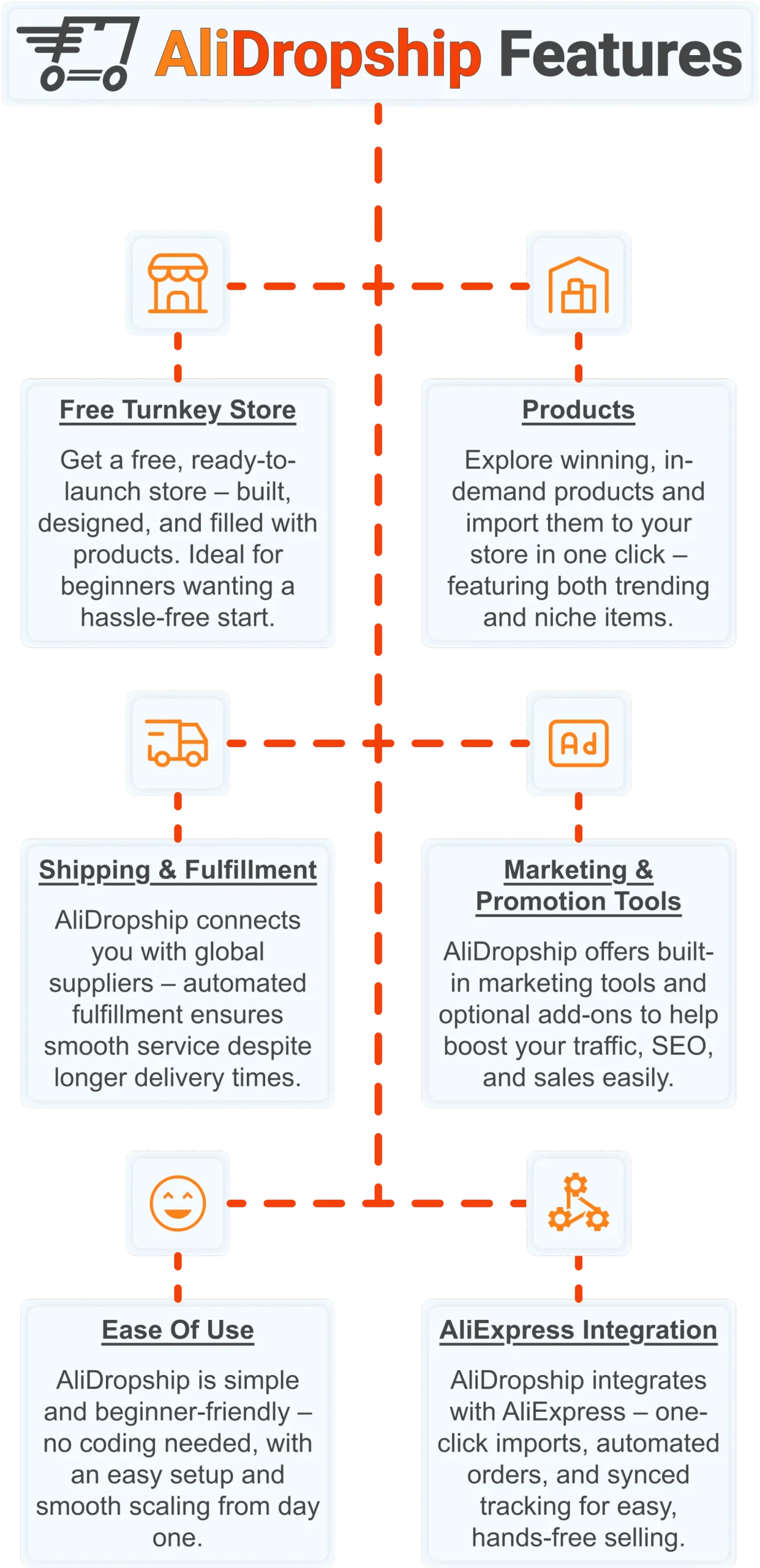
Free turnkey store ️
Get a free turnkey store – built, designed, and filled with products. Ideal for beginners wanting a hassle-free start, the store comes fully optimized to attract customers right away, saving you time on setup. Plus, it includes professional design elements to give your business a polished, trustworthy look from day one. This ready-made foundation makes it easy to move seamlessly into product selection.
Products
Once your store is set up, you can explore winning, in-demand products and import them in one click – featuring both trending and niche items. This wide selection lets you cater to diverse customer interests and test what works best. Regular updates ensure you always have fresh products, keeping your store competitive and relevant. With great products in place, smooth shipping becomes the next essential step.
Shipping & fulfillment
AliDropship connects you with global suppliers, and automated fulfillment ensures seamless order processing despite international delivery times. Customers receive real-time tracking updates, which builds confidence and trust in your store. Once shipping is handled reliably, you can focus on promoting your store and attracting traffic.
Marketing & promotion tools
To maximize sales, AliDropship offers built-in marketing tools and optional add-ons that help boost traffic, SEO, and conversions. From email campaigns and discounts to social media integration, these tools empower you to reach and retain customers without needing prior marketing experience. With promotion strategies in place, managing your business becomes simpler and more efficient.
Ease of use
AliDropship is beginner-friendly – no coding needed, with an intuitive dashboard that guides you through every step. Easy setup and smooth scaling let you expand your store without stress. As your business grows, adding new features, products, and marketing campaigns remains hassle-free, giving you more time to focus on sales.
AliExpress integration
Finally, AliDropship integrates seamlessly with AliExpress, enabling one-click imports, automated orders, and synced tracking. Your inventory stays up-to-date with the latest products and prices, while automated order processing frees you from manual tasks. Combined with the turnkey setup, reliable shipping, and built-in marketing tools, this integration ensures your dropshipping business is fully equipped for growth and success.
An ecommerce store built on AliDropship is one of the most accessible assets that make money in 2026 – no inventory, no coding, and a free store to get you started. Claim your free turnkey store and start building an asset that earns today.
Frequently Asked Questions
What are the best assets that make money in 2026?
Assets that make money include dividend stocks, rental properties, REITs, ecommerce stores, digital products, content channels, and bonds. Most people build two or three of these together for a diversified income base rather than relying on just one. Some digital assets can be launched for under 100 dollars, while traditional investment assets often require significant starting capital. The right choice depends on available capital, time, and income goals.
How much income can dividend stocks realistically generate?
Dividend stocks typically yield between 2 and 6 percent annually. On a 50000 dollar portfolio, that translates to 1000 to 3000 dollars per year, or roughly 83 to 250 dollars per month. Reinvesting dividends early and holding for 10 to 20 years significantly accelerates growth into a more meaningful income engine. Blue-chip payers like Johnson and Johnson and Coca-Cola have paid consistent dividends for decades.
What can rental property earn as an income-generating asset?
A well-managed single-family rental or small multi-unit property can generate 300 to 1500 dollars per month in net cash flow after mortgage, taxes, insurance, and maintenance costs. Entry typically requires a 20 to 25 percent down payment plus closing costs and cash reserves. Over 10 to 20 years, rental property combines cash flow with appreciation in a way few other assets can match.
How much can an ecommerce or dropshipping store earn as an asset?
Realistic earnings for a focused beginner sit at 30 to 80 dollars per day within the first 60 to 90 days. This can scale to 500 to 3000 dollars per month for sellers who commit to consistent marketing and product optimization, with some optimized stores reaching up to 5000 dollars per month. Platforms like AliDropship allow a fully functional, product-loaded store to launch in a fraction of the time it once required.
How long does it take for a content channel to become an income-generating asset?
Most YouTube channels take 12 to 18 months to reach monetization requirements, while blogs typically take 6 to 18 months to rank meaningfully in search. Once established, successful content creators often earn 2000 to 10000 dollars or more per month across ad revenue, affiliate commissions, and sponsorships. This makes content channels a long-game asset rather than a short-term income strategy.
 Previous post
