 ‧ Agnes Kazaryan ‧
March 16, 2026
‧ Agnes Kazaryan ‧
March 16, 2026  615 ‧
615 ‧
 0
0
Every time someone buys from an online store, a chain of events kicks off behind the scenes. That chain is called order fulfillment – and whether your store runs smoothly or falls apart depends almost entirely on how well you manage it.
If you are building an ecommerce store for the first time, getting your head around the fulfillment process early saves you from a lot of expensive mistakes later. Get it right and customers stay happy, reviews stay positive, and your store grows. Get it wrong and you are drowning in complaints before you have found your first winning product.
This guide walks through every stage of order fulfillment in plain language, compares the main fulfillment methods, and helps you figure out which approach makes the most sense for where you are right now.
Quick Answer: Order fulfillment is the end-to-end process of receiving, processing, packing, and shipping a customer order. For dropshipping stores, the supplier handles most of this automatically – meaning you can run a fully functional ecommerce business without ever touching a product.
What is order fulfillment?
Order fulfillment covers everything that happens between a customer clicking “buy” and the package arriving at their door. That includes inventory storage, order processing, picking and packing, dispatch, shipment tracking, and handling any returns or issues that follow.
In a traditional retail model, the seller manages most of this in-house – renting warehouse space, buying stock upfront, and physically packing and posting every order. In a dropshipping model, the supplier takes on the physical work while you focus on the parts of the business that actually require your attention: marketing, product selection, and customer experience.
In 2026, ecommerce fulfillment has become more automated and more accessible than it has ever been. Tools that once required warehouse software and full-time logistics staff are now built into beginner-friendly platforms. That is exactly why so many people are launching online stores today rather than waiting for some perfect moment that never arrives.
Why this works in 2026: Fulfillment speed and accuracy are among the top reasons customers leave reviews – positive or negative. A store that ships reliably builds repeat buyers. A store that loses orders or ships late loses them permanently.
How much can you realistically earn with a well-run store?
Fulfillment efficiency has a direct effect on your profit margin and how far your store can scale. A store with automated order fulfillment can handle 10 orders or 1,000 orders without you working extra hours. That is the core financial argument for getting this right early – not as an afterthought once things start going wrong.
Here is how earning potential typically breaks down across the three main ecommerce approaches:
Self-fulfillment works at very small scale but breaks down fast as volume increases. Third-party logistics gives you room to grow but comes with upfront costs and complexity. Automated dropshipping fulfillment has the lowest barrier to entry and the most flexible ceiling – especially for new sellers with limited capital.
One note on these figures: The ranges above reflect realistic outcomes for sellers who are consistent with marketing and product selection. Full-time results typically take 60–90 days of focused effort. These are benchmarks, not guarantees.
The order fulfillment process: Step by step
Whether you are handling fulfillment yourself or running a fully automated dropshipping operation, the same core stages apply. Understanding each one helps you spot where problems are most likely to happen – and where automation saves the most time.
Stage 1: Receiving inventory or connecting your supplier
In a traditional model, receiving inventory means physically accepting stock, checking quantities against purchase orders, and logging items into your system. If you work with a 3PL warehouse, they handle the physical receipt on your behalf – but you still need to coordinate shipments and reconcile counts. Errors at this stage ripple through every order that follows.
With dropshipping, you skip the inventory stage entirely. Your store connects directly to a supplier who holds the stock. When a customer orders, the supplier ships it. There is no warehouse, no stock count, and no receiving involved. This structural advantage is one of the biggest reasons dropshipping remains one of the most accessible ecommerce models for beginners in 2026.
Stage 2: Order processing
Order processing covers everything that happens the moment a customer completes a purchase: confirming payment, logging the order, notifying the supplier or warehouse, and preparing for dispatch. In a manual setup, this can take 15–30 minutes per order. In an automated dropshipping setup, it happens in seconds without you lifting a finger.
The most common mistakes at this stage include duplicate orders sent to suppliers, payment confirmation delays that hold up dispatch, and address errors that only surface after the package has shipped. Using an automated platform that flags anomalies before dispatch eliminates most of these problems before they start.
Stage 3: Picking, packing, and shipping
If you are shipping orders yourself, picking and packing is where your time goes. At low volumes – 5 to 10 orders a day – it is manageable. Beyond that, the repetitive physical work becomes a ceiling. Many self-fulfilling sellers hit a hard limit around $30–$50/day simply because there are not enough hours to pack more orders. Add packaging materials, label printing, and carrier drop-offs, and the true time cost per order can exceed 20 minutes.
In a dropshipping model, your supplier picks, packs, and ships every order. Your only involvement is confirming the order is correct before it goes out – and even that step can be automated. Global suppliers connected through platforms like AliDropship offer tracked international shipping, with customers receiving real-time updates on their delivery status. You never touch the product, but your customer gets a professional, tracked experience.
Important: International shipping from suppliers typically takes 7–20 days. Set clear delivery expectations on your product pages to pre-empt customer complaints before they arrive.
Stage 4: Returns and customer service
Returns are a part of ecommerce fulfillment that most new sellers underestimate. A clear, written returns policy – published before your first sale – prevents disputes and builds buyer confidence. For dropshipping sellers, coordinate your policy with your supplier’s terms. Most AliExpress-connected suppliers handle defective item replacements directly, which reduces your workload significantly.
Shipping confirmation emails, tracking number delivery, and order status updates are all automatable. Customers who receive proactive updates are far less likely to open disputes or request refunds. Most ecommerce platforms include basic post-purchase email flows. Use them from your first sale, not after your first complaint.
Fulfillment methods compared: Which one fits your situation?
Choosing the right fulfillment method is less about what is objectively best and more about what fits your current resources, goals, and timeline. Here is a side-by-side look at the three main options:
If you are starting out without capital to invest in stock or warehouse space, dropshipping fulfillment is the most practical entry point. Once your store is generating consistent revenue, you can layer in faster shipping options or transition to a hybrid model that uses 3PL for your best-selling lines.
How to optimize your order fulfillment process
Choose suppliers with proven shipping records
Your fulfillment reliability is only as good as your supplier’s. Before listing a product, check the supplier’s feedback score, review their average dispatch time, and look for seller ratings above 4.7 with at least a few hundred reviews. A supplier with a 4.9 rating and 2,000+ transactions is a far safer bet than a newer listing offering lower prices. Supplier quality is not just an operations issue – it is directly tied to your review score and repeat purchase rate.
Use fulfillment automation wherever possible
Automation in ecommerce fulfillment covers order routing, payment confirmation, supplier notification, tracking updates, and post-purchase email flows. Platforms like AliDropship connect your WordPress store directly to AliExpress, so orders are processed and forwarded to your supplier without any manual input from you.
At 10 orders a day, this saves you 2–3 hours. At 100 orders a day, it is the difference between a business and a second job.
Set honest delivery expectations upfront
One of the biggest sources of customer dissatisfaction in dropshipping is not slow shipping – it is unexpected slow shipping. If your product page says “ships in 2–4 weeks,” most customers accept that. If it says nothing and the order takes three weeks, you will see disputes. Add a clear shipping timeline to every product page and your customer service workload drops significantly.
Monitor your order processing rate regularly
Check your fulfillment metrics weekly in the early months. Key numbers to track: average time from purchase to dispatch, percentage of orders with tracking numbers uploaded within 48 hours, and your refund or dispute rate. Most ecommerce platforms surface these automatically. If your dispute rate climbs above 2%, it is usually a fulfillment or communication issue – not a product issue.
Build a simple returns workflow before you need it
Write your returns policy before your first sale. Keep it short – three to five sentences covering timeframe (for example, 14 days from delivery), condition requirements, and what the customer receives (refund, replacement, or store credit). Publish it in your footer and on product pages. When a return request does come in, having a clear process means you respond in minutes rather than scrambling for answers.
Pro Tip: If your supplier offers direct replacement for defective items, note that in your returns policy. It reassures buyers and reduces the number of return requests that escalate to disputes.
Legal and ethical considerations in ecommerce fulfillment
Order fulfillment involves consumer protection obligations that vary by region but share common principles. Understanding them from the start keeps your store on the right side of platform policies and customer expectations – and protects you from account-level consequences that are very difficult to recover from.
What to avoid
Do not advertise delivery times you cannot guarantee. Do not list products as “in stock” when you have not confirmed supplier availability. Do not use misleading tracking numbers – sending a tracking number that does not update for two weeks damages trust more than sending no tracking at all.
Do not ignore dispute requests either. Platforms like PayPal and Stripe flag sellers with high unresolved dispute rates, which can lead to account freezes or permanent bans. One pattern of avoidable disputes can end a store that is otherwise performing well.
Key principle: Promise only what your supplier can reliably deliver. Underpromise and overdeliver on shipping times wherever possible.
What to do instead
Set conservative delivery estimates from the start. Use supplier dispatch confirmation before sending shipping emails to customers. Proactively message customers when an order is delayed rather than waiting for them to reach out first. These practices take a few minutes and prevent the majority of escalations.
Platforms like Trustpilot and Google Reviews reward sellers with consistent, honest fulfillment with organic reputation growth that compounds over time. A 4.8-star rating is a genuine marketing asset. It cannot be bought – it has to be earned through reliable operations.
Final thoughts: Choosing the right fulfillment approach for your situation
Order fulfillment is not a one-size-fits-all problem. The right method depends on where you are in your ecommerce journey, how much time you have available, and how much capital you are willing to put in upfront. Here is how to think about it by stage:
Complete beginner
If you are starting your first store with limited time or budget, automated dropshipping fulfillment is the clearest path forward. You skip inventory, skip packing, and skip the upfront stock risk entirely. Your job is to pick good products, set up your store, and drive traffic. Platforms like AliDropship handle the entire logistics layer, leaving you free to focus on growth rather than operations.
Intermediate / part-time seller
If your store is already generating $30–$80/day and you want to push toward consistent income, focus your optimization energy on supplier quality and fulfillment speed. Upgrading to suppliers with faster dispatch times or ePacket shipping can meaningfully lift your review scores and repeat purchase rate within 30–60 days. Small improvements here compound quickly at this stage.
Advanced / full-time goal
If your target is full-time income from ecommerce, treat fulfillment as infrastructure – not an afterthought. At the $100–$200/day level, even small improvements to dispatch speed or post-purchase communication compound into measurable revenue gains through higher repeat purchase rates and better organic reviews. The sellers who reach this level consistently are the ones who set up automated fulfillment from the start rather than trying to retrofit it later.
The platforms and tools available in 2026 make professional-grade order fulfillment accessible to first-time sellers. The gap between a beginner operation and a polished, scalable store has never been smaller – and the sellers closing that gap fastest are the ones who stop treating fulfillment as something to figure out later.
AliDropship: Your complete all-in-one solution for starting dropshipping in 2026
If you want the simplest possible way to start dropshipping – especially if you’re brand new – AliDropship remains one of the most beginner-friendly tools available in 2026. It brings together store creation, product imports, automation, and marketing into a single streamlined system designed to help you launch quickly and grow confidently.
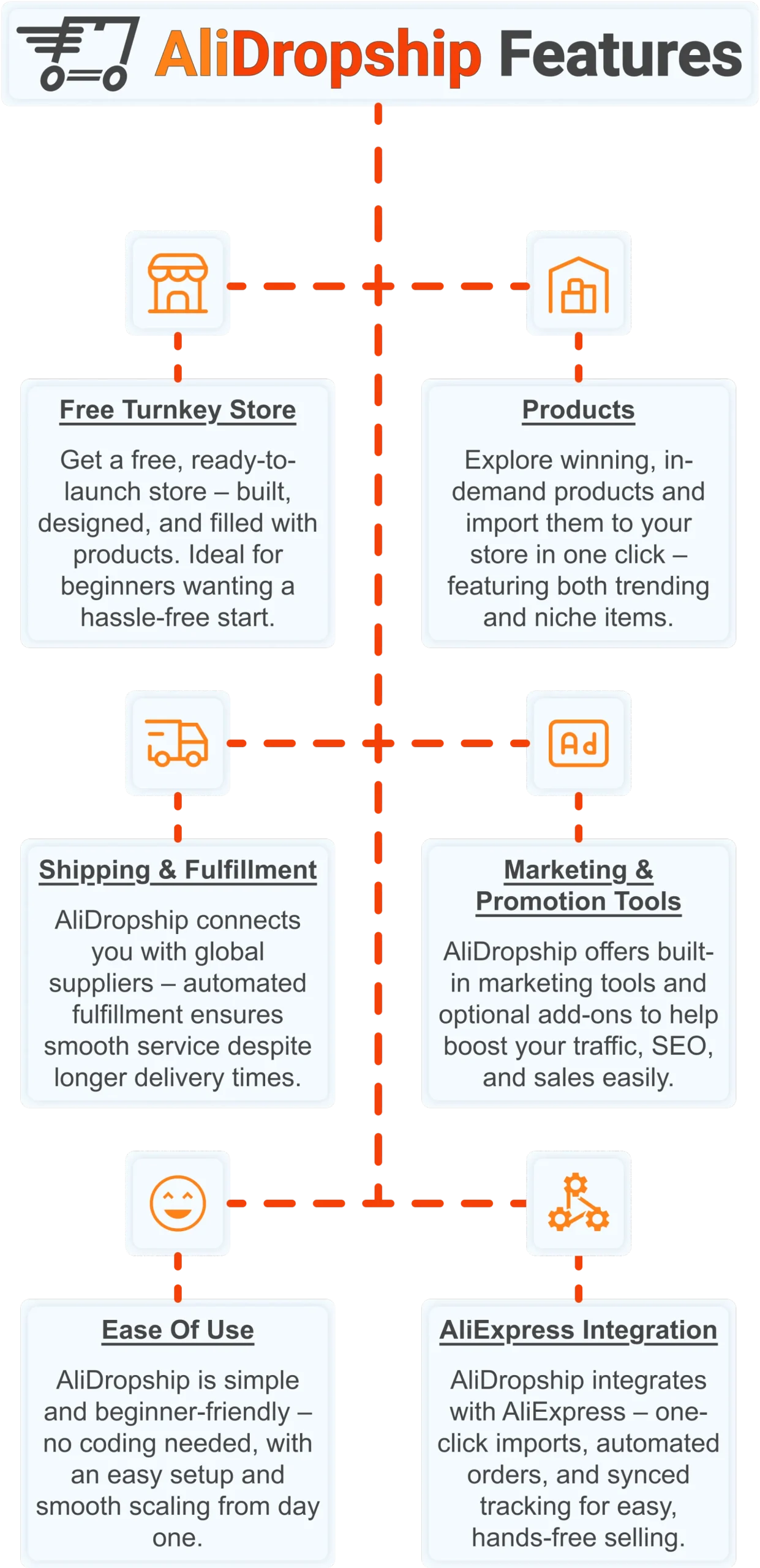
Free turnkey store ️
Get a free turnkey store – built, designed, and filled with products. Ideal for beginners wanting a hassle-free start, the store comes fully optimized to attract customers right away, saving you time on setup. Plus, it includes professional design elements to give your business a polished, trustworthy look from day one. This ready-made foundation makes it easy to move seamlessly into product selection.
Products
Once your store is set up, you can explore winning, in-demand products and import them in one click – featuring both trending and niche items. This wide selection lets you cater to diverse customer interests and test what works best. Regular updates ensure you always have fresh products, keeping your store competitive and relevant. With great products in place, smooth shipping becomes the next essential step.
Shipping & fulfillment
AliDropship connects you with global suppliers, and automated fulfillment ensures seamless order processing despite international delivery times. Customers receive real-time tracking updates, which builds confidence and trust in your store. Once shipping is handled reliably, you can focus on promoting your store and attracting traffic.
Marketing & promotion tools
To maximize sales, AliDropship offers built-in marketing tools and optional add-ons that help boost traffic, SEO, and conversions. From email campaigns and discounts to social media integration, these tools empower you to reach and retain customers without needing prior marketing experience. With promotion strategies in place, managing your business becomes simpler and more efficient.
Ease of use
AliDropship is beginner-friendly – no coding needed, with an intuitive dashboard that guides you through every step. Easy setup and smooth scaling let you expand your store without stress. As your business grows, adding new features, products, and marketing campaigns remains hassle-free, giving you more time to focus on sales.
AliExpress integration
Finally, AliDropship integrates seamlessly with AliExpress, enabling one-click imports, automated orders, and synced tracking. Your inventory stays up-to-date with the latest products and prices, while automated order processing frees you from manual tasks. Combined with the turnkey setup, reliable shipping, and built-in marketing tools, this integration ensures your dropshipping business is fully equipped for growth and success.
Getting your order fulfillment right from day one is what separates stores that scale from stores that stall – and AliDropship gives you the automation layer to do it properly. Get your free turnkey store and start fulfilling orders the smart way.
Frequently asked questions
What is order fulfillment and how does it work?
Order fulfillment covers everything that happens between a customer completing a purchase and the package arriving at their door, including processing, picking, packing, dispatch, and tracking. In a dropshipping model, the supplier handles the physical work, which lets a store owner focus on marketing and customer experience instead. Manual order processing can take 15 to 30 minutes per order, while an automated dropshipping setup handles the same steps in seconds. This structural difference is one of the main reasons dropshipping remains accessible for beginners in 2026.
How much can a well run order fulfillment process earn per day?
Self fulfillment, where a seller packs and ships every order themselves, typically earns 20 to 60 dollars per day and hits a hard ceiling once volume increases. Third party logistics can push earnings to 50 to 200 dollars per day but requires upfront setup costs and fees. Automated dropshipping fulfillment typically produces 30 to 150 dollars per day within 60 to 90 days, with the lowest barrier to entry of the three methods. These figures assume consistent effort on marketing and product selection rather than fulfillment alone.
How long does dropshipping order fulfillment take?
International shipping from suppliers connected through platforms such as AliDropship typically takes 7 to 20 days depending on the destination. Order processing itself happens in seconds once a purchase is automated, compared to 15 to 30 minutes for a manual setup. Uploading tracking numbers within 48 hours of dispatch is a common benchmark that reduces customer disputes. Setting a clear shipping timeline of, for example, 2 to 4 weeks on every product page significantly lowers customer service requests.
How do you choose a reliable supplier for order fulfillment?
Look for a supplier feedback score above 4.7 with at least a few hundred reviews before listing a product. A supplier with a 4.9 rating and 2,000 or more transactions is generally a safer choice than a newer listing with lower prices. Supplier quality directly affects the review score and repeat purchase rate of a store, not just day to day operations. Automation platforms that connect a store directly to a supplier can save 2 to 3 hours per day once order volume reaches around 10 orders daily.
What legal and ethical rules apply to order fulfillment?
Sellers should not advertise delivery times they cannot guarantee or list products as in stock without confirming supplier availability first. Sending a tracking number that does not update for two weeks damages customer trust more than providing no tracking at all. Platforms such as PayPal and Stripe flag sellers with high unresolved dispute rates, which can lead to account freezes or permanent bans. Setting conservative delivery estimates and proactively messaging customers about delays prevents most disputes before they start.
 Previous post
