 ‧ Agnes Kazaryan ‧
March 17, 2026
‧ Agnes Kazaryan ‧
March 17, 2026  1307 ‧
 0
0
Blogging still makes real money in 2026 – but only if you pick the right topic and pair it with a monetization strategy that actually works. Most bloggers who struggle chose a niche because they liked it, without checking whether anyone was willing to pay for it. The ones earning consistently? They found the overlap between what they know, what people search for, and what advertisers and brands actually spend on.
Quick answer: The blog ideas that make money most reliably in 2026 are personal finance, health and wellness, digital marketing, AI and tech tools, food and recipes, and ecommerce and online business. Each of these has proven monetization paths – affiliate programs, display ads, digital products, and sponsored content – and consistent search demand year-round.
This guide breaks down the most profitable blog types for beginners, explains how each one actually earns, and gives you realistic income figures so you can plan with clear eyes. Whether you are starting from scratch or already have a few posts live, you will find a clear starting point here.
What is a money-making blog, exactly?
Before diving into specific niches, it helps to ground your expectations. A blog makes money through one or more revenue streams – display advertising, affiliate commissions, sponsored posts, digital product sales, or paid memberships. The niche you choose determines which of these streams are available to you and how much each one pays.
For example, a personal finance blog can earn $30–$80 per thousand pageviews from display ads alone, because advertisers in that space pay premium rates for that audience. A general lifestyle blog covering random topics might earn $5–$15 per thousand views from the same ad network. Same traffic volume, very different income.
The other key variable is time. Most blogs take 60–90 days to see their first meaningful traffic from search, and 6–12 months to build consistent income. That is not a reason to avoid blogging – it is a reason to choose a profitable niche from the start, so every month of effort compounds toward something that actually pays.
How much can you realistically earn from a blog?
Blogging income figures can be misleading. Viral income reports almost always show the top 1% of creators. Here is a more grounded picture based on real niche data and typical blogger timelines.
These ranges reflect the span from a newer blog with growing traffic to an established site with multiple income streams. The ceiling figures represent full-time blogging with a solid SEO strategy and at least 12–18 months of consistent publishing.
One note on the ceiling figures: The top-end numbers you see in income reports almost always come from bloggers who have been publishing for 3–5 years, run multiple revenue streams simultaneously, and treat the blog as a full-time business. Most part-time bloggers in these niches earn $200–$1,500 per month within their first year – not life-changing on its own, but a real foundation to build on.
The honest summary: pick a niche below that genuinely interests you, commit to publishing consistently for at least 6 months, and build your first revenue stream before trying to run five at once. Slow and focused beats fast and scattered every single time in blogging.
The best blog ideas that make money in 2026
Here are the six most profitable blog niches for beginners, broken down by type, monetization method, and realistic earning potential. Each one has an established audience, proven affiliate programs, and a clear path to income – no massive following required to start seeing results.
Finance and money management blogs
Personal finance is consistently one of the top-earning niches online. Readers in this space are actively looking for solutions – how to pay off debt, how to invest, how to earn more – and they respond well to recommendations. That combination makes it ideal for affiliate marketing and display advertising.
Personal finance and budgeting
This sub-niche covers everything from building an emergency fund to automating savings and paying off student loans. The audience is broad – anyone earning a paycheck is a potential reader – and search volume is enormous. Topics like “how to save money on groceries,” “best budgeting apps,” and “how to pay off debt fast” pull in steady traffic year-round without depending on trends or news cycles.
Monetization here typically comes from display ads (personal finance ad rates can reach $25–$100 cost per click for competitive keywords), affiliate links to financial tools and apps, and digital products like budget spreadsheet templates or email courses.
Earning potential: $300–$4,000/month within 12 months for a blogger publishing 2–3 times per week and building an email list alongside the content.
Investing and side income
Investing blogs attract a slightly more advanced reader who is already financially stable and looking to grow wealth. Sub-topics include stock market basics, index fund investing, cryptocurrency, real estate, and building passive income. The affiliate programs in this space – brokerage platforms, robo-advisors, investment apps – typically pay $50–$200 per qualified sign-up, making even modest traffic highly profitable.
Why this works in 2026: Economic uncertainty and rising interest in financial independence have pushed millions of people to seek financial education online for the first time – and most of them start with a Google search.
Health, wellness, and fitness blogs
Health and wellness is one of the most durable niches online. People search for health information constantly – before and after doctor visits, when trying to lose weight, when starting a new routine, when managing a chronic condition. That sustained demand means traffic arrives consistently, regardless of what is trending on social media that week.
Fitness and workout content
A fitness blog focused on a specific audience – women over 40, beginners who hate the gym, runners training for their first 5K – will outperform a general fitness blog almost every time. Niche-down fitness content builds loyal readership faster, ranks for less competitive keywords, and converts better because the reader feels like the content was written specifically for them.
Monetization paths include affiliate links to fitness equipment, supplements, and workout apps; sponsored posts from fitness brands; and your own programs or coaching packages.
Earning potential: $200–$3,500/month with consistent publishing, a clear sub-niche, and at least one affiliate program running from month one.
Mental health and self-care
This sub-niche has grown significantly in recent years and shows no sign of slowing. Readers look for practical content – stress management techniques, sleep guides, journaling prompts, and product recommendations like apps or wellness tools. Because this audience is highly engaged and emotionally invested, email list conversion rates tend to be strong, making it a good fit for digital product sales alongside affiliate income.
Important: Mental health content requires care. Stay in your lane – share personal experience and well-sourced information, but avoid making claims that require medical credentials you do not have.
Food and recipe blogs
Food blogs are among the highest-traffic blog types online, and the top earners in this niche pull in over $10,000 per month through a combination of display ads and brand partnerships. The key to success is not covering every cuisine – it is picking a lane and owning it.
Niche recipe content
The food blogs that break through in 2026 are specific: “30-minute dairy-free dinners for busy families,” “high-protein meal prep for weight loss,” “budget-friendly vegan recipes under $5.” These micro-niches have lower competition than “recipes” as a broad category, higher ad conversion rates, and a built-in community of readers who share content because it speaks directly to them.
Display advertising is the primary income stream for most food bloggers – once a blog hits 50,000 monthly sessions, premium ad networks pay substantially more than Google AdSense. Affiliate links to kitchen tools, specialty ingredients, and meal kit services round out the income.
Earning potential: $200–$5,000/month once traffic hits the threshold for premium ad networks, typically achievable within 12–18 months with consistent, SEO-focused publishing.
Food photography and brand partnerships
Some food bloggers earn as much from brand partnerships and sponsored content as they do from ads. Brands in the food, kitchen, and grocery space regularly pay bloggers $500–$5,000 per sponsored post, depending on traffic and audience quality. If photography is something you enjoy, combining strong visuals with solid recipe content is one of the most effective ways to attract those deals early.
Digital marketing and SEO blogs
A blog about blogging and digital marketing might sound circular, but it is genuinely one of the most monetizable blog ideas that make money in 2026. The audience – aspiring bloggers, small business owners, freelancers – is actively looking for tools and solutions, and they are comfortable spending money on software and courses to improve their results.
SEO and content strategy
SEO content earns well through affiliate programs for tools like Ahrefs, Semrush, and Surfer SEO – all of which pay recurring monthly commissions, meaning one referral keeps paying you for as long as that subscriber stays active. A blog in this niche with 10,000 monthly readers and a handful of active affiliate referrals can earn $1,000–$3,000 per month in commissions alone, before ads or products factor in.
Why this works in 2026: As more businesses shift budgets toward organic search, the demand for honest, practical SEO guidance from real practitioners – not agency jargon – has never been higher.
Email marketing and list building
Email marketing is a sub-niche within digital marketing that is slightly less saturated and highly practical. Tutorials, tool comparisons, automation walkthroughs, and list-building strategies attract business owners who are ready to invest in their setup. Affiliate programs for platforms like Klaviyo, ConvertKit, and ActiveCampaign pay solid recurring commissions, and average order values in this space are high.
Earning potential: $500–$5,000/month once the blog has traction, with recurring affiliate commissions providing a stable income baseline as the audience grows.
AI and technology blogs
AI is the fastest-moving content category in 2026. Global AI spending is forecast to exceed $2.52 trillion this year, and businesses and individuals alike are hunting for practical guidance on which tools to use and how to use them. That appetite for information creates real content opportunity for bloggers who can cut through the noise.
AI tools and productivity
A blog focused on AI tools for a specific audience – freelance writers, small business owners, marketers, students – has significantly lower competition than a generic “AI news” blog and much higher conversion rates. Readers searching for “best AI tools for social media managers” are closer to a purchasing decision than someone casually browsing AI headlines.
Affiliate programs for SaaS products in this space commonly pay 20–30% recurring monthly commissions. A blog with a few hundred engaged monthly readers in the right niche can earn $500–$2,000 per month from affiliates before reaching mass traffic levels.
Earning potential: $400–$4,000/month within 12 months for a blogger targeting specific AI tool sub-niches with genuine how-to content rather than surface-level roundups.
Software and app reviews
Review-based content performs especially well in search because people type comparison queries – “X vs Y,” “best tool for Z” – when they are ready to make a decision. A blog built around honest, detailed software reviews earns through affiliate links placed naturally within the review. Conversion rates on this type of content are among the highest in blogging because the reader is already in buying mode.
Ecommerce and online business blogs
Blogging about how to build an online business is itself one of the best blog ideas that make money – because the audience you attract is already motivated to spend on tools, courses, and platforms that help them earn. This is the niche where you can most naturally tie content to high-value affiliate programs and your own products.
Dropshipping and ecommerce guides
Content covering how to start an online store, how to find winning products, how dropshipping works, and how to market an ecommerce business attracts readers who are actively researching a model they intend to pursue. The intent is high – these readers want to take action. That makes affiliate programs in this space (ecommerce platforms, product research tools, marketing software) highly profitable even at lower traffic volumes.
A blog in this niche with 5,000 monthly readers can realistically earn $500–$2,000 per month from affiliate commissions, because every visitor is a potential customer for one of several high-ticket or recurring affiliate offers. As the blog grows, sponsored content from ecommerce tools becomes an additional income stream on top.
Earning potential: $300–$6,000/month with a well-structured content strategy targeting product-aware readers who are actively looking for solutions.
Freelancing and remote work content
The freelancing niche covers topics like how to find clients, how to price services, how to manage a remote workflow, and which platforms to use. It attracts a broad, motivated audience – people who either want to go freelance or are already freelancing and want to grow. Affiliate programs for platforms like Fiverr, Upwork, and Toptal, plus tools like Notion, Canva, and project management software, provide commission opportunities at every traffic level.
Why this works in 2026: The number of people working remotely or supplementing income through freelance work has grown substantially since 2020 and continues to rise. Search demand in this space is durable, not trend-dependent.
How to choose the right blog niche for you
The most profitable niche is not automatically the right one for you. A blog that earns well is one you can sustain – that means publishing consistently for 6–12 months before seeing meaningful results. Choosing a topic purely for money and burning out after month two earns nothing. Here is a simple framework that works for beginners.
Check the three P’s
Before committing to a niche, run it through three questions. First, passion – can you write about this topic 50 or 100 times without running out of things to say? Second, problem – does this topic solve something people actively search for on Google? Third, profit – does this niche have affiliate programs, display ad potential, or a clear product angle that generates income?
A niche that checks all three gives you staying power, traffic, and income. A niche that only checks one or two is a gamble. The best blog ideas that make money consistently are the ones where all three overlap naturally.
Validate before you commit
Before writing your first post, spend a week validating the niche. Search your topic on Google and check whether high-authority sites dominate every result – if they do, you need a more specific sub-niche to gain traction as a new blog. Use free tools like Google Keyword Planner or Ubersuggest to check search volume for 10–20 topic ideas. If you can find 30–50 topics with real search volume and manageable competition, you have a viable niche.
Also check the affiliate landscape. Look for 3–5 affiliate programs in your niche with commission rates that make the numbers work. A niche with $5 one-time commissions and 2% conversion rates will require enormous traffic to earn meaningfully. A niche with $50–$200 recurring commissions and a motivated audience can earn well at a fraction of that traffic.
Niche down from the start
One of the most common beginner mistakes is choosing a topic that is too broad. “Health” is not a niche. “Fitness for women in their 40s who have never worked out before” is a niche. The broader your topic, the harder it is to compete with established sites, and the less clearly your content speaks to any specific reader.
Starting narrow does not mean staying narrow forever. Once you build authority in one sub-niche, you can expand naturally into adjacent topics. But in the first 6–12 months, tight focus is what separates blogs that grow from blogs that drift.
Build your monetization plan from day one
Do not wait until you have traffic to think about how you will earn. Sign up for relevant affiliate programs before you publish your first post. Choose one or two primary revenue streams – affiliate marketing and display ads work well together for most beginner bloggers – and structure your content strategy to support them. Review posts, comparison posts, and “best of” roundups convert well from affiliate links. Tutorial and explainer content builds the organic traffic that makes display ads worthwhile.
Pro Tip: Start collecting email addresses from your first visitor. A simple free resource – checklist, template, short guide – relevant to your niche is enough to get people to subscribe, and that list becomes your most durable income asset over time. Most beginner bloggers delay this too long.
Legal and ethical considerations for bloggers
Blogging for income comes with a few legal obligations that beginners often overlook. Skipping these is not worth the risk – the FTC takes affiliate disclosure seriously, and so do readers who feel misled.
Key principle: Disclose every affiliate relationship clearly and honestly. Readers who trust you convert better anyway – transparency is not just a legal requirement, it is good business.
Here is what to avoid and what to do instead across the most important areas.
- Affiliate links without disclosure: The FTC requires bloggers to disclose affiliate relationships clearly – not buried in a footer or in tiny text. Add a short disclosure at the top of any post containing affiliate links. Something like “This post contains affiliate links. If you purchase through them, I may earn a commission at no extra cost to you” is sufficient and builds reader trust rather than undermining it.
- Fake or exaggerated reviews: Writing positive reviews for products you have not tested, or inflating results to earn commissions, erodes trust and can attract legal issues. Honest reviews – including what a product does not do well – consistently outperform fake ones in search rankings and reader loyalty.
- Unqualified medical or financial advice: If you blog in health or finance, always qualify your content. Use phrases like “consult your doctor” or “this is not financial advice” where appropriate, and make clear when you are sharing personal experience versus professional guidance. Failing to do this can expose you to liability and will get your content flagged by Google’s quality guidelines.
- Copying content: Republishing content from other blogs – even with modifications – is a copyright violation and will hurt your SEO significantly. Every post you publish should be original. Drawing on published research, citing sources, and putting ideas in your own words is fine. Copying and spinning is not.
Final thoughts: Which blog idea is right for you?
The best starting point depends on where you are right now – your experience level, available time, and the kind of income you are looking to build. Here is a quick breakdown by reader type.
Complete beginner: If you are starting from scratch with no blog, no audience, and no affiliate accounts, pick one niche from the list above that genuinely interests you, start a WordPress blog, and commit to publishing one well-researched post per week for the first three months. Do not try to do everything at once. Pick one primary keyword per post, set up Google Search Console from day one, and sign up for one or two affiliate programs relevant to your topic. Food, health and wellness, and personal finance are all beginner-friendly because audiences are broad and affiliate programs are easy to join.
Intermediate / part-time blogger: If you already have a blog but are not earning yet, the most likely issue is one of three things – the niche is too broad, the content is not targeting buyer-intent keywords, or the monetization is passive rather than active. Spend a week auditing your top 10 posts, check their rankings, update any outdated information, and add affiliate links or a relevant call to action where they are missing. Then build out a content cluster around your strongest topic to signal topical authority to Google.
Advanced / full-time goal: If you are aiming to replace a full-time income with blog revenue, the strategy shifts from building to scaling. At this level, you want multiple income streams running simultaneously – display ads, affiliate commissions, at least one digital product, and ideally a sponsored content relationship or two. Digital marketing, AI tools, and ecommerce blogs are particularly well-suited for this because audiences actively spend on tools and education, and affiliate programs pay recurring commissions that compound as your audience grows. Blogging income in the $5,000–$9,000+ per month range is achievable, but it typically requires 18–24 months of focused work and a diversified monetization strategy.
AliDropship: Your complete all-in-one solution for starting dropshipping in 2026
If you want the simplest possible way to start dropshipping – especially if you’re brand new – AliDropship remains one of the most beginner-friendly tools available in 2026. It brings together store creation, product imports, automation, and marketing into a single streamlined system designed to help you launch quickly and grow confidently.
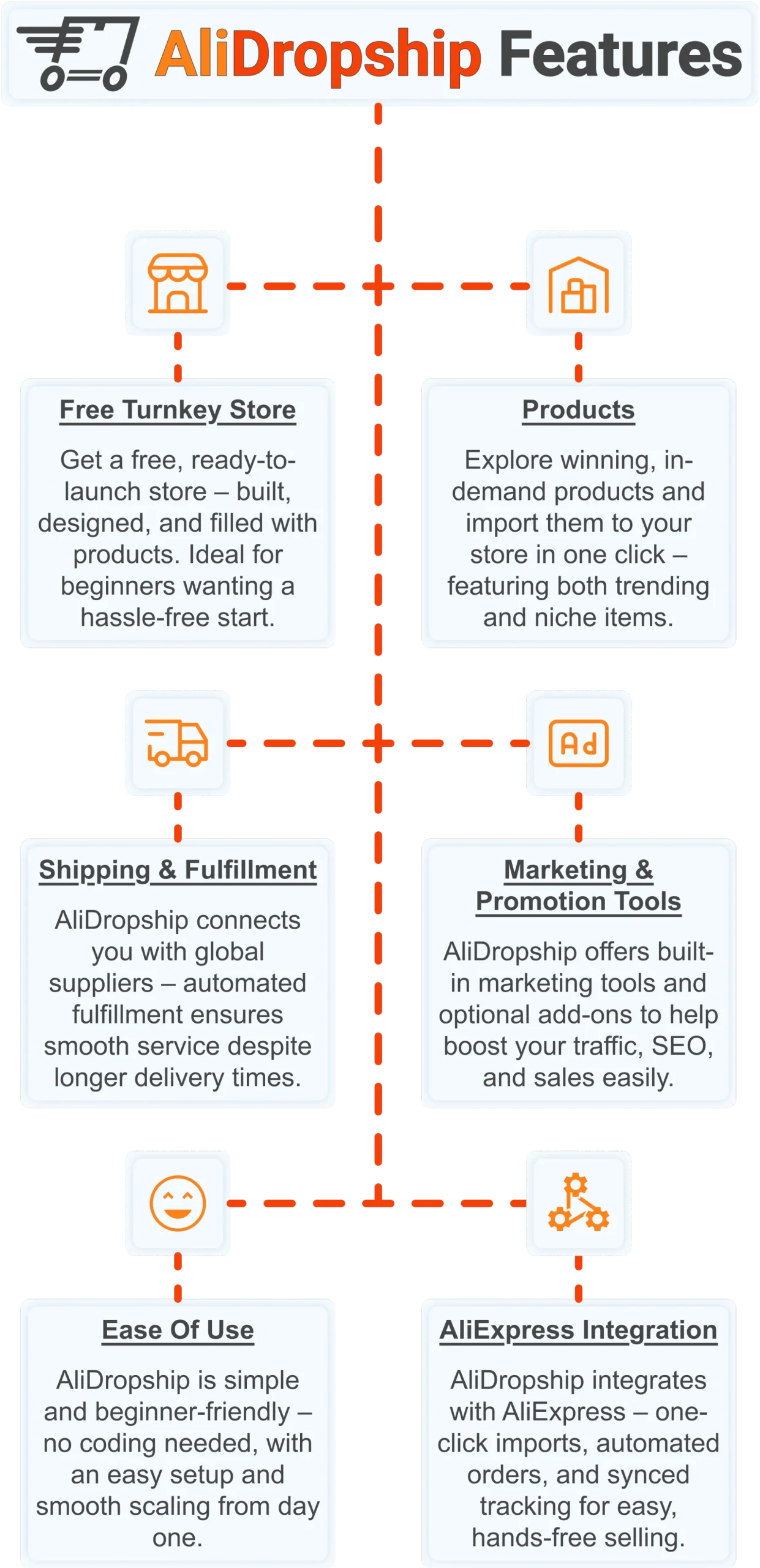
Free turnkey store ️
Get a free turnkey store – built, designed, and filled with products. Ideal for beginners wanting a hassle-free start, the store comes fully optimized to attract customers right away, saving you time on setup. Plus, it includes professional design elements to give your business a polished, trustworthy look from day one. This ready-made foundation makes it easy to move seamlessly into product selection.
Products
Once your store is set up, you can explore winning, in-demand products and import them in one click – featuring both trending and niche items. This wide selection lets you cater to diverse customer interests and test what works best. Regular updates ensure you always have fresh products, keeping your store competitive and relevant. With great products in place, smooth shipping becomes the next essential step.
Shipping & fulfillment
AliDropship connects you with global suppliers, and automated fulfillment ensures seamless order processing despite international delivery times. Customers receive real-time tracking updates, which builds confidence and trust in your store. Once shipping is handled reliably, you can focus on promoting your store and attracting traffic.
Marketing & promotion tools
To maximize sales, AliDropship offers built-in marketing tools and optional add-ons that help boost traffic, SEO, and conversions. From email campaigns and discounts to social media integration, these tools empower you to reach and retain customers without needing prior marketing experience. With promotion strategies in place, managing your business becomes simpler and more efficient.
Ease of use
AliDropship is beginner-friendly – no coding needed, with an intuitive dashboard that guides you through every step. Easy setup and smooth scaling let you expand your store without stress. As your business grows, adding new features, products, and marketing campaigns remains hassle-free, giving you more time to focus on sales.
AliExpress integration
Finally, AliDropship integrates seamlessly with AliExpress, enabling one-click imports, automated orders, and synced tracking. Your inventory stays up-to-date with the latest products and prices, while automated order processing frees you from manual tasks. Combined with the turnkey setup, reliable shipping, and built-in marketing tools, this integration ensures your dropshipping business is fully equipped for growth and success.
If you are serious about building online income in 2026 – not just writing about it – a ready-made ecommerce store gives you a real business to run alongside your blog. Get your free turnkey store and a $100 voucher to start earning today.
Frequently asked questions
Which blog niches make the most money in 2026?
Food and recipe blogs have the highest ceiling, with top earners pulling in over 10000 dollars per month through display ads and brand partnerships. Personal finance blogs can earn 500 to 9100 dollars or more per month, with display ad rates reaching 25 to 100 dollars cost per click for competitive keywords. Digital marketing and SEO blogs earn 500 to 8000 dollars or more per month, largely through recurring affiliate commissions from tools like Ahrefs and Semrush. Most part-time bloggers across these niches earn 200 to 1500 dollars per month within their first year rather than the higher ceiling figures.
How long does it take for a blog to start making money?
Most blogs take 60 to 90 days to see their first meaningful traffic from search and 6 to 12 months to build consistent income. The higher ceiling figures reported in income reports typically come from bloggers who have been publishing for 3 to 5 years and run multiple revenue streams simultaneously. A personal finance blog publishing 2 to 3 times per week and building an email list can realistically reach 300 to 4000 dollars per month within 12 months. Reaching full-time income levels of 5000 to 9000 dollars or more per month typically requires 18 to 24 months of focused work.
How much do display ads pay compared to affiliate marketing on a blog?
A personal finance blog can earn 30 to 80 dollars per thousand pageviews from display ads, compared to only 5 to 15 dollars per thousand views for a general lifestyle blog on the same ad network. Affiliate programs for investing products like brokerage platforms and robo-advisors typically pay 50 to 200 dollars per qualified sign-up. SEO tool affiliate programs pay recurring monthly commissions, meaning a blog with 10000 monthly readers and a handful of active referrals can earn 1000 to 3000 dollars per month in commissions alone. Food blogs typically need around 50000 monthly sessions before premium ad networks pay substantially more than standard ad platforms.
How do you choose a profitable blog niche as a beginner?
A profitable niche should pass three checks, referred to as passion, problem, and profit, meaning you can write about it repeatedly, it solves something people actively search for, and it has real monetization potential. Before committing, it helps to search the topic on Google and check whether high-authority sites dominate every result, since that signals a need for a more specific sub-niche. Using free tools to find 30 to 50 topics with real search volume and manageable competition is a reasonable validation threshold. A niche with 50 to 200 dollar recurring commissions and a motivated audience can earn well at a fraction of the traffic needed for a niche with 5 dollar one-time commissions.
What legal requirements do bloggers need to follow for monetized content?
The FTC requires bloggers to disclose affiliate relationships clearly, not buried in a footer or written in tiny text, typically through a short disclosure at the top of any post containing affiliate links. Writing positive reviews for products that were never tested or inflating results to earn commissions can erode trust and create legal exposure. Bloggers writing in health or finance niches should qualify their content with phrases like consult your doctor or this is not financial advice where relevant. Republishing content from other blogs, even with modifications, is a copyright violation that can significantly hurt search rankings.
 Previous post
