 ‧ Agnes Kazaryan ‧
March 20, 2026
‧ Agnes Kazaryan ‧
March 20, 2026  561 ‧
561 ‧
 0
0
Search traffic is still the cheapest, most durable source of buyers online – but only if your pages actually show up. If you are wondering how to improve SEO without burning months on tactics that no longer work, this guide walks through what moves the needle in 2026 and what to quietly drop.
Quick Answer: To improve SEO in 2026, focus on search intent, fast and crawlable pages, helpful original content, a clean internal linking structure, and a slow steady build of trustworthy backlinks. Everything else is decoration.
This guide covers on-page SEO, technical SEO, keyword research, ecommerce SEO, backlinks, and content optimization – with realistic timelines and specific numbers so you know what to actually expect. No miracle tricks, no “rank in 7 days” promises. You will know how to improve SEO for a new site, an established store, or anything in between by the end of it.
What improving SEO actually means in 2026
SEO is the practice of making your website easier for search engines to find, understand, and recommend to the right people. In 2026 that job looks very different from a few years ago. Google now blends classic blue-link results with AI Overviews, shopping panels, video carousels, and community answers pulled from Reddit and forums. Ranking is no longer one leaderboard – it is a dozen smaller ones on the same page.
What has not changed is the underlying logic. Search engines try to match a query with the single best result for that specific person, in that specific moment. Your job is to be that result. That means clear topical focus, pages that load quickly on a mid-range phone, and content that genuinely answers the question instead of circling around it.
Why this works in 2026: Google’s helpful content systems and AI Overviews both reward the same thing – pages that solve the user problem fully in one place. Thin, keyword-stuffed content is not just ignored, it actively drags down the rest of your site.
If you are running an online store, knowing how to improve SEO matters even more because every organic visitor is a buyer you did not pay for. A single product page ranking on page one can quietly generate $30–$80 per day in profit for months, with no ongoing ad spend. That is the real reward for doing this well.
How much traffic and revenue can you realistically expect
Before you invest time in any SEO tactic, it helps to anchor your expectations in real numbers. Most small sites that commit to consistent SEO work see measurable results in 60–90 days, meaningful traffic in 4–6 months, and compounding returns from month 9 onward. Anyone selling you faster than that is usually just selling.
Those top numbers assume a reasonably competitive niche, decent writing, and no serious penalties. Brand new sites in crowded spaces usually land in the lower range. Treat the ceiling figures as what is possible if you execute well, not a default outcome.
One note on these figures: Traffic alone is not the goal – qualified traffic that converts is. A store getting 2,000 buyer-intent visits per month will usually outperform a blog pulling 20,000 casual readers.
On-page SEO: The fastest pillar to fix
On-page SEO is everything you control directly on a given page – the title tag, meta description, headings, URL structure, internal links, image alt text, and the body copy itself. It is the fastest pillar to improve because you do not need anyone’s permission or cooperation to fix it. If you are asking how to improve SEO this week, this is where to start.
Title tags and meta descriptions
Your title tag is the single most important on-page element. Keep it under 60 characters, put the primary keyword near the front, and write it like a human would search. Meta descriptions do not directly influence ranking but they heavily influence click-through rate, which does. Aim for 140–150 characters that promise a specific benefit.
Headings and structure
Use one H1 per page – usually the article or product title. Break the body into H2 sections that map to distinct subtopics, then H3 for specifics inside each section. Search engines use this hierarchy to understand what a page is really about, and readers use it to skim.
Internal linking
Every new page should link to 3–5 related older pages, and at least 1–2 older pages should link back to the new one. This spreads ranking authority across your site and helps Google discover new content faster. Use descriptive anchor text – “dropshipping pricing guide” beats “click here” every time.
Image optimization
Compress every image to under 200 KB where possible, use descriptive file names (“blue-running-shoes-side-view.webp” not “IMG_4872.jpg”), and write alt text that describes what is actually in the image. Alt text also doubles as accessibility copy for screen readers, so it is doing double duty.
Earning potential: $0 in direct spend with a 10–25% traffic lift in 60 days from a tight on-page pass on an existing 50-page site – no new content required.
Technical SEO: The plumbing that quietly caps your ranking
Technical SEO is how easily search engines can crawl, render, and index your pages. Most sites have a handful of quiet technical issues dragging them down. Fixing them rarely requires new content, just attention. If you want to know how to improve SEO without writing a single new word, this pillar is often the answer.
Site speed and core web vitals
Google measures three specific metrics: Largest Contentful Paint (should be under 2.5 seconds), Interaction to Next Paint (under 200 milliseconds), and Cumulative Layout Shift (under 0.1). Run your homepage and 2–3 key templates through PageSpeed Insights. The single biggest wins usually come from compressing images, lazy-loading below-the-fold content, and removing unused JavaScript.
Mobile-first everything
Google indexes the mobile version of your site, not the desktop one. Pull up your site on a real phone and actually use it. If buttons are cramped, text is hard to read, or anything requires pinch-zooming, fix that before you write another blog post. Mobile usability issues quietly cap your ranking ceiling.
Crawlability and indexing
Check Google Search Console every week. The Pages report tells you which URLs Google has indexed, which it has skipped, and why. Common fixable issues include duplicate content from URL parameters, thin category pages with almost no products, and orphan pages with zero internal links pointing to them.
HTTPS, structured data, and sitemaps
Your site should be fully HTTPS with no mixed content warnings. Submit an XML sitemap to Search Console and keep it updated automatically. Add structured data – Product schema on product pages, Article schema on blog posts, FAQ schema where relevant – so your listings can show rich results in the search page.
Important note: Technical fixes alone rarely drive new traffic, but they prevent 20–40% of the traffic you have already earned from leaking away through slow pages and indexing gaps.
Keyword research and content that actually ranks
You cannot rank for keywords you never target. Good keyword research is the quiet reason some sites grow 10x faster than their competitors – they simply pick winnable battles. The goal is not to find the highest volume term, it is to find the right match between what you can credibly write about and what real people are actually searching.
Starting with real search intent
Every keyword falls into one of four intents: informational (how to improve SEO), navigational (Ahrefs login), commercial (best SEO tools 2026), and transactional (buy Ahrefs subscription). Before you write, ask which intent a keyword represents – then look at the current top 10 results to confirm. If the first page is all product listings, a blog post will not rank there no matter how good it is.
Finding long-tail opportunities
Short keywords like “SEO tips” are nearly impossible for a new site. Long-tail variations like “SEO tips for small ecommerce stores” or “how to improve SEO for product pages” have lower volume but far less competition.
Free tools like Google Search Console, Google autocomplete, and the “People also ask” boxes are a goldmine for these. Paid tools like Ahrefs, Semrush, and Ubersuggest speed the process up, but you can do solid work with only free ones.
Writing content that actually answers
The top-ranking pages in 2026 tend to share three traits: they answer the main question in the first 100 words, they cover related subtopics the reader would ask next, and they include unique perspective or data the other results do not. If your article is just a rephrased version of what already ranks, you will not outrank it.
Content freshness and updates
Publishing new content matters, but updating existing content often delivers a bigger return for less work. Pick your top 10 traffic pages every quarter, add new sections, refresh outdated stats, and improve examples. A well-maintained 3-year-old post regularly outranks a brand new one because it has accumulated backlinks and user engagement signals.
Earning potential: 500–3,000 monthly visits by month 6 and 10,000+ by month 12 from consistent keyword-led content at 2 articles per week, in moderately competitive niches.
Backlinks and off-page signals in 2026
Backlinks are still one of the strongest ranking factors, but the link game changed a lot in the past two years. Cheap directory drops and forum spam no longer move rankings – and often trigger manual penalties. What works now is slower, more deliberate, and honestly more enjoyable to do.
Earning links through genuinely useful content
The cleanest way to earn backlinks is to publish something other people in your space actually want to reference. Original data, detailed how-to guides, free tools and calculators, and honest in-depth reviews all attract links naturally. One well-crafted asset can earn 50–200 links over its lifetime, while ten thin listicles earn almost none.
Digital PR and guest posting
Reaching out to relevant blogs, podcasts, and online publications with a real story or expertise is slow but reliable. Services like Help a B2B Writer, Featured, and Qwoted connect subject experts with journalists looking for quotes. Getting cited once in a reputable publication often beats 20 low-quality guest posts – and the link quality matters far more than quantity now.
Community presence
Reddit, niche Discord servers, Facebook groups, and professional forums all drive both direct traffic and, indirectly, links. Being genuinely helpful in the spaces where your buyers hang out surfaces your site to exactly the people who would naturally link to it later. This is a 6–12 month play, not a 6-week one.
What to avoid in 2026
Buying links from PBN vendors, swapping links in “link exchange” schemes, comment spam, and paying directories to list you all fall into the same category now – at best useless, at worst penalty triggers. If a service offers 100 backlinks for $50, the links are either worthless or actively harmful.
Earning potential: A single high-authority editorial backlink can lift relevant page rankings 10–30 positions, and the effect compounds as links accumulate.
Ecommerce SEO: Extra rules for online stores
Ecommerce sites face a specific set of SEO challenges that blogs do not. You have hundreds or thousands of product pages, many near-duplicates, collection and category pages that can easily become thin, and fast-changing inventory. Handling this well is the difference between a store that quietly compounds and one that stays invisible in search. If you are asking how to improve SEO specifically for a store, the rules below are the ones that matter most.
Product page SEO
Write genuinely unique product descriptions – not manufacturer boilerplate, which appears on every other store selling the same item. Include buyer-intent phrases like “best,” “review,” “compared to,” and actual use cases. Add FAQ sections addressing the specific questions your support team hears most often. Product schema markup lets Google show price, availability, and star ratings directly in the results.
Category and collection pages
Category pages often drive more money than individual product pages because they match wider buyer intent. Each category should have 150–300 words of original intro copy at the top explaining what the category covers, who it is for, and how to choose between options. Avoid creating a category for every tag – thin categories drag your whole site down.
Managing out-of-stock and discontinued items
Never just delete old product URLs – that throws away ranking authority and creates broken links across the web. If an item is temporarily out of stock, keep the page live with a “notify me” option. If it is permanently gone, 301 redirect it to the closest current alternative or its parent category.
Reviews and user-generated content
Customer reviews on product pages serve three SEO purposes at once: they add unique keyword-rich content Google can index, they improve conversion rates which Google indirectly measures, and they support rich snippets that increase click-through. Actively ask every buyer for a review after delivery and display genuine reviews prominently.
Legal and ethical considerations
SEO sits in a grey zone full of tempting shortcuts. Most of them cost more than they earn, either directly through penalties or indirectly through lost trust. Keeping your approach above-board is both an ethical stance and a long-term business strategy.
Key principle: If a tactic relies on deceiving either users or search engines, it will eventually cost you more than it earned.
What to avoid absolutely
Fake reviews from paid networks violate both Google’s spam policies and, in many jurisdictions including the US and EU, consumer protection law. The FTC has been actively fining companies for fake testimonials since 2023.
Cloaking – showing different content to Google than to real users – triggers manual actions that can wipe 80% of your traffic overnight. Buying expired domains specifically to redirect their authority is also a fast track to a penalty. Keyword stuffing, hidden text, and doorway pages belong in the same bucket.
What to do instead
Earn real reviews by delivering genuinely good products and service. Build real links by creating content worth citing. If you need to speed up growth, invest in professional content, real PR outreach, or a well-designed paid ad campaign running alongside your organic work. These cost more upfront but do not collapse under you when an algorithm update rolls out.
Important: A single manual action from Google can wipe months of work, and recovery often takes 3–6 months of clean-up before rankings return.
Final thoughts: How to choose your SEO approach
There is no single right way to improve SEO – the best approach depends on where you are starting from, how much time you can commit, and what you are trying to build. Here is how to match an approach to your profile.
Complete beginner
Start with the on-page pillar and a tight technical audit. Pick 10 existing pages and rewrite their titles, meta descriptions, and headings. Fix site speed to green on PageSpeed Insights. Publish one solid 1,500-word article per week on a topic you genuinely know. Give it 90 days before judging progress. This alone can lift a small site from almost zero traffic to 1,000+ visits a month.
Intermediate or part-time
You already have a site, some traffic, and a working feel for your niche. Move to a 2-articles-per-week cadence, start refreshing old top-10 traffic pages quarterly, and begin light outreach – 10–15 personalized emails per week to relevant sites. Add structured data everywhere it fits. Realistic goal: double traffic in 6 months, triple in 12.
Advanced or full-time goal
You are treating SEO as a primary growth channel. Build a content calendar 3 months ahead, invest in digital PR, commission original research, and consider bringing in specialist help for technical SEO on larger sites. Track rankings for a focused set of 50–100 target keywords. At this level, 25,000–100,000 monthly visits within 12–18 months is realistic in the right niche.
Whatever profile fits you best, the compounding nature of SEO rewards consistency far more than intensity. Two hours a day for 12 months beats 40 hours a week for one month, every single time. The platforms change, the algorithms update, but the core trade – make genuinely useful stuff, make it easy to find – is not going anywhere.
AliDropship: Your complete all-in-one solution for starting dropshipping in 2026
If you want the simplest possible way to start dropshipping – especially if you’re brand new – AliDropship remains one of the most beginner-friendly tools available in 2026. It brings together store creation, product imports, automation, and marketing into a single streamlined system designed to help you launch quickly and grow confidently.
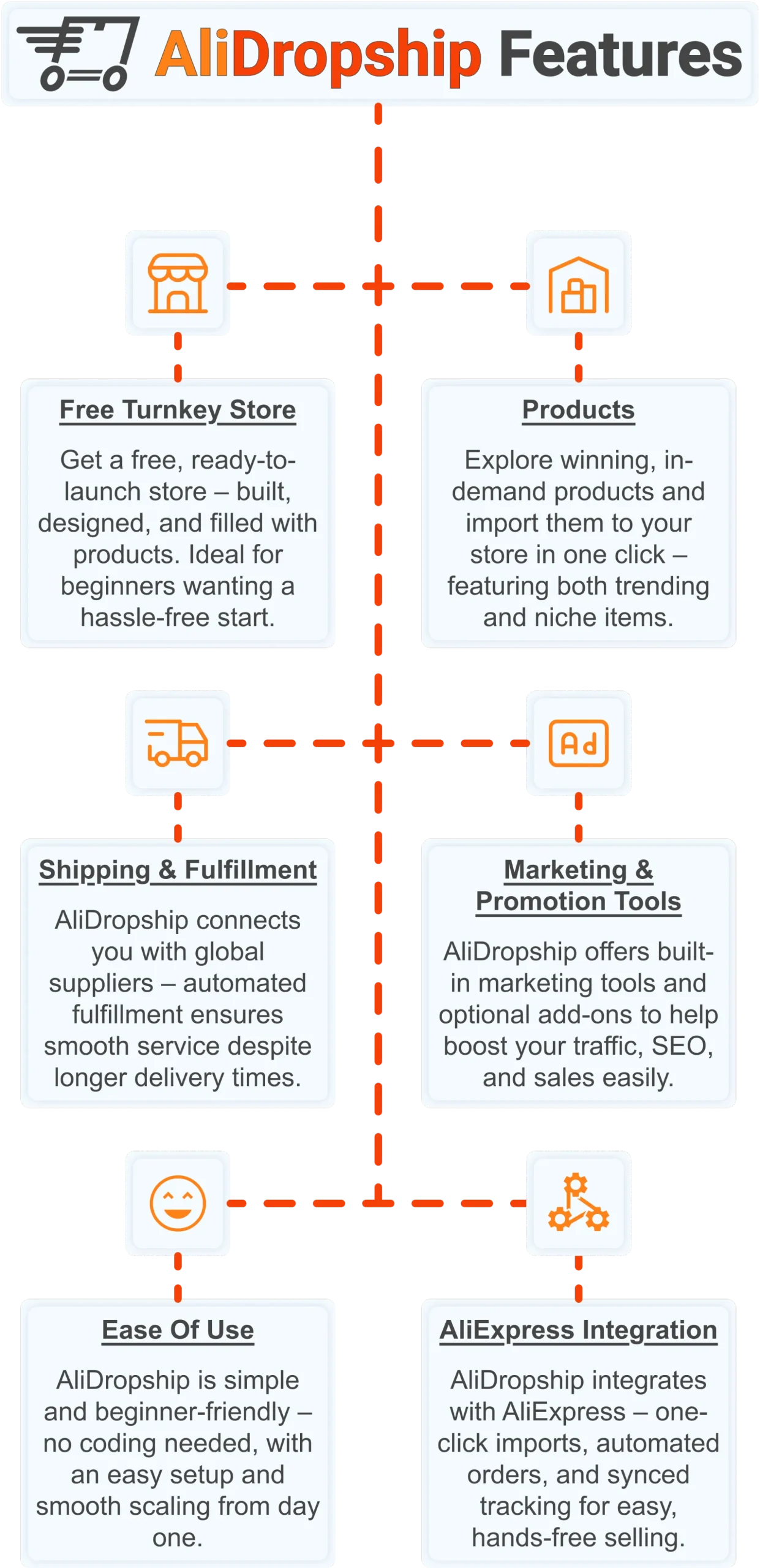
Free turnkey store ️
Get a free turnkey store – built, designed, and filled with products. Ideal for beginners wanting a hassle-free start, the store comes fully optimized to attract customers right away, saving you time on setup. Plus, it includes professional design elements to give your business a polished, trustworthy look from day one. This ready-made foundation makes it easy to move seamlessly into product selection.
Products
Once your store is set up, you can explore winning, in-demand products and import them in one click – featuring both trending and niche items. This wide selection lets you cater to diverse customer interests and test what works best. Regular updates ensure you always have fresh products, keeping your store competitive and relevant. With great products in place, smooth shipping becomes the next essential step.
Shipping & fulfillment
AliDropship connects you with global suppliers, and automated fulfillment ensures seamless order processing despite international delivery times. Customers receive real-time tracking updates, which builds confidence and trust in your store. Once shipping is handled reliably, you can focus on promoting your store and attracting traffic.
Marketing & promotion tools
To maximize sales, AliDropship offers built-in marketing tools and optional add-ons that help boost traffic, SEO, and conversions. From email campaigns and discounts to social media integration, these tools empower you to reach and retain customers without needing prior marketing experience. With promotion strategies in place, managing your business becomes simpler and more efficient.
Ease of use
AliDropship is beginner-friendly – no coding needed, with an intuitive dashboard that guides you through every step. Easy setup and smooth scaling let you expand your store without stress. As your business grows, adding new features, products, and marketing campaigns remains hassle-free, giving you more time to focus on sales.
AliExpress integration
Finally, AliDropship integrates seamlessly with AliExpress, enabling one-click imports, automated orders, and synced tracking. Your inventory stays up-to-date with the latest products and prices, while automated order processing frees you from manual tasks. Combined with the turnkey setup, reliable shipping, and built-in marketing tools, this integration ensures your dropshipping business is fully equipped for growth and success.
Knowing how to improve SEO is only half the battle – you also need a store worth ranking. Claim your free turnkey store and put your SEO skills to work today.
Frequently Asked Questions
How long does it take to see results after you improve SEO?
Most small sites see measurable results within 60 to 90 days of consistent work, with meaningful traffic gains by 4 to 6 months. Compounding returns typically begin around month 9 as backlinks and content accumulate authority. A complete beginner following an on-page and technical audit approach can lift a small site to 1,000 or more visits a month within 90 days. Full content plus link building efforts can reach 10,000 to 50,000 visits per month by month 12 in the right niche.
What is the fastest way to improve SEO on an existing website?
On-page SEO is the fastest pillar to fix because it does not require anyone else’s cooperation. A tight on-page pass on an existing 50 page site can produce a 10 to 25 percent traffic lift within 60 days at zero direct spend. Focus on title tags under 60 characters, meta descriptions between 140 and 150 characters, and one H1 per page with clear H2 and H3 structure. Internal linking each new page to 3 to 5 related older pages also spreads ranking authority across the site.
How do technical issues affect SEO performance?
Technical SEO covers how easily search engines can crawl, render, and index pages, and quiet technical issues often cap rankings without the owner realizing it. Google measures Largest Contentful Paint under 2.5 seconds, Interaction to Next Paint under 200 milliseconds, and Cumulative Layout Shift under 0.1 as core web vitals. Technical fixes alone rarely generate new traffic, but they prevent 20 to 40 percent of existing traffic from leaking away through slow pages and indexing gaps. Checking Google Search Console weekly helps catch duplicate content and orphan pages before they cause damage.
What kind of backlinks actually help SEO in 2026?
Backlinks remain one of the strongest ranking factors, but cheap directory drops and forum spam no longer move rankings and can trigger manual penalties. One well crafted piece of original content, such as a data study or free tool, can earn 50 to 200 links over its lifetime. A single high authority editorial backlink can lift relevant page rankings 10 to 30 positions, and the effect compounds as more links accumulate. Digital PR and genuine expert outreach now outperform low quality guest posting by a wide margin.
How is ecommerce SEO different from regular blog SEO?
Ecommerce sites must manage hundreds or thousands of product pages, near duplicate listings, and category pages that can easily become thin. Category pages often need 150 to 300 words of original intro copy explaining what the category covers and how to choose between options. Out of stock items should stay live with a notify me option rather than being deleted, since removing pages throws away ranking authority. Product schema markup also lets Google display price, availability, and star ratings directly in search results, which increases click through rate.
 Previous post
