 ‧ Agnes Kazaryan ‧
March 22, 2026
‧ Agnes Kazaryan ‧
March 22, 2026  815 ‧
815 ‧
 0
0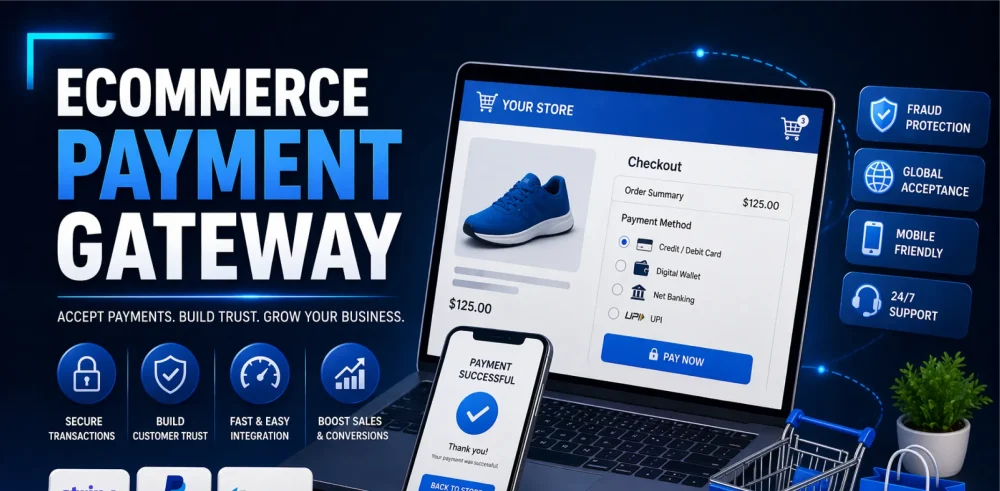
If you are setting up an online store in 2026, choosing the right ecommerce payment gateway is one of the first real decisions you will face. It sounds like a technical detail – but it directly affects how many customers complete their purchase, how much you pay per transaction, and how quickly money lands in your account.
Get it wrong and you lose sales to high fees, clunky checkout flows, or regions your gateway simply does not support. Get it right and payments work invisibly, reliably, every time.
Quick answer: The best ecommerce payment gateway for most beginners in 2026 is Stripe or PayPal. Both support 40+ currencies, charge transparent fees around 2.9%–3.5% per transaction, and plug into almost every major store platform with minimal setup. If you are already on Shopify, Shopify Payments is the strongest default choice.
This guide covers the top options, what they actually cost, and a clear recommendation based on where you are in your journey – whether you are just starting out or already scaling past $10,000 a month.
What is an ecommerce payment gateway?
An ecommerce payment gateway is the technology that securely processes customer payments on your online store. When a shopper enters their card details and clicks “buy,” the gateway encrypts that data, sends it to the card network for authorization, and confirms the transaction back to your store – all in a few seconds.
Think of it as the digital equivalent of a card reader in a physical shop. The customer never sees the gateway itself. They just see a smooth checkout. But what happens under the hood has a real impact on your conversion rate, your fees, and how fast your money moves.
In 2026, payment gateways do a lot more than just process cards. The best ones handle fraud detection, support buy-now-pay-later options, offer multi-currency checkout, and integrate with platforms like WooCommerce, Shopify, and custom-built stores with minimal setup.
It is also worth knowing that a payment gateway is slightly different from a payment processor and a merchant account – though most modern providers bundle all three together. When people say “ecommerce payment gateway,” they usually mean the full package: the interface, the processing engine, and the account that holds your funds.
How much does a payment gateway actually cost?
Fees are the part most new sellers underestimate. Every transaction runs through at least one fee layer, and those percentages add up fast once you have real volume. Here is a realistic breakdown of what the major ecommerce payment gateway options charge in 2026.
Most beginner stores will land between 2.9% and 3.5% per transaction all-in. On a $50 product sale, that is roughly $1.45–$1.75 per order. At 100 orders a month, that is $145–$175 in gateway fees alone – not counting platform fees or ad spend.
One note on fee comparisons: The cheapest gateway is not always the best choice. Payout speed, fraud protection, currency support, and platform integration all factor into the real cost of doing business. A gateway that charges 0.2% less but holds funds for 7 days can hurt your cash flow more than the saving is worth.
Payout schedules vary too. Stripe pays out in 2 business days by default. PayPal can be instant to your PayPal balance. Shopify Payments typically settles in 1–3 business days. If you are running a dropshipping store where you need to pay suppliers quickly, payout speed matters as much as the fee rate.
The best ecommerce payment gateway options compared
There is no single winner here – the right ecommerce payment gateway depends on your store setup, your target market, and how technical you are willing to get. Below are the strongest options in 2026, split by use case.
Best all-round options for new stores
Stripe
Stripe is the most developer-friendly payment gateway available, and it has become genuinely beginner-accessible in recent years through no-code integrations with WooCommerce, Squarespace, Wix, and almost every other major platform. It supports 135+ currencies, handles subscriptions natively, and has some of the best fraud detection tools in the industry through its Radar product.
Setup takes under an hour for most platforms. Payouts land in your bank account in 2 business days. Stripe is available in 46+ countries – though if you are in parts of Southeast Asia, Africa, or Latin America where Stripe is not yet available, you will need an alternative. Standard transaction fee: 2.9% + $0.30.
Why this works in 2026: Stores with well-optimized Stripe checkouts consistently report 10–15% higher conversion rates versus redirected payment flows – and that difference goes straight to your bottom line.
PayPal
PayPal remains one of the most recognized checkout options in the world, and that is its biggest advantage. Studies consistently show that displaying the PayPal button at checkout increases completed purchases – particularly among buyers aged 35 and over who associate it with purchase protection and trust.
On the downside, PayPal’s fees are higher than Stripe’s – 3.49% + $0.49 for standard transactions in 2026 – and its seller protection policies can be frustrating for dropshippers dealing with disputes. PayPal works best as a secondary payment option rather than your only gateway. Pair it with Stripe or Shopify Payments for full coverage.
Why this works in 2026: PayPal has over 400 million active accounts globally. Even if only 20% of your customers prefer it, not offering it means losing those sales to checkout friction that could have been avoided.
Shopify Payments
If your store is on Shopify, using Shopify Payments is an obvious choice. It eliminates the extra transaction fee that Shopify charges when you use a third-party gateway – 0.5%–2% depending on your plan – which alone makes it worth using. The checkout is natively integrated, so there is no redirect. Customers pay without ever leaving your store page, which keeps conversion rates higher.
Shopify Payments is powered by Stripe on the back end, so the reliability and fraud tools are solid. It is available in around 20 countries as of 2026. If you are based outside those markets, you will need to use a third-party gateway – and budget for the extra Shopify transaction fee in your pricing.
Strong options for specific situations
Authorize.Net
Authorize.Net has been around since 1996 and remains a trusted choice for established stores processing high volumes. The $25/month fee makes it uneconomical for stores doing fewer than 200–300 orders per month, but at scale the per-transaction costs become very competitive. It integrates well with WooCommerce and Magento and offers strong recurring billing tools for subscription businesses.
Important: Authorize.Net requires a separate merchant account, which adds setup time – typically 3–5 business days for approval. It is not the right choice if you need to start selling this week.
Klarna and Afterpay (buy-now-pay-later)
Buy-now-pay-later gateways are not full replacements for a standard payment gateway, but they are increasingly important add-ons. Klarna, Afterpay, and similar services allow customers to split purchases into instalments – and stores that offer BNPL options report average order value increases of 20–45% according to merchant data from Klarna’s platform documentation. The gateway takes on the credit risk; you get paid in full upfront.
These work best on stores selling products priced $50 and above, where the instalment option meaningfully reduces the psychological barrier to purchase. Most BNPL providers integrate as an additional payment method inside Stripe or Shopify Payments rather than as a standalone gateway.
Earning potential: Adding a BNPL option to an existing store can increase monthly revenue by $200–$800 for stores already doing $2,000–$5,000/month, simply from higher conversion on higher-ticket items.
2Checkout (now Verifone)
2Checkout – rebranded as Verifone in recent years – is worth knowing about if you are selling to customers in regions where Stripe is not available. It supports 87 currencies and 200+ countries, making it one of the widest-reaching options for international sellers. Fees are higher at 3.5% + $0.35 per transaction on the base plan, but for markets where alternatives are limited, it fills an important gap.
Payoneer
Payoneer is less of a traditional checkout gateway and more of a receiving and disbursement tool, but it comes up frequently in dropshipping circles because it works well for receiving marketplace payouts and paying overseas suppliers. If your store earns through Amazon, Walmart, or similar platforms, Payoneer is worth setting up alongside your main gateway to simplify supplier payments and currency conversion.
How to choose the right payment gateway for your store
With so many options, narrowing it down comes down to four practical filters. Run your situation through each one and the right choice usually becomes clear.
1. Where are you and where are your customers?
Your location determines what gateways you can even sign up for. Stripe is available in 46+ countries but not everywhere. PayPal is more widely accessible but has restrictions in certain markets too. Before you commit to any gateway, check its supported countries page for both merchant signup and customer payment – these are sometimes different lists.
If you are targeting customers in Europe, SEPA bank transfers and iDEAL (popular in the Netherlands) are worth supporting. In Southeast Asia, local wallets like GrabPay or GCash often outperform cards for conversion.
2. What platform is your store on?
Some gateways integrate natively with certain platforms and not others. Shopify Payments only works on Shopify. Many WooCommerce-specific gateways do not support Shopify at all. Check the integration library of any gateway before signing up – a gateway that requires custom API work to connect to your store is a significant time and money cost for most beginners.
3. What is your expected monthly volume?
At low volumes (under $5,000/month), the difference between 2.9% and 3.5% is relatively small in absolute terms. Focus on setup ease, payout speed, and customer trust signals. At higher volumes ($10,000+/month), every 0.1% in fees is worth optimizing – that is when it becomes worth exploring negotiated rates with Stripe or considering a dedicated merchant account through Authorize.Net or a similar provider.
4. Do you need multi-currency support?
If you are running a dropshipping store targeting multiple countries, multi-currency checkout is a significant conversion booster. Shoppers are 70% more likely to complete a purchase when prices are displayed in their local currency, according to research cited in Stripe’s official documentation. Both Stripe and Shopify Payments handle this well. PayPal does it automatically through currency conversion, though it takes a conversion fee cut in the process.
Security, fraud, and compliance: What to watch out for
Payment gateways operate in a heavily regulated space. As a store owner you have legal and ethical obligations that go beyond picking a low-fee provider. Here is what matters most.
PCI DSS compliance
Any store that accepts card payments needs to be PCI DSS compliant – a set of security standards designed to protect cardholder data. The good news is that modern hosted gateways like Stripe and PayPal handle PCI compliance on their end, so you are not storing raw card data on your own server. If you use a self-hosted checkout, the compliance burden is significantly higher. Stick to hosted or embedded checkout forms unless you have a developer who understands PCI requirements.
Key principle: Never store raw card numbers on your own server or database. Use a gateway that tokenizes card data – Stripe, PayPal, and Shopify Payments all do this by default.
Fraud prevention
Chargebacks are one of the most common and costly problems for online stores. A chargeback happens when a customer disputes a transaction with their bank – the funds are reversed and you often pay a fee of $15–$25 per incident on top. Stripe Radar uses machine learning to flag suspicious orders before they are processed. Shopify has its own fraud analysis built into the order dashboard. Use these tools from day one.
Important: A chargeback rate above 1% can result in your merchant account being suspended by your gateway provider. Monitor this metric monthly from the start.
What to avoid
Some practices might seem like smart shortcuts but can get your gateway account permanently banned. Do not process test orders through your live account to generate fake sales history. Do not use someone else’s business identity to open a gateway account. Do not use a gateway to process payments for products prohibited under its terms of service – this commonly includes certain supplements, adult content, firearms, and high-risk financial products. Read the acceptable use policy before you commit.
Which payment gateway should you pick? Recommendations by profile
Here is a practical summary based on where you are right now.
Complete beginner
If you are starting your first online store, go with Stripe or Shopify Payments. Both have excellent documentation, beginner-friendly dashboards, and are supported natively by every major store platform. Stripe is slightly more flexible if you plan to grow beyond a single platform. Shopify Payments wins if you are already committed to Shopify. Set up PayPal as a secondary option to capture the segment of buyers who prefer it. Do not overthink this – get started, and switch or add providers later as your needs evolve.
Intermediate / part-time seller
If you are already selling and doing $2,000–$8,000/month, the focus shifts to optimization. Review your current chargeback rate, payout speed, and whether multi-currency checkout would help you expand into new markets. Consider adding a BNPL option like Klarna or Afterpay if your average order value is above $50. If you are on WooCommerce, make sure you are using a gateway with native integration rather than a redirect-based checkout, which typically drops conversion by 10–20%.
Advanced / full-time goal
At $15,000+/month in revenue, gateway fees become a meaningful line item. At this point it is worth contacting Stripe directly about negotiated rates – this becomes possible once you are processing above $80,000–$100,000/month. It is also worth separating your payment processing from your fraud management, using a dedicated tool like Signifyd or Kount alongside your main gateway for more granular control. For stores with international reach, a multi-gateway setup – where different payment methods route to the most appropriate provider for each market – can add 5–10% to net revenue.
The ecommerce payment gateway market is evolving fast in 2026, with embedded finance, instant payouts, and AI-powered fraud detection becoming standard features even in entry-level plans. Starting with a solid foundation now puts you in a strong position to take advantage of those tools as they roll out.
AliDropship: Your complete all-in-one solution for starting dropshipping in 2026
If you want the simplest possible way to start dropshipping – especially if you’re brand new – AliDropship remains one of the most beginner-friendly tools available in 2026. It brings together store creation, product imports, automation, and marketing into a single streamlined system designed to help you launch quickly and grow confidently.
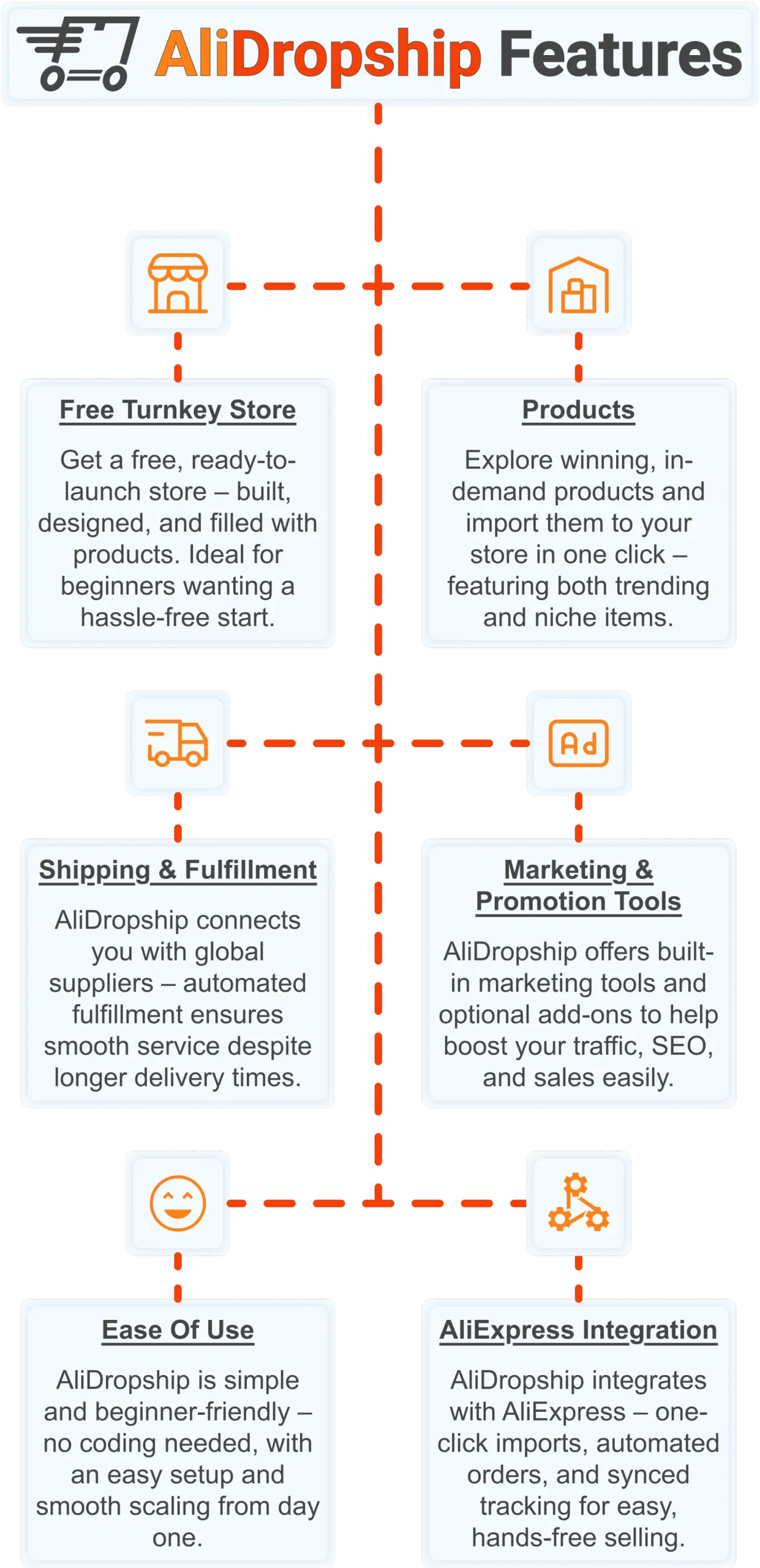
Free turnkey store ️
Get a free turnkey store – built, designed, and filled with products. Ideal for beginners wanting a hassle-free start, the store comes fully optimized to attract customers right away, saving you time on setup. Plus, it includes professional design elements to give your business a polished, trustworthy look from day one. This ready-made foundation makes it easy to move seamlessly into product selection.
Products
Once your store is set up, you can explore winning, in-demand products and import them in one click – featuring both trending and niche items. This wide selection lets you cater to diverse customer interests and test what works best. Regular updates ensure you always have fresh products, keeping your store competitive and relevant. With great products in place, smooth shipping becomes the next essential step.
Shipping & fulfillment
AliDropship connects you with global suppliers, and automated fulfillment ensures seamless order processing despite international delivery times. Customers receive real-time tracking updates, which builds confidence and trust in your store. Once shipping is handled reliably, you can focus on promoting your store and attracting traffic.
Marketing & promotion tools
To maximize sales, AliDropship offers built-in marketing tools and optional add-ons that help boost traffic, SEO, and conversions. From email campaigns and discounts to social media integration, these tools empower you to reach and retain customers without needing prior marketing experience. With promotion strategies in place, managing your business becomes simpler and more efficient.
Ease of use
AliDropship is beginner-friendly – no coding needed, with an intuitive dashboard that guides you through every step. Easy setup and smooth scaling let you expand your store without stress. As your business grows, adding new features, products, and marketing campaigns remains hassle-free, giving you more time to focus on sales.
AliExpress integration
Finally, AliDropship integrates seamlessly with AliExpress, enabling one-click imports, automated orders, and synced tracking. Your inventory stays up-to-date with the latest products and prices, while automated order processing frees you from manual tasks. Combined with the turnkey setup, reliable shipping, and built-in marketing tools, this integration ensures your dropshipping business is fully equipped for growth and success.
Picking the right ecommerce payment gateway is just one piece of the puzzle – your store setup, products, and traffic matter just as much. Get your free turnkey store today and launch with everything already in place.
Frequently asked questions
What is the best ecommerce payment gateway for beginners?
The best options for most beginners in 2026 are Stripe or PayPal, both supporting more than 40 currencies. Stripe charges 2.9 percent plus 30 cents per transaction, while PayPal charges 3.49 percent plus 49 cents for standard transactions. Both plug into almost every major store platform with minimal setup, and Stripe setup typically takes under one hour. If a store is already on Shopify, Shopify Payments is generally the strongest default choice since it removes the extra third party transaction fee.
How much do ecommerce payment gateways typically cost?
Most beginner stores land between 2.9 percent and 3.5 percent per transaction across all fees combined. On a 50 dollar product sale, that works out to roughly 1.45 to 1.75 dollars per order. At 100 orders a month, gateway fees alone total around 145 to 175 dollars, not counting platform fees or ad spend. Authorize.Net charges 2.9 percent plus 30 cents plus a 25 dollar monthly fee, making it uneconomical for stores doing fewer than 200 to 300 orders per month.
How fast do payment gateways pay out to sellers?
Stripe pays out to a bank account in 2 business days by default. PayPal can be instant to a PayPal balance, while Shopify Payments typically settles in 1 to 3 business days. Authorize.Net requires a separate merchant account that typically takes 3 to 5 business days for approval, making it a poor fit for anyone needing to start selling immediately. Payout speed matters especially for dropshippers who need to pay suppliers quickly after a sale.
Does adding buy now pay later affect ecommerce conversion rates?
Stores that offer buy now pay later options such as Klarna or Afterpay report average order value increases of 20 to 45 percent according to merchant data from Klarna platform documentation. These options work best on stores selling products priced 50 dollars and above, where installments meaningfully reduce the psychological barrier to purchase. Adding a BNPL option to an existing store can increase monthly revenue by 200 to 800 dollars for stores already doing 2000 to 5000 dollars per month. Most BNPL providers integrate as an additional payment method inside Stripe or Shopify Payments rather than as a standalone gateway.
What fraud and compliance risks should ecommerce sellers watch for?
A chargeback happens when a customer disputes a transaction with their bank, reversing the funds and often adding a fee of 15 to 25 dollars per incident. A chargeback rate above 1 percent can result in a merchant account being suspended by the gateway provider, so this metric should be monitored monthly. Stores must be PCI DSS compliant, though hosted gateways like Stripe and PayPal handle this compliance automatically by tokenizing card data. Processing test orders through a live account or using someone else business identity to open a gateway account can result in a permanently banned account.
 Previous post
