 ‧ Agnes Kazaryan ‧
March 23, 2026
‧ Agnes Kazaryan ‧
March 23, 2026  676 ‧
676 ‧
 0
0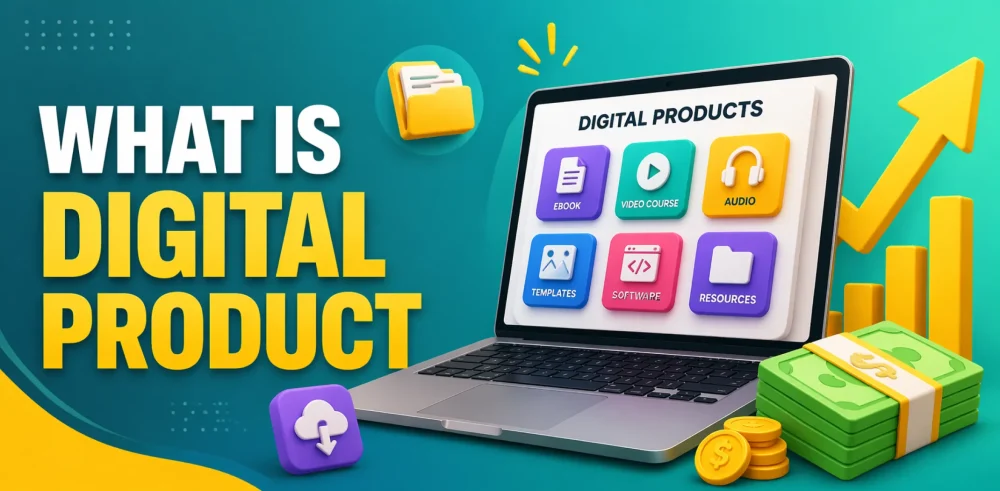
More people than ever are selling things online – but not everything you sell has to arrive in a box. Digital products have quietly become one of the most talked-about categories in ecommerce, and once you understand what they actually are, it is easy to see why. Whether you are brand new to online business or exploring ways to diversify your income, getting clear on what a digital product is – and how it stacks up against physical goods – puts you in a much better position to act.
Quick answer: A digital product is any item delivered electronically rather than physically – think ebooks, software, online courses, music files, and templates. Unlike physical goods, digital products require no inventory, no shipping, and can be sold to unlimited buyers at once.
This article walks through the full definition, the most common types and real-world examples, and gives you an honest side-by-side comparison of digital versus physical products. By the end, you will know which model – or which combination – makes the most sense for your goals in 2026.
What is a digital product?
A digital product is any product that exists in digital format and is delivered to the buyer electronically – through a download link, a streaming platform, an email attachment, or direct access to a members-only area. There is nothing physical to hold, pack, or ship. The value is entirely in the content, the functionality, or the access the product provides.
The most common types of digital products include:
- Ebooks and digital guides – downloadable PDFs or formatted files covering a topic in depth
- Online courses and video content – structured learning delivered through video, audio, or text modules
- Software and apps – tools, plugins, mobile applications, or browser extensions
- Templates and design assets – Canva templates, resume packs, Notion dashboards, Lightroom presets
- Music, sound effects, and audio files – licensed tracks, beats, or royalty-free sound libraries
- Stock photography and illustrations – images licensed for personal or commercial use
- Digital memberships and subscriptions – recurring access to exclusive content or tools
- Printables – calendars, planners, worksheets, and activity sheets that buyers print at home
What ties all of these together is the absence of a physical component. Once a digital product is created, the same file can be sold again and again with almost zero additional cost per sale. That scalability is exactly what draws so many entrepreneurs to this space.
Why this works in 2026: Consumer comfort with digital purchases has never been higher. From streaming subscriptions to SaaS tools, people are accustomed to paying for things they never touch physically – and that behavior makes the market for digital products extremely receptive right now.
How much can you realistically earn selling digital products?
Earnings vary widely depending on your niche, your audience size, and how much marketing effort you put in. Here is an honest breakdown of what different approaches typically look like in practice.
These figures reflect what is genuinely achievable at each level – not best-case scenarios. The biggest variable is whether you already have an audience or are building from scratch.
One note on these figures: Profit margins on digital products can look impressive on paper, but reaching consistent sales takes real marketing work. Expect a 60–90 day runway before organic traffic or an audience starts converting reliably.
Digital products vs physical products: How they actually compare
This is the core question for anyone thinking about starting an online store or adding a new revenue stream. Both models have real advantages and real drawbacks. Here is an honest look at how they stack up across the metrics that matter most.
Neither model is universally better – they suit different goals, skill sets, and risk tolerances. Digital products reward creators and knowledge-sharers. Physical products reward merchandisers and trend-spotters. Dropshipping physical products removes the inventory problem entirely, which is why it remains one of the most popular entry points for new ecommerce businesses.
The real advantages of selling digital products
If you have been wondering why digital products get so much attention in the online business world, these three reasons explain most of it.
Profit margins are genuinely high
Once a digital product is created, the cost to deliver it is essentially zero. No raw materials, no packaging, no warehouse fees. An ebook that took you a weekend to write can sell for $19–$49 indefinitely. A Notion template bundle or a set of Lightroom presets can generate passive income for months or years.
This is why digital products are popular among solopreneurs who want to build income without the logistics overhead of a physical product business.
Earning potential: $500–$5,000/month is realistic for established digital product sellers with an audience. Beginners with no existing following typically see $50–$300/month in the first 60–90 days.
Instant delivery and global reach
A buyer in Germany can purchase your digital guide at 2 AM and have it in their inbox within seconds. No shipping delays, no customs complications, no international courier fees. Your product is global from day one, which dramatically expands your potential customer base compared to a physical goods store dealing with international shipping costs and timelines.
No inventory, no storage, no logistics
You are never sitting on unsold stock. You never need to calculate reorder points or negotiate storage deals. The product lives on a server, and every sale is a clean transaction. For people who want to run a lean business without operational complexity, this is a major draw.
The real advantages of selling physical products
Physical products come with their own set of genuine strengths – and understanding them helps you make a smarter decision about which direction to go.
Tangibility builds trust faster
Customers can see product photos, read reviews from other buyers, and understand exactly what they are getting. Physical products are easier to describe, easier to photograph, and easier for buyers to evaluate before purchasing. This trust shortcut that tangibility creates is something digital products often have to earn through testimonials, demo videos, or free previews.
The dropshipping model removes the biggest friction
The traditional objection to physical products – “I don’t want to deal with inventory or shipping” – largely disappears with dropshipping. In a dropshipping model, your supplier handles all fulfillment. You market the product, collect the payment, and the supplier ships directly to your customer. You never touch the stock.
This brings physical product selling very close to the operational simplicity of digital products, while keeping all the advantages of selling something tangible. Platforms like AliDropship are built specifically to make this workflow seamless – connecting your store to AliExpress suppliers, automating orders, and syncing tracking information automatically.
Broader market demand and easier product validation
Physical products span virtually every human interest and need. Fitness gear, home decor, pet accessories, kitchen gadgets, outdoor tools – these categories have massive, established demand. Validating a product idea is also more straightforward: you can look at Amazon bestseller lists, AliExpress sales volumes, and Google Trends data to gauge real interest before committing to a niche.
With digital products, validating demand before you invest time in creation is harder – you are often building before you know if buyers exist.
Earning potential: Dropshipping physical products typically generates $30–$100/day for a well-run store in its first active quarter, scaling to $200–$500/day as traffic and conversion data improve over 6–12 months.
Downsides of each model worth knowing
An honest comparison has to include the friction points – because both models have them.
Digital product challenges
Creating a digital product takes real time and skill. A great online course can take weeks or months to film, edit, and structure properly. Templates and design assets require creative expertise. And once you have created the product, you still need to market it – because without traffic and an audience, even the best digital product sits unnoticed.
Refund management is also trickier. Since there is nothing to return, some buyers attempt to dispute charges after downloading. Clear terms of service and a no-refund-after-access policy help, but it is a friction point that physical product businesses do not face in quite the same way.
Physical product challenges
Even with dropshipping removing inventory headaches, you are still dependent on your supplier’s fulfillment speed and quality. Shipping times from overseas suppliers can range from 10 to 30 days, which requires proactive communication with customers. Product quality issues – something you have no direct control over – can generate negative reviews that damage your store’s reputation over time.
Margins on physical products are also lower than on digital goods. After supplier cost, transaction fees, and any ad spend, a 20–35% net margin is common. That is still a workable business, but it requires higher sales volume to hit the same income level as a high-margin digital product at similar traffic.
Legal and ethical considerations when selling digital products
The digital product space has a few specific legal and ethical areas worth understanding before you start selling.
Licensing and intellectual property
If you are selling content you created yourself, you own it and can sell it freely. If you are selling resell-rights or private-label content, you need to confirm the license explicitly permits resale and commercial use. Selling a product you do not have the rights to – even unknowingly – can result in DMCA takedowns or account bans on platforms like Etsy or Gumroad.
Key principle: Always verify the license type before listing any digital product you did not create yourself.
Refund and access policies
Because digital goods are delivered instantly, most sellers adopt a strict no-refund policy once access is granted. This is legally acceptable in most jurisdictions, but you need to display the policy clearly before purchase – on the product page, at checkout, and in the order confirmation email. Burying or omitting the refund policy is a common cause of payment disputes.
Tax and VAT on digital sales
Selling digital products internationally triggers VAT or GST obligations in some countries – including EU member states, the UK, and Australia – regardless of where your business is registered. If you are selling to customers in these regions, it is worth checking whether your payment platform (Gumroad, Stripe, PayPal) handles tax collection automatically, or whether you need to register yourself.
Important: This is not legal or tax advice – consult a local accountant or tax professional for guidance specific to your situation.
Which model is right for you?
The honest answer depends on what you already have. Here is a breakdown by reader profile to make this more concrete.
Complete beginner: If you are starting from zero with no existing audience, no email list, and no established skill to productize, a ready-made digital store is one of the fastest paths to getting started. You skip the product creation phase entirely – the catalog is already built, delivery is automated, and the store comes ready to accept orders. You can start generating sales data within weeks without writing a single word of your own content.
Creator or expert with existing knowledge: If you have genuine expertise – in fitness, design, finance, language learning, coding, or cooking – digital products are a strong match. You are packaging knowledge you already have into a format people will pay for. The creation investment is real, but the long-term margin and passive income potential is hard to match with physical goods.
Intermediate seller looking to diversify: If you already have a functioning dropshipping store or an online business of any kind, adding digital products as a secondary revenue stream is a smart move. Many physical product store owners add digital downloads – care guides, how-to PDFs, printable planners – as upsells. This increases average order value without adding fulfillment complexity.
Advanced / full-time income goal: The strongest online businesses tend to combine both models. A dropshipping store bringing in steady physical product revenue, paired with digital upsells or a complementary info product line, creates multiple income streams that reinforce each other. Aim for $5,000–$15,000/month as a realistic full-time benchmark, which typically requires 12–24 months of consistent effort and reinvestment.
AliDropship: Your complete all-in-one solution for starting dropshipping in 2026
If you want the simplest possible way to start dropshipping – especially if you are brand new – AliDropship remains one of the most beginner-friendly tools available in 2026. It brings together store creation, product imports, automation, and marketing into a single streamlined system designed to help you launch quickly and grow confidently.
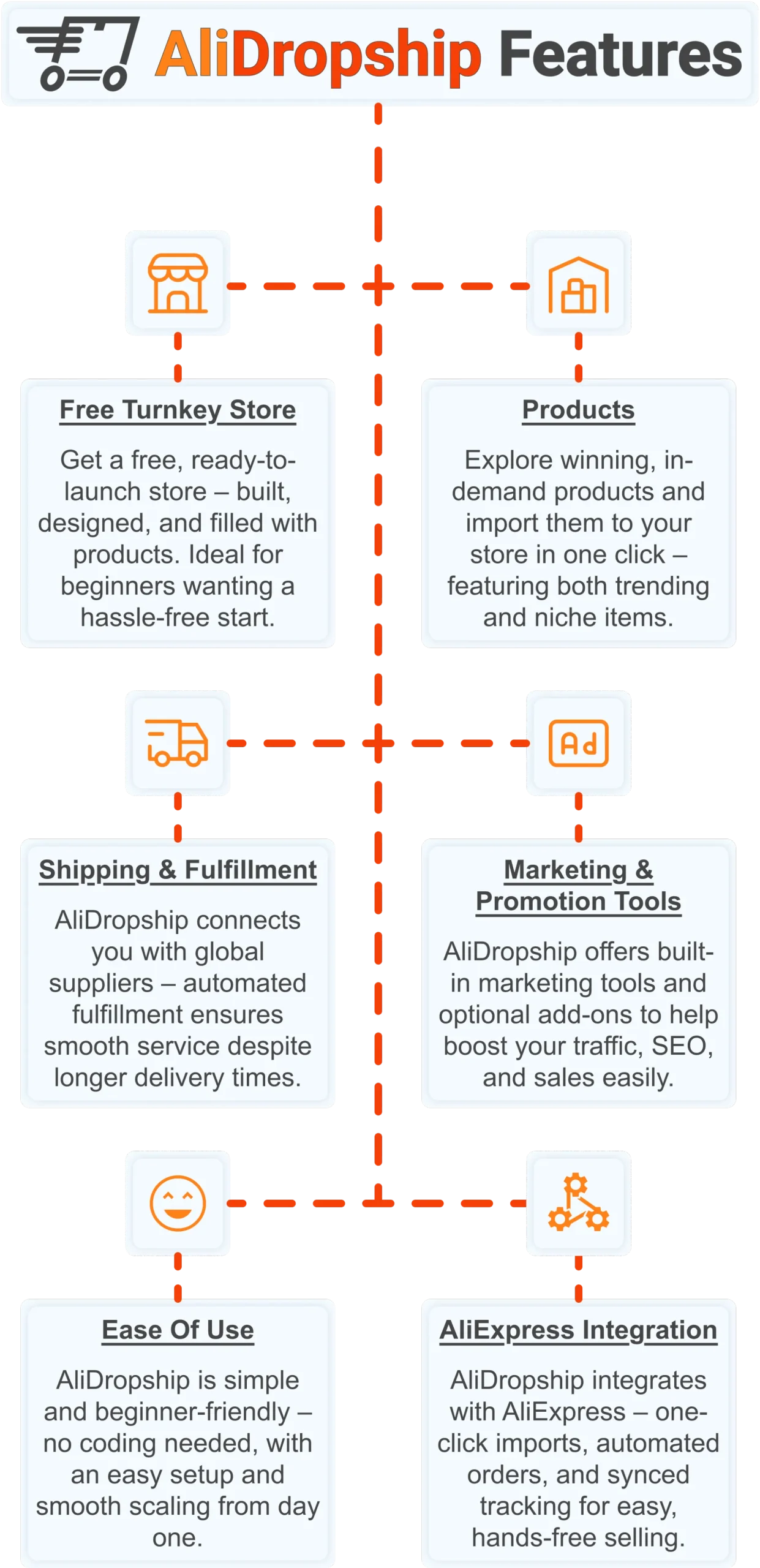
Free turnkey store ️
Get a free turnkey store – built, designed, and filled with products. Ideal for beginners wanting a hassle-free start, the store comes fully optimized to attract customers right away, saving you time on setup. Plus, it includes professional design elements to give your business a polished, trustworthy look from day one. This ready-made foundation makes it easy to move seamlessly into product selection.
Products
Once your store is set up, you can explore winning, in-demand products and import them in one click – featuring both trending and niche items. This wide selection lets you cater to diverse customer interests and test what works best. Regular updates ensure you always have fresh products, keeping your store competitive and relevant. With great products in place, smooth shipping becomes the next essential step.
Shipping & fulfillment
AliDropship connects you with global suppliers, and automated fulfillment ensures seamless order processing despite international delivery times. Customers receive real-time tracking updates, which builds confidence and trust in your store. Once shipping is handled reliably, you can focus on promoting your store and attracting traffic.
Marketing & promotion tools
To maximize sales, AliDropship offers built-in marketing tools and optional add-ons that help boost traffic, SEO, and conversions. From email campaigns and discounts to social media integration, these tools empower you to reach and retain customers without needing prior marketing experience. With promotion strategies in place, managing your business becomes simpler and more efficient.
Ease of use
AliDropship is beginner-friendly – no coding needed, with an intuitive dashboard that guides you through every step. Easy setup and smooth scaling let you expand your store without stress. As your business grows, adding new features, products, and marketing campaigns remains hassle-free, giving you more time to focus on sales.
AliExpress integration
Finally, AliDropship integrates seamlessly with AliExpress, enabling one-click imports, automated orders, and synced tracking. Your inventory stays up-to-date with the latest products and prices, while automated order processing frees you from manual tasks. Combined with the turnkey setup, reliable shipping, and built-in marketing tools, this integration ensures your dropshipping business is fully equipped for growth and success.
Now that you know what a digital product is and how it compares to physical goods, the next step is finding the right model to act on. Get your free store today and start selling with everything already in place.
Frequently Asked Questions
What is a digital product and what are common examples?
A digital product is any item delivered electronically rather than physically, with nothing to hold, pack, or ship. Common examples include ebooks, online courses, software and apps, templates, music files, stock photography, digital memberships, and printables. Once a digital product is created, the same file can be sold repeatedly with almost zero additional cost per sale. This scalability is a major reason digital products attract so many solopreneurs.
How much profit margin do digital products typically generate?
Digital products typically generate profit margins between 70 and 95 percent, compared to 20 to 50 percent for physical products depending on niche. Because there are no raw materials, packaging, or warehouse fees, the cost to deliver a digital product is essentially zero after creation. An ebook that took a weekend to write can sell for 19 to 49 dollars indefinitely. This high margin structure is a key reason digital products appeal to solo creators.
How much can you realistically earn selling digital products?
A ready-made digital store with no creation required typically earns 50 to 300 dollars a month in the first 60 to 90 days. Self-created digital products like ebooks and templates can generate 500 to 2,000 dollars a month after 3 to 6 months of effort. Online courses or software tools built around specialist knowledge can reach 2,000 to 10,000 dollars a month for established sellers. A 60 to 90 day runway is typical before organic traffic or an audience starts converting reliably.
How do digital products compare to physical products for a new seller?
Digital products require no inventory and offer instant, automated fulfillment, while physical products depend on shipping and handling even with dropshipping. Physical product shipping from overseas suppliers can take 10 to 30 days, requiring proactive communication with customers. Digital products need strong social proof to build trust, while physical products are generally easier for buyers to evaluate before purchase. A well-run dropshipping store can generate 30 to 100 dollars a day in its first active quarter, scaling to 200 to 500 dollars a day over 6 to 12 months.
What legal issues should sellers understand before selling digital products?
Sellers who did not create a digital product themselves need to confirm the license explicitly permits resale and commercial use before listing it. Selling digital products internationally can trigger VAT or GST obligations in regions including the EU, the UK, and Australia, regardless of where the business is registered. Most sellers adopt a strict no-refund policy once digital access is granted, but this policy must be displayed clearly before purchase. Payment platforms such as Gumroad, Stripe, and PayPal sometimes handle tax collection automatically, though this varies by platform.
 Previous post
