 ‧ Agnes Kazaryan ‧
March 24, 2026
‧ Agnes Kazaryan ‧
March 24, 2026  593 ‧
593 ‧
 0
0
You clicked “buy.” Now what? Between that moment and the package hitting your customer’s doorstep, a whole chain of decisions – storage, picking, packing, shipping, tracking – quietly determines whether your store gets a five-star review or a chargeback. That entire chain is called fulfillment for ecommerce, and how well you manage it will either build your brand or quietly burn it down.
The good news is that in 2026 you have more ways to handle this than ever before – from packing boxes yourself at the kitchen table to running a fully automated store where a supplier ships every order without you lifting a finger. The challenge is knowing which model makes sense for where you are right now, and which one to build toward as you grow. This guide gives you the honest breakdown.
Quick answer: Fulfillment for ecommerce is the end-to-end process of storing products, processing orders, and shipping them to customers. Depending on your setup, you can handle this yourself, hand it off to a third-party logistics provider, or use dropshipping to skip inventory completely.
Before diving into each model, it helps to understand why fulfillment matters so much right now. Consumer expectations in 2026 are not gentle – two-day delivery is the baseline in most markets, and anything slower needs a clear explanation or you will be buried in support tickets. Getting your ecommerce order fulfillment strategy right is not a background detail. It directly affects customer satisfaction, repeat purchases, and your profit margin per order.
What is fulfillment for ecommerce?
Ecommerce fulfillment is the complete operational sequence that moves a product from a warehouse or supplier to your customer’s front door. It starts the moment a customer completes checkout and covers everything that follows: inventory storage, order processing, picking the right items, packing them securely, printing shipping labels, handing parcels to a carrier, and managing returns when they come back.
The ecommerce order fulfillment process sounds simple on paper. At any real volume, though, it requires coordination across warehousing, logistics, carrier relationships, and customer communication. A mistake or delay at any single point in that chain lands in your inbox as a complaint – and often as a refund request.
In 2026, the fulfillment landscape breaks down into four main models: self-fulfillment (you handle everything), third-party logistics or 3PL (a fulfillment center stores and ships on your behalf), dropshipping (the supplier ships directly to your customer), and a hybrid approach that blends two or more of these. Each has real trade-offs, and none is universally the best choice. The right model depends on your product type, order volume, margin, and where you are in building your business.
How much does bad fulfillment actually cost you?
Before comparing the models, it is worth anchoring on what is actually at stake. Research consistently shows that a poor delivery experience is one of the top reasons customers never return to an online store. A late shipment or damaged package does not just cost you that one sale – it costs you that customer’s entire lifetime value, which for a healthy ecommerce store often runs $80–$300 or more per person.
Self-fulfillment gives you control but eats your time fast. Third-party logistics unlocks scale but introduces fixed costs that squeeze margins on low-ticket products. Dropshipping removes the physical burden entirely – which is why it remains the most accessible starting point for most new sellers.
One note on startup costs: The figures above show the entry point, not the long-term picture. As order volume grows, 3PL pricing per unit typically drops. Self-fulfillment costs in time – and in packing errors – tend to rise. Build your model with that trajectory in mind.
The main fulfillment models for ecommerce stores
Let us walk through each model honestly – what it involves, who it suits, and what the real trade-offs look like when you are actually running orders day to day.
Self-fulfillment
With self-fulfillment, you purchase stock upfront, store it at home or in a rented space, and handle every order yourself – printing labels, packing boxes, dropping shipments at your carrier. It is the most hands-on model and the one most beginners start with because it feels controllable and familiar.
The reality is that self-fulfillment works reasonably well up to around 20–30 orders per day. Beyond that threshold, the time cost becomes unsustainable unless you are hiring help. You are also carrying the full risk of unsold inventory and whatever storage costs come with it.
Earning potential: Margins can reach 30–50% on physical products when volume is consistent and your product selection is tight. Slow-moving stock quietly erodes those margins through storage cost and opportunity cost.
Self-fulfillment is a reasonable starting point if you are selling handmade, custom, or highly perishable products where hands-on control genuinely matters. It also works as a temporary phase while you validate demand before committing to a broader fulfillment strategy. The biggest risk is scaling without a plan – many sellers get comfortable at 10 orders a day, hit 50 suddenly, and the whole model collapses into missed shipments and burned evenings.
Third-party logistics (3PL) and fulfillment centers
A third-party logistics provider – commonly called a 3PL – is a company that warehouses your inventory and manages the entire ecommerce shipping process on your behalf. You send your stock to their fulfillment center, integrate your store with their system, and orders are automatically picked, packed, and dispatched when a customer buys.
Well-known 3PL options include ShipBob, ShipMonk, and Fulfillment by Amazon (FBA). Pricing typically involves receiving fees when your stock arrives, monthly storage fees per cubic foot, and per-order pick-and-pack fees. Expect to pay $3–$8 per order fulfilled depending on product dimensions and provider.
Why this works in 2026: Major 3PLs have strategically located fulfillment centers across the US and EU, meaning customers often receive orders in 1–2 days without you paying Amazon Prime-level logistics costs.
Third-party fulfillment services start making financial sense when you are consistently processing 100+ orders per month and your margins can absorb the per-unit fees. Below that volume, fixed costs typically outweigh the time savings. The real trade-off is physical control – if a 3PL makes a packing error or damages stock during receiving, your customer complains to you, not to them. Vet your provider carefully and check reviews on Trustpilot before committing.
Dropshipping fulfillment
Dropshipping is the fulfillment model where you sell products in your online store without ever holding inventory. When a customer places an order, you forward it to a supplier – typically sourced through AliExpress or a similar platform – and the supplier ships directly to your customer under your store name.
The order fulfillment process from your side is almost entirely automated when you use the right tools. You set up the product listings, a customer buys, the order routes to the supplier, and tracking information passes back to the customer automatically. No warehouses, no packing tape, no postage runs.
Earning potential: Margins typically run 15–35% depending on your niche and pricing competitiveness. A store generating $3,000–$8,000/month in revenue is a realistic target within 60–90 days of consistent effort on marketing and product selection.
The most common friction point in dropshipping fulfillment is shipping time. Suppliers shipping from overseas can take 10–20 days to deliver, which creates customer service challenges unless you set clear expectations upfront. Selecting suppliers with ePacket or AliExpress Standard Shipping options – or those with warehouses in your target country – significantly reduces this issue. Dropshipping removes the financial and physical barriers to starting, which is why it remains one of the most popular entry points for new ecommerce sellers in 2026.
Hybrid fulfillment
Many experienced ecommerce operators eventually land on a hybrid model – dropshipping certain product lines while self-fulfilling or using a 3PL for others. This is especially common when a seller starts with dropshipping, identifies their best-selling products, and then brings those specific SKUs in-house or to a local fulfillment center to improve delivery speed and quality control.
Hybrid fulfillment is not a beginner strategy. It adds complexity to your operations, inventory management, and customer service. But for a store doing consistent volume across multiple niches, it can unlock the best of each model simultaneously. Think of it as a destination, not a starting point.
Key factors that make or break ecommerce fulfillment
Regardless of which fulfillment model you choose, the same core factors determine whether your customers stay happy or file disputes. Here is what to optimize across all of them.
Shipping speed and carrier selection
Ecommerce shipping expectations vary significantly by market. US customers generally expect 3–5 business days as standard, and anything over 7 days needs proactive communication. If you are dropshipping internationally, setting accurate delivery windows in your product descriptions and confirmation emails prevents the majority of “where is my order?” tickets before they arrive.
For self-fulfillment and 3PL operations, compare carrier rates regularly – USPS, UPS, FedEx, and regional carriers all price differently by weight, dimensions, and destination. Small parcel consolidation services can cut your ecommerce shipping costs by 20–30% at moderate volumes, and that difference adds up quickly at scale.
Inventory management
If you are holding any stock at all – even a small amount – inventory management is non-negotiable. Overselling a product you do not have in stock is one of the fastest ways to damage your store’s reputation. Tools like Inventory Planner, Linnworks, or the built-in inventory systems in Shopify or WooCommerce give you real-time visibility and low-stock alerts before problems hit your customers.
With dropshipping, inventory sync is handled by your supplier integration – which is one of the key reasons the model is so attractive for beginners. When a supplier runs out of stock, a good dropshipping tool will flag or pause the listing automatically rather than allowing you to keep selling a product that cannot ship.
Returns management
Returns are an unavoidable part of fulfillment for ecommerce, and how you handle them defines your brand as much as the original delivery. A clear, fair returns policy – stated upfront on your product pages – reduces the emotional friction of the return experience considerably.
For dropshipping stores, returns are slightly more complex because the supplier is holding the product. Most established suppliers accept returns for defective or damaged items, but you need to negotiate your returns process clearly before you start selling. Never list a product without understanding the supplier’s return terms first.
Important note: Many dropshippers offer replacement or refund policies funded from their margin rather than routing returns back to international suppliers – for low-ticket items under $30, this is usually faster and more cost-effective for everyone involved.
Tracking and customer communication
Customers who can see their order moving are far less likely to submit a support ticket. Automated tracking emails – sent at dispatch, in transit, and on delivery – reduce inbound support volume by as much as 40% according to data from major ecommerce platforms. This is table stakes in 2026, not a premium feature.
If you are dropshipping with AliExpress suppliers, tracking is typically available via 17track or your platform’s native tracking integration. For 3PL operations, your provider should include automated tracking notifications as part of their standard service. If they do not offer this, it is a red flag worth acting on before you scale.
Legal and ethical considerations in ecommerce fulfillment
Fulfillment is not just an operational topic – there are real legal and ethical responsibilities tied to how you store, ship, and represent products to customers. Getting this wrong can cost you your store, not just a sale.
What to avoid absolutely
Do not misrepresent shipping times. Listing “ships in 1–3 days” when your supplier takes 14 days is a deceptive trade practice in most markets and will attract chargebacks, PayPal disputes, and potential platform bans. Similarly, do not import and resell products with counterfeit branding or trademark violations – even unknowingly, customs seizures and marketplace bans are real consequences that hit without warning.
Avoid suppliers who cannot provide tracking on orders. Untracked packages are a liability – if a customer claims non-delivery and you have no tracking evidence, dispute resolution almost always goes in the customer’s favour. No tracking equals no protection.
Key principle: Represent your fulfillment process honestly and your customers will forgive occasional delays – misrepresent it and they will not forgive you even when delivery is on time.
What to do instead
Always display accurate, realistic delivery estimates based on your actual supplier or 3PL performance data. Use dispatch confirmation emails with tracking links. If a delay occurs – supplier backlog, customs hold, carrier issue – proactively email affected customers before they ask. This transparency converts a potential complaint into a neutral or even positive experience in a surprising number of cases.
When selecting fulfillment services or supplier partners, check their track record on Trustpilot and ecommerce community forums like Reddit’s r/dropship before committing. Verified history from real sellers matters more than a polished supplier sales page.
How to choose the right fulfillment strategy for your store
The honest answer is that the best fulfillment strategy for ecommerce depends entirely on where you are right now – not where you plan to be in two years. Here is a practical breakdown by seller profile.
Complete beginner
If you are just starting out and have not yet made your first sale, dropshipping is the right model. It eliminates inventory risk, keeps startup costs near zero, and lets you test products and niches without financial exposure. Focus your energy on product selection, store design, and learning basic paid or organic traffic – not on logistics infrastructure.
The ecommerce order fulfillment process with dropshipping is nearly invisible to you once set up correctly. That means you can put 100% of your attention on the parts of the business that actually drive revenue.
Intermediate / part-time seller
If you are already generating consistent sales – say $2,000–$5,000/month – and you are running into fulfillment friction (supplier quality issues, slow shipping complaints, returns headaches), this is the right time to evaluate a hybrid approach or a trusted 3PL for your top-selling SKUs.
At this stage, audit your supplier performance: look at average delivery time, defect rate, and return frequency per product. Products with consistently poor metrics are candidates for switching to a domestic supplier or moving into a fulfillment center.
Advanced / full-time ecommerce operator
At scale – $15,000+/month in revenue – your fulfillment strategy should be driven by data, not intuition. You should know your cost per order fulfilled, return rate by SKU, average delivery time by region, and carrier cost per pound. A 3PL with multi-location fulfillment centers becomes genuinely valuable at this point because it cuts average delivery time and reduces ecommerce shipping costs simultaneously.
Advanced operators often maintain a dropshipping pipeline for new product testing while using a 3PL for proven bestsellers. This combination gives you the flexibility to experiment without committing capital to unproven stock – and it is the direction most successful stores move in as they scale through 2026 and beyond.
AliDropship: Your complete all-in-one solution for starting dropshipping in 2026
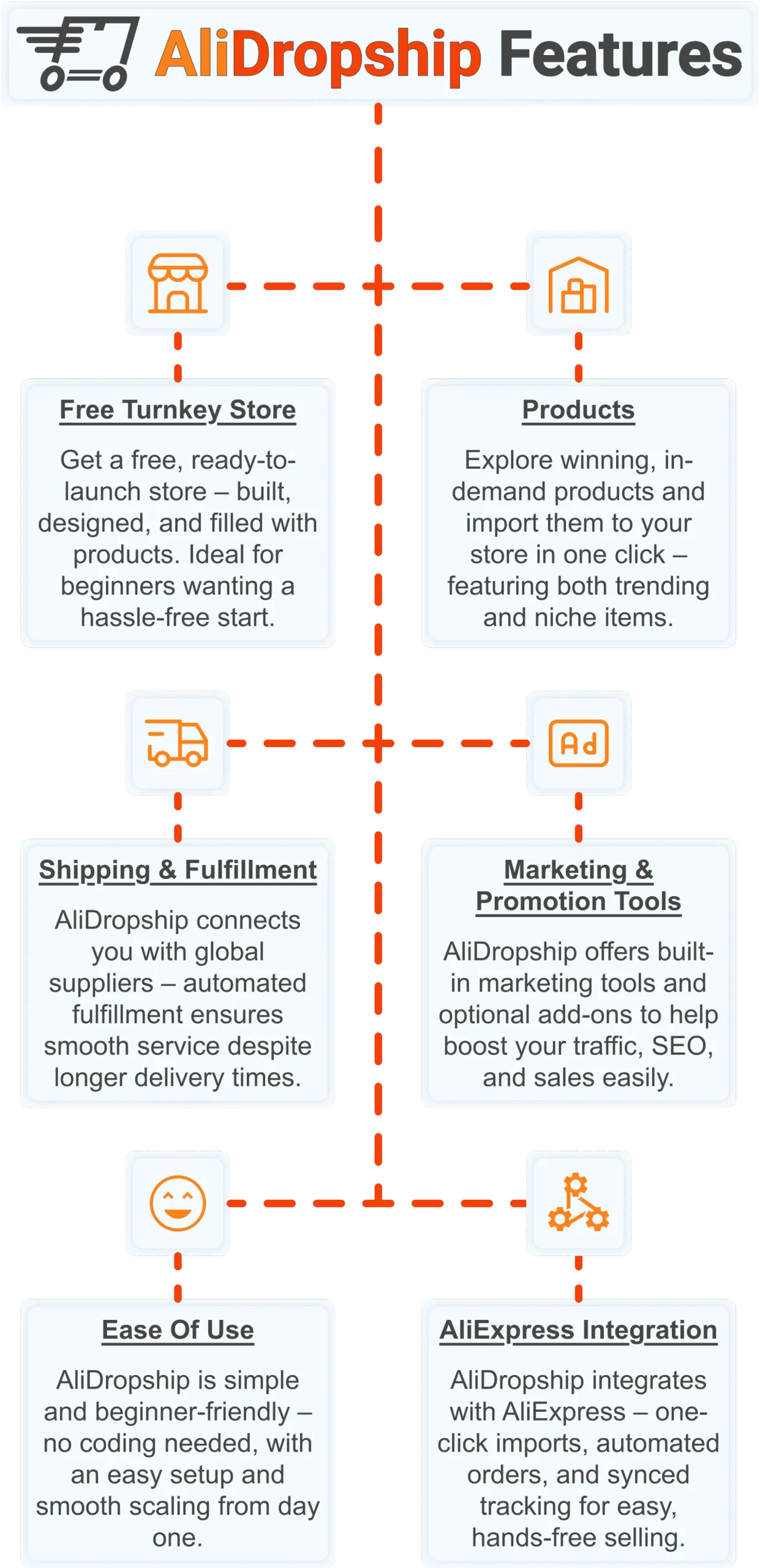
If you want the simplest possible way to start dropshipping – especially if you are brand new – AliDropship remains one of the most beginner-friendly tools available in 2026. It brings together store creation, product imports, automation, and marketing into a single streamlined system designed to help you launch quickly and grow confidently.
Free turnkey store ️
Get a free turnkey store – built, designed, and filled with products. Ideal for beginners wanting a hassle-free start, the store comes fully optimized to attract customers right away, saving you time on setup. Plus, it includes professional design elements to give your business a polished, trustworthy look from day one. This ready-made foundation makes it easy to move seamlessly into product selection.
Products
Once your store is set up, you can explore winning, in-demand products and import them in one click – featuring both trending and niche items. This wide selection lets you cater to diverse customer interests and test what works best. Regular updates ensure you always have fresh products, keeping your store competitive and relevant. With great products in place, smooth shipping becomes the next essential step.
Shipping & fulfillment
AliDropship connects you with global suppliers, and automated fulfillment ensures seamless order processing despite international delivery times. Customers receive real-time tracking updates, which builds confidence and trust in your store. Once shipping is handled reliably, you can focus on promoting your store and attracting traffic.
Marketing & promotion tools
To maximize sales, AliDropship offers built-in marketing tools and optional add-ons that help boost traffic, SEO, and conversions. From email campaigns and discounts to social media integration, these tools empower you to reach and retain customers without needing prior marketing experience. With promotion strategies in place, managing your business becomes simpler and more efficient.
Ease of use
AliDropship is beginner-friendly – no coding needed, with an intuitive dashboard that guides you through every step. Easy setup and smooth scaling let you expand your store without stress. As your business grows, adding new features, products, and marketing campaigns remains hassle-free, giving you more time to focus on sales.
AliExpress integration
Finally, AliDropship integrates seamlessly with AliExpress, enabling one-click imports, automated orders, and synced tracking. Your inventory stays up-to-date with the latest products and prices, while automated order processing frees you from manual tasks. Combined with the turnkey setup, reliable shipping, and built-in marketing tools, this integration ensures your dropshipping business is fully equipped for growth and success.
Fulfillment for ecommerce does not have to be complicated – with AliDropship, the entire process is built in from day one. Get your free turnkey store today and start selling with supplier fulfillment already in place.
Frequently asked questions
What is fulfillment for ecommerce and how does it work?
Fulfillment for ecommerce is the end to end process of storing products, processing orders, and shipping them to customers after checkout. It covers inventory storage, order processing, picking, packing, printing shipping labels, and managing returns. There are four main models available in 2026, including self fulfillment, third party logistics, dropshipping, and a hybrid approach. The right model depends on product type, order volume, margin, and business stage.
What is the difference between self fulfillment and third party logistics?
Self fulfillment means the seller purchases stock upfront, stores it themselves, and handles every order personally, which works reasonably well up to around 20 to 30 orders per day. Third party logistics, or 3PL, involves a company that warehouses inventory and manages shipping on the sellers behalf, typically costing 3 to 8 dollars per order fulfilled. 3PL services start making financial sense once a seller is consistently processing 100 or more orders per month. Well known 3PL providers include ShipBob, ShipMonk, and Fulfillment by Amazon.
How does dropshipping fulfillment work for ecommerce stores?
Dropshipping is a fulfillment model where the seller never holds inventory, and orders are forwarded directly to a supplier who ships to the customer under the store name. Margins typically run 15 to 35 percent depending on niche and pricing competitiveness. A store generating 3000 to 8000 dollars per month in revenue is a realistic target within 60 to 90 days of consistent marketing effort. Suppliers shipping from overseas can take 10 to 20 days to deliver, so setting clear shipping expectations is important.
How much does poor fulfillment cost an ecommerce business?
A poor delivery experience is one of the top reasons customers never return to an online store, and losing a customer can cost their entire lifetime value. For a healthy ecommerce store, that lifetime value often runs 80 to 300 dollars or more per person. Automated tracking emails sent at dispatch and delivery can reduce inbound support volume by as much as 40 percent according to major ecommerce platforms. Choosing the wrong fulfillment model early can compound these costs as order volume grows.
When should an ecommerce seller switch from dropshipping to a 3PL or hybrid model?
Sellers generating 2000 to 5000 dollars per month in consistent sales and running into fulfillment friction, such as slow shipping complaints or returns headaches, are ready to evaluate a hybrid approach or a trusted 3PL. At this stage, auditing supplier performance by delivery time, defect rate, and return frequency helps identify which products need a switch. At 15000 dollars or more per month in revenue, a 3PL with multi location fulfillment centers becomes genuinely valuable for cutting delivery time. Many advanced operators keep a dropshipping pipeline for testing new products while using a 3PL for proven bestsellers.
 Previous post
