 ‧ Agnes Kazaryan ‧
March 03, 2026
‧ Agnes Kazaryan ‧
March 03, 2026  22 ‧
22 ‧
 0
0
Most people who search for the best gig apps aren’t looking for a lecture on the gig economy. They want a straight answer: which apps actually pay, and is it worth your time? The short answer – yes, with the right platform matched to your skills. The longer answer is what this article is about.
Quick answer: The best gig apps in 2026 include Upwork, Fiverr, DoorDash, Uber, TaskRabbit, and Rover – each suited to a different skill set and lifestyle. Your earning potential ranges from $15–$30/hour for task-based work to $50–$150+/hour for specialized freelance skills.
The gig economy now accounts for a significant portion of the global workforce, and that number keeps climbing. Whether you want to replace a full-time income or just cover a few bills on the side, the platforms below give you real options – no hype, no vague promises.
What are gig apps and why do they matter in 2026?
A gig app is a digital marketplace that connects workers with short-term, flexible jobs – or “gigs.” The work can be anything from writing a blog post to delivering groceries to designing a logo. You set your own schedule, take on as much or as little as you want, and get paid per task or per hour.
What makes 2026 different from five years ago is the sheer depth of these platforms. The early gig apps were mostly ride-sharing and food delivery. Now you can monetize skills like video editing, coding, pet care, legal consulting, and tutoring – all through dedicated apps with built-in payment protection and client ratings.
The barriers to entry are low. Most platforms let you sign up for free, create a profile in under an hour, and start bidding on or receiving work within days. That said, competition is real – especially on the bigger platforms. The apps that work best for you will depend on what you bring to the table.
How much can you realistically earn with gig apps?
Here’s an honest breakdown. Earnings vary widely depending on the platform, your skill level, and how many hours you put in. The table below gives you a realistic picture.
These figures reflect active earners who are consistent and treat their gig work professionally. Most beginners start at the lower end of each range and scale up within 30–60 days once they’ve built reviews and a track record.
Important note: Platform fees eat into your take-home pay. Upwork charges up to 20% on your first earnings with a client. Fiverr takes 20% of every order. Factor this in when setting your rates.
Best gig apps for freelancers: writing, design, and digital services
If you have a skill that can be delivered digitally – writing, design, coding, translation, voiceover, social media management – these are the best gig apps to start with. The market for remote freelance work is deeper than it has ever been, and demand for content and creative services in particular keeps growing.
Upwork
Upwork is the largest freelance marketplace in the world and consistently ranks as one of the best gig apps for professionals with in-demand skills. You create a profile, showcase your portfolio, and bid on contracts posted by clients. Projects range from one-off tasks to ongoing retainers paying $3,000–$10,000/month for senior talent.
The platform is competitive, so new users often take lower-paying jobs initially to build reviews. Once you have 5–10 solid reviews and a strong Job Success Score, your earning potential rises sharply. Withdrawals are available via PayPal, direct bank transfer, or wire.
Earning potential: $25–$150+/hour depending on skill and experience level.
Fiverr
Fiverr works differently – instead of bidding, you create “gigs” (service listings) that clients browse and buy. This makes it a great starting point if you’re building from zero, because you don’t need to pitch. You simply describe what you offer, set a price, and wait for orders.
The downside is that the platform’s name anchors a perception of low prices. But Fiverr Pro – a vetted tier for experienced freelancers – regularly sees orders for $500–$5,000. The platform is particularly strong for graphic design, video editing, voiceover, and copywriting.
Earning potential: $15–$200+ per order, with top sellers earning $5,000–$20,000/month.
Freelancer
Freelancer.com is worth considering if you want access to a global client pool and don’t mind a bidding model similar to Upwork. It handles a wide variety of project types – software development, writing, data entry, marketing, and engineering. The interface is older than Upwork’s but the volume of posted projects is substantial.
Earning potential: $20–$80/hour for mid-level skills.
PeoplePerHour
PeoplePerHour is a solid alternative for creative professionals and is particularly popular in the UK and European markets. It works on both a project and hourly basis and has a strong reputation for design, content, and web development gigs.
Earning potential: $25–$75/hour for experienced workers.
Best gig apps for delivery, ridesharing, and on-the-go income
If you’d rather work with your hands or your car than stare at a screen, the best gig apps in this category offer reliable income with near-instant onboarding. Most platforms get you approved and earning within 3–7 days.
DoorDash
DoorDash is consistently ranked as one of the best gig apps for food delivery in the US. Dashers (delivery drivers) can earn $15–$25/hour including tips, with peak hours – typically lunch (11am–2pm) and dinner (5pm–9pm) – offering the best opportunities. DoorDash also runs “Peak Pay” promos where you earn a flat bonus per delivery on top of your base rate.
You can use a car, bike, or scooter depending on your market. The app is well-designed, payouts through DasherDirect are available instantly, and weekly direct deposits are standard.
Earning potential: $600–$1,200/week for full-time Dashers in busy urban markets.
Uber and Uber Eats
Uber gives you two income streams from a single app – ridesharing and food delivery via Uber Eats. This flexibility is one of the main reasons it stays near the top of any best gig apps list. You can toggle between both modes depending on demand in your area.
Uber’s earnings vary more than DoorDash because surge pricing and demand fluctuate by city and time of day. Drivers in major cities like New York, Los Angeles, and Chicago tend to earn significantly more than those in smaller markets.
Earning potential: $18–$35/hour including tips, with surge periods hitting $40–$60/hour.
Lyft
Lyft is Uber’s main ridesharing competitor in the US and is known for being slightly more driver-friendly in terms of its policies and support. Many drivers work both platforms simultaneously to maximize earnings. Lyft also has a bonus system for completing a certain number of rides per week.
Earning potential: $16–$28/hour depending on market and time of day.
Instacart
Instacart is a strong option if you prefer grocery shopping to driving passengers. You pick orders from local supermarkets and deliver them to customers. It’s particularly well-suited to people who prefer predictable, quieter work over the unpredictability of ride-sharing.
Earning potential: $15–$25/hour including tips.
Best gig apps for task-based and in-person work
Not every gig has to involve a screen or a steering wheel. These best gig apps match you with people who need hands-on help – whether that’s furniture assembly, home cleaning, dog walking, or running errands. If you’re practical, reliable, and good with people, this category can be very lucrative.
TaskRabbit
TaskRabbit connects you with local customers who need help with physical tasks – moving furniture, mounting TVs, cleaning, yard work, general repairs, and more. You set your own hourly rate and choose the tasks you want to offer. Once you’re verified and have a few reviews, work comes in consistently.
TaskRabbit charges a 15% service fee to clients, not to you as a Tasker, which means your earnings are more predictable. Top Taskers in high-demand categories like furniture assembly and home repairs can earn $50–$80/hour.
Earning potential: $25–$80/hour depending on task type and location.
Rover
Rover is the leading platform for pet care gigs – dog walking, pet sitting, boarding, drop-in visits, and grooming. If you love animals, this is one of the most enjoyable best gig apps available. Rover lets you set your own rates and build a client base that often turns into repeat business.
Dog walkers in busy cities can earn $20–$40 per 30-minute walk. Overnight pet sitting often brings in $50–$100 per night depending on your location and the services offered.
Earning potential: $300–$800/week part-time for active Rover sitters with repeat clients.
Handy
Handy connects skilled tradespeople and cleaners with homeowners who need reliable help. If you’re experienced in plumbing, electrical work, painting, or home cleaning, Handy provides a steady stream of booked jobs with upfront pricing. The platform handles all client payments and you receive payouts weekly.
Earning potential: $22–$45/hour for cleaning; $40–$80/hour for skilled trade work.
Best gig apps for creative professionals
The market for creative talent has never been stronger. Brands, startups, and content creators constantly need designers, photographers, video editors, animators, and illustrators. These best gig apps help you find that work without cold emailing or relying on word of mouth alone.
99designs
99designs is the go-to platform for graphic designers. It operates on a contest model – clients post a brief, designers submit concepts, and the client picks a winner. This means you can lose time on unpaid pitches, but winning a contest pays well: logo design contests typically award $200–$1,300, while brand identity packages pay $600–$3,500.
The platform also has a direct project feature where clients hire designers directly – this is the more reliable income model once you have a track record.
Earning potential: $30–$100/hour equivalent for experienced designers on direct projects.
Dribbble
Dribbble is primarily a portfolio and networking platform, but it has a robust job board and freelance marketplace. For designers looking to attract inbound work – rather than competing on price – building a strong Dribbble presence is one of the smartest long-term moves. Clients come to you.
Earning potential: $45–$120/hour for established designers with a strong portfolio.
Behance
Behance is Adobe’s creative portfolio platform. While it’s less transactional than Dribbble, it has enormous reach and is closely integrated with Adobe Creative Cloud. Many creative directors and hiring managers use Behance to scout talent. It’s best used in combination with another platform for active project sourcing.
Video editing and animation platforms
For video editors and animators, Upwork and Freelancer remain the best gig apps for finding consistent work. PeoplePerHour is also worth listing on because it has a dedicated creative services section with strong client demand for short-form video, YouTube content, and animation explainers. Rates for video editing on these platforms range from $30–$100/hour depending on complexity and experience.
What to look for when choosing a gig app
With so many options in the best gig apps space, picking the right one comes down to a few practical criteria. Here’s what to evaluate before you commit your time to a platform.
Fee structure
Every gig app takes a cut. Fiverr and Upwork charge 20% on lower-tier earnings. TaskRabbit charges clients, not Taskers. Rover takes 20–25% of each booking. Delivery apps structure pay differently – they pay a base rate plus tips rather than taking a percentage. Know your net earnings before you start.
Payment speed and methods
If you need money quickly, look for platforms with instant or same-day payout options. DoorDash’s DasherDirect card pays instantly. Uber’s Instant Pay feature lets you cash out up to 5 times per day. Fiverr holds funds for 7–14 days after order completion. This matters if cash flow is tight.
Demand in your area
On-demand gig apps like DoorDash, Uber, and TaskRabbit perform very differently in a city of 500,000 versus a rural town. Before signing up, check whether there’s active demand in your area – most platforms show a rough indicator during sign-up.
Review system and reputation building
Your rating is your income on gig apps. Platforms like Upwork, Rover, and TaskRabbit heavily favor workers with 4.8+ ratings and multiple reviews. Starting from zero takes time – usually 30–60 days to build enough social proof to attract consistent work at good rates.
Legal and ethical considerations when using gig apps
Gig work comes with responsibilities that regular employment handles for you automatically. Before you start earning, make sure you’ve got the basics covered.
Tax obligations
In the US, gig workers are classified as independent contractors. That means no tax is withheld from your earnings – you’re responsible for paying self-employment tax (15.3%) plus income tax on your net earnings. If you expect to owe more than $1,000 in taxes for the year, the IRS requires quarterly estimated payments. Keep records of every expense related to your gig work – these are deductible.
Key principle: Set aside 25–30% of every gig payment for taxes from day one. It’s much easier than scrambling at year end.
Insurance gaps
Standard auto insurance often doesn’t cover you while you’re driving for a rideshare app. Uber and Lyft provide some coverage during active trips, but there are gaps between periods. Check your personal policy and consider a rideshare insurance add-on if you plan to drive regularly.
Platform terms and account safety
Read the terms of service before you sign up. Some platforms restrict you from working with clients directly after connecting through their app – violating this can get your account banned. Never share contact info or try to move a client off-platform before completing the first paid transaction. It’s not worth the risk.
Avoiding scams
Gig platforms attract occasional bad actors. On freelance apps, watch out for clients who ask for free “test work” before hiring, or who pressure you to invoice outside the platform. Legitimate clients work within the system. If something feels off, trust that instinct and move on.
Final thoughts: how to choose the right gig app for you
The best gig app isn’t the same for everyone. It depends entirely on what you can offer, how much time you have, and what you want from the work. Here’s a simple breakdown by reader profile.
Complete beginner
Start with one platform and one type of gig. If you have a car, try DoorDash or Uber – the onboarding is fast and you can be earning within a week. If you want to test freelance work, sign up on Fiverr and create one service listing. Don’t try to be on five platforms at once. Build one profile, get your first reviews, then expand.
Intermediate / part-time
You’ve got some experience and you’re looking to optimize. Consider upgrading to Upwork if you’re in a skilled profession – the earning ceiling is much higher. If you’re in physical gig work, look at TaskRabbit where you can set your own rate rather than being capped by an algorithm. Aim for 15–25 hours per week with a clear earning target: $500–$1,000/month is very achievable at this level.
Advanced / full-time goal
If you’re targeting $3,000–$5,000/month from gig work, you need to treat it like a business. Pick 1–2 platforms where you’re building a reputation, specialize rather than generalize, and think about income diversification. Many full-time gig workers combine a stable platform (Upwork retainers, repeat Rover clients) with occasional high-value project work. Give yourself 90 days to build to a sustainable income before drawing conclusions.
AliDropship: Your complete all-in-one solution for starting dropshipping in 2026
If you want the simplest possible way to start dropshipping – especially if you’re brand new – AliDropship remains one of the most beginner-friendly tools available in 2026. It brings together store creation, product imports, automation, and marketing into a single streamlined system designed to help you launch quickly and grow confidently.
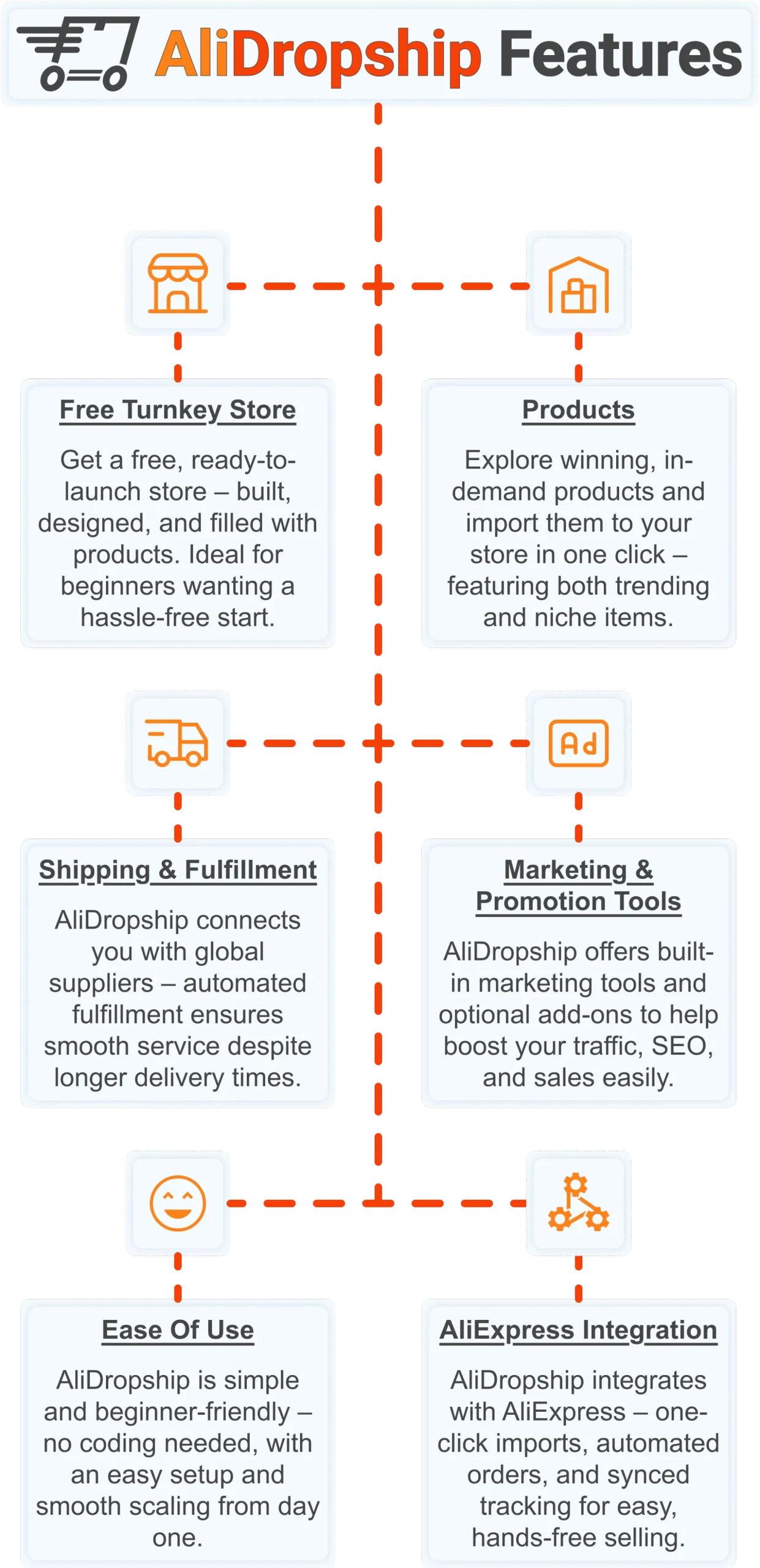
Free turnkey store ️
Get a free turnkey store – built, designed, and filled with products. Ideal for beginners wanting a hassle-free start, the store comes fully optimized to attract customers right away, saving you time on setup. Plus, it includes professional design elements to give your business a polished, trustworthy look from day one. This ready-made foundation makes it easy to move seamlessly into product selection.
Products
Once your store is set up, you can explore winning, in-demand products and import them in one click – featuring both trending and niche items. This wide selection lets you cater to diverse customer interests and test what works best. Regular updates ensure you always have fresh products, keeping your store competitive and relevant. With great products in place, smooth shipping becomes the next essential step.
Shipping & fulfillment
AliDropship connects you with global suppliers, and automated fulfillment ensures seamless order processing despite international delivery times. Customers receive real-time tracking updates, which builds confidence and trust in your store. Once shipping is handled reliably, you can focus on promoting your store and attracting traffic.
Marketing & promotion tools
To maximize sales, AliDropship offers built-in marketing tools and optional add-ons that help boost traffic, SEO, and conversions. From email campaigns and discounts to social media integration, these tools empower you to reach and retain customers without needing prior marketing experience. With promotion strategies in place, managing your business becomes simpler and more efficient.
Ease of use
AliDropship is beginner-friendly – no coding needed, with an intuitive dashboard that guides you through every step. Easy setup and smooth scaling let you expand your store without stress. As your business grows, adding new features, products, and marketing campaigns remains hassle-free, giving you more time to focus on sales.
AliExpress integration
Finally, AliDropship integrates seamlessly with AliExpress, enabling one-click imports, automated orders, and synced tracking. Your inventory stays up-to-date with the latest products and prices, while automated order processing frees you from manual tasks. Combined with the turnkey setup, reliable shipping, and built-in marketing tools, this integration ensures your dropshipping business is fully equipped for growth and success.
Gig apps are a great way to earn money on the side – but dropshipping lets you build something that works for you around the clock. Get your free store and a $100 gift voucher and start building passive income today.
 Previous post
