 ‧ julia.nenyukova ‧
March 12, 2026
‧ julia.nenyukova ‧
March 12, 2026  81 ‧
81 ‧
 0
0
Bond funds are one of the most widely used investment vehicles in the world – and if you’ve searched “how do you make money with bond funds,” you’ve probably already waded through a lot of confusing jargon. This guide skips the noise and gives you straight answers.
Quick Answer: You make money with bond funds in two main ways – through regular interest income paid out by the fund, and through capital appreciation when the fund’s share price rises. Most investors benefit from both, making bond funds a solid option for steady, lower-risk returns.
Whether you’re building a passive income stream, diversifying an existing portfolio, or just trying to understand what bond funds actually do, you’re in the right place. This guide walks you through how the money flows, which fund types suit which goals, and what risks to watch before you invest a single dollar.
What are bond funds?
A bond is essentially a loan you give to a government, a company, or a local municipality. In return, they agree to pay you regular interest over a fixed period, then return your original principal when the bond matures.
A bond fund pools money from many different investors and uses it to buy a diversified basket of bonds. Instead of managing individual bonds yourself, you buy shares of the fund. A professional fund manager handles all the buying and selling decisions on your behalf.
This setup gives you two major advantages. First, diversification – if one bond in the fund defaults, the impact on your overall investment is cushioned by the rest of the holdings. Second, accessibility – you don’t need large amounts of capital or specialist knowledge to get started. Many bond funds are available from as little as $1 through major brokers.
Bond funds come in two forms: mutual funds (priced once per day after the market closes) and exchange-traded funds, or ETFs, which trade on stock exchanges throughout the day just like shares. Both work the same way in terms of how they generate returns – the difference is mainly about how and when you can buy and sell.
How much can you realistically earn from bond funds?
Before diving into the mechanics, it helps to understand what earning potential actually looks like. The honest answer is that returns vary considerably depending on the type of fund, current interest rates, and your time horizon.
These figures are general benchmarks, not guarantees. Yields shift with interest rate movements, inflation trends, and the overall health of the economy. A bond fund that yields 5% today could yield 3.5% in 12 months if conditions change – or more, if rates rise further.
How do you make money with bond funds through interest income?
Interest income – sometimes called income distributions or dividends – is the most consistent and predictable way to earn from bond funds. This is how most long-term bond investors generate returns.
Here’s the basic mechanism: the bonds inside the fund pay interest to the fund. The fund collects those payments and distributes them to shareholders – that’s you – typically on a monthly or quarterly basis.
How much you receive depends on two things: the fund’s current yield (its annual rate of return based on today’s price) and how many shares you own.
Let’s say you invest $5,000 in a corporate bond fund with a yield of 4%. That works out to roughly $200 per year in interest income, or around $16–17 per month. Not a fortune on its own – but remember, this is fully passive. You’re not doing anything to earn it.
Earning potential: $30–$200/month on a $10,000 investment, depending on fund type and current market rates.
Why this works in 2026: After years of near-zero rates, the interest rate environment has improved significantly for bond investors. Funds that were yielding under 1% in 2021 are now offering 3%–5% – making income distributions meaningfully more attractive for anyone building passive income.
One practical tip: most brokers let you reinvest your distributions automatically. This means your interest income buys more shares, which generate more interest – compounding your returns without any extra effort on your part.
Capital appreciation – the second way to profit
The second way to make money with bond funds is through capital appreciation. This happens when the fund’s share price rises above what you paid for it, and you sell at a profit.
To understand this, you need to know one key relationship: bond prices and interest rates move in opposite directions. When rates fall, existing bonds – which pay a fixed, higher rate – become more attractive. That drives their prices up. When rates rise, those older bonds look less appealing next to new ones offering better terms, so prices fall.
Example: you buy 500 shares of a bond fund at $10 each – a $5,000 investment. A year later, following a central bank rate cut, the share price climbs to $11.20. If you sell at that point, you’ve made $600 in capital gains (500 shares × $1.20 gain per share), on top of any interest income you received during the year.
Important: Capital appreciation is not guaranteed. If rates rise during your holding period, your fund’s price may fall below what you paid. This is the primary risk of bond investing and the main reason short-term thinking can hurt you.
For most everyday investors, interest income is the more dependable earner. Capital appreciation is a bonus – useful when rate conditions work in your favour, but not something to rely on as your main return.
Types of bond funds and which one fits your goals
Bond funds are not one-size-fits-all. The type you choose shapes your yield, your risk exposure, and your overall experience. Here’s what you need to know about the main categories.
Government bond funds
These invest in bonds issued by national governments – U.S. Treasuries, UK Gilts, German Bunds. They’re considered the safest category because sovereign governments very rarely default. The trade-off is lower yields, typically in the 1%–4% range. Best for: capital preservation and low-risk income.
Corporate bond funds
These hold bonds issued by private companies. Returns are better than government bonds – usually 3%–6% – but so is the risk. Companies can and do default, especially during recessions. Best for: balanced investors who want better yield without going to extremes.
High-yield (junk) bond funds
These invest in bonds from companies with below-investment-grade credit ratings. Yields of 6%–10%+ are possible, but default risk is significantly higher. During market downturns, high-yield funds can behave more like stock funds – volatile and unpredictable. Best for: higher-risk tolerance and long time horizons only.
Municipal bond funds
These hold bonds issued by U.S. state and local governments. The key appeal is tax efficiency – interest income from municipal bonds is often exempt from federal income tax. Best for: U.S. investors in higher tax brackets looking to keep more of what they earn.
Inflation-protected bond funds (TIPS)
Treasury Inflation-Protected Securities adjust their principal in line with the Consumer Price Index. If inflation runs at 4%, the value of your principal rises by 4%. Your yield looks lower in nominal terms, but your real purchasing power is preserved. Best for: inflation hedging and long-term capital protection.
Short-term, intermediate, and long-term bond funds
This classification refers to how soon the bonds inside the fund mature. Short-term funds (under 3 years) are the least sensitive to interest rate changes – lower yield, lower volatility. Long-term funds (10+ years) offer higher income potential but can drop significantly in price when rates rise. Best for: short-term funds suit conservative investors; long-term funds suit those who can ride out fluctuations.
Risks to understand before you invest
Bond funds are generally less volatile than stock funds – but “less volatile” is not the same as “safe.” Here are the risks that matter most.
Interest rate risk: The biggest one. When rates go up, bond prices go down. The longer the fund’s duration – meaning the longer until its bonds mature – the more sensitive it is to rate movements. A long-term government bond fund can fall 15%–20% in a rapid rate-hiking cycle.
Credit risk: The risk that bond issuers in the fund default on their payments. Government funds carry minimal credit risk. High-yield funds carry considerable credit risk, especially during economic slowdowns.
Inflation risk: If inflation runs above your fund’s yield, your real return is negative. A fund yielding 3% during 5% inflation is quietly eroding your purchasing power, even if the nominal numbers look fine.
Liquidity risk: In most conditions, bond funds are easy to exit. In rare market stress events, some funds – particularly those holding less-traded corporate bonds – may widen their bid-ask spreads, meaning you get a worse exit price than expected.
Important note: Bond fund prices fluctuate. You can lose money, especially in the short term. Time horizon is everything – the longer you stay invested, the more your accumulated income distributions offset any price dips along the way.
Tips for making the most of your bond fund investments
Match the fund to your timeline
If you need your money back within one to two years, stick to short-term bond funds. If you’re investing for a decade or more, you can afford to take on more duration risk in exchange for higher income. Mismatching your timeline to your fund type is one of the most common and costly mistakes beginners make.
Pay attention to expense ratios
Bond funds charge annual fees – called expense ratios – that are deducted directly from your returns. A passively managed bond ETF might charge 0.05%. An actively managed fund might charge 0.8%–1.5%. Over 15 years, that difference compounds significantly against you. Always check the fee before you invest.
Reinvest your distributions
Automatic reinvestment is one of the simplest wealth-building habits available to any investor. Setting it up takes 30 seconds on most platforms. Compounding at even 3%–4% per year adds up to a substantial difference over a 10–20 year period.
Diversify across fund types
A mix of government and corporate bond funds across different maturities can smooth out volatility and keep income flowing across different rate environments. Putting everything into a single fund type concentrates your risk unnecessarily.
Stay aware of the rate environment
You don’t need to predict interest rates perfectly. But understanding the general direction helps. When central banks signal rate cuts, longer-duration funds tend to gain in price. When rates are rising, short-duration or floating-rate funds are more defensive. Most major brokers let you filter ETFs by duration – a quick adjustment can meaningfully reduce your exposure during rate-hiking cycles.
Legal and ethical considerations
Bond fund investing is a fully regulated activity in most jurisdictions. There are no grey areas here – but a few things are worth keeping in mind.
Tax treatment: Interest distributions from bond funds are usually taxed as ordinary income in most countries. Capital gains may be taxed at a different rate. Municipal bond funds offer a legal and transparent way to reduce your tax burden if you’re a U.S. investor in a higher bracket. Always verify the tax rules that apply to your specific situation.
Key principle: Never invest money in bond funds that you may need to access within 12 months. Fund prices move. If you’re forced to sell during a down period – say, following a rate hike – you may lock in a loss that time would have otherwise healed.
What to avoid absolutely: Chasing yield without understanding why it’s high. A bond fund advertising 14% annual returns is almost certainly carrying extreme credit or duration risk – or both. There is no such thing as high yield without elevated risk in fixed income. If something looks too good, dig into what the fund actually holds before committing any money.
Final thoughts – choosing the right approach for you
So – how do you make money with bond funds? You do it by combining regular interest income with the potential for price appreciation, in a structure that matches your financial goals and risk tolerance. The key is choosing the right fund type, keeping fees low, staying invested, and letting compounding do the work.
Here’s a quick summary by investor type:
Complete beginner: Start with a broad-market bond ETF or a total bond market index fund. Look for a low expense ratio, set up automatic dividend reinvestment, and leave it alone. Simplicity wins at this stage.
Intermediate / part-time investor: Consider a mix of short-to-intermediate corporate bond funds alongside a government bond allocation. This gives you better yield while spreading risk across issuers and durations.
Advanced / full-time goal: Build a laddered portfolio across short-term, intermediate, and inflation-protected funds. Adjust duration exposure based on rate cycle signals to maximise total return over time.
The most important rule across all three levels: don’t panic sell. Bond funds are a long game. Investors who exit during rate spikes lock in losses that patient investors recover – often with compounded income to show for the wait.
AliDropship: Your complete all-in-one solution for starting dropshipping in 2026
If you want the simplest possible way to start dropshipping – especially if you’re brand new – AliDropship remains one of the most beginner-friendly tools available in 2026. It brings together store creation, product imports, automation, and marketing into a single streamlined system designed to help you launch quickly and grow confidently.
Free turnkey store ️
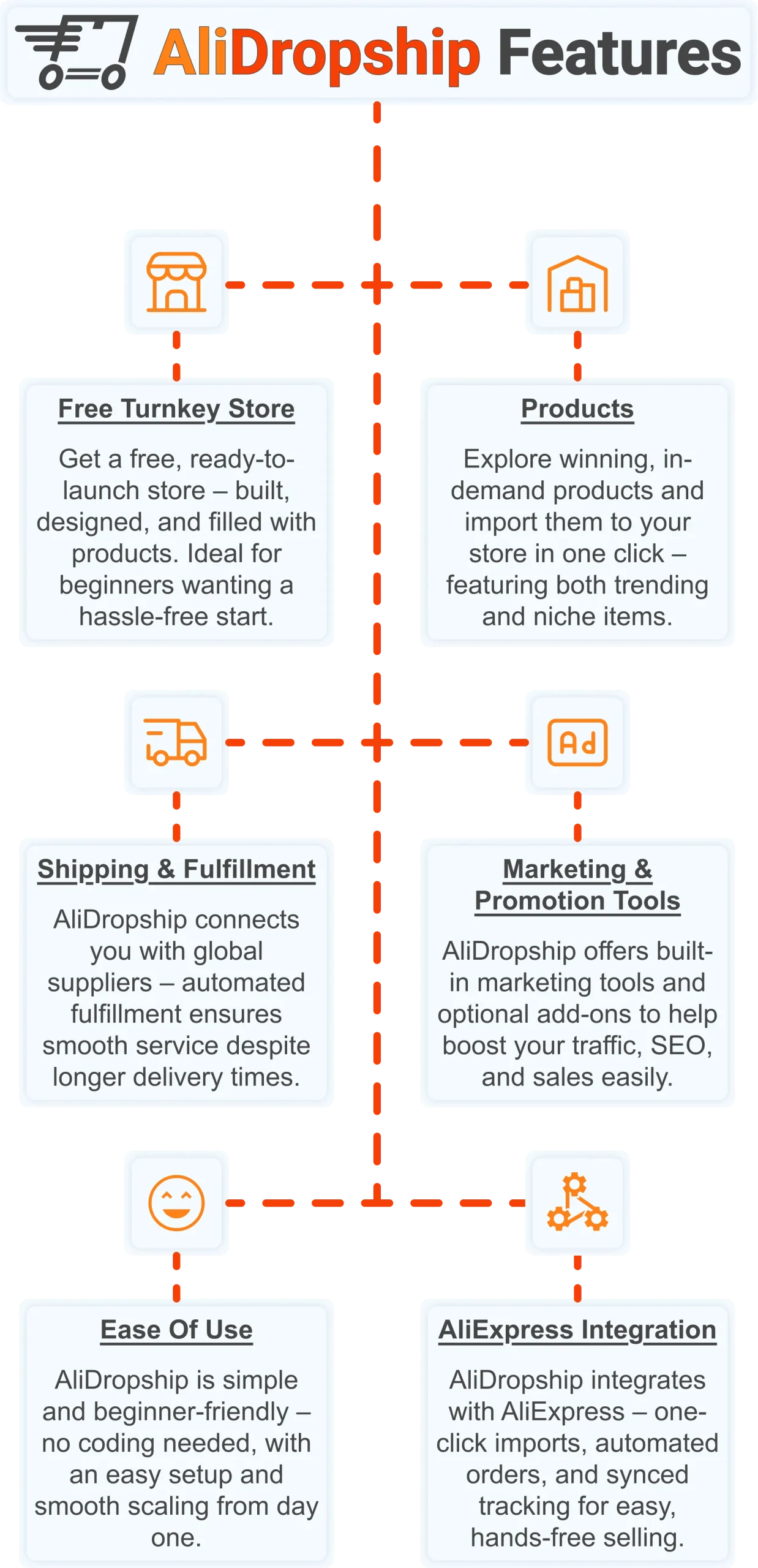
Get a free turnkey store – built, designed, and filled with products. Ideal for beginners wanting a hassle-free start, the store comes fully optimized to attract customers right away, saving you time on setup. Plus, it includes professional design elements to give your business a polished, trustworthy look from day one. This ready-made foundation makes it easy to move seamlessly into product selection.
Products
Once your store is set up, you can explore winning, in-demand products and import them in one click – featuring both trending and niche items. This wide selection lets you cater to diverse customer interests and test what works best. Regular updates ensure you always have fresh products, keeping your store competitive and relevant. With great products in place, smooth shipping becomes the next essential step.
Shipping & fulfillment
AliDropship connects you with global suppliers, and automated fulfillment ensures seamless order processing despite international delivery times. Customers receive real-time tracking updates, which builds confidence and trust in your store. Once shipping is handled reliably, you can focus on promoting your store and attracting traffic.
Marketing & promotion tools
To maximize sales, AliDropship offers built-in marketing tools and optional add-ons that help boost traffic, SEO, and conversions. From email campaigns and discounts to social media integration, these tools empower you to reach and retain customers without needing prior marketing experience. With promotion strategies in place, managing your business becomes simpler and more efficient.
Ease of use
AliDropship is beginner-friendly – no coding needed, with an intuitive dashboard that guides you through every step. Easy setup and smooth scaling let you expand your store without stress. As your business grows, adding new features, products, and marketing campaigns remains hassle-free, giving you more time to focus on sales.
AliExpress integration
Finally, AliDropship integrates seamlessly with AliExpress, enabling one-click imports, automated orders, and synced tracking. Your inventory stays up-to-date with the latest products and prices, while automated order processing frees you from manual tasks. Combined with the turnkey setup, reliable shipping, and built-in marketing tools, this integration ensures your dropshipping business is fully equipped for growth and success.
If you want to build income streams that go beyond investing, dropshipping with AliDropship gives you a proven, low-cost business model you can launch from scratch. Claim your free store and $100 voucher to get started today.
 Previous post
