 ‧ Agnes Kazaryan ‧
March 06, 2026
‧ Agnes Kazaryan ‧
March 06, 2026  18 ‧
18 ‧
 0
0
If you’ve ever watched your stream count climb and wondered what it’s actually worth, you’re not alone. “How much does Spotify pay?” is one of the most Googled questions in the music world right now – and the honest answer is: it’s complicated. There’s no single flat rate. What you earn depends on who’s listening, where they’re based, and how your music is set up in the system.
Quick answer: Spotify pays most artists between $0.003 and $0.005 per stream on average. That means 1,000 streams earns roughly $3 to $5 – but real payouts vary significantly based on listener type, geography, and your distribution deal.
That might feel discouraging at first glance. But understanding the system is the first step to making it work for you. This guide breaks down exactly how Spotify royalties work in 2026, what factors push your earnings up or down, and what you can realistically expect at different levels of success.
How Spotify actually pays artists
Before we get into numbers, it’s worth understanding the mechanics behind how much does Spotify pay – because the payment structure is more layered than most people expect.
Every time someone streams a song, Spotify earns revenue from two sources: paid Premium subscriptions and advertising on the free tier. That total revenue pool doesn’t go straight to artists. Instead, it’s divided among all rights holders – labels, publishers, distributors, and independent artists – based on each party’s share of total streams during that period.
This is called the pro-rata model. Your earnings aren’t calculated in isolation. They’re determined by how your streams compare to every other stream on Spotify that month. If your tracks account for 0.001% of all global streams, you receive 0.001% of the available royalty pool. The bigger the platform grows, the more streams you’re competing against.
There’s also a split before the money reaches you personally. If you’re signed to a label, the label takes their percentage first. Even independent artists lose a portion to their distributor. And if your music is published through a third party, the publisher claims their share too. What’s left is your artist royalty.
One more thing worth knowing: Premium streams pay more than ad-supported streams. The subscription pot is larger and more predictable than ad revenue, so listeners on paid plans contribute more to your earnings per play than free users do.
How much does Spotify pay per stream – the real numbers
Now for what you actually came here for. Based on industry data and independent analyses, the average Spotify payout sits between $0.003 and $0.005 per stream. Spotify doesn’t publish a fixed per-stream rate, so everything you see – including this – is an estimate based on aggregated reports.
Here’s what that looks like at different stream levels:
These are ballpark figures, not guarantees. A Premium-heavy audience in the US or Western Europe will push you toward the top of the range. A mostly free-tier, globally spread audience pulls you toward the bottom – or below it.
One note on these figures: they assume you keep 100% of your royalties. If you’re on a label deal or sharing with a publisher, your actual take-home will be lower than the numbers above.
What really determines how much Spotify pays you
The per-stream average is just a starting point. What Spotify actually pays you is shaped by a handful of factors that either push your earnings up or drag them down. Here’s what matters most.
Premium vs. free listeners
This is probably the biggest lever in the system. Premium subscribers pay a monthly fee, which creates a larger, more reliable revenue pool. Ad-supported listeners contribute far less per stream because ad revenue is smaller and less predictable. If your audience skews heavily toward free users, your per-stream rate will sit at the lower end – or below – the average range.
Why this works in 2026: Spotify Premium has grown significantly in paid subscriber share, meaning the overall royalty pool is larger – but so is the competition for it.
Where your listeners are based
Geography has a direct impact on how much does Spotify pay per play. A stream in the US, UK, or Western Europe earns more than a stream in a country where Spotify charges lower subscription fees or relies more heavily on ads. You can’t control where your fans are, but you can focus your promotional efforts on higher-paying markets if this matters to you.
Your label or distribution deal
Even if Spotify calculates a strong royalty for your tracks, how much lands in your pocket depends on your deal. A label takes their cut first. Distributors claim a percentage. Publishers take theirs. An independent artist keeping 100% of their royalties will always out-earn a signed artist with identical streams – at least on a per-stream basis.
How your metadata is set up
This one trips people up. If your ISRC codes, publishing registrations, or distributor information contain errors, royalties can go unclaimed or get delayed. It’s not glamorous work, but getting your metadata right is one of the easiest ways to make sure you’re receiving everything you’re owed.
Your share of total platform streams
Because Spotify uses a pro-rata model, your earnings are relative. The more total streams happen on the platform in a given month, the smaller each individual stream’s slice of the pie becomes. This is why your payout rate can shift slightly month to month even if your stream count stays the same.
Real scenarios: what artists actually take home
Abstract numbers are hard to work with. Let’s make it concrete with three realistic scenarios that show how different situations affect what you actually earn.
Scenario 1: Independent artist, Premium-heavy US audience
You release a track. It reaches 100,000 streams over a few months, mostly from Premium listeners in the US and UK. You distribute independently, so no label takes a cut. In this scenario, you’d likely land somewhere between $400 and $500. That’s around $0.004 to $0.005 per stream – solid, and at the top of the typical range.
Earning potential: $400–$500 per 100,000 streams with a Premium-heavy, English-speaking audience and full royalty retention.
Scenario 2: Same stream count, global free-tier audience
Now imagine the same 100,000 streams, but spread across global markets where most listeners are on the free tier. Your payout drops to roughly $200–$250. Same number of plays. Very different result. The type of listener matters as much as the volume.
Earning potential: $200–$250 per 100,000 streams with a predominantly ad-supported, globally distributed audience.
Scenario 3: 1 million streams with label support
A bigger number doesn’t always mean a bigger payday for you personally. A million streams with label backing might generate $4,000 in gross royalties – but after the label and publisher take their shares, the artist might walk away with $1,000 to $1,500. Exposure helps. But exposure alone doesn’t pay the bills.
Earning potential: $1,000–$1,500 for the artist after splits on 1 million streams with a standard label arrangement.
How to get more from your Spotify streams
You can’t change the platform’s payment model, but you can influence several of the factors that shape what you earn. Here are the practical moves that actually make a difference.
Target Premium listeners in your promotion
Think about where your promotional energy goes. Playlist pitching, social campaigns, and collaborations that reach paid subscribers in high-income markets will return more per stream than the same effort aimed at a general global audience. It’s not about gatekeeping your music – it’s about being strategic with where you invest your time.
Check your metadata before every release
Run through your ISRC codes, publishing registrations, and distributor details for every release. One mistake can mean royalties sitting in limbo for months – or disappearing entirely. Make it a pre-release checklist item, not an afterthought.
Understand your distribution deal
If you’re independent, pick a distributor with transparent splits and good royalty reporting. If you’re with a label, know your contract. “How much does Spotify pay” is only part of the equation – how much of that you actually receive is down to your deal.
Release strategically, not just frequently
Timing matters. Tracks released in line with playlist update cycles and seasonal listening trends tend to land on more playlists, which means more Premium-heavy listeners and better per-stream returns. Quality over volume, but with an eye on timing.
Don’t rely on streaming alone
Spotify royalties are one revenue stream, not a full income. Merchandise, live shows, sync licensing, and brand partnerships all complement your streaming earnings. The artists who make a sustainable living from music treat Spotify as one piece of a wider puzzle – not the whole picture.
What’s changing in Spotify payments – trends to watch in 2026
The way Spotify pays artists isn’t static. A few developments are worth keeping an eye on if you’re planning your music career for the long term.
The biggest ongoing conversation is the shift toward a user-centric payment model. Under the current pro-rata system, your earnings depend on your share of total platform streams. In a user-centric model, each listener’s subscription fee would be directed only to the artists they actually listen to. This would benefit artists with loyal, consistent fanbases – even smaller ones – and reduce the outsized influence of mega-streaming acts on the overall royalty pool. It hasn’t been fully implemented yet, but it remains an active discussion in the industry.
Global expansion is another factor. Spotify continues growing in markets across Asia, Latin America, and Africa – regions where subscription prices are lower. If your audience grows in these markets, your average per-stream rate may dip, even as your total stream count rises. This isn’t necessarily bad – a larger audience has long-term value – but it’s worth factoring into your expectations.
Royalty transparency tools are also improving. Spotify for Artists, along with most major distributors, now offers more detailed breakdowns of where your streams are coming from and what they’re earning. Using these dashboards regularly gives you real data to make smarter decisions about promotion and release strategy.
Important: Changes to Spotify’s payment model can happen without much public notice – always check your distributor’s latest royalty statements rather than relying on older industry averages.
Final thoughts: making sense of Spotify pay in 2026
So – how much does Spotify pay? The honest answer is: between $0.003 and $0.005 per stream on average, but the real figure for your music depends on a mix of factors you partly control and partly don’t. Premium vs. free listeners. Geography. Your distribution deal. Your metadata. The timing of your releases.
The per-stream rate isn’t going to make anyone rich on its own. But it’s also not the only thing that matters. Artists who treat Spotify as one part of a broader income strategy – combining streaming with merch, licensing, live income, and other digital revenue – tend to build something more durable than those chasing stream counts alone.
If you’re a complete beginner, focus on getting your setup right first: correct metadata, a reliable distributor, and tracks that connect with a specific audience. If you’re at an intermediate level, start being more deliberate about which markets and playlist types you’re targeting. And if you’re thinking about this full-time, diversification isn’t optional – it’s essential.
Streams are a signal. They tell you your audience is growing. Building a business around that audience is the next step – and that’s entirely in your hands.
AliDropship: Your complete all-in-one solution for starting dropshipping in 2026
If you want the simplest possible way to start dropshipping – especially if you’re brand new – AliDropship remains one of the most beginner-friendly tools available in 2026. It brings together store creation, product imports, automation, and marketing into a single streamlined system designed to help you launch quickly and grow confidently.
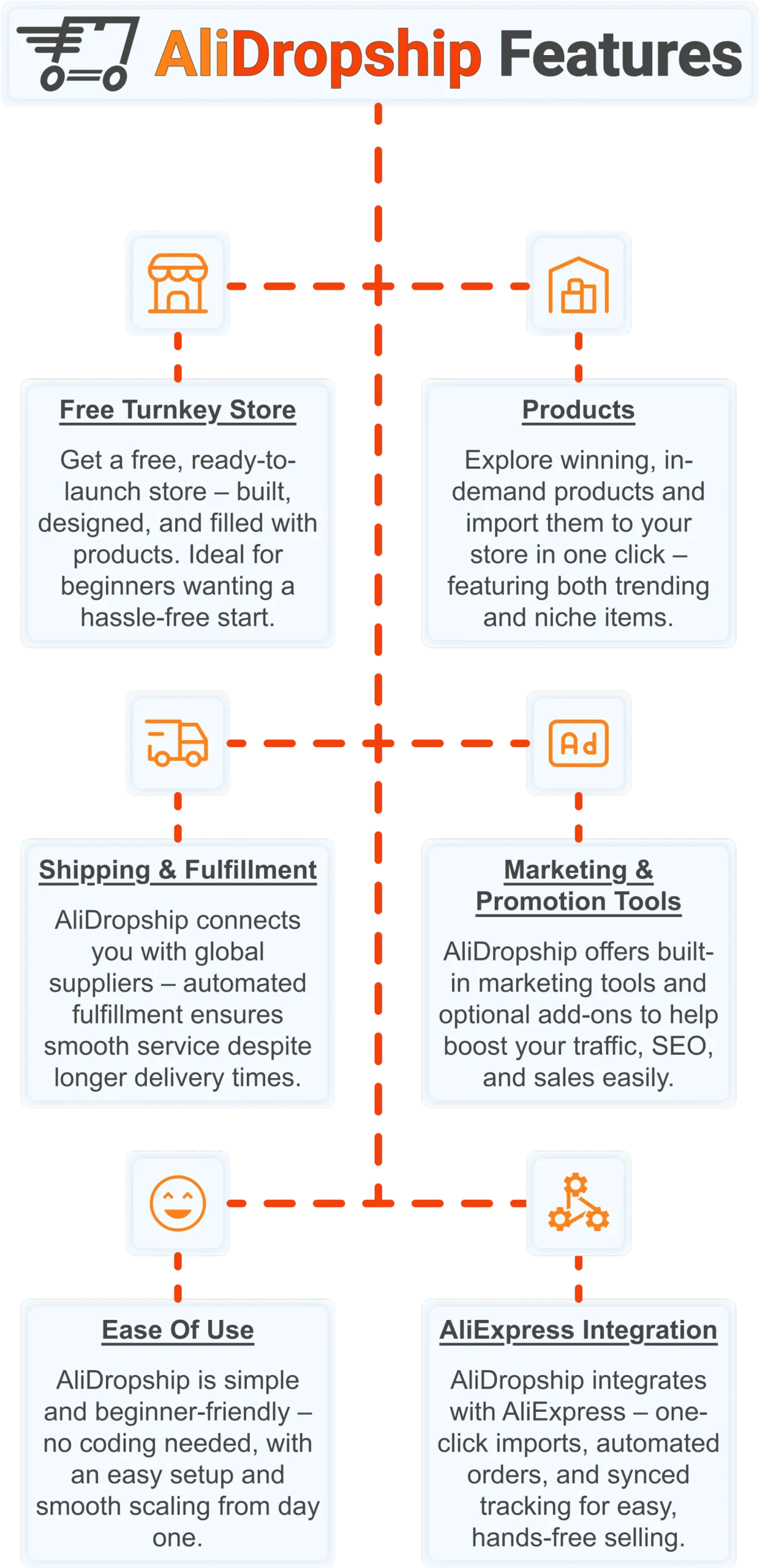
Free turnkey store ️
Get a free turnkey store – built, designed, and filled with products. Ideal for beginners wanting a hassle-free start, the store comes fully optimized to attract customers right away, saving you time on setup. Plus, it includes professional design elements to give your business a polished, trustworthy look from day one. This ready-made foundation makes it easy to move seamlessly into product selection.
Products
Once your store is set up, you can explore winning, in-demand products and import them in one click – featuring both trending and niche items. This wide selection lets you cater to diverse customer interests and test what works best. Regular updates ensure you always have fresh products, keeping your store competitive and relevant. With great products in place, smooth shipping becomes the next essential step.
Shipping & fulfillment
AliDropship connects you with global suppliers, and automated fulfillment ensures seamless order processing despite international delivery times. Customers receive real-time tracking updates, which builds confidence and trust in your store. Once shipping is handled reliably, you can focus on promoting your store and attracting traffic.
Marketing & promotion tools
To maximize sales, AliDropship offers built-in marketing tools and optional add-ons that help boost traffic, SEO, and conversions. From email campaigns and discounts to social media integration, these tools empower you to reach and retain customers without needing prior marketing experience. With promotion strategies in place, managing your business becomes simpler and more efficient.
Ease of use
AliDropship is beginner-friendly – no coding needed, with an intuitive dashboard that guides you through every step. Easy setup and smooth scaling let you expand your store without stress. As your business grows, adding new features, products, and marketing campaigns remains hassle-free, giving you more time to focus on sales.
AliExpress integration
Finally, AliDropship integrates seamlessly with AliExpress, enabling one-click imports, automated orders, and synced tracking. Your inventory stays up-to-date with the latest products and prices, while automated order processing frees you from manual tasks.
Combined with the turnkey setup, reliable shipping, and built-in marketing tools, this integration ensures your dropshipping business is fully equipped for growth and success.
Just like diversifying beyond Spotify streams builds a more stable music income, building an online store gives you a revenue stream you fully control. Claim your free store and $100 gift voucher to get started today.
 Previous post
