 ‧ julia.nenyukova ‧
March 15, 2026
‧ julia.nenyukova ‧
March 15, 2026  31 ‧
31 ‧
 0
0
You’ve probably read a hundred Amazon reviews. But have you ever stopped to wonder whether the people writing them were actually getting paid?
The short answer is: sometimes yes, sometimes no – and the difference depends entirely on how you approach it. Most people searching for this topic have the same question: is there a real, legitimate way to earn money reviewing products on Amazon? The answer is yes – but not in the way most clickbait articles suggest.
Quick Answer: You can make money doing Amazon reviews through the affiliate program, third-party review platforms, and a review-based content channel – but direct cash payments per review are rare, tightly restricted by Amazon’s terms of service, and often a sign of a scheme worth avoiding.
In 2026, side income from online activity is more searched than ever. Reviewing products you already use – or products you’d genuinely test – sounds like an easy win. And it can be, once you understand where the money actually comes from and what kind of effort each method realistically requires.
What is Amazon reviewing?
Amazon reviewing is the act of publishing written feedback on products listed in Amazon’s marketplace. Every review contributes to the social proof that drives purchasing decisions – and for sellers, a strong review profile can make or break a product launch in a competitive category.
For shoppers, reviews are trust signals. For Amazon, they’re central to the marketplace experience. And for anyone hoping to earn money, reviews represent a genuine entry point – either through influencing sales via affiliate links, receiving free products in exchange for honest feedback, or building an audience that brands want to reach.
There are several distinct models in this space. Some involve Amazon directly, like the invite-only Vine program. Others work through Amazon’s affiliate infrastructure – the Associates program – where your earnings come from commissions on sales you refer. And others exist entirely outside Amazon, on review platforms and content channels where income comes from ad revenue, sponsorships, or product partnerships. Understanding the difference between these models is essential before you commit time and effort to any one strategy.
How much can you realistically earn doing Amazon reviews?
This is where most guides get vague. Let’s be specific instead.
One note on headline earning figures: Most articles claim Amazon reviewers “can earn hundreds per month.” That’s technically true – but only for specific methods, and only with real audience-building effort behind them. Free products are more accessible early on. Cash income takes longer and requires more infrastructure.
The methods that pay real cash require either an existing audience or a content platform you build from scratch. Free products are more accessible in the short term – but they don’t replace income. If your goal is to genuinely make money doing Amazon reviews, the affiliate model or a content channel is where it realistically comes from.
Legitimate ways to get paid to review on Amazon
Here are the four main methods worth your time in 2026 – what each one actually involves, and what you can expect to earn.
Amazon Vine program
Amazon Vine is an invite-only program run directly by Amazon. Sellers submit products to the program, and Amazon sends them to selected top reviewers in exchange for honest written feedback. You don’t pay for the products – but you don’t receive cash either.
To get invited, you need a track record of high-quality, helpful reviews on Amazon. There’s no application form. Amazon monitors reviewer ratings and helpfulness scores, then extends invitations based on your history. Most Vine reviewers reach that status after months or years of consistent, well-written reviews.
If you’re accepted, you’ll receive a steady stream of free products across multiple categories. One important caveat: in the US, the IRS treats free products received through Vine as taxable income at fair market value. If you receive $600+ worth of products in a tax year, that’s reportable income.
Earning potential: No direct cash – but free products valued at $50–$300+/month for active Vine reviewers.
Why this works in 2026: Amazon’s search algorithm still weighs early, verified reviews heavily. Sellers compete intensely for Vine placement, making it one of the most credible and Amazon-sanctioned reviewer programs available.
Amazon Associates – the affiliate program
This is the method that can generate real, recurring cash. Amazon’s affiliate program – called Amazon Associates – pays you commissions of 1–10% on products bought through your unique referral links.
The model works like this: you create content around a product (a review article, a YouTube video, a product comparison page), include your affiliate link, and earn a commission every time someone clicks and buys. You don’t need to write reviews directly on Amazon – your content lives on your own blog, channel, or social platform.
Commission rates vary by category. Electronics pay around 1–3%, while categories like beauty, fashion, and home goods can reach 4–10%. The critical factor is traffic – specifically, how many qualified visitors land on your content with genuine buying intent.
A review blog pulling in 10,000 monthly visitors in a mid-ticket niche can realistically earn $200–$500/month from affiliate commissions. Scale that up over 12–24 months of consistent content, and the numbers grow substantially.
Earning potential: $30–$500+/month for a beginner with a growing content site; $1,000–$3,000+/month for established review publishers with strong SEO rankings.
Third-party review platforms
Several platforms connect Amazon sellers with reviewers willing to test products and leave honest feedback. Sites like Rebaid, Vipon, and AMZDiscover offer discounted or free products in exchange for Amazon reviews. Some platforms also include small cash payments – typically $5–$20 per review.
Important: Always verify that any platform you use explicitly complies with Amazon’s review policies before participating. Incentivized reviews that aren’t properly disclosed can result in your Amazon account being flagged or permanently banned.
The safest way to use these platforms is to receive the product at a discount, purchase it through the standard Amazon checkout flow, and leave an unbiased review with a disclosure statement. This keeps you within Amazon’s terms while still giving you access to free or heavily reduced products.
Earning potential: $5–$50 per review, or free/discounted products worth $20–$150 each – depending on the platform and product category.
Building a review blog or YouTube channel
This is the highest-effort, highest-reward route. You build a content platform – a niche blog, a YouTube channel, or ideally both – dedicated to reviewing products in a specific category. Revenue comes from a combination of Amazon affiliate links, display advertising, sponsored content, and eventually direct brand partnerships.
It takes time. Realistically, you’re looking at 6–12 months before a new blog gains enough organic search traffic to generate meaningful income. YouTube can move faster if you’re consistent and target a growing niche early.
The upside is real, though. Established product review channels on YouTube regularly generate $2,000–$10,000+/month from a mix of AdSense, affiliate commissions, and brand deals. A well-ranked review blog with 50,000+ monthly visitors can earn $1,500–$5,000/month in affiliate commissions alone.
Pro Tip: Choose a niche with solid Amazon commission rates and relatively low competition on YouTube – home organization, pet accessories, and specialty kitchen gadgets are still underserved compared to consumer electronics or fitness equipment.
Earning potential: $0 for the first 3–6 months; $200–$500/month around months 9–12 with consistent publishing; $1,000–$3,000+/month at maturity with diversified monetization.
How to write reviews that actually perform
Whether you’re building affiliate content or contributing to Amazon’s review community, the quality of your writing determines your results. Here’s what separates reviews that earn trust – and clicks – from ones that get ignored.
Lead with your verdict
Most people reading a review are trying to answer one question: “Is this worth buying for my specific situation?” Your review should answer that within the first paragraph – not bury the verdict beneath three hundred words of specifications. Lead with your overall assessment, then back it up with evidence.
Be specific about your experience
Generic reviews (“This product is great! Would highly recommend!”) provide zero value and rank poorly in search. Give real detail: how long you used the product, what you used it for, what worked and what didn’t, and who you’d recommend it to. A review that says “I blended protein smoothies daily for four months and the lid seal loosened after six weeks” is worth ten times as much as a five-star write-up with no substance.
Include photos or video
On Amazon, reviews with photos receive significantly more “helpful” votes – and helpfulness votes contribute to your reviewer ranking, which is how you eventually attract Vine invitations. On a blog or YouTube channel, visual content extends time-on-page and watch time, both of which signal quality to search algorithms. Either way, visuals make your reviews more credible and more useful.
Disclose appropriately
If you received a product for free or at a discount in exchange for a review – on Amazon or anywhere else – you must disclose it. Amazon requires it. The FTC requires it in the US. Non-disclosure isn’t a grey area; it’s a policy violation that can cost you your account.
Legal and ethical considerations
This section is short, but it matters.
Key principle: Amazon’s terms of service explicitly prohibit paid reviews, review swapping, and incentivized reviews without proper disclosure. Violating these rules can result in review removal, account suspension, or a permanent ban from the platform.
What to avoid absolutely:
- Accepting cash directly from sellers in exchange for a positive Amazon review – this violates Amazon’s terms and may breach FTC regulations
- Using platforms that coordinate fake or biased reviews at scale
- Posting reviews for products you haven’t actually received or tested
- Failing to disclose when you received a product for free or at a discounted price
What to do instead:
- Only participate in review programs that comply with Amazon’s policies – Vine is the safest option
- Always include a disclosure statement in affiliate content and sponsored reviews
- Focus on honest, experience-based reviews – Amazon’s algorithm rewards reviewer credibility over sheer volume
The reviewers who build sustainable income are the ones who treat their platform as a long-term asset, not a quick-cash shortcut. Your reputation as a reviewer is the actual product you’re building.
Final thoughts: which approach suits you?
The right starting point depends on where you are right now and how much time you’re willing to invest.
Complete beginner: Start by leaving genuine, detailed reviews on Amazon for products you already own. Focus on quality over quantity. If you’re consistent, Vine invitations can follow within 6–12 months. Simultaneously, sign up for a free Amazon Associates account so you’re ready to add affiliate links to any content you create down the line.
Intermediate / part-time: If you have a few dedicated hours per week, start a niche review blog or a product-focused YouTube channel. Keep the niche tight – not “tech,” but something like “portable projectors for backyard use.” Build 20–30 quality posts before expecting organic traffic. Add affiliate links from day one.
Advanced / full-time goal: Treat this like a business from the start. Diversify across platforms – a blog for SEO traffic, YouTube for video discovery, Pinterest for product-intent traffic, and an email list for retention. Layer affiliate commissions on top of brand partnerships and sponsored content. At full scale, $3,000–$5,000/month from a review-based content business is a realistic 18–24 month target with consistent, strategic effort.
Important note: None of these paths are passive in the early stages. The “easy money” framing that surrounds online reviewing is misleading. What it actually requires is consistent publishing, genuinely honest content, and enough patience to let SEO and audience growth compound over time.
AliDropship: Your complete all-in-one solution for starting dropshipping in 2026
If you want the simplest possible way to start dropshipping – especially if you’re brand new – AliDropship remains one of the most beginner-friendly tools available in 2026. It brings together store creation, product imports, automation, and marketing into a single streamlined system designed to help you launch quickly and grow confidently.
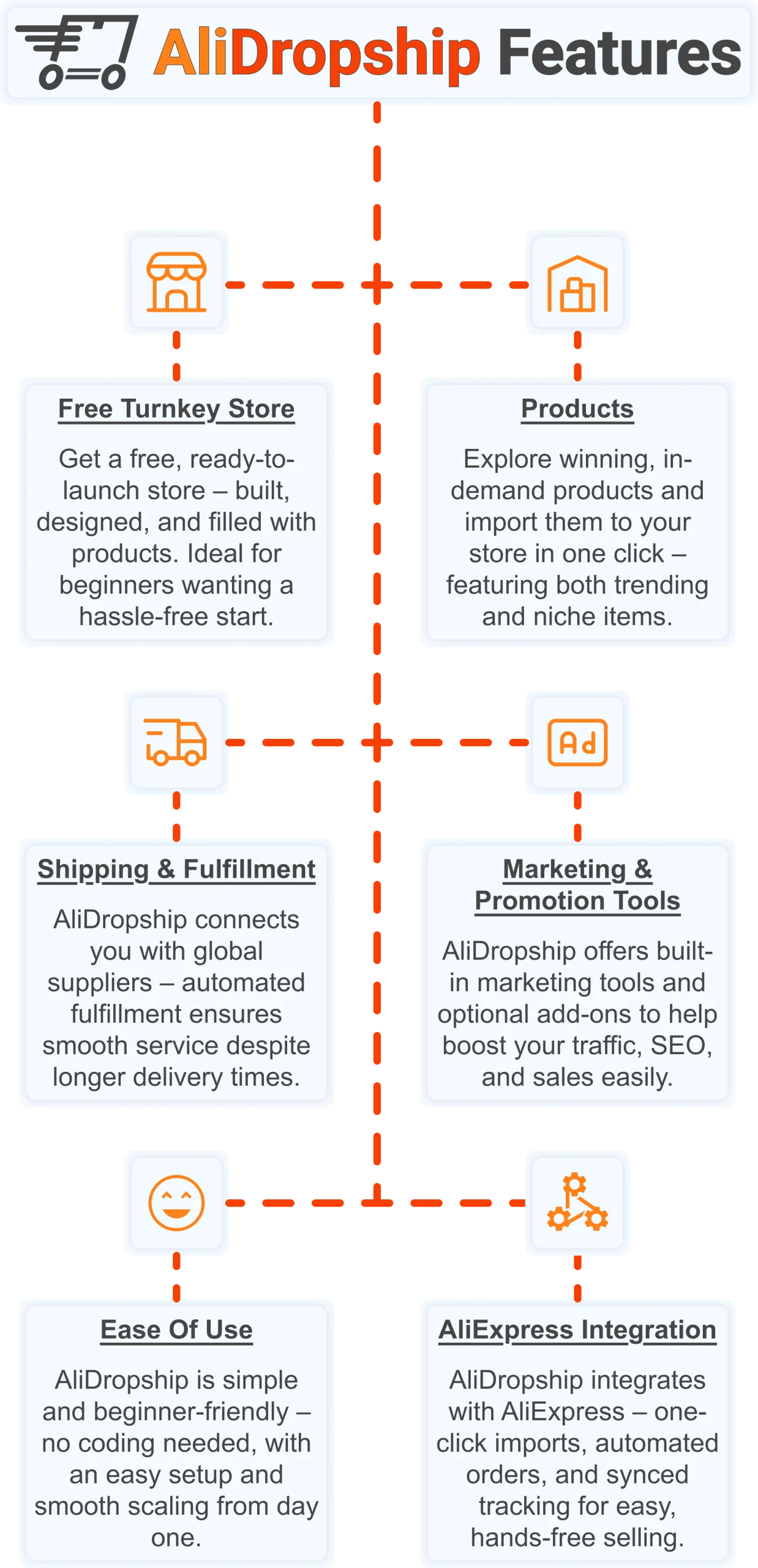
Free turnkey store ️
Get a free turnkey store – built, designed, and filled with products. Ideal for beginners wanting a hassle-free start, the store comes fully optimized to attract customers right away, saving you time on setup. Plus, it includes professional design elements to give your business a polished, trustworthy look from day one. This ready-made foundation makes it easy to move seamlessly into product selection.
Products
Once your store is set up, you can explore winning, in-demand products and import them in one click – featuring both trending and niche items. This wide selection lets you cater to diverse customer interests and test what works best. Regular updates ensure you always have fresh products, keeping your store competitive and relevant. With great products in place, smooth shipping becomes the next essential step.
Shipping & fulfillment
AliDropship connects you with global suppliers, and automated fulfillment ensures seamless order processing despite international delivery times. Customers receive real-time tracking updates, which builds confidence and trust in your store. Once shipping is handled reliably, you can focus on promoting your store and attracting traffic.
Marketing & promotion tools
To maximize sales, AliDropship offers built-in marketing tools and optional add-ons that help boost traffic, SEO, and conversions. From email campaigns and discounts to social media integration, these tools empower you to reach and retain customers without needing prior marketing experience. With promotion strategies in place, managing your business becomes simpler and more efficient.
Ease of use
AliDropship is beginner-friendly – no coding needed, with an intuitive dashboard that guides you through every step. Easy setup and smooth scaling let you expand your store without stress. As your business grows, adding new features, products, and marketing campaigns remains hassle-free, giving you more time to focus on sales.
AliExpress integration
Finally, AliDropship integrates seamlessly with AliExpress, enabling one-click imports, automated orders, and synced tracking. Your inventory stays up-to-date with the latest products and prices, while automated order processing frees you from manual tasks. Combined with the turnkey setup, reliable shipping, and built-in marketing tools, this integration ensures your dropshipping business is fully equipped for growth and success.
If you want to build online income that goes beyond reviewing other people’s products, dropshipping gives you your own store, your own brand, and a scalable path to real revenue. Claim your free AliDropship store today and get a $100 bonus voucher to launch with.
 Previous post
