 ‧ julia.nenyukova ‧
March 16, 2026
‧ julia.nenyukova ‧
March 16, 2026  40 ‧
40 ‧
 0
0
Can you actually make money in stocks? The honest answer is yes – but not always in the way the internet makes it sound. Too many beginners jump in expecting quick returns, only to discover the hard way that stock investing is a skill that takes time, research, and a clear strategy.
This guide walks you through how to make money in stocks in 2026 – from understanding how the market works to the strategies that experienced investors actually use. No hype, no shortcuts. Just practical information you can act on, wherever you’re starting from.
Quick Answer: The most reliable way to make money in stocks is through a combination of long-term investing, reinvested dividends, and a diversified portfolio. Most beginners see meaningful returns over a 3–5 year horizon, not weeks or months.
What is stock market investing?
When you buy a stock, you’re buying a small ownership stake in a company. If that company grows and becomes more valuable, your shares increase in price. You can then sell them for a profit – that’s called a capital gain. Some companies also pay dividends, which are regular cash payments to shareholders, giving you income without selling a single share.
The stock market is a marketplace where buyers and sellers trade these ownership stakes. In the US, the two main exchanges are the NYSE and NASDAQ. Prices shift constantly based on company performance, economic data, investor sentiment, and global events – all at the same time.
What makes stocks appealing is their long-term track record. The S&P 500 – a benchmark index tracking 500 large US companies – has delivered an average annual return of around 10% over the past century. That’s significantly better than a savings account or most bonds. But that average comes with real volatility along the way, and understanding that is fundamental to making smart decisions.
How much can you realistically earn from stocks?
This is where most beginners get misled. Social media is full of people claiming they doubled their money in a month. What you rarely see is the losses that came before – or after – that single win. Here’s an honest breakdown of what different approaches can return.
These figures assume you’re staying consistent and reinvesting returns where possible. A $10,000 investment growing at 10% annually becomes around $25,900 in 10 years – without adding another dollar. Contribute monthly and the numbers improve dramatically. The most powerful variable here isn’t strategy, it’s time.
One note on earnings claims: Any approach promising consistent 50%+ annual returns is either overstating risk or misleading you entirely. Even the best professional fund managers rarely beat the market by more than a few percentage points per year over the long run.
Getting started: what you need before buying your first stock
Before you fund a brokerage account, a few things need to be in order. Skipping these steps is the single most common reason new investors lose money in the early stages.
Build an emergency fund first
Money invested in stocks should be money you can leave untouched for several years. If you don’t already have 3–6 months of living expenses sitting in a liquid account – a high-yield savings account works well – sort that out before you invest a cent. The reason is simple: if you need to withdraw money during a market downturn, you’ll be forced to sell at a loss. An emergency fund removes that pressure entirely and lets your portfolio do its job.
Choose the right brokerage
Opening a brokerage account is straightforward in 2026. Platforms like Fidelity, Schwab, and Vanguard offer commission-free trading alongside solid research tools. For beginners, the priority should be a clean interface, decent educational content, and no minimum deposit requirement. Avoid platforms with high per-trade fees – they compound against you faster than most people expect.
Set a budget you can genuinely commit to
You don’t need thousands to start. Many platforms support fractional share purchases, so you can buy a slice of a $500 stock for as little as $5. Start with an amount you’d be comfortable losing entirely – not because you will lose it, but because that mindset protects you from panic-selling when the market dips, which it will.
Understand how taxes work
In the US, profits from stocks held for less than a year are taxed as ordinary income. Hold longer than a year and you qualify for lower long-term capital gains rates. This creates a meaningful financial incentive to think long-term – and to use tax-advantaged accounts like an IRA or 401(k) wherever possible.
Investment strategies that actually work in 2026
There’s no single best way to make money in stocks. The right approach depends on your timeline, risk tolerance, and how much active management you want to do. Here are the four most widely used strategies – with an honest look at what each involves.
Index investing
This is the best starting point for most beginners – full stop. You invest in a fund that tracks an index like the S&P 500, giving you instant exposure to hundreds of companies in a single purchase. It’s low-cost, highly diversified, and requires almost no ongoing management. Research consistently shows that most actively managed funds underperform simple index funds over 10+ year periods. That’s not a coincidence.
Earning potential: 7–10% average annual return over the long term.
Dividend investing
Dividend stocks pay regular cash distributions – usually quarterly – directly to shareholders. Companies like Johnson & Johnson, Coca-Cola, and Procter & Gamble have paid rising dividends for decades. This strategy appeals to investors who want steady income alongside price appreciation. Reinvesting those dividends accelerates growth significantly over time through compounding.
Earning potential: 3–5% annual dividend yield, plus 5–8% price growth in strong years.
Growth investing
Growth investors target companies expanding faster than the broader market – typically in tech, healthcare, or emerging sectors. The potential upside is higher, but so is the downside. These companies often reinvest all profits rather than paying dividends, so returns come entirely from share price appreciation. Works best with a 5+ year time horizon and a stomach for volatility.
Earning potential: 15–30% in strong years – but double-digit losses in down years are equally common.
Value investing
Popularised by Warren Buffett, value investing means identifying companies whose stock price is lower than their actual worth. You’re buying good businesses at a discount, then waiting for the market to catch up. This requires substantial research and real patience – sometimes years before a position pays off. It’s one of the most demanding strategies intellectually, but the long-term track record of disciplined value investors speaks for itself.
Earning potential: Variable – strong practitioners have beaten the market consistently over decades, but individual results depend heavily on the quality of analysis.
How to pick the right stocks
Whether you’re buying individual stocks or building a broader portfolio, the selection process matters more than most beginners realise. Here’s what experienced investors actually focus on.
Read the financial statements
A company’s income statement, balance sheet, and cash flow statement tell you almost everything you need to know about its financial health. Look for consistent revenue growth, manageable debt levels, and positive free cash flow. A company burning through cash with no clear path to profitability is a red flag – regardless of how exciting its product sounds at a conference.
Understand the industry context
Every sector has its own dynamics. Retail behaves differently from pharmaceuticals; energy stocks react to oil prices; tech companies are highly sensitive to interest rate changes. Before investing in any company, understand the broader environment it operates in. Who are the competitors? Is the industry growing or contracting? Are there regulatory changes on the horizon?
Evaluate management quality
The leadership team running a company makes an enormous difference to long-term performance. Look at how executives have allocated capital historically, what they’ve said in earnings calls, and whether their compensation is genuinely aligned with shareholder returns. Companies with strong, transparent leadership consistently outperform those with high executive turnover or a track record of poor decisions.
Don’t ignore valuation
Even a genuinely great company can be a bad investment if you overpay for it. Simple metrics like the price-to-earnings ratio give you a quick sense of whether a stock looks expensive relative to its peers and its own historical range. Buying a fundamentally solid company at a fair price almost always beats buying a hyped-up stock at an inflated valuation.
Managing risk and protecting what you’ve built
Stock market investing always involves risk. The goal isn’t to eliminate it – that’s not possible – but to manage it in a way that lets you stay in the game long enough for the good years to outnumber the bad.
Diversify across sectors and geographies
Never concentrate all your money in a single stock, a single sector, or even a single country’s market. A well-diversified portfolio spreads risk so that a downturn in one area doesn’t cause catastrophic damage to your overall position. A simple combination of US index funds, international index funds, and a small bond allocation covers a lot of ground for a beginner without requiring constant monitoring.
Avoid emotional decisions
The most common and expensive mistake retail investors make is panic-selling during market downturns. Markets have always recovered from crashes – but only investors who stayed the course benefited from those recoveries. Define your strategy before you invest and commit to it. Reacting to short-term news is almost always counterproductive.
Rebalance at least once a year
Over time, some holdings outperform and grow to represent a larger portion of your portfolio than intended. Rebalancing – trimming what’s grown and adding to what hasn’t – keeps your risk profile consistent with your original plan and forces you to buy low and sell high in a systematic way.
Important: Leverage (borrowing money to invest) dramatically amplifies both gains and losses. Avoid it entirely until you have several years of experience and a thorough understanding of the downside scenario.
Legal and ethical considerations
Stock investing is legal and accessible to most adults in most countries, but there are rules you need to know – and some practices you need to avoid entirely.
Insider trading is a serious crime
Trading on non-public information – for example, buying shares in a company because a contact who works there told you they’re about to announce a major deal – is insider trading. It’s illegal in every major market and carries serious penalties including significant fines and prison time. Stick strictly to publicly available information, always.
Be sceptical of “hot tips”
Stock tips circulating on social media, Discord servers, or Telegram groups are almost always either uninformed or deliberately manipulative. Pump-and-dump schemes – where a group buys a stock, hypes it publicly to inflate the price, then sells into the demand – are common in small-cap and penny stock markets. If someone is creating urgency around a stock purchase, that’s your cue to walk away.
Only invest in what you understand
This sounds obvious but gets ignored constantly during bull markets. Complexity is not the same as sophistication – and the most successful long-term investors often hold simple, well-understood positions. If you can’t explain why you own a stock in two sentences, it probably shouldn’t be in your portfolio.
Key principle: Good investing should feel boring most of the time. If it starts feeling like gambling, something in your approach needs to change.
Final thoughts – which approach suits your situation?
There’s no universal answer to how to make money in stocks. The right approach depends on where you are financially, how much time you have, and what outcome you’re working toward.
If you’re a complete beginner, start with index funds. Open an account, set up automatic monthly contributions, and resist the urge to check it obsessively. Let compounding do the work over 10–20 years. This is the lowest-effort, highest-probability path to building real wealth through the stock market.
If you’re at an intermediate level – you’ve been investing for a year or two and want to be more active – consider layering individual stocks or sector ETFs on top of a core index fund base. Keep speculative positions to 10–20% of your total holdings so a bad bet doesn’t derail the overall strategy.
If your long-term goal is financial independence, stocks are one piece of a larger picture. Combining stock investing with additional income streams – a side business, digital products, or an ecommerce venture – gives you diversification beyond just asset classes. Relying on stock returns alone means accepting a long timeline and the psychological challenge of staying calm through volatility.
Whatever your level, the fundamentals stay constant: invest regularly, keep costs low, diversify, and don’t panic. That’s genuinely how most people make money in stocks over a lifetime.
AliDropship: Your complete all-in-one solution for starting dropshipping in 2026
If you want the simplest possible way to start dropshipping – especially if you’re brand new – AliDropship remains one of the most beginner-friendly tools available in 2026. It brings together store creation, product imports, automation, and marketing into a single streamlined system designed to help you launch quickly and grow confidently.
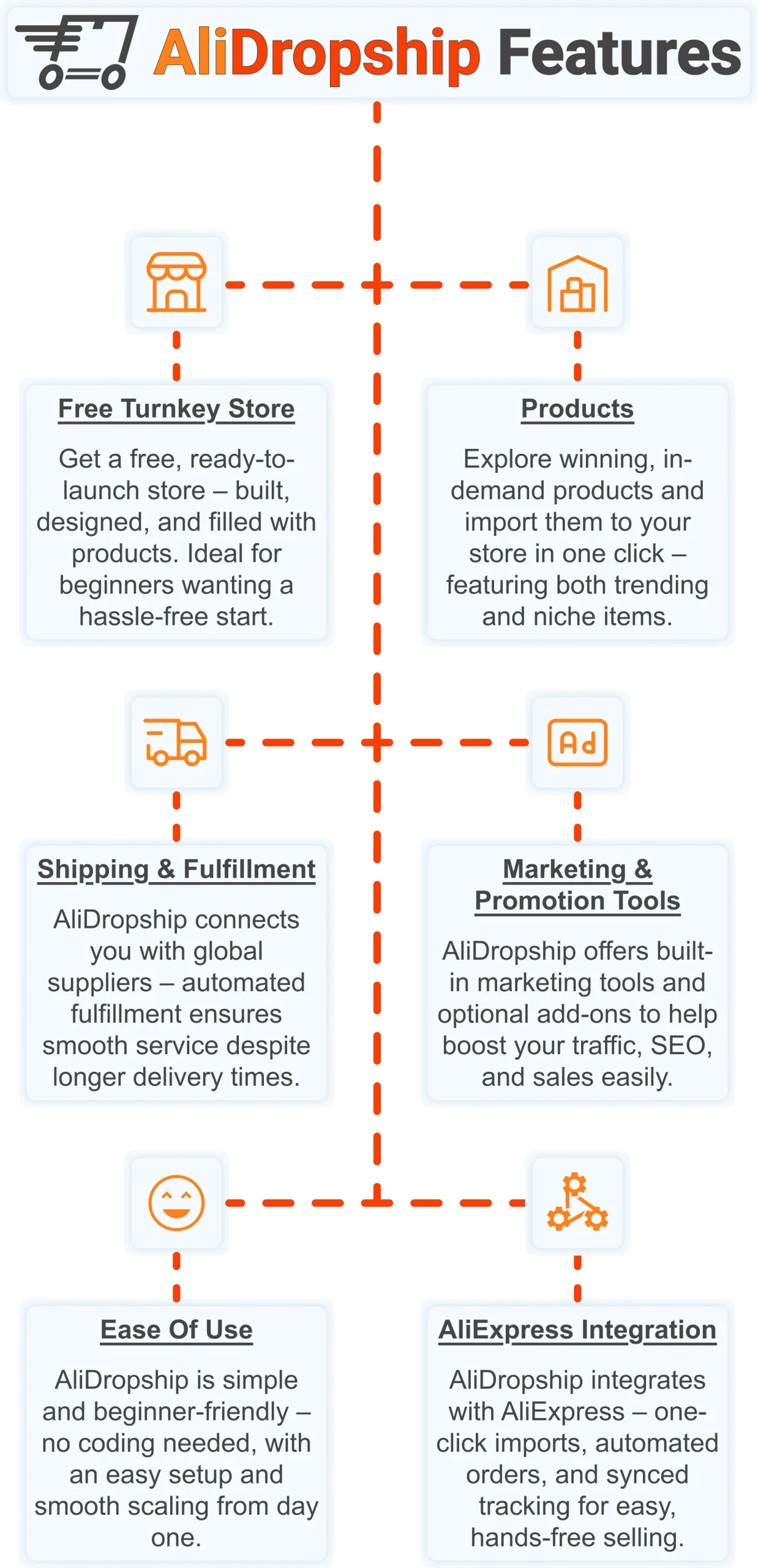
Free turnkey store ️
Get a free turnkey store – built, designed, and filled with products. Ideal for beginners wanting a hassle-free start, the store comes fully optimized to attract customers right away, saving you time on setup. Plus, it includes professional design elements to give your business a polished, trustworthy look from day one. This ready-made foundation makes it easy to move seamlessly into product selection.
Products
Once your store is set up, you can explore winning, in-demand products and import them in one click – featuring both trending and niche items. This wide selection lets you cater to diverse customer interests and test what works best. Regular updates ensure you always have fresh products, keeping your store competitive and relevant. With great products in place, smooth shipping becomes the next essential step.
Shipping & fulfillment
AliDropship connects you with global suppliers, and automated fulfillment ensures seamless order processing despite international delivery times. Customers receive real-time tracking updates, which builds confidence and trust in your store. Once shipping is handled reliably, you can focus on promoting your store and attracting traffic.
Marketing & promotion tools
To maximize sales, AliDropship offers built-in marketing tools and optional add-ons that help boost traffic, SEO, and conversions. From email campaigns and discounts to social media integration, these tools empower you to reach and retain customers without needing prior marketing experience. With promotion strategies in place, managing your business becomes simpler and more efficient.
Ease of use
AliDropship is beginner-friendly – no coding needed, with an intuitive dashboard that guides you through every step. Easy setup and smooth scaling let you expand your store without stress. As your business grows, adding new features, products, and marketing campaigns remains hassle-free, giving you more time to focus on sales.
AliExpress integration
Finally, AliDropship integrates seamlessly with AliExpress, enabling one-click imports, automated orders, and synced tracking. Your inventory stays up-to-date with the latest products and prices, while automated order processing frees you from manual tasks. Combined with the turnkey setup, reliable shipping, and built-in marketing tools, this integration ensures your dropshipping business is fully equipped for growth and success.
Building multiple income streams alongside your stock portfolio is one of the smartest moves you can make in 2026 – and dropshipping is one of the lowest-barrier ways to start. Claim your free AliDropship store and $100 voucher and add a new income stream today.
 Previous post
