 ‧ julia.nenyukova ‧
March 14, 2026
‧ julia.nenyukova ‧
March 14, 2026  31 ‧
31 ‧
 0
0
The drone industry isn’t just growing – it’s booming. The global commercial drone market is on track to surpass $54 billion by 2030, and individual operators are already getting a real slice of that pie. If you own a drone – or you’re thinking about getting one – the question isn’t really whether you can make money with a drone. It’s how much, and through which channels.
Quick Answer: You can realistically make money with a drone through aerial photography, mapping, infrastructure inspections, stock footage, and delivery services – with earnings ranging from $50 per hour for entry-level work to $1,500+ per day on specialist contracts.
The barrier to entry is lower than most people expect. A solid consumer drone costs $400–$800. A commercial-grade setup runs $1,500–$3,000. With that investment, you can offer services that businesses – from real estate agencies to construction firms – are actively paying for right now. But like any skill-based business, building a drone income takes preparation, the right credentials, and consistency. This guide breaks down every realistic path to drone income in 2026 and tells you exactly what to expect at each level.
What does making money with a drone actually mean?
It’s worth being clear here. “Making money with a drone” isn’t one thing – it’s an umbrella term for a range of commercial activities. You might freelance as an aerial photographer. You might run a mapping or surveying service for agricultural clients. You might earn passively by licensing stock footage on platforms like Shutterstock or Pond5. Or, with the right partnerships, you could get involved in last-mile drone delivery services.
In 2026, drone monetization has matured well beyond hobbyist side hustles. Sectors like construction, agriculture, real estate, emergency services, and film production now regularly contract drone operators – sometimes for one-off gigs, sometimes on longer-term retainers. The demand is genuine and growing. The key is figuring out which entry point aligns with your skills, equipment, and available time.
Why this works in 2026: Advances in drone AI, longer battery life, and improved cameras have made commercial drone services faster and more affordable to deliver – which means more businesses are adopting them than ever before.
How much can you realistically earn with a drone?
Earnings vary significantly depending on the type of work, your location, your experience level, and how consistently you market your services. Here’s a realistic breakdown of what drone operators are currently earning across the most popular service categories.
These figures reflect what’s achievable once you’ve built a basic client base – not what you’ll earn in week one. Most drone operators reach consistent $500–$1,500 monthly income within 60–90 days of launching, assuming they’re actively marketing their services. Full-time operators in specialist fields like mapping and inspection regularly exceed $5,000 per month.
One note on these figures: Location matters a lot. Urban and suburban markets with strong real estate or construction activity will yield higher rates and more frequent bookings than rural areas.
How to make money with a drone in 2026
Below are the most reliable, proven methods – starting with the most accessible for beginners and moving toward the more specialized and higher-paying end of the spectrum.
Aerial photography and videography
This is the most popular starting point for good reason. Real estate agents, wedding planners, event organizers, and tourism businesses all need high-quality aerial visuals – and most of them don’t own a drone or know how to fly one. That’s where you come in.
Real estate is especially strong. An aerial shoot of a residential or commercial property typically takes 60–90 minutes and commands $150–$400 per session. Add a short edited highlight video and you can push that to $350–$600. Weddings and events are another solid niche – full aerial coverage packages regularly run $500–$1,000 per event.
Promotional videos for businesses – particularly those in tourism, hospitality, and property development – are another consistent source of work. Once you land a business as a client, repeat bookings tend to follow naturally.
Earning potential: $150–$600 per shoot, scaling higher with editing add-ons and client volume.
Drone mapping and surveying
If you’re willing to invest in specialized mapping software like DroneDeploy or Pix4D, surveying is one of the highest-paying drone services you can offer. Farmers use drone maps for crop monitoring, soil health analysis, and irrigation planning. Construction companies use them to track site progress and produce volumetric measurements. Land developers use 3D models for planning submissions and investor presentations.
This niche requires more technical skill than photography, but that’s also what makes it more lucrative – less competition, more specialized knowledge, and clients who are used to paying professional rates.
Earning potential: $500–$2,000 per contract, with repeat agricultural clients often providing steady monthly income.
Infrastructure and industrial inspections
Drone inspections of rooftops, cell towers, power lines, solar panels, and pipelines are replacing methods that once required scaffolding, cherry pickers, or rappelling crews. It’s faster, safer, and cheaper for the client – which is why demand in this sector has grown sharply over the past three years.
To operate in this space professionally, you’ll typically need industry-specific certifications on top of your commercial drone license. The upfront investment in training is real, but so is the payoff: inspection contracts often run for multiple days and pay $600–$1,500 per day.
Earning potential: $600–$1,500 per day on specialist contracts.
Stock footage and photography
This is the most accessible passive income stream for drone operators. Platforms like Shutterstock, Adobe Stock, Pond5, and Getty Images all accept drone footage and images, paying royalties each time a clip or photo is licensed.
The catch? Building a portfolio that generates meaningful income takes time. Most drone operators earning $200–$300 per month from stock have uploaded 150–300+ assets. The income compounds slowly but steadily – and once your footage is uploaded, it keeps earning with zero additional effort on your part.
Earning potential: $50–$300+ per month passively, scaling with portfolio size and subject demand.
Search and rescue and public safety
Some drone operators partner with local emergency services, fire departments, or search and rescue organizations to provide aerial support in critical situations. This path isn’t typically a high-income play – but it does provide steady contract work, serious credibility, and in some cases a foothold into government contracts, which tend to be more stable and better-paying than one-off commercial gigs.
Earning potential: $300–$800 per day on formal contract engagements.
Drone delivery services
Drone delivery is still in its early commercial stages, but the landscape is shifting. Companies like Wing (Google) and Zipline are actively expanding their operator networks in eligible markets. Partnering with these platforms – or establishing a local last-mile arrangement with businesses or medical facilities – is a viable income path, particularly in rural or suburban areas underserved by traditional delivery infrastructure.
For most operators, this is more of a long-term bet than an immediate income stream. But it’s worth watching as the regulatory environment and infrastructure continue to mature.
Earning potential: Highly variable by platform and market.
How to set up your drone business the right way
Choose the right drone for the job
Not every drone is suited for commercial work. For aerial photography and events, the DJI Air 3 or DJI Mavic Air 2 are excellent entry-level commercial options that offer strong camera quality without breaking the bank. For mapping and surveying, look at the DJI Phantom 4 RTK or the DJI Matrice series. For industrial inspections, thermal camera-equipped drones – like those using the DJI Zenmuse XT payload – are the standard.
You don’t need the most expensive gear on day one. Start with what fits your niche and budget, then reinvest in upgraded equipment as your income grows.
Get certified before you take paid work
In the US, commercial drone operations require an FAA Part 107 Remote Pilot Certificate. The exam covers airspace classification, weather, emergency procedures, and drone regulations. Most candidates pass with 10–20 hours of focused study. The test fee is $175, and it’s administered at FAA-approved testing centers nationwide.
Outside the US, check your country’s civil aviation authority for equivalent requirements. Most developed countries now have formal commercial drone licensing frameworks in place, and operating without one carries serious financial and legal risk.
Get insured
Liability insurance is non-negotiable. A single incident – a crashed drone damaging a vehicle or injuring a bystander – could cost thousands without coverage. Policies from providers like Verifly, Thimble, or DroneBase start at around $10–$25 per flight hour, with annual commercial policies running $500–$1,500 depending on coverage limits and activity type.
How to maximize your drone income
Getting your first few clients is one thing. Turning drone work into consistent, growing income is another. Here’s what the most successful drone operators do differently.
Build an online portfolio from day one. Even a simple one-page website showing your best aerial photos and edited videos will do more for your credibility than any amount of cold outreach. Keep it current and make sure your contact details are easy to find.
Bundle your services. Don’t just offer raw footage – offer edited packages. Real estate clients especially want final deliverables they can publish immediately. Charging for editing on top of the shoot can double or triple your per-client revenue without adding significant time to your workflow.
Network in high-value industries. Real estate agents, construction project managers, and event planners are your best sources of repeat business. Attend local industry events, join relevant LinkedIn and Facebook groups, and reach out directly to agencies in your area. A handful of reliable long-term clients is worth more than a constant stream of one-off gigs.
Diversify your income streams. The strongest drone operators combine active services – photography, surveys, inspections – with passive income from stock footage, and sometimes educational content like YouTube tutorials or online courses. Diversification smooths out seasonal fluctuations and reduces dependency on any single client or niche.
Legal and ethical considerations for drone operators
Before you take on any paid work, understand the legal landscape. Operating a commercial drone without proper certification in the US isn’t just a regulatory risk – it can result in civil penalties of up to $32,666 per violation from the FAA. Don’t skip this step.
Rules you need to follow
In the US, that means registering your drone if it weighs over 0.55 lbs, holding a valid Part 107 certificate for any commercial operation, and respecting all airspace restrictions. Use tools like the FAA’s B4UFLY app or AirMap to check airspace status before every flight – especially near urban areas, airports, or temporary flight restriction zones.
Never fly over crowds or moving vehicles without an FAA waiver. Never fly near controlled airspace without authorization through the LAANC system. Respect privacy – avoid filming private property without consent, and always be transparent with clients about where footage will be used or published.
Key principle: Staying legal and properly insured isn’t just about avoiding fines – it’s what separates professional drone operators from hobbyists, and it’s what wins you corporate and government contracts.
What to avoid absolutely
Don’t fly in restricted or controlled airspace without authorization, regardless of how short the flight seems. Don’t accept cash-in-hand commercial work without licensing – if something goes wrong mid-flight, you have zero legal protection. And don’t overpromise deliverables to clients based on footage quality or turnaround times you can’t yet consistently achieve.
Final thoughts: which method is right for you?
The best drone income path depends on where you’re starting from and what you want to build. Here’s a quick breakdown by reader profile.
If you’re a complete beginner, start with aerial photography. It has the lowest equipment and knowledge barrier, the most accessible client base – real estate, weddings, local businesses – and more community support and tutorials than any other drone niche. Focus on getting your Part 107 certification and building a small portfolio before pitching clients.
If you’re intermediate or working part-time, consider adding stock footage as a passive complement to your active photography work. Upload consistently, prioritize high-demand subjects like cityscapes, coastlines, agriculture, and construction, and let that portfolio build over time alongside your client work.
If you’re targeting a full-time income, mapping, surveying, and industrial inspections are where the real money is. These services command the highest rates, attract repeat corporate clients, and are far harder to commoditize than standard photography. They require more training and upfront investment – but the income ceiling is significantly higher, and the work is more stable.
And if you want to build a scalable online income stream that works while you’re grounded – one that complements your drone business without depending on the weather or your flying schedule – keep reading.
AliDropship: Your complete all-in-one solution for starting dropshipping in 2026
If you want the simplest possible way to start dropshipping – especially if you’re brand new – AliDropship remains one of the most beginner-friendly tools available in 2026. It brings together store creation, product imports, automation, and marketing into a single streamlined system designed to help you launch quickly and grow confidently.
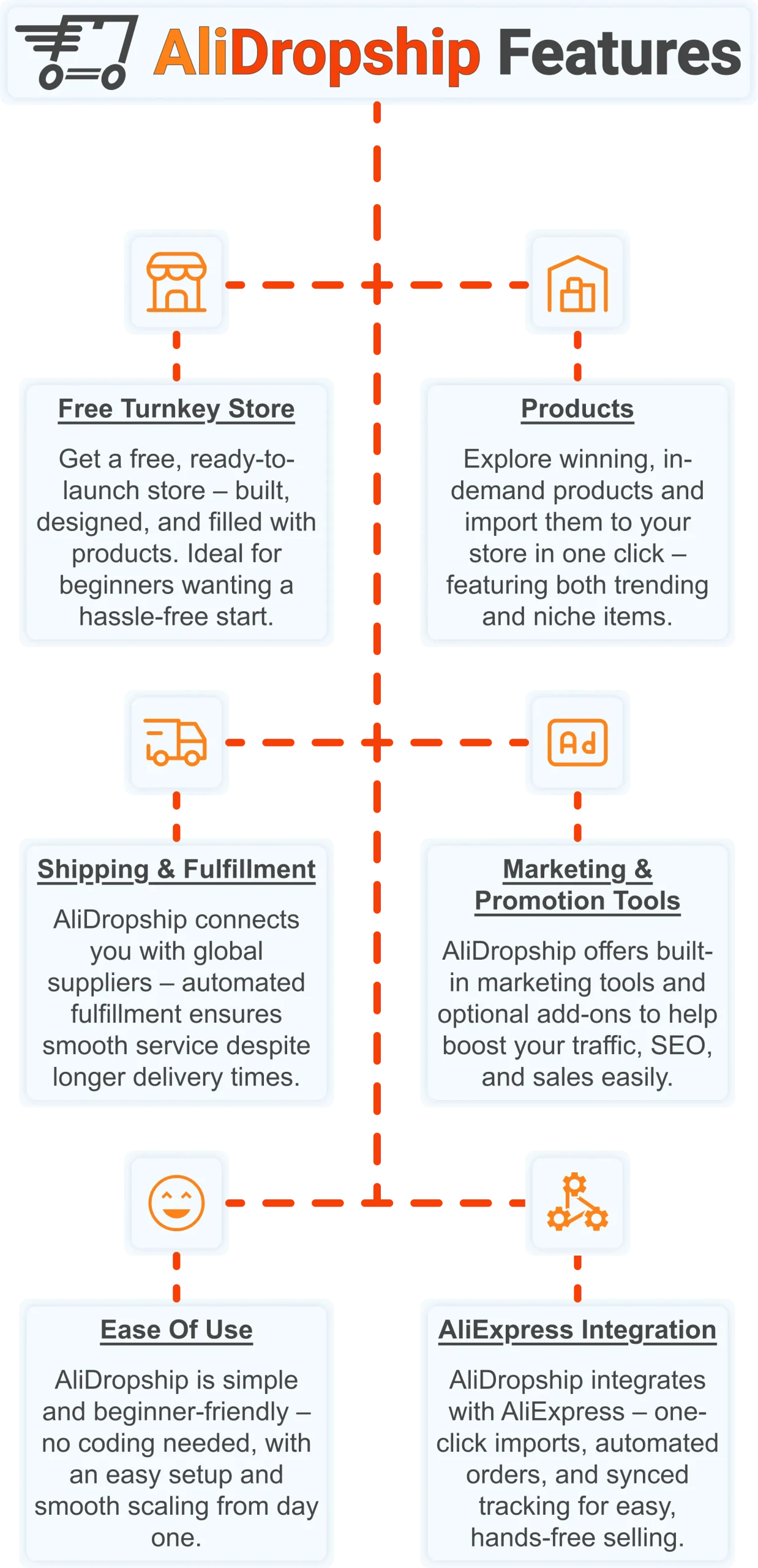
Free turnkey store ️
Get a free turnkey store – built, designed, and filled with products. Ideal for beginners wanting a hassle-free start, the store comes fully optimized to attract customers right away, saving you time on setup. Plus, it includes professional design elements to give your business a polished, trustworthy look from day one. This ready-made foundation makes it easy to move seamlessly into product selection.
Products
Once your store is set up, you can explore winning, in-demand products and import them in one click – featuring both trending and niche items. This wide selection lets you cater to diverse customer interests and test what works best. Regular updates ensure you always have fresh products, keeping your store competitive and relevant. With great products in place, smooth shipping becomes the next essential step.
Shipping & fulfillment
AliDropship connects you with global suppliers, and automated fulfillment ensures seamless order processing despite international delivery times. Customers receive real-time tracking updates, which builds confidence and trust in your store. Once shipping is handled reliably, you can focus on promoting your store and attracting traffic.
Marketing & promotion tools
To maximize sales, AliDropship offers built-in marketing tools and optional add-ons that help boost traffic, SEO, and conversions. From email campaigns and discounts to social media integration, these tools empower you to reach and retain customers without needing prior marketing experience. With promotion strategies in place, managing your business becomes simpler and more efficient.
Ease of use
AliDropship is beginner-friendly – no coding needed, with an intuitive dashboard that guides you through every step. Easy setup and smooth scaling let you expand your store without stress. As your business grows, adding new features, products, and marketing campaigns remains hassle-free, giving you more time to focus on sales.
AliExpress integration
Finally, AliDropship integrates seamlessly with AliExpress, enabling one-click imports, automated orders, and synced tracking. Your inventory stays up-to-date with the latest products and prices, while automated order processing frees you from manual tasks. Combined with the turnkey setup, reliable shipping, and built-in marketing tools, this integration ensures your dropshipping business is fully equipped for growth and success.
Drone work is a great active income – but pairing it with an automated dropshipping store gives you revenue that runs even when you’re not in the air. Claim your free AliDropship store and $100 gift voucher to get started today.
 Previous post
