 ‧ Agnes Kazaryan ‧
March 01, 2026
‧ Agnes Kazaryan ‧
March 01, 2026  32 ‧
32 ‧
 0
0
You spot an ad, click through, and notice the URL ends in “myshopify.com.” A small voice kicks in: is Shopify legit? That’s a reasonable thing to wonder. No one wants to hand over card details to a store they don’t fully understand.
Here’s the short version: Shopify itself is completely legitimate. It’s a publicly traded company that has been operating since 2006, trusted by millions of sellers worldwide – from solo side hustlers to global brands. The platform handles payments securely, encrypts your data, and has fraud detection built in.
Quick answer: Shopify the platform is secure and well-established. The real question isn’t whether Shopify is legit – it’s whether the individual store you’re buying from is trustworthy. This article explains exactly how to tell the difference.
The distinction matters because anyone can open a Shopify store. That openness is what makes it a great place for entrepreneurs, but it also means a small number of stores don’t play by the rules. Knowing what to look for puts you in control.
What is Shopify?
Shopify is an e-commerce platform that lets people build and run their own online stores without needing to write a single line of code. Think of it like renting a fully equipped digital storefront – you get the space, the checkout system, and all the tools, and you fill it with your own products.
Since launching in 2006, Shopify has grown into one of the most widely used commerce platforms in the world. Over 4 million businesses use it, ranging from handmade craft sellers to established names like Gymshark and Allbirds. That scale matters: if the platform weren’t reliable, it wouldn’t have earned that level of trust.
For buyers, the key thing to understand is that every Shopify store is independently owned and operated. Shopify provides the technology – payment processing, hosting, security – but each seller manages their own products, pricing, and customer service. That’s why your experience can vary from store to store. The platform is consistent; the sellers are not.
How trustworthy is Shopify compared to other platforms?
If you’re wondering how Shopify stacks up against alternatives when it comes to buyer safety, the table below gives you a quick overview.
Shopify sits at the more secure end of the spectrum. Unlike a self-hosted store or an unknown standalone website, Shopify enforces security standards across every store on the platform – which means the baseline level of protection is consistent wherever you shop.
Shopify’s safety and security measures
One of the main reasons Shopify is widely trusted is the security layer it builds into every store automatically. Sellers don’t have to configure it themselves – and as a buyer, you benefit from it regardless of which store you’re shopping at.
PCI compliance and SSL
Shopify is fully PCI compliant, which means it meets the strict standards required to handle credit card data safely. Every Shopify store also comes with an SSL certificate included – that’s the padlock you see in your browser bar. It’s not just visual; it encrypts your payment information so that it can’t be intercepted in transit.
Important: If you ever visit a store – Shopify-powered or not – and you don’t see “https://” in the URL, treat that as a red flag and don’t enter payment details.
Fraud detection
Shopify has built-in fraud detection tools that monitor transactions for suspicious activity. If an order looks unusual – say, a high-value purchase from a brand-new account – the platform flags it automatically. This happens at the infrastructure level, not at the seller’s discretion.
Merchant standards
Shopify requires sellers to verify their accounts and follow platform guidelines around returns, contact information, and product accuracy. Stores that consistently violate these rules can be suspended. That doesn’t mean every bad actor gets caught immediately, but it does mean there are active mechanisms to keep the platform clean.
Chargeback support
If a Shopify store fails to deliver your order or misrepresents what it’s selling, you can pursue a chargeback through your bank or payment provider. Shopify support can also be contacted directly if a store is behaving suspiciously – something many smaller marketplaces can’t offer.
The bottom line: Shopify has built serious infrastructure around buyer safety. It won’t catch every bad actor, but it creates a much safer environment than an unverified standalone website with no accountability.
Common Shopify scams – and how to spot them
Even with all of Shopify’s protections in place, a small number of stores do cause problems. Understanding the most common patterns helps you avoid them.
Fake or counterfeit products
Some stores advertise branded goods at unusually low prices. The products either never arrive, or what arrives is a cheap imitation. If a price seems dramatically lower than what you’d find elsewhere, that’s worth investigating before you buy.
Important: Authentic branded goods rarely appear at 60–70% below retail on a site you’ve never heard of. Trust the instinct that something’s off.
Stores that disappear after payment
A store might take your money and then go offline or stop responding. These operations tend to be short-lived, which is exactly why they don’t invest in customer service or social proof. If you can’t find any reviews of a store outside its own website, that’s a warning sign.
Phishing stores
Some sites are designed specifically to harvest your payment details or personal information rather than actually sell products. Common signs include: copied product images, a generic “About Us” page with no real information, and contact emails that use free services like Gmail instead of a branded domain.
Misleading product descriptions
This one is more subtle. A store might be technically legitimate but use vague or exaggerated descriptions that don’t match what you actually receive. Reading reviews on Trustpilot or Reddit before buying from an unfamiliar store is the simplest way to catch this pattern.
Why this works in 2026: Review platforms like Trustpilot aggregate feedback from real buyers across hundreds of thousands of stores. A quick search takes under a minute and can save you significant frustration.
How to check if a Shopify store is legit
Shopify’s platform-level security handles a lot – but your own quick checks are what protect you at the individual store level. Here’s what to look for before you hit “Buy Now.”
Check the contact information
A legitimate store will have a real email address, and often a phone number or physical address. If the only contact option is a generic form and nothing else, that’s a concern. Look for a branded domain email (e.g. support@storename.com) rather than a free webmail address.
Look for a return and refund policy
Trustworthy sellers are transparent about how returns work. If a store has no refund policy, or the policy is buried and vague, that’s a signal the seller isn’t committed to standing behind their products.
Read reviews off-site
Don’t rely only on testimonials published on the store itself – those can be curated or fabricated. Check Trustpilot, Google Reviews, or Reddit for independent feedback. Patterns of delayed shipping, wrong items, or unresponsive customer service tend to show up clearly across these platforms.
Check the URL and padlock
Make sure the URL starts with “https://” and that the padlock icon is visible. This confirms that your connection to the store is encrypted. Also check that the domain looks right – scam stores sometimes use names that closely mimic legitimate brands with slight spelling variations.
Use a secure payment method
Pay with a credit card or PayPal wherever possible. Both offer dispute resolution and chargeback options if something goes wrong. Avoid direct bank transfers or cryptocurrency payments to stores you don’t know well – those are much harder to recover.
Pro tip: A quick Google search of the store name plus “reviews” or “scam” takes about 30 seconds and can tell you a lot. If the results are empty or suspicious, trust that signal.
Real examples – what good and bad Shopify stores look like
It helps to see both sides in practice.
Legitimate Shopify stores
Brands like Gymshark and Allbirds run their entire operations on Shopify. These stores have clear product descriptions, transparent return policies, easily findable contact information, and a well-documented presence on review platforms. Shopping on them feels professional because they follow the platform’s guidelines and invest in the buyer experience.
Beyond major brands, thousands of smaller independent sellers use Shopify to run honest, well-run businesses. Many rely heavily on repeat customers and word-of-mouth, which gives them a strong motivation to deliver what they promise.
Problematic stores
On the other side, some stores have caused real problems – selling knockoffs, shipping wrong items, or simply taking payment and going silent. These cases are a minority, but they do exist. What they tend to have in common: no verifiable reviews, minimal contact information, and prices that seem too good to be accurate.
Key principle: The platform itself isn’t responsible for individual seller behavior, but the tools exist to protect yourself if you use them.
Shopify vs other platforms – a legitimacy comparison
Context helps here. Shopify isn’t operating in a vacuum – it’s one of several platforms buyers and sellers use, each with different security profiles.
Shopify vs WooCommerce
WooCommerce is an open-source plugin for WordPress, which means security is largely the store owner’s responsibility. If a seller hasn’t kept their plugins updated or hasn’t properly configured SSL, there can be real gaps in protection. Fully managed WooCommerce setups – like those built with AliDropship – take care of all technical security details from the start, making them comparable to Shopify in terms of baseline safety.
Shopify vs BigCommerce
BigCommerce is Shopify’s closest competitor and offers a similar hosted model with strong fraud protection and secure payments. The practical difference for most buyers is minimal. Shopify has a larger merchant base and a more established support network, which can work in your favor if an issue arises.
Shopify vs Etsy
Etsy is purpose-built for handmade and vintage goods. It has buyer protections, but they’re not as comprehensive as Shopify’s for larger purchases. Shopify-powered stores operating at scale generally have more robust systems in place.
Shopify vs Amazon (third-party sellers)
Amazon’s A-to-Z Guarantee provides strong buyer protection, but many third-party sellers on Amazon operate with limited oversight – which creates risks similar to those on poorly rated Shopify stores. The key difference is that Amazon’s infrastructure handles resolution; on Shopify, you work through your payment method or Shopify support directly.
Overall, Shopify’s platform-level security is strong. The risks that exist are at the individual store level – which is true to varying degrees on every major commerce platform.
Legal and ethical considerations
There are a few areas worth being aware of as both a buyer and – if you’re thinking about starting a store – as a seller.
What buyers should know
If you’re scammed by a Shopify store, you have real recourse. Chargebacks through your bank or card provider are the most direct route. PayPal’s buyer protection covers most transactions. You can also report a store to Shopify directly – the platform does take action on verified complaints, including suspending sellers who repeatedly violate its policies.
Important note: Keep a record of your order confirmation, payment receipt, and any communication with the seller. This documentation makes dispute resolution significantly easier.
What sellers should know
If you’re running or planning to run a Shopify store, the platform’s terms of service are clear: accurate product descriptions, transparent policies, and honest pricing are required. Grey-area tactics – like advertising a product as branded when it isn’t, or deliberately obscuring shipping times – violate both Shopify’s policies and consumer protection laws in most jurisdictions.
Key principle: Running a trustworthy store isn’t just the ethical choice – it’s also the practical one. Chargebacks, negative reviews, and platform suspension all have real costs. Transparency pays off long-term.
Final thoughts – is Shopify legit?
Yes. Shopify as a platform is secure, well-established, and built with real protections for both buyers and sellers. It’s been operating since 2006, is publicly traded, and is used by millions of verified merchants worldwide. The infrastructure it provides – PCI compliance, SSL, fraud detection, chargeback support – is genuinely robust.
The nuance is that Shopify is a platform, not a single store. The individual stores on it vary in quality, just like sellers on any open marketplace. That variation is manageable once you know what to look for.
Here’s how to approach it based on where you are:
- Complete beginner to online shopping: Start with stores you recognize or can verify through independent reviews on Trustpilot or Google. Always pay by credit card or PayPal. Check for a return policy before you buy.
- Occasional online shopper: You already know most of this, but don’t skip the off-site review check for stores you’ve never heard of. Thirty seconds of research is worth it.
- Thinking about selling on Shopify: The platform is a solid foundation. Your reputation as a seller matters more than any tool you use – so prioritize transparency, accurate descriptions, and responsive customer service from day one.
Shopify is legitimate. Use it with the same awareness you’d bring to any online purchase, and you’ll be in good shape.
AliDropship: Your complete all-in-one solution for starting dropshipping in 2026
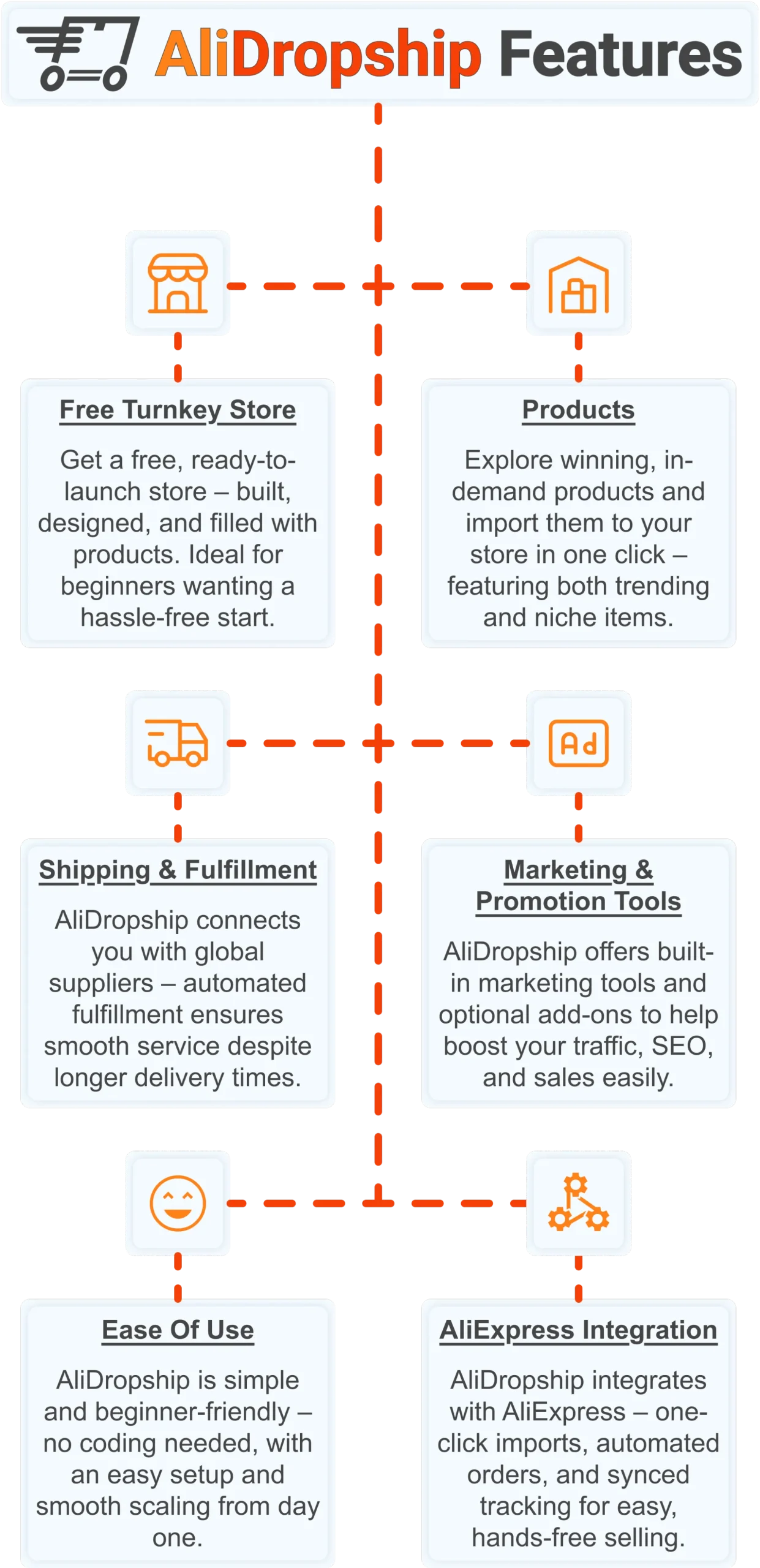
If you want the simplest possible way to start dropshipping – especially if you’re brand new – AliDropship remains one of the most beginner-friendly tools available in 2026. It brings together store creation, product imports, automation, and marketing into a single streamlined system designed to help you launch quickly and grow confidently.
Free turnkey store ️
Get a free turnkey store – built, designed, and filled with products. Ideal for beginners wanting a hassle-free start, the store comes fully optimized to attract customers right away, saving you time on setup. Plus, it includes professional design elements to give your business a polished, trustworthy look from day one. This ready-made foundation makes it easy to move seamlessly into product selection.
Products
Once your store is set up, you can explore winning, in-demand products and import them in one click – featuring both trending and niche items. This wide selection lets you cater to diverse customer interests and test what works best. Regular updates ensure you always have fresh products, keeping your store competitive and relevant. With great products in place, smooth shipping becomes the next essential step.
Shipping & fulfillment
AliDropship connects you with global suppliers, and automated fulfillment ensures seamless order processing despite international delivery times. Customers receive real-time tracking updates, which builds confidence and trust in your store. Once shipping is handled reliably, you can focus on promoting your store and attracting traffic.
Marketing & promotion tools
To maximize sales, AliDropship offers built-in marketing tools and optional add-ons that help boost traffic, SEO, and conversions. From email campaigns and discounts to social media integration, these tools empower you to reach and retain customers without needing prior marketing experience. With promotion strategies in place, managing your business becomes simpler and more efficient.
Ease of use
AliDropship is beginner-friendly – no coding needed, with an intuitive dashboard that guides you through every step. Easy setup and smooth scaling let you expand your store without stress. As your business grows, adding new features, products, and marketing campaigns remains hassle-free, giving you more time to focus on sales.
AliExpress integration
Finally, AliDropship integrates seamlessly with AliExpress, enabling one-click imports, automated orders, and synced tracking. Your inventory stays up-to-date with the latest products and prices, while automated order processing frees you from manual tasks. Combined with the turnkey setup, reliable shipping, and built-in marketing tools, this integration ensures your dropshipping business is fully equipped for growth and success.
Now that you know Shopify is a legitimate platform to shop and sell on, the next step is getting your own store running. Claim your free AliDropship store and start building your dropshipping business today.
 Previous post
