 ‧ julia.nenyukova ‧
March 17, 2026
‧ julia.nenyukova ‧
March 17, 2026  42 ‧
42 ‧
 0
0
You’ve probably heard that dropshipping can make you money without needing a warehouse, a big budget, or any prior business experience. And honestly? That’s mostly true — but only if you understand what you’re actually getting into. This guide breaks down exactly how to make money dropshipping in 2026, from choosing a niche to landing your first sale, with realistic numbers attached to every step.
Quick Answer: Dropshipping is a legitimate way to earn income online. Beginners typically see their first profits within 60–90 days of launching, with realistic earnings of $300–$1,500/month once a store is optimized. Full-time dropshippers with proven products can earn $3,000–$10,000+/month.
If you’ve been sitting on the idea for a while, now is a good time to act. Global ecommerce continues to grow, consumer trust in online shopping is higher than ever, and the tools available to beginners in 2026 make the setup process faster than it’s ever been. Let’s get into it.
What is dropshipping?
Dropshipping is a retail business model where you sell products through your own online store — but you never handle inventory or ship anything yourself. When a customer buys something from you, the order goes straight to your supplier, who packs and ships it directly to the buyer. You keep the difference between what your customer paid and what the supplier charges you.
It sounds simple, and structurally it is. The complexity comes in finding the right products, building an audience, and keeping customers happy despite international shipping times. That’s the real work — and it’s entirely manageable with the right setup.
Why this works in 2026: The barrier to entry has dropped significantly. Free store builders, automated order processing, and one-click product imports mean you can go from zero to a live store in a matter of hours — not weeks.
How much can you realistically earn?
Let’s put some real numbers on this. Earnings in dropshipping vary widely depending on your niche, traffic strategy, and how long you’ve been running. Here’s a general breakdown across three experience levels:
These figures reflect net profit after product costs, not gross revenue. Most beginners who stick with it for 6–12 months and take marketing seriously can realistically hit $1,000–$3,000/month before the end of their first year.
One note on these figures: Results depend heavily on niche selection, ad spend, and how quickly you identify winning products. No timeline is guaranteed — but the model itself is proven.
Step 1 – Choose a profitable niche
Your niche is the single most important decision you’ll make when starting a dropshipping business. Get it right, and everything downstream becomes easier — marketing, pricing, product selection, and customer retention. Get it wrong, and no amount of hard work will save you.
A profitable niche in 2026 typically shares a few traits: it solves a real problem, it attracts a passionate or repeat-buying audience, and it isn’t completely dominated by Amazon or big-box retailers. Think pet accessories, home fitness, kitchen tools, hobbyist gear, or baby products — categories where people buy emotionally and often.
How to research a niche before committing
Start with Google Trends. Type in your niche idea and check whether search interest is growing, stable, or declining. You want stable or growing — avoid anything that spiked once and crashed. Then go to Reddit and find communities around your niche. Read what people complain about, what they wish existed, and what they buy repeatedly. That’s free market research.
Next, search for similar products on AliExpress or other supplier marketplaces and look at order volumes. High order counts on multiple products in the same category are a strong signal that the niche converts. Cross-check with Facebook Ad Library to see if other dropshippers are actively running ads in that space — competition means there’s money there.
Earning potential: Niche selection doesn’t directly create earnings, but stores built around a focused niche typically convert 2–3x better than general stores and see higher average order values.
Step 2 – Find reliable suppliers
Your supplier is your silent business partner. They determine whether your customers get their orders on time, whether the product quality matches your listing photos, and whether returns are handled professionally. Choosing poorly here is one of the fastest ways to destroy a store’s reputation before it gets off the ground.
For most beginners, AliExpress-connected suppliers are the starting point — the product range is enormous, shipping options are flexible, and the integration with dropshipping platforms is seamless. As your store grows, you can layer in suppliers from other regions for faster delivery times.
What to look for in a dropshipping supplier
Before committing to a supplier, check their review score and the volume of orders they’ve fulfilled — a supplier with 4.7+ stars across hundreds of orders is a safer bet than a newer one. Look for suppliers who offer ePacket or similar tracked shipping for international orders. And always order a test product yourself before you start selling it. A $15 test purchase can save you hundreds in returns and refund disputes later.
Important: Never rely on a single supplier for your best-selling products. If they run out of stock or disappear, your store goes dark. Always have a backup sourced and ready.
Step 3 – Build your store
Your store is your storefront, your brand, and your first impression — all at once. Fortunately, you don’t need to be a developer or hire one. Modern dropshipping platforms handle the technical side entirely, so your job is to make smart decisions about design, structure, and product presentation.
The key elements of a high-converting dropshipping store are a clean, fast-loading design, clear product pages with quality photos and honest descriptions, a visible returns/shipping policy, and an easy checkout process. Each of these directly affects whether visitors turn into buyers.
Don’t overthink the design phase
One of the most common beginner mistakes is spending weeks on store design before making a single sale. Get your store live with a solid foundation, then optimize based on real data. A simple, professional-looking store that’s live beats a perfect store that’s still being built. Focus on product pages, trust signals (reviews, secure payment badges), and a clear value proposition — then iterate.
Why this works in 2026: Consumer expectations for online stores are high, but so are the tools available to meet them. Turnkey store builders with pre-loaded products and professional designs mean even first-timers can launch stores that look credible from day one.
Step 4 – Import winning products
Product selection is an ongoing process, not a one-time decision. The goal isn’t to stock your store with hundreds of items on day one — it’s to find the handful of products that your target audience actually wants to buy, then build your marketing around those.
Start with 10–20 products in your niche. Look for items with strong order histories, a clear use case, good photos, and a price point that gives you a healthy margin. A typical dropshipping margin to aim for is 30–50% above supplier cost. So if a product costs $10 from the supplier, you’d list it at $15–$20 minimum, factoring in transaction fees and ad costs.
Manual vs automated product importing
Manual importing means you copy product details, write descriptions, and upload images one by one — which can take 5–20 minutes per product. It gives you full control but doesn’t scale well.
Automated importing lets you pull entire product bundles — sometimes 100 to 1,000 items — with a single click, complete with photos, descriptions, and existing customer reviews. For anyone running a store seriously, automation is the only viable long-term approach. It frees up your time to focus on marketing and customer experience, which is where the real money is made.
Earning potential: Stores with 15–30 well-researched products typically outperform stores with 500+ randomly selected items. Quality beats volume here.
Step 5 – Promote your store and drive traffic
You can have the best niche, the best products, and a beautifully designed store — but without traffic, none of it matters. Marketing is where most beginners struggle, and it’s also where the biggest wins happen. The good news is that you don’t need a huge budget to start.
Organic traffic strategies
SEO (search engine optimization) is the long game. Write product descriptions and blog content targeting what your customers are searching for. It takes 3–6 months to see meaningful results, but organic traffic is essentially free once it kicks in. Similarly, building a presence on TikTok or Instagram through short-form video content can drive significant traffic without paid ads — especially in visual niches like fashion, home decor, or fitness gear.
Paid traffic strategies
Facebook and Instagram ads remain the most popular paid traffic channels for dropshippers. A typical beginner testing phase involves $5–$20/day across 3–5 ad sets targeting different audiences. Once you identify what’s converting, you scale the winners and cut the losers. Google Shopping ads work well for products with strong search intent — people actively looking to buy rather than just browse.
Important note: Don’t spend more than you can afford to lose during the testing phase. Set a clear budget for your first 30 days and treat it as paid education — you’re buying data, not just sales.
Step 6 – Handle orders and keep customers happy
Order fulfillment in dropshipping is largely hands-off — that’s the whole point. When a customer places an order, it gets forwarded to your supplier, who ships it directly. But “hands-off” doesn’t mean “no responsibility.” You’re still the one the customer emailed when their package is late, and you’re the one who processes refunds when something goes wrong.
Automated fulfillment tools handle the order routing and tracking updates, but you need to stay on top of customer communication. Respond to inquiries within 24 hours. Have a clear, honest shipping policy visible before checkout — don’t hide the fact that international shipping takes 2–4 weeks. Customers who know what to expect rarely complain. Customers who feel misled leave negative reviews.
Unbranded packaging is another important detail. When your supplier ships without AliExpress branding, the package looks like it came from your store — which builds brand credibility and makes repeat purchases more likely.
Earning potential: Stores with strong customer service and transparent shipping policies see return customer rates of 20–30%, significantly boosting monthly revenue without additional ad spend.
How long does it take to start making money?
This is the question every beginner asks, and the honest answer is: it depends — but there are reasonable benchmarks to work toward.
Most dropshippers see their first sale within the first 2–4 weeks of launching, assuming they’re actively promoting their store. Reaching consistent profitability — where monthly revenue reliably covers costs and produces a net positive — typically takes 60–90 days of focused effort. Scaling to a part-time income of $1,000–$2,000/month usually happens between months 3 and 9, depending on niche and marketing spend.
The timeline is shorter if you start with a high-quality product selection and a clear niche. It’s longer if you’re testing broadly without a focused strategy. The biggest factor isn’t budget — it’s willingness to test, learn from the data, and adapt quickly.
Legal and ethical considerations
Dropshipping is entirely legal, but there are a few areas where beginners commonly run into trouble — usually by accident.
First, business registration. You don’t need to register a business on day one, but once you’re generating consistent revenue, you should look into the requirements for your country or state. In the US, for example, most sole proprietors register as an LLC once they’re earning regularly — it’s relatively cheap and protects your personal assets.
Second, product legality. Not every product on a supplier marketplace is legal to sell in every country. Certain electronics need specific certifications, some health products can’t make medical claims, and branded or counterfeit goods are always off-limits. Selling counterfeit items isn’t just unethical — it can result in your store being taken down and legal action against you.
Third, transparency with customers. Don’t misrepresent shipping times. Don’t use stock images that misrepresent the product. Don’t write fake reviews. These shortcuts might boost short-term conversions, but they destroy reputation and often violate platform terms of service.
Key principle: Build your store the way you’d want someone to build one if you were the customer — honest, transparent, and reliable.
Final thoughts – which approach fits you?
Making money dropshipping in 2026 is genuinely achievable, but it’s not passive income out of the gate. It requires real decisions, real testing, and real marketing work. Here’s a quick summary based on where you’re starting from:
- Complete beginner: Start with a turnkey store in a clear niche. Use automated product importing. Focus on one marketing channel — either organic social or a small paid budget. Give yourself 90 days before judging the results.
- Intermediate / part-time: You probably already have a store. The next step is tightening your product catalog to your top converters, improving your ad targeting with data from your first sales, and adding email marketing for repeat buyers.
- Advanced / full-time goal: Focus on scaling winners, automating fulfillment entirely, testing high-ticket products with larger margins, and building a recognizable brand around your niche rather than running a generic store.
The fundamentals don’t change at any level: good products, honest marketing, reliable fulfillment, and responsive customer service. That’s the dropshipping playbook — and it still works.
AliDropship: Your complete all-in-one solution for starting dropshipping in 2026
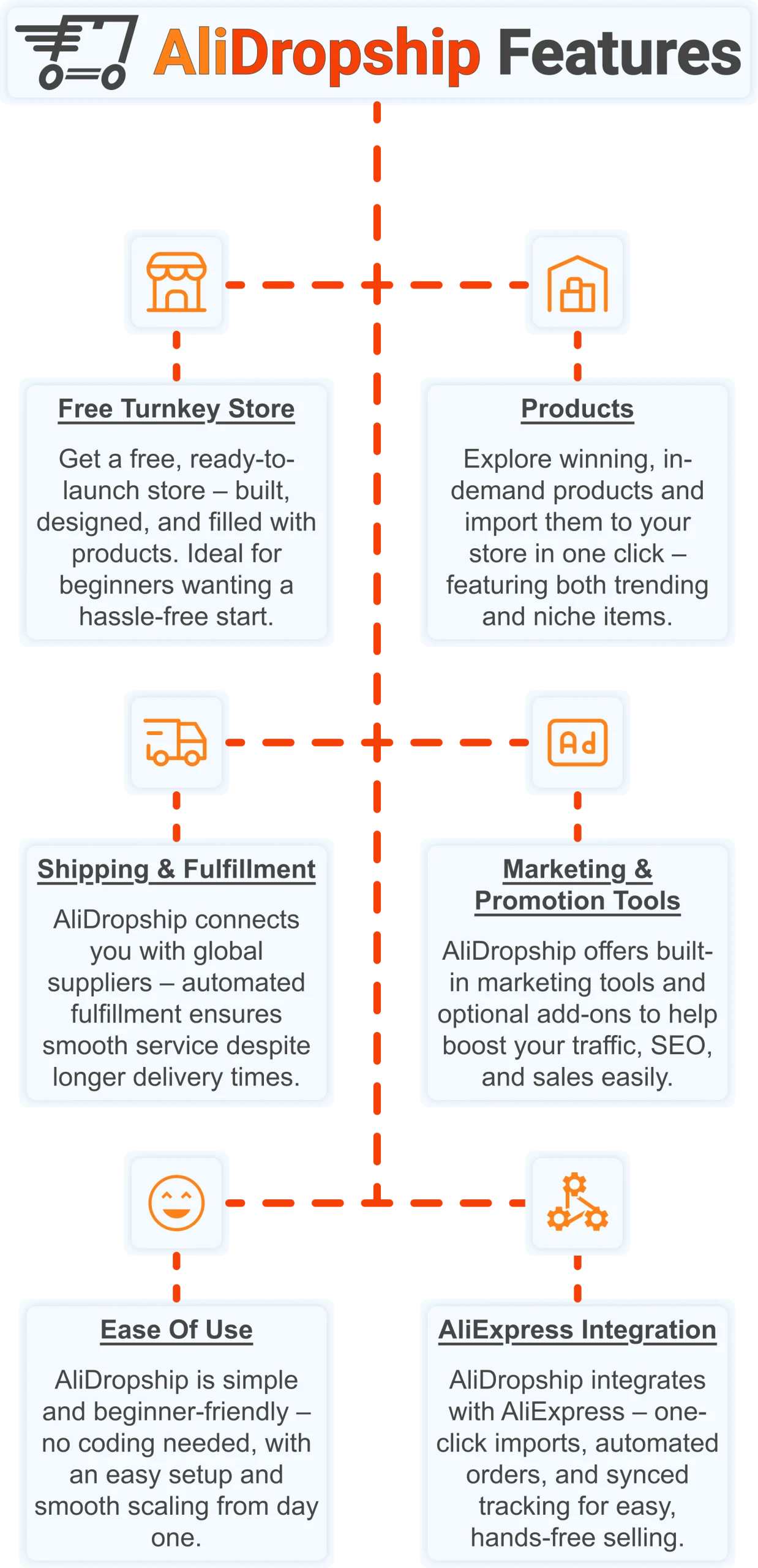
If you want the simplest possible way to start dropshipping – especially if you’re brand new – AliDropship remains one of the most beginner-friendly tools available in 2026. It brings together store creation, product imports, automation, and marketing into a single streamlined system designed to help you launch quickly and grow confidently.
Free turnkey store ️
Get a free turnkey store – built, designed, and filled with products. Ideal for beginners wanting a hassle-free start, the store comes fully optimized to attract customers right away, saving you time on setup. Plus, it includes professional design elements to give your business a polished, trustworthy look from day one. This ready-made foundation makes it easy to move seamlessly into product selection.
Products
Once your store is set up, you can explore winning, in-demand products and import them in one click – featuring both trending and niche items. This wide selection lets you cater to diverse customer interests and test what works best. Regular updates ensure you always have fresh products, keeping your store competitive and relevant. With great products in place, smooth shipping becomes the next essential step.
Shipping & fulfillment
AliDropship connects you with global suppliers, and automated fulfillment ensures seamless order processing despite international delivery times. Customers receive real-time tracking updates, which builds confidence and trust in your store. Once shipping is handled reliably, you can focus on promoting your store and attracting traffic.
Marketing & promotion tools
To maximize sales, AliDropship offers built-in marketing tools and optional add-ons that help boost traffic, SEO, and conversions. From email campaigns and discounts to social media integration, these tools empower you to reach and retain customers without needing prior marketing experience. With promotion strategies in place, managing your business becomes simpler and more efficient.
Ease of use
AliDropship is beginner-friendly – no coding needed, with an intuitive dashboard that guides you through every step. Easy setup and smooth scaling let you expand your store without stress. As your business grows, adding new features, products, and marketing campaigns remains hassle-free, giving you more time to focus on sales.
AliExpress integration
Finally, AliDropship integrates seamlessly with AliExpress, enabling one-click imports, automated orders, and synced tracking. Your inventory stays up-to-date with the latest products and prices, while automated order processing frees you from manual tasks. Combined with the turnkey setup, reliable shipping, and built-in marketing tools, this integration ensures your dropshipping business is fully equipped for growth and success.
If making money dropshipping is your goal, AliDropship gives you every tool you need to get there — from your very first sale to a full-time income. Claim your free store and $100 voucher to get started today.
 Previous post
