 ‧ julia.nenyukova ‧
March 05, 2026
‧ julia.nenyukova ‧
March 05, 2026  1190 ‧
 0
0
You have a camera – or a phone with a decent one – and you already take pictures you’re proud of. The real question is whether those images can actually make you money. In 2026, the answer is a clear yes. But the follow-up question matters just as much: how much, and which method?
The global stock photo market is valued at over $4 billion and growing. Brands, bloggers, content creators, and ecommerce sellers need fresh images every single day. Authentic, real-world photography – the kind you’re already shooting – is in higher demand than ever, even as AI-generated imagery expands the market.
Quick Answer: You can make money selling photos in 2026 through stock platforms, print sales, and freelance work. Most photographers earn $30–$80/day at their peak as a side hustle, with higher income possible once you specialize or build a client base.
This is not a get-rich-quick path. Most photographers see their first meaningful income after 60–90 days of consistent effort. What you do in those first three months – and which method you choose – makes a significant difference. This guide walks through every proven route, what each one realistically pays, and what kind of photographer each approach suits best.
What is selling photos for money?
“Selling photos” sounds simple, but it covers a wide range of business models with very different dynamics. At the most passive end, you upload images to a stock platform once and collect small royalties indefinitely. At the most active end, you get hired directly by clients for shoots and charge a day rate or project fee. In between, you can sell physical prints, license your work directly to publications, or carve out a premium niche that commands above-average rates.
What all these models share is a straightforward transaction: someone needs an image you’ve taken, and they pay you for the right to use it – or for the print itself. The key differences are who that buyer is, how they find you, how much control you have over pricing, and how much ongoing effort each model requires.
Important note: You do not need expensive gear to get started. Many active contributors on Shutterstock and Adobe Stock shoot entirely on modern smartphones. What matters more is authenticity, good lighting, and relevance to buyer demand. Technical perfection matters less than many beginners assume.
In 2026, the subjects most in demand are everyday lifestyle images, diverse groups of people in real situations, food and wellness content, remote work scenes, and local travel. If any of those overlap with what you already shoot, you are already closer to earning than you think.
How much can you realistically earn selling photos?
These ranges assume consistent effort – regularly uploading new content, building a portfolio or client base, and actively promoting your work. Passive income from stock photography is real, but it takes time to compound.
One note on these figures: photographers who treat this as a side hustle typically earn $30–$80/day at their peak. Those who go full-time, specialize in a profitable niche like product or event photography, and build a client roster can realistically aim for $3,000–$5,000/month within 12–18 months. Be patient with the timeline – those results are achievable, but not overnight.
Stock photography – the most scalable option
Stock photography is the go-to starting point for most people who want to make money selling photos without dealing with clients directly. You upload your images to a platform, they review and approve them, and whenever a buyer licenses one of your photos, you earn a royalty. The more images you have approved, the more you earn – and you keep earning on the same images indefinitely.
The major platforms to know in 2026:
- Shutterstock – the largest stock library globally. Royalties start at 15% and increase with your cumulative earnings. Ideal for volume uploading.
- Adobe Stock – deeply integrated with Adobe Creative Cloud, making it popular with designers and marketers. Pays around 33% royalty on photos. Strong conversion rates.
- Getty Images / iStock – more selective at submission, but your images sit in a premium catalog with higher buyer intent. Royalties range from 15% to 45% depending on contract type.
- Alamy – known for accepting a broader range of content and paying contributors up to 50% royalty. Less buyer traffic than Shutterstock, but better rates per sale.
The subjects that consistently sell on stock platforms: business and workplace scenes, food and lifestyle, diverse groups of people in everyday situations, remote work setups, technology, and travel. If you focus on these themes and upload 10–20 new images per week, your portfolio compounds steadily over time.
One practical tip: keywords matter as much as the images themselves. Study the keywords your best-performing competitors use, and model your tagging on what buyers are already searching for. Platforms like Shutterstock offer a search autocomplete that doubles as a free keyword research tool.
It is also worth uploading to multiple platforms simultaneously. Your images can live on Shutterstock, Adobe Stock, and Alamy at the same time, which multiplies your exposure without any extra shooting.
Why this works in 2026: Businesses, content creators, and marketers need fresh, authentic images constantly. A library of 300–500 relevant photos can generate reliable passive income that grows with each new upload.
Earning potential: $50–$300/month with a portfolio of 300+ approved images across 2–3 platforms, after 6–12 months of consistent uploading.
Print sales – from digital files to physical products
Print sales let you earn more per transaction than stock photography, because you are selling a physical product rather than a small royalty. The margin per sale is higher, but so is the effort required – you need to actively market your work and build an audience who wants to display it.
There are two main routes. Print-on-demand (POD) services like Redbubble, Society6, or Printful handle production, shipping, and customer service entirely. You upload your photos, set your prices, and receive a percentage of each sale. Your margin is smaller, but there is zero upfront cost and no inventory to manage – which makes it a low-risk way to test which of your images people actually want to buy.
Selling through your own store – via Etsy or a custom ecommerce site – gives you more control over pricing, branding, and the customer experience. You can set your own profit margins, build a recognizable brand around your photography, and retain customer data for repeat marketing. The tradeoff is that you need to drive your own traffic rather than relying on a marketplace.
The best-performing print categories in 2026:
- Nature and landscape photography – consistent demand for wall art in homes and offices.
- Minimalist travel and architecture – popular with younger buyers and interior design enthusiasts.
- Abstract macro photography – unique, conversation-starting prints that are hard to find elsewhere.
- City skylines and urban scenes – strong demand from local buyers and corporate offices.
Pinterest and Instagram are the two most effective promotional channels for print sales. Boards, reels, and consistent posting around your photography style drive traffic to your shop over time – and unlike paid ads, that traffic compounds as your following grows.
Earning potential: $200–$800/month with a focused niche, a portfolio of 50+ print-ready images, and consistent promotion over a 90-day period.
Freelance photography – get hired, get paid
Freelance photography has the highest earning ceiling of any method here – but it also requires the most active effort. You are not building passive income; you are marketing a skill, finding clients, and delivering a service. The upside is that a single well-paid shoot can earn more than months of stock royalties.
The most in-demand freelance categories right now:
- Product photography – ecommerce sellers need professional images of their products for Amazon, Shopify, and social media. A solid day rate is $300–$800, and demand is growing as more businesses sell online.
- Event photography – weddings, corporate events, and parties. Entry-level event shooters charge $150–$300 per event; experienced wedding photographers earn $1,500–$5,000 per booking.
- Portrait photography – headshots, family portraits, senior photos. Typical session rates range from $150 to $500.
- Real estate photography – consistent, repeatable demand driven by the property market. Rates range from $100 to $400 per property, and agents book regularly.
- Food photography – restaurants, food delivery apps, and publishers all need high-quality food images. Session rates typically run $150–$500+.
To land your first freelance clients, build a targeted portfolio first – even if that means doing a few pro-bono or discounted shoots for local businesses. Post your best work consistently on Instagram or LinkedIn with location tags. Reach out directly to small businesses in your area that have poor product or profile photos. Most photographers land their first paid commission within 30–60 days of actively looking.
Word of mouth grows quickly in freelance photography. Deliver great work, ask for reviews, and the repeat and referral business typically takes over within 6 months.
Earning potential: $500–$3,000+/month with 2–5 booked clients per month, depending on your specialty and local market rates.
Microstock photography – volume over prestige
Microstock platforms work similarly to traditional stock photography, but with lower prices, lower royalties, and less demanding acceptance criteria. Images are licensed at very affordable rates – often $1–$5 – which means you need serious volume to generate meaningful income.
The major microstock platforms are Dreamstime, 123RF, and Bigstock. These are a good fit for photographers who have a large backlog of decent images that might not meet the stricter standards of Shutterstock or Getty. Where a premium stock platform might reject 30–40% of submissions, microstock platforms accept a much higher percentage.
Important: Do not treat microstock as your primary income strategy. At $0.25–$0.50 per download on most sites, you would need hundreds of downloads every month to earn $100. That requires a library of thousands of images and takes years to build at scale.
The smart approach is to treat microstock as a supplementary channel. Upload the same images you already have on your main platforms, set up your accounts, and let the small royalties accumulate passively. Over time, even $20–$50/month per platform adds up without any additional work.
One area where microstock genuinely excels: it gives you early data on which of your images actually resell. If a particular subject or style consistently downloads across multiple platforms, that is a signal to shoot more of it – which benefits your entire portfolio strategy.
Earning potential: $20–$100/month as a fully passive supplementary income stream from an existing portfolio.
Niche photography – find your unique angle
One of the most underrated strategies for making money selling photos is going narrow. Instead of shooting everything and competing in saturated stock categories, you pick one specific type of photography, develop genuine expertise, and build a reputation for it. Niche photographers face less competition, earn higher rates, and attract buyers who specifically seek them out.
Some niche directions worth exploring in 2026:
- Drone / aerial photography – high demand from real estate agents, tourism boards, architects, and media companies. Licensing rates are premium, and the barrier to entry (FAA certification in the US, equivalent in other countries) keeps competition manageable.
- Underwater photography – niche enough that quality images command significantly higher prices on stock platforms and in editorial licensing.
- Pet photography – a booming consumer category. Pet owners invest more in pet-related experiences than ever, and professional pet portraits are a well-established market with strong repeat business.
- Macro photography – extreme close-ups of flowers, insects, textures, and everyday objects are consistently popular in design, publishing, and commercial contexts.
- Cultural and documentary photography – editorial buyers, NGOs, and news agencies pay a premium for authentic, story-driven images that generalist stock libraries simply don’t have.
The key advantage of niche photography is that authority builds faster. When your portfolio, Instagram, or website is clearly focused on one type of image, buyers who need that specific content find you rather than you hunting them down. A focused portfolio of 50 strong niche images will outperform a generalist portfolio of 500 average ones.
Why this works in 2026: Generalist stock categories are saturated. Specialized, high-quality images in underserved niches sell for more, face less competition, and attract higher-value clients – especially for freelance work.
Earning potential: $300–$1,500/month once a niche is established, with significantly faster growth than generalist stock photography.
Legal and ethical considerations
Making money selling photos comes with real legal responsibilities. Ignoring them won’t just get your images removed from a platform – it can expose you to serious liability. This is not optional reading, especially if you plan to sell commercially.
Key principle: You must own the full copyright to every image you submit or sell – no exceptions.
Model releases: If your photo shows a recognizable person’s face – even in a public space – you need a signed model release before selling it commercially. This applies to stock photography, print sales, and direct licensing. Editorial use (news and commentary) is an exception, but any commercial use requires a signed release. Without one, your submission will be rejected or removed.
Property releases: Some private properties and branded locations also require a property release for commercial use. This includes branded buildings, trademarked logos visible in the frame, art installations, and certain landmarks. Check the contributor guidelines of each platform – they often list specific property categories that require releases.
Important: Images featuring minors require explicit, documented parental consent before being used commercially. Most major stock platforms require this as a condition of submission, regardless of whether the image seems innocuous.
What to avoid absolutely:
- Submitting images that include copyrighted logos, branded products, or artwork without proper releases
- Claiming rights to photos taken as part of employment or a work-for-hire contract without reviewing the terms first
- Uploading images of sensitive or restricted locations – government buildings, military sites, and certain infrastructure
- Using someone’s likeness in a way that implies endorsement of a product or service without their written consent
The practical fix: before uploading any image commercially, run through a quick checklist. Does it show a recognizable person? Is there private property, branding, or a third-party creative work in the frame? If yes, get the release before uploading. Most stock platforms provide standard model and property release templates you can use for free.
Final thoughts – which method is right for you?
There is no single best way to make money selling photos. The right method depends on your current skills, how much time you have, and what kind of income you are targeting – passive and scalable, or active and higher-paying.
Here is a quick breakdown by where you are right now:
Complete beginner: Start with stock photography on Shutterstock and Adobe Stock. Upload consistently for 90 days. Do not expect much in month one – your portfolio needs critical mass before the income builds. Focus on in-demand subjects: people, food, business, and lifestyle. Aim to submit 10–15 images per week.
Intermediate / part-time: Add print sales through Etsy or a print-on-demand platform alongside your stock presence. Start building a social media presence focused on your shooting style. Look for your first freelance client – even one product photography shoot per month adds $300–$500 in direct income and builds your portfolio at the same time.
Advanced / full-time goal: Commit to a niche, build a client roster for freelance work, and use stock platforms as supplementary passive income. Treat this as a business – track your best-selling images, invest in a portfolio website, and actively network within your niche community. Set a clear monthly income target and work backward from the number of shoots or sales needed to hit it.
One thing all three profiles share: consistency wins. Photographers who upload regularly, keep their portfolios relevant, and stay active on at least one promotional channel consistently outperform those who try every method at once and abandon them after 30 days.
Pick one or two methods that suit your current situation, commit to them for 90 days, and track what works. Adjust from there. The photographers making real income from their images in 2026 are not the most talented ones – they are the most persistent.
AliDropship: your complete all-in-one solution for starting dropshipping in 2026
If you want the simplest possible way to start dropshipping – especially if you’re brand new – AliDropship remains one of the most beginner-friendly tools available in 2026. It brings together store creation, product imports, automation, and marketing into a single streamlined system designed to help you launch quickly and grow confidently.
Free turnkey store ️
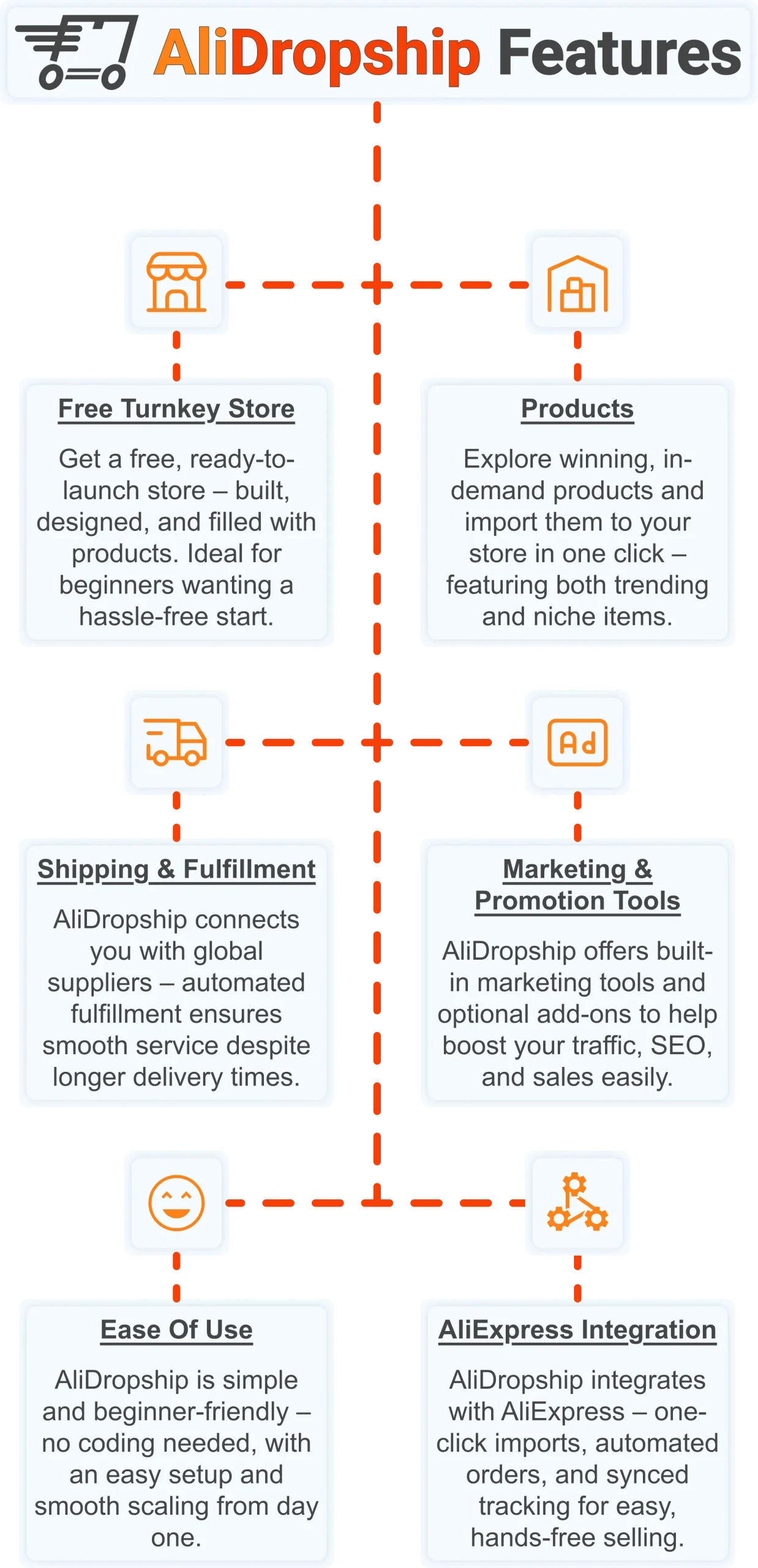
Get a free turnkey store – built, designed, and filled with products. Ideal for beginners wanting a hassle-free start, the store comes fully optimized to attract customers right away, saving you time on setup. Plus, it includes professional design elements to give your business a polished, trustworthy look from day one. This ready-made foundation makes it easy to move seamlessly into product selection.
Products
Once your store is set up, you can explore winning, in-demand products and import them in one click – featuring both trending and niche items. This wide selection lets you cater to diverse customer interests and test what works best. Regular updates ensure you always have fresh products, keeping your store competitive and relevant. With great products in place, smooth shipping becomes the next essential step.
Shipping & fulfillment
AliDropship connects you with global suppliers, and automated fulfillment ensures seamless order processing despite international delivery times. Customers receive real-time tracking updates, which builds confidence and trust in your store. Once shipping is handled reliably, you can focus on promoting your store and attracting traffic.
Marketing & promotion tools
To maximize sales, AliDropship offers built-in marketing tools and optional add-ons that help boost traffic, SEO, and conversions. From email campaigns and discounts to social media integration, these tools empower you to reach and retain customers without needing prior marketing experience. With promotion strategies in place, managing your business becomes simpler and more efficient.
Ease of use
AliDropship is beginner-friendly – no coding needed, with an intuitive dashboard that guides you through every step. Easy setup and smooth scaling let you expand your store without stress. As your business grows, adding new features, products, and marketing campaigns remains hassle-free, giving you more time to focus on sales.
AliExpress integration
Finally, AliDropship integrates seamlessly with AliExpress, enabling one-click imports, automated orders, and synced tracking. Your inventory stays up-to-date with the latest products and prices, while automated order processing frees you from manual tasks. Combined with the turnkey setup, reliable shipping, and built-in marketing tools, this integration ensures your dropshipping business is fully equipped for growth and success.
Frequently Asked Questions
How much can you realistically earn selling photos online?
Earnings vary significantly by method. Stock photography contributors with 200 or more accepted images across multiple platforms can realistically earn $50–$500 per month in passive royalties, with top contributors holding portfolios of 5,000 or more images earning $2,000–$5,000 per month. Selling photo prints or digital downloads through Etsy or print-on-demand platforms generates $30–$400 per month for an active seller. Freelance photography sessions pay $100–$500 each, and consistent freelancers working most weekends can reach $1,000–$2,500 per month within 6–12 months of actively building a client base. Microstock platforms earn $5–$50 per month and work best as a supplementary stream rather than a primary one.
What types of photos sell best on stock photography platforms?
The most consistently downloaded categories on platforms like Shutterstock and Adobe Stock are business imagery — meetings, laptops, handshakes, and diverse teams — along with lifestyle content such as cooking, exercising, traveling, and relaxing at home, food photography with clean well-lit shots, and technology imagery showing devices, screens, and abstract data concepts. Nature and landscapes sell but represent the most crowded niches with the highest competition from existing images. In 2026, the rise of AI-generated imagery has actually increased demand for authentic, human-made photography, with brands paying a premium for real photos of real people and places to avoid the artificial look of AI visuals.
What is the fastest way to grow a stock photography income?
Three habits consistently compound stock earnings faster than others. Thorough and accurate keyword tagging is the single most impactful factor — buyers search by keyword, so maximizing the number of relevant tags on every submission is as important as image quality. Uploading to multiple platforms simultaneously rather than exclusively to one multiplies exposure without any additional shooting time, with Shutterstock, Adobe Stock, and Alamy covering the widest range of buyers. And consistent volume over time is the primary driver — photographers uploading 10–20 new images per week build a significant passive income base within 12–18 months, while those uploading sporadically see much slower growth.
What legal requirements do photographers need to know before selling photos commercially?
Two release types are non-negotiable for commercial licensing. A signed model release is required before selling any image that contains a recognizable person commercially — without one, stock agencies will reject the submission and the photographer faces potential legal complaints from the person pictured. A property release is similarly required for privately owned buildings, distinctive interiors, publicly displayed artwork, and branded products appearing in images sold commercially. Separately, photographers should never sell images featuring trademarked logos or branded storefronts without permission, and must never submit images of minors without written parental consent. For digital downloads and portfolio uploads, embedding copyright metadata — including your name, copyright notice, and contact information — directly in the image file protects ownership even if someone crops out a watermark.
Which photo-selling method is best for a complete beginner with no existing client base?
Stock photography is the most accessible starting point for beginners, as it requires no existing clients, no prior business experience, and no upfront cost beyond a camera. The recommended first step is opening accounts on Shutterstock and Adobe Stock, focusing on high-demand categories like lifestyle, business, and food, and spending the first 30–60 days learning what platform reviewers accept and reject. The first 60–90 days typically produce very little income, so treating this period as portfolio-building time rather than income-generating time sets realistic expectations. Adding Etsy digital downloads as a second passive stream once 30–50 strong images are ready is a natural complement — buyers purchase digital image files once, and the photographer collects payment automatically each time with no printing, shipping, or ongoing customer service involved.
If selling photos has sparked your entrepreneurial mindset, dropshipping is the natural next step – a business you can run from anywhere with no inventory and no upfront stock costs. Claim your free AliDropship store today and start building your online income stream.
 Previous post
