 ‧ Agnes Kazaryan ‧
March 14, 2026
‧ Agnes Kazaryan ‧
March 14, 2026  587 ‧
587 ‧
 0
0
Most people who start looking for niche market ideas already know something important: competing in mass-market categories is a losing game unless you have a massive ad budget and years of brand equity behind you. The good news is that niche markets – tight, specific, underserved segments of buyers – are still wide open in 2026, and the earning potential for sellers who move with focus is genuinely significant.
A well-chosen niche does not need to be enormous. It needs to be specific enough that you can own it, serve its buyers better than anyone else, and build a store that attracts repeat purchases over time. That combination – passion audience, relevant products, and real margin – is what separates profitable niche stores from stores that plateau at their first $200 month.
Quick answer: The best niche market ideas in 2026 combine a passionate, repeat-buying audience with products that are genuinely hard to find in mainstream retail. Think eco-conscious pet owners, remote workers who invest seriously in ergonomics, or hobbyists who spend freely on gear. Specificity is the strategy.
This guide covers 25+ proven niche market ideas, concrete niche products examples you can start sourcing today, realistic earning ranges tied to real seller data, and a practical breakdown of how to choose the right niche for your situation – whether you are starting from zero or already earning and looking to diversify.
What is a niche market – and why it matters more than ever in 2026
A niche market is a clearly defined subset of a larger market. Instead of selling “fitness products,” you sell recovery tools for trail runners. Instead of “home decor,” you sell Scandinavian minimalist pieces for small apartments. The narrower the focus, the easier it is to reach your ideal buyer, reduce your cost per acquisition, and build authority faster than any generalist store could.
In 2026, niche selling is not just a smart strategy – it is practically necessary. Global ecommerce is saturated at the top but still remarkably open in the middle. Platforms like Google Shopping and TikTok Shop increasingly reward relevance over scale. A store that speaks directly to one specific type of person consistently outperforms a store trying to speak to everyone.
The three qualities that define a viable niche are straightforward: genuine buyer demand, manageable competition, and products that carry a real margin. All three are achievable in the niches covered below – and the sections that follow show you exactly where to find them.
How much can you realistically earn from a niche store?
Earnings depend on which niche you pick, how you drive traffic, and how consistently you work the business in the first 60–90 days. The table below gives a grounded comparison across the most common approaches. These figures are based on real seller data, not best-case projections.
The clearest pattern in the table: niche stores outperform general stores at every effort level. A focused store testing products in one category reaches consistent sales faster because every product you add speaks to the same buyer.
One note on the higher figures: Reaching $5,000+ per month typically takes 6–12 months of consistent work, smart reinvestment of early profits, and a traffic strategy that is either paid or organic – not just hopeful. Treat the store like a real business from day one and the upper ranges become realistic targets, not outliers.
The single biggest lever in how quickly you reach profitability is niche selection. A mediocre product in the right niche will outsell a great product in a saturated one every time. The sections below break down the best niche market ideas available right now, grouped by category.
Eco-friendly and sustainable living
Sustainability has crossed from trend to mainstream expectation. Buyers in this space actively seek out merchants who share their values, which creates strong brand loyalty and repeat purchase rates that general stores almost never achieve. It is also one of the niche market ideas with the clearest audience signal – you can find these buyers on Instagram, Pinterest, and dedicated communities in minutes.
Zero-waste home products
Reusable food wraps, bamboo cleaning brushes, compostable bin liners, and stainless steel straws are proven sellers with low return rates and high perceived value. Buyers in this niche research before they purchase, which means clear, well-written product descriptions convert at a noticeably higher rate than in impulse-buy categories.
Earning potential: $800–$3,500/month with a focused product range and consistent content marketing.
Sustainable pet care
Pet owners who care about the environment consistently spend more per pet than the average buyer. Biodegradable poop bags, natural ingredient treats, organic cotton pet bedding, and hemp-based toys are niche products examples with strong verified search demand and almost no presence in mass retail. The combination of ethical positioning and pet owner loyalty makes this one of the stickiest niches on the list.
Earning potential: $1,000–$4,000/month once you build trust with this audience.
Upcycled and recycled fashion accessories
Wallets, bags, and phone cases made from recycled materials are growing fast in search volume. The product story sells itself – sustainability buyers want to feel good about what they purchase, and that emotional angle is a natural advantage for content-driven stores. Start with one product type, build the story around it, and expand once you have proof of traction.
Why this works in 2026: Gen Z now accounts for a growing share of online purchasing and sustainability ranks as a top purchase factor for this cohort across multiple consumer surveys.
Remote work and home office
Remote work is not a phase. For a large and growing segment of the workforce it is permanent, and these buyers invest seriously in their workspace because it directly affects how they perform and feel every day. Average order values in this niche are consistently high – a buyer who upgrades one element of their desk setup often comes back to upgrade the next.
Ergonomic accessories
Monitor risers, laptop stands, ergonomic wrist rests, posture correctors, and anti-fatigue mats are in steady demand year-round. These are niche products examples where natural repeat purchases happen over time – a buyer who fixes their monitor height often returns for a cable management solution, then a better chair cushion. The lifetime value per customer is strong.
Earning potential: $1,500–$6,000/month with a well-curated product range and comparison-style content.
Cable and desk organisation
Cable management boxes, under-desk drawers, magnetic cable clips, and monitor arms may sound like a boring category, but search volume is steady and buyer motivation is high – a cluttered desk is a daily frustration that people will pay to solve. Large retailers do not serve this niche well, which keeps competition manageable for a focused store.
Home office lighting
Ring lights, bias lighting strips, smart desk lamps, and webcam lighting kits are purchased by remote workers, streamers, and content creators alike. This niche naturally overlaps with the creator audience, which multiplies your potential reach through social content without requiring additional ad spend.
Earning potential: $1,000–$5,000/month when targeting both remote workers and content creators in the same store.
Health, wellness and self-care
The global wellness industry is valued in the trillions, and its niche subcategories remain among the least saturated entry points for new sellers. People spend seriously on their health – and they come back. High buyer intent, clear product benefits, and strong emotional hooks make wellness one of the most reliable categories across all niche market ideas.
Sleep improvement products
Weighted blankets, sleep masks, white noise machines, and magnesium sleep sprays are niche products examples with exceptionally motivated buyers. Poor sleep is a top health complaint globally, and buyers in this category are typically willing to spend $40–$150 on a product that promises genuine relief. Reviews matter enormously here – strong social proof drives conversions more than any ad creative.
Earning potential: $1,200–$5,000/month with solid product reviews and educational content.
Posture and back care
Posture correctors, lumbar support cushions, back stretchers, and spinal alignment tools serve an audience in real, daily discomfort. This is a high-intent buying niche – the person already has a problem and is actively searching for a fix. Conversion rates in pain-relief niches are naturally higher than in lifestyle niches because the motivation to purchase is immediate.
Important: Do not make medical claims in your product descriptions. Describe what the product does, not what it cures – this keeps you compliant and avoids platform policy issues.
Red light therapy and recovery tools
Portable red light therapy devices, muscle recovery guns, and compression sleeves have moved from professional sports into mainstream wellness. Price points range from $30 to $300+, and the audience spans athletes, older buyers managing chronic pain, and general wellness enthusiasts. Educational content – blog posts, comparison guides – performs particularly well in this niche.
Earning potential: $2,000–$8,000/month for stores that build genuine authority with consistent educational content.
Hobbies and passion-driven niches
Hobby niches are among the most profitable in ecommerce for a simple reason: the buyers are enthusiasts. They spend freely, engage deeply with content, return repeatedly, and recommend stores they trust to others in their community. The key is to pick a hobby with an active online community and consistent product needs – both of which the niches below have in abundance.
Indoor plants and plant care
Self-watering planters, moisture meters, grow lights, specialty soil mixes, and decorative pots are all niche products examples within a hobby that grew sharply in recent years and has not retreated. The plant parent community is extraordinarily active on Instagram and Pinterest, which makes organic content marketing a genuinely viable traffic strategy for this niche.
Earning potential: $800–$4,000/month – meaningfully stronger when paired with visual content on Instagram or Pinterest.
DIY and home repair tools
Precision screwdriver sets, tile cutting kits, wallpaper smoothing tools, and specialty adhesives serve a growing DIY audience that has decided to handle their own renovations rather than pay inflated contractor fees. Average order values are solid and repeat purchases are common – a buyer who completes one project typically comes back for the next one.
Candle and soap making supplies
Fragrance oils, soy wax, silicone moulds, wick holders, and colorants are consumables. Buyers come back every month. This is one of the strongest niche market ideas for repeat revenue because the cost per unit is low, order frequency is high, and the creative community around this hobby is large, active, and easy to reach through content.
Earning potential: $600–$3,000/month as a consumables-focused store, with strong growth potential from subscription-style bundles.
Tech accessories and digital lifestyle
Tech accessories are a perennial niche, but specificity is everything. Selling “phone cases” is a commodity play. Selling MagSafe accessories for minimalist iPhone users, or gear for the analogue photography revival, is a niche play – and the margin, the loyalty, and the community engagement all reflect that difference.
Mechanical keyboard accessories
Keycap sets, switch testers, artisan keycaps, wrist rests, and desk mats are niche products examples within one of the fastest-growing enthusiast communities in consumer tech. Buyers in this space are vocal, community-driven, and comfortable spending $50–$200+ on individual accessories. Reddit and Discord communities make this one of the most reachable niche audiences available.
Earning potential: $1,500–$6,000/month with the right product curation and genuine community engagement.
Film and analogue photography
Film canisters, darkroom supplies, camera straps, film developing tanks, and scanning accessories serve a community that has grown significantly as younger buyers rediscover analogue photography. This is a premium-spending niche with strong word-of-mouth behaviour – buyers who love this hobby talk about it constantly, and a store that serves them well benefits from organic referrals.
Smart home accessories
Wall plates, smart switches, Zigbee adapters, cable conduits, and home automation accessories are purchased by buyers who are already invested in a smart home ecosystem and need compatible products. Repeat purchases are structurally built in because smart home adoption expands room by room – a buyer who automates their living room typically comes back for the bedroom, then the kitchen.
Earning potential: $1,000–$5,000/month for stores serving the smart home enthusiast segment with a well-organised product catalog.
Legal and ethical considerations when building a niche store
Choosing the right niche is half the equation. How you operate within that niche determines whether you build a sustainable, growing business or expose yourself to problems that are entirely avoidable. These are the most important considerations for any seller entering a niche market in 2026.
What to avoid
Health-related niches carry specific risk. If your store sells posture devices, sleep aids, or recovery tools, your product descriptions must never include medical claims. Phrases like “cures back pain” or “treats insomnia” cross into regulated territory in most markets and can get your store flagged or removed. Describe what the product does and how it works – not what condition it treats.
Important note: Counterfeit or trademark-infringing products – even when sourced unknowingly – can result in your store being shut down and your payment processor account closed. Always verify suppliers through platforms with genuine buyer protection, and scan product listings for registered trademark terms before importing.
Fake reviews are another absolute line to avoid. Platforms like Trustpilot and Google actively detect review manipulation, and the reputational damage from being caught is far worse than any short-term ranking gain. Build your review base legitimately through post-purchase follow-up emails and consistent service quality.
What to do instead
Register your business properly from the start. The admin takes a few hours and protects you from serious liability later. Use verified suppliers through established dropshipping platforms. Write original product descriptions that accurately represent what each item does. Build a returns policy that is clear, fair, and easy to find.
Key principle: The niche stores that last are the ones buyers trust. Trust is built through honest marketing, accurate product descriptions, and responsive customer service – none of which cost money, only attention.
How to choose your niche market idea – by reader profile
The best niche market idea for you depends on where you are starting from, how much time you can commit, and what kind of income goal you are working toward. Here is a practical guide by profile.
Complete beginner
Start with a niche you already know something about – a hobby, a lifestyle category, a problem you have personally solved. Familiarity reduces the research burden dramatically and makes writing product descriptions and content significantly easier. Sustainable home, sleep products, and desk accessories are all beginner-accessible with low return rates and straightforward supplier sourcing.
Your priority as a beginner is speed: get a store live fast, test 5–10 products, and follow the data. Do not spend weeks planning – spend that time selling instead.
Intermediate / part-time
If you have some ecommerce experience and can commit 10–15 hours per week, target a niche with repeat purchase potential. Consumables like candle-making supplies, or accessory-heavy niches like mechanical keyboards where buyers return for variety, both give you natural customer lifetime value without requiring constant new customer acquisition.
Build an email list from day one – it is the single highest-return investment at this stage.
Advanced / full-time goal
If your goal is $5,000+ per month within 12 months, target niches where average order value sits at $60 or higher – ergonomics, red light therapy, smart home accessories, or analogue photography all qualify. Pair your store with paid traffic from Facebook or Google and invest in content that earns organic rankings for niche market ideas and product-specific search terms over time.
Seller who wants to diversify income
If you are already earning from freelancing, content creation, or a day job and want a passive income stream running alongside it, digital niche products are worth serious consideration. Guides, templates, and digital tools require no inventory, no shipping, and scale without any additional cost per unit sold. The upfront effort is higher, but the ongoing work is minimal once the product exists.
The niche ecommerce space in 2026 rewards focus and consistency above everything else. Pick a direction, build with quality, and commit to at least 90 days before drawing conclusions about what is or is not working.
AliDropship: Your complete all-in-one solution for starting dropshipping in 2026
If you want the simplest possible way to start dropshipping – especially if you are brand new – AliDropship remains one of the most beginner-friendly tools available in 2026. It brings together store creation, product imports, automation, and marketing into a single streamlined system designed to help you launch quickly and grow confidently.
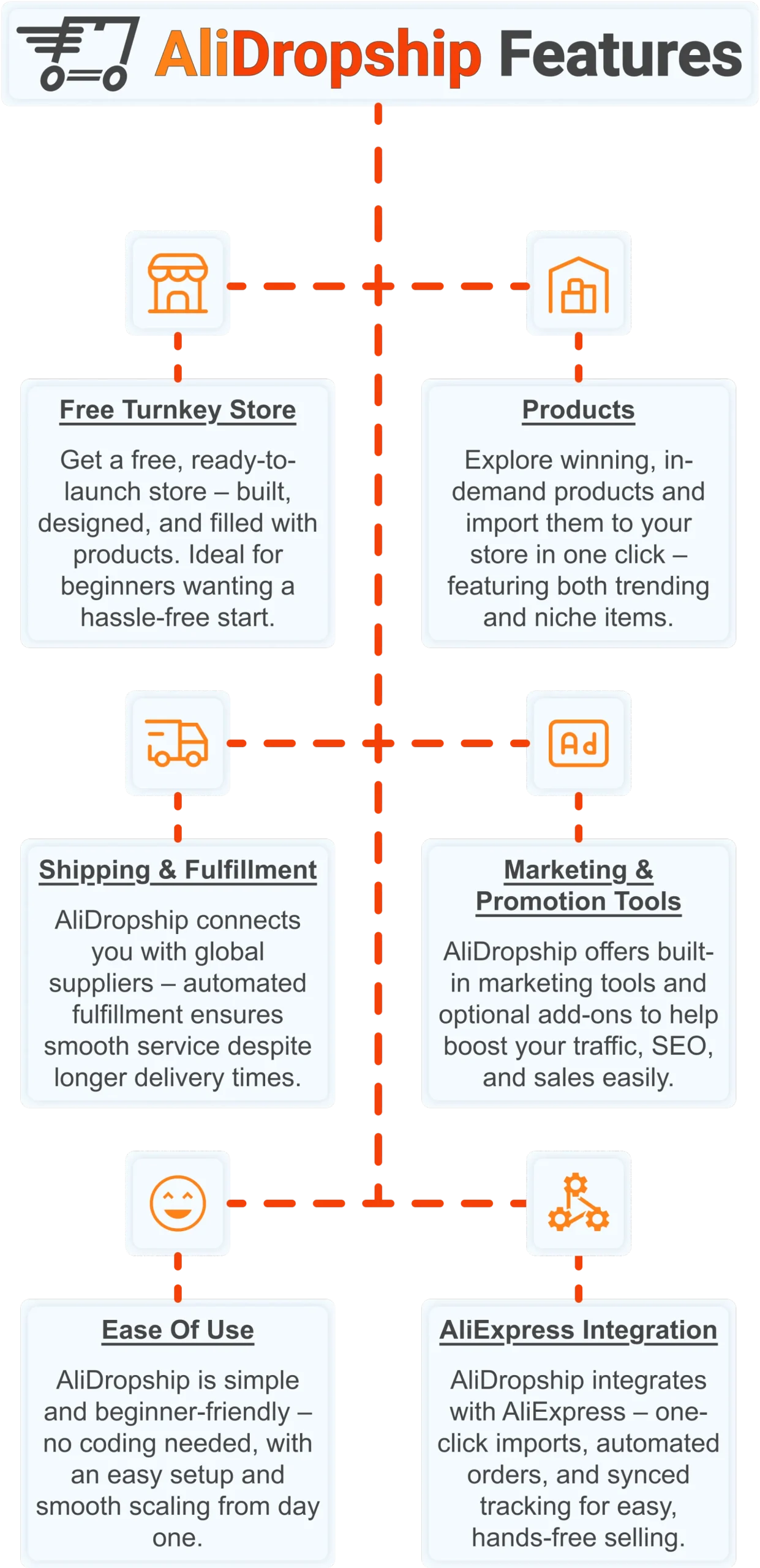
Free turnkey store ️
Get a free turnkey store – built, designed, and filled with products. Ideal for beginners wanting a hassle-free start, the store comes fully optimized to attract customers right away, saving you time on setup. Plus, it includes professional design elements to give your business a polished, trustworthy look from day one. This ready-made foundation makes it easy to move seamlessly into product selection.
Products
Once your store is set up, you can explore winning, in-demand products and import them in one click – featuring both trending and niche items. This wide selection lets you cater to diverse customer interests and test what works best. Regular updates ensure you always have fresh products, keeping your store competitive and relevant. With great products in place, smooth shipping becomes the next essential step.
Shipping & fulfillment
AliDropship connects you with global suppliers, and automated fulfillment ensures seamless order processing despite international delivery times. Customers receive real-time tracking updates, which builds confidence and trust in your store. Once shipping is handled reliably, you can focus on promoting your store and attracting traffic.
Marketing & promotion tools
To maximize sales, AliDropship offers built-in marketing tools and optional add-ons that help boost traffic, SEO, and conversions. From email campaigns and discounts to social media integration, these tools empower you to reach and retain customers without needing prior marketing experience. With promotion strategies in place, managing your business becomes simpler and more efficient.
Ease of use
AliDropship is beginner-friendly – no coding needed, with an intuitive dashboard that guides you through every step. Easy setup and smooth scaling let you expand your store without stress. As your business grows, adding new features, products, and marketing campaigns remains hassle-free, giving you more time to focus on sales.
AliExpress integration
Finally, AliDropship integrates seamlessly with AliExpress, enabling one-click imports, automated orders, and synced tracking. Your inventory stays up-to-date with the latest products and prices, while automated order processing frees you from manual tasks. Combined with the turnkey setup, reliable shipping, and built-in marketing tools, this integration ensures your dropshipping business is fully equipped for growth and success.
Frequently asked questions
What is a niche market and why does it matter for dropshipping in 2026?
A niche market is a clearly defined subset of a larger market, such as selling recovery tools for trail runners instead of general fitness products. The narrower the focus, the easier it is to reach your ideal buyer, reduce your cost per acquisition, and build authority faster than any generalist store could. Platforms like Google Shopping and TikTok Shop increasingly reward relevance over scale, making niche selling practically necessary rather than just a smart strategy. The three qualities that define a viable niche are genuine buyer demand, manageable competition, and products that carry a real margin.
How much money can you realistically earn from a niche dropshipping store?
A niche dropshipping store with medium effort and focused testing in one category earns 500 to 5000 dollars per month within 60 to 90 days. Adding an email list and retention marketing raises that ceiling to 2000 to 10000 dollars per month at maturity. General dropshipping stores without a niche focus earn far less, typically 0 to 500 dollars per month for most beginners due to constant product testing without direction. Reaching 5000 dollars or more per month typically takes 6 to 12 months of consistent work along with smart reinvestment of early profits.
Which niche market ideas have the strongest earning potential in 2026?
Red light therapy and recovery tools can earn 2000 to 8000 dollars per month for stores that build genuine authority with consistent educational content. Mechanical keyboard accessories earn 1500 to 6000 dollars per month, with buyers in this enthusiast community comfortable spending 50 to 200 dollars or more on individual items. Ergonomic accessories for remote work earn 1500 to 6000 dollars per month with a well curated product range and comparison style content. Sustainable pet care products earn 1000 to 4000 dollars per month once trust is built with this loyal, higher spending audience segment.
How do sleep and posture niche products compare in earning potential?
Sleep improvement products such as weighted blankets and white noise machines earn 1200 to 5000 dollars per month, with buyers typically willing to spend 40 to 150 dollars on a product promising genuine relief. Posture and back care products serve a high intent buying audience already in daily discomfort, though specific earning figures depend heavily on avoiding medical claims in product descriptions. Reviews matter enormously in the sleep category, since strong social proof drives conversions more than any ad creative. Both niches benefit from educational content, but posture and pain relief niches typically see naturally higher conversion rates because the buyer motivation is more immediate.
What legal and ethical rules apply when building a niche ecommerce store?
Health related niches carry specific risk, since phrases like cures back pain or treats insomnia cross into regulated territory in most markets and can get a store flagged or removed. Counterfeit or trademark infringing products, even when sourced unknowingly, can result in a store being shut down and its payment processor account closed. Fake reviews are another line to avoid entirely, since platforms like Trustpilot and Google actively detect review manipulation and the reputational damage from being caught outweighs any short term ranking gain. Registering a business properly, using verified suppliers, and writing original product descriptions are the basic practices that protect a niche store as it grows.
Every niche market idea on this list becomes a viable business the moment you have a store ready to sell. Claim your free AliDropship store and put your chosen niche to work today.
 Previous post
