 ‧ Agnes Kazaryan ‧
March 17, 2026
‧ Agnes Kazaryan ‧
March 17, 2026  740 ‧
740 ‧
 0
0
Let’s be straight with you. Making money on YouTube in 2026 is genuinely possible – but it is not as simple as uploading a few videos and waiting for the dollars to roll in. Most new creators underestimate how long it takes to reach monetization, overestimate what ads alone will actually pay, and quit long before the platform ever rewards them.
Quick answer: How hard is it to make money on YouTube? Moderately hard. Reaching the YouTube Partner Program typically takes 6–18 months of consistent effort. Once monetized, ad revenue alone earns most small channels $20–$300 per month. Channels that layer in sponsorships, affiliate links, and digital products can reach $1,000–$5,000+ monthly – but that requires strategy, not just views.
By the end of this guide you will know exactly where the difficulty lies, what the realistic income curve looks like at each stage, and how to build a channel that actually pays – whether you are starting from scratch or stuck at a frustrating plateau.
What is YouTube monetization and why does it matter in 2026?
YouTube monetization is the process of turning the views and audience you build on the platform into real income. It covers everything from the ads that run before your videos to brand sponsorships, affiliate commissions, digital product sales, and direct fan support through Super Chats or channel memberships.
In 2026, the platform has more than 2.5 billion active users, and YouTube has paid out over $70 billion to creators, artists, and media companies in a recent three-year period. The creator economy built around the platform is valued at $250 billion. Those numbers are real – but so is the inequality in how that money is distributed. The vast majority goes to a relatively small number of established channels. The majority of creators earn modest amounts or nothing at all from ads.
Understanding this landscape upfront is what separates creators who eventually earn a real income from those who grind for 18 months and walk away with nothing. The difficulty is not the platform itself – it is the gap between what most people expect and what the data actually shows.
Why this works in 2026: YouTube remains the dominant long-form video platform globally, and advertiser budgets keep growing. Creators who understand the economics can still build sustainable income – but they need to do it strategically, not by accident.
How much can you realistically earn from YouTube?
This is the question most guides either dodge or exaggerate. Here is the honest picture, based on real channel data from 2025 and 2026.
The single biggest variable is not your subscriber count – it is your niche and the RPM (revenue per mille) that niche attracts. A finance channel with 50,000 subscribers can realistically out-earn a gaming channel with 500,000 subscribers. Advertisers in financial services pay $12–$25+ per 1,000 views, while gaming content averages $0.80–$3. That gap is widening, not narrowing.
These are ad-only figures. Channels at every stage that layer in sponsorships, affiliate links, and their own products can earn two to five times more.
One note on the earnings ceiling: The figures above assume reasonably high-CPM niches and consistent uploads in English-speaking markets. Creators in entertainment, gaming, or low-CPM regions will typically land at the lower end. Full-time income from YouTube ads alone is possible, but it usually requires 250,000+ monthly views and 12–24 months of consistent growth to reach.
The good news is that you do not need millions of views to earn meaningfully. A well-monetized channel with 10,000 engaged subscribers in a high-CPM niche, combined with affiliate marketing and a digital product, can generate $1,000–$3,000 per month. The question is not just how hard it is to make money on YouTube – it is how smart your setup is.
The main ways to make money on YouTube in 2026
Most creators think of YouTube income as a single stream – ads. In reality, the creators earning reliably are stacking four or five revenue sources on top of each other. Here is a breakdown of every legitimate method, what it pays, and what it actually requires.
Ad revenue through the YouTube Partner Program
Once you join the YouTube Partner Program (YPP), ads run on your videos and YouTube shares a portion of that revenue with you. For long-form videos, creators receive 55% of ad revenue. For Shorts, creators receive 45% of their allocated share from the pooled Shorts ad fund.
The average CPM (what advertisers pay per 1,000 impressions) sits around $15, but your take-home RPM – after YouTube’s cut and non-monetized views – typically lands between $1 and $10 per 1,000 views for most creators. Finance and business content can push $12–$25 RPM. Entertainment and gaming content often sits closer to $1–$3.
What you need to qualify
In 2026, YouTube offers two entry tiers. The expanded early access tier (fan funding only, no ad revenue) requires 500 subscribers plus either 3,000 watch hours in the past 12 months or 3 million Shorts views in 90 days. Full ad revenue access requires 1,000 subscribers plus either 4,000 public watch hours in the past 12 months or 10 million Shorts views in 90 days. Your channel must also have no active Community Guideline strikes and comply with all monetization policies.
How long does it take?
The timeline varies considerably. Channels that post consistently in searchable niches with strong audience retention can reach the 1,000-subscriber and 4,000-watch-hour thresholds in 6–9 months. Others take 18 months or more. There is no shortcut that bypasses genuine content quality – YouTube actively rejects channels that rely on recycled footage, low-effort AI-generated scripts, or mass-produced filler content.
Earning potential: $20–$300/month at early stage with ads alone. Grows significantly as views scale, especially in high-CPM niches.
Sponsorships and brand deals
A brand pays you to feature their product or service in your video – either as a dedicated segment, a mid-roll mention, or a full integration. Sponsorships are where the real money starts for most mid-tier creators, and they are accessible much earlier than most people assume. Brands today care about engagement and audience relevance far more than raw subscriber counts.
Rates vary enormously by niche and audience quality. Micro-creators with 5,000–15,000 subscribers in tight niches – tech, finance, productivity, fitness – regularly land deals worth $200–$1,000 per video. Channels with 100,000 subscribers in premium niches can charge $3,000–$10,000 per integration. The trend in 2026 is shifting away from flat CPM deals toward performance-based arrangements – if your audience actually buys, brands will pay more.
You do not need to wait for brands to come to you. Build a simple media kit showing your niche, average views, audience demographics, and engagement rate. Reach out directly to brands whose products you already use and genuinely recommend.
Earning potential: $200–$1,000 per video for micro-creators; $3,000–$10,000+ per video for established channels with 100,000+ engaged subscribers in high-value niches.
Affiliate marketing
You include unique referral links in your video descriptions or pinned comments. When a viewer clicks your link and makes a purchase, you earn a commission – typically 5–30% of the sale depending on the product category. Affiliate marketing is one of the most powerful early-stage monetization tools because it does not require YPP approval, a huge audience, or any upfront investment.
A review channel with 2,000 subscribers in a tech or software niche can generate $300–$800/month from affiliate links alone, especially if the videos target high-intent search queries like “best X for beginners” or “X vs Y comparison.” Software, financial tools, and online courses tend to carry the highest commissions. Place your affiliate link at the moment of maximum relevance in the video – right after you demonstrate the problem the product solves – rather than as a generic end-of-video mention.
Earning potential: $100–$1,500/month for consistent creators in review or tutorial niches, with earnings compounding as your video library grows.
Digital products and courses
You create a product once – a guide, a template pack, a course, a preset collection – and sell it repeatedly with almost zero marginal cost. Every sale goes almost entirely to you, unlike ad revenue or affiliate commissions where a platform takes a cut. Channels that teach a repeatable skill are especially well-positioned: the audience self-selects for people who want to learn, and the logical next step after a free tutorial is buying a structured course.
A channel with 1,000–10,000 subscribers can realistically earn $500–$2,000/month selling a $47–$97 digital product, particularly if it targets high-intent search topics. Channels with 50,000+ subscribers and a well-positioned course can generate five figures monthly from product sales alone, independent of ad revenue fluctuations.
Earning potential: $500–$5,000+/month depending on product price, audience size, and niche. Scales well and is not subject to algorithm changes or CPM seasonality.
Channel memberships, Super Chats, and fan funding
Channel memberships let subscribers pay a recurring monthly fee – typically $1.99–$9.99 – for access to exclusive perks like members-only content, badges, and early access. Super Chats allow viewers to pay to have their comment highlighted during a live stream. Super Thanks lets fans tip you directly on uploaded videos.
Fan funding works best for creators with a highly engaged, community-oriented audience. For most creators, it provides a useful supplementary income of $200–$2,000/month rather than a primary revenue stream. The expanded early access tier in 2026 now lets creators unlock Super Chats and channel memberships at just 500 subscribers, which means you can start testing fan funding well before you hit the full YPP threshold.
Earning potential: $200–$2,000/month for engaged communities at small-to-mid scale; significantly higher for live streamers with loyal daily audiences.
YouTube Shorts monetization
YouTube Shorts now operates on a shared revenue pool model. YouTube pools ad revenue from ads shown between Shorts in the feed, allocates a portion to the creator pool based on music licensing costs, and pays creators 45% of their share based on their proportion of total regional Shorts views. The result is that RPM for Shorts is significantly lower than for long-form content – typically $0.04–$0.08 per 1,000 views – but the viral potential for view volume makes it viable for rapid growth.
In 2026, creators can now qualify for full YPP through Shorts alone by reaching 1,000 subscribers and 10 million Shorts views within 90 days. This is a genuinely fast path for creators who can produce high-volume, engaging short content – one viral clip can push an entire channel across the monetization finish line. The practical earning reality for a channel generating 5 million Shorts views per month is approximately $200–$400/month from ads alone.
Earning potential: $30–$400/month from Shorts ads at moderate view volumes. Most effective as a channel growth and discovery tool rather than a standalone income stream.
What makes YouTube monetization harder than most people expect
Knowing the methods is one thing. Understanding the specific friction points that trip up most creators is what actually helps you avoid the mistakes that waste months of effort.
The algorithm is not consistent
YouTube’s recommendation algorithm can drive a channel from 50 views per video to 50,000 seemingly overnight – and then pull back just as fast. CPM rates fluctuate with advertiser spending cycles, dropping sharply in January and February after Q4 peaks. A creator who built their income projections around a strong November can be in for a rude shock in the new year. Treating any single revenue stream as stable is the core mistake most creators make in their first year.
Niche selection determines your income ceiling
Two creators posting the same number of videos with the same production quality and the same view counts can earn radically different amounts. A finance or software review channel at 50,000 monthly views can realistically earn $800–$1,500 in ad revenue. A general entertainment channel at the same view count might earn $80–$200. Niche selection is a financial decision, not just a creative one – and it is much harder to change direction once you have built an audience around a low-CPM topic.
The gap between subscriber count and actual income
Subscriber count is the metric most new creators fixate on. It is also one of the least predictive of actual earnings. What actually determines income is view velocity, your RPM, the number of revenue streams you have active, and whether your audience takes action. A 1,000-subscriber channel with 10% click-through rates on affiliate links can out-earn a 100,000-subscriber channel with passive viewers and a single ad revenue stream.
Content quality requirements have risen sharply
YouTube is actively cracking down on inauthentic content in 2026 – including AI-generated scripts paired with stock footage, recycled clips without added commentary, and low-effort mass-produced uploads. Channels that rely on these tactics are being rejected from or removed from the Partner Program. The bar for original, valuable content is higher than it was two or three years ago, which means the creators who do make it through are, on average, producing genuinely useful material.
Demonetization risk is real
YouTube’s advertiser-friendly content guidelines are strict and sometimes applied inconsistently. A single video flagged for sensitive content can be demonetized – and if a channel relies entirely on AdSense, that means zero income from that video regardless of how many views it gets. This is why diversification is not optional for creators who want sustainable income. It is essential.
Tips for making money on YouTube faster
The creators who reach meaningful income in 12 months rather than 36 months are not necessarily more talented – they are more strategic. Here are the practices that consistently separate faster-growing channels from channels that stall.
Pick a niche with both audience demand and advertiser value
The best niches for YouTube income in 2026 combine three things: a large enough audience that is actively searching for content, enough depth to produce dozens of videos without running out of topics, and advertiser demand that translates to a CPM of $5 or higher. Finance, personal productivity, software reviews, health and fitness, and online business education all check these boxes. Entertainment, reaction content, and low-specificity lifestyle vlogging generally do not.
Structure every video for retention
Watch time and audience retention are the two most important signals YouTube uses to decide how widely to recommend your content. A video that retains 60% of viewers to the halfway point will outperform a longer video that loses 70% in the first 90 seconds, every time. Open every video with a strong hook that tells the viewer exactly what they are going to get and why it matters. Avoid long intros. Respect your viewer’s time.
Enable mid-roll ads on videos over 8 minutes
YouTube allows mid-roll ad placements on any video 8 minutes or longer. Even a single additional mid-roll placement can meaningfully increase your RPM from the same video. If your content naturally falls in the 7-minute range, consider whether adding genuinely useful content brings it past the 8-minute threshold – but never pad a video just to hit the mark, as that hurts retention and the algorithm will respond accordingly.
Build your affiliate stack before you need it
You do not need to wait for YPP approval to start earning from affiliate links. Programs like Amazon Associates, ShareASale, and software-specific affiliate schemes can be included in video descriptions from your very first upload. A creator with 500 subscribers who consistently recommends relevant tools can generate $100–$300/month in affiliate commissions before ever seeing a dollar in ad revenue.
Use Shorts as a growth accelerator, not a primary income stream
The most effective Shorts strategy in 2026 is to use short-form content for channel discovery and audience growth, then funnel that audience to long-form videos where the real ad revenue is generated. Shorts RPM is too low to build substantial income on its own, but the viral potential and lower production barrier make it a legitimate fast track to hitting the subscriber and watch time thresholds for full YPP access.
Legal and ethical considerations for YouTube creators
The YouTube income space has its share of grey areas and outright traps. Here is what to avoid and what to do instead.
Important: Never purchase subscribers, views, or engagement. YouTube’s systems detect artificial activity and the consequences range from channel strikes to permanent removal from the Partner Program. Channels built on purchased metrics also have terrible audience quality for sponsors and affiliates – the damage compounds well beyond the platform risk.
Avoid using copyrighted music, footage, or content without licensing or explicit permission. Copyright strikes can cost you monetization on individual videos or across your entire channel, and three strikes within 90 days results in channel termination. Use royalty-free music libraries or YouTube’s own Audio Library instead.
Do not make misleading income claims in your content. YouTube’s Community Guidelines prohibit deceptive practices, and videos that promise unrealistic outcomes to sell courses or services frequently get flagged and demonetized. Beyond the platform rules, it is simply bad business – audiences that feel misled do not buy, do not subscribe, and do not stay.
Disclose sponsored content, affiliate relationships, and paid partnerships clearly. YouTube requires this, the FTC requires this for US-based creators, and audiences respect it. A clear sponsorship disclosure does not hurt conversion – it builds the trust that makes future conversions more likely.
If you use AI tools in your content production, be transparent about how and ensure the output meets YouTube’s originality standard. AI-assisted scripting, research, and editing are all acceptable. AI-generated content with no original voice or added value is not.
Key principle: Every monetization decision on your channel should be something you would be comfortable disclosing publicly to your audience.
How to choose your approach based on where you are right now
How hard it is to make money on YouTube depends significantly on your starting point and timeline. Here is the honest guidance by reader profile.
Complete beginner
If you are starting from zero, your first goal should not be income – it should be finding a specific, searchable niche you can produce consistent content around and learning what makes your audience stay and return. Pick a niche with at least moderate CPM potential. Set up affiliate links from your first video. Build toward the 500-subscriber fan funding tier as your first monetization milestone, then push to the 1,000-subscriber YPP threshold. Expect 9–18 months before meaningful ad revenue. Plan for $0–$200/month in your first year, with most of that coming from affiliates rather than ads.
Intermediate creator (part-time)
If you have a channel with some traction – say 1,000–10,000 subscribers – but income is not where you want it, the issue is almost always diversification. Add affiliate links to every relevant video if you have not already. Identify one digital product you could sell to your audience. Approach two or three relevant brands directly for sponsorships. The goal at this stage is to stop depending on AdSense as your primary income and treat it as a baseline layer while other streams grow on top of it.
Advanced creator with full-time goals
If you are targeting $5,000–$10,000/month from YouTube, you need to be operating YouTube as a funnel, not just a content channel. Your videos should be driving your audience toward something you own – a course, a membership community, a newsletter, a product suite, or an ecommerce store. The creators who sustain five-figure monthly income from YouTube are invariably those who built an asset outside the platform that the platform feeds. Relying on AdSense at this level is the equivalent of building on rented land – algorithm changes and CPM swings can gut your income overnight.
The platform’s long-term growth trajectory remains strong. YouTube’s reach continues to expand globally, advertiser investment is growing, and the tools available to creators for diversified monetization are better in 2026 than they have ever been. The creators who approach it strategically – with realistic expectations, a diversified income model, and content that actually serves their audience – have a genuine opportunity.
AliDropship: Your complete all-in-one solution for starting dropshipping in 2026
If you want the simplest possible way to start dropshipping – especially if you’re brand new – AliDropship remains one of the most beginner-friendly tools available in 2026. It brings together store creation, product imports, automation, and marketing into a single streamlined system designed to help you launch quickly and grow confidently.
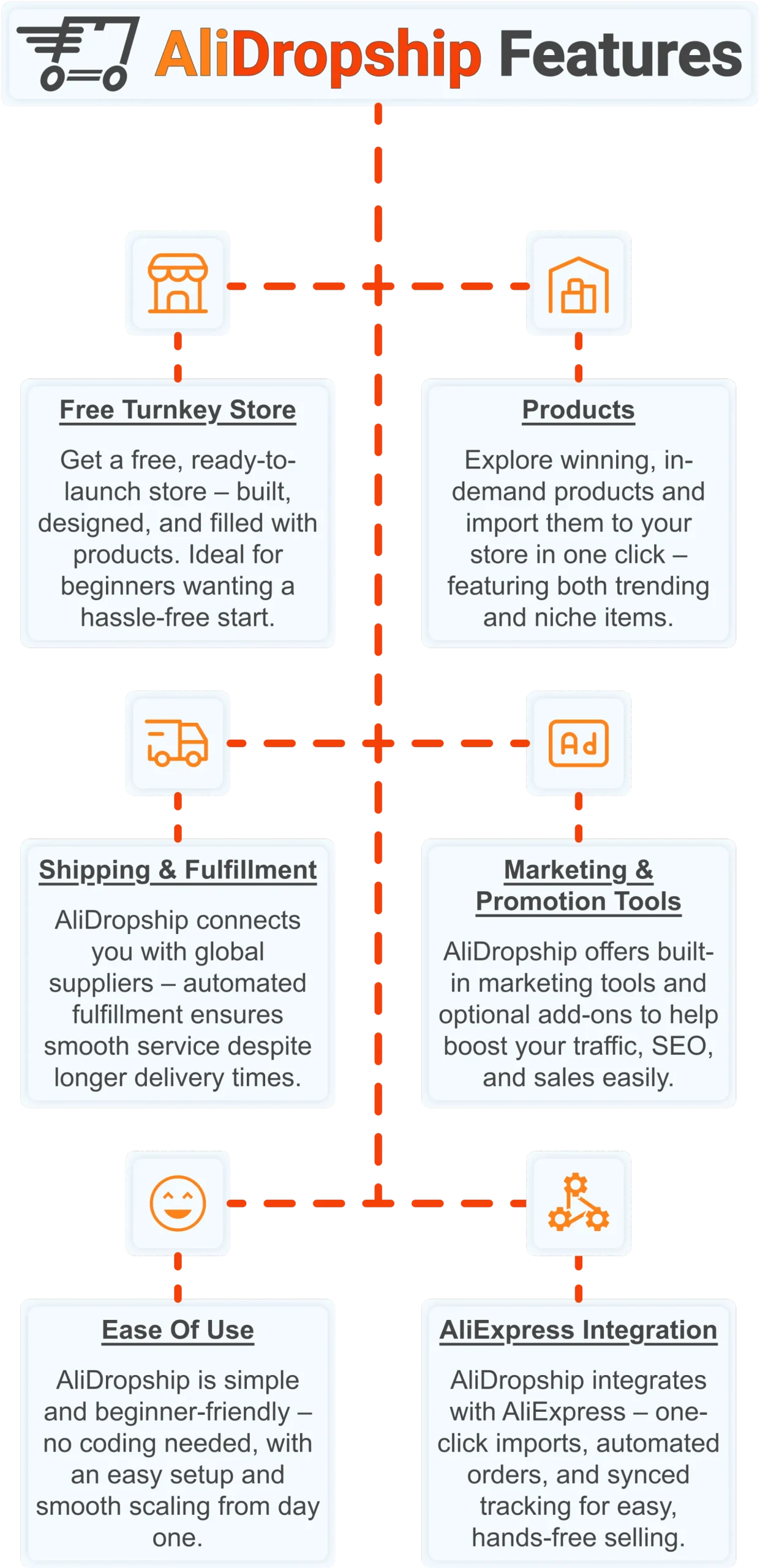
Free turnkey store ️
Get a free turnkey store – built, designed, and filled with products. Ideal for beginners wanting a hassle-free start, the store comes fully optimized to attract customers right away, saving you time on setup. Plus, it includes professional design elements to give your business a polished, trustworthy look from day one. This ready-made foundation makes it easy to move seamlessly into product selection.
Products
Once your store is set up, you can explore winning, in-demand products and import them in one click – featuring both trending and niche items. This wide selection lets you cater to diverse customer interests and test what works best. Regular updates ensure you always have fresh products, keeping your store competitive and relevant. With great products in place, smooth shipping becomes the next essential step.
Shipping & fulfillment
AliDropship connects you with global suppliers, and automated fulfillment ensures seamless order processing despite international delivery times. Customers receive real-time tracking updates, which builds confidence and trust in your store. Once shipping is handled reliably, you can focus on promoting your store and attracting traffic.
Marketing & promotion tools
To maximize sales, AliDropship offers built-in marketing tools and optional add-ons that help boost traffic, SEO, and conversions. From email campaigns and discounts to social media integration, these tools empower you to reach and retain customers without needing prior marketing experience. With promotion strategies in place, managing your business becomes simpler and more efficient.
Ease of use
AliDropship is beginner-friendly – no coding needed, with an intuitive dashboard that guides you through every step. Easy setup and smooth scaling let you expand your store without stress. As your business grows, adding new features, products, and marketing campaigns remains hassle-free, giving you more time to focus on sales.
AliExpress integration
Finally, AliDropship integrates seamlessly with AliExpress, enabling one-click imports, automated orders, and synced tracking. Your inventory stays up-to-date with the latest products and prices, while automated order processing frees you from manual tasks. Combined with the turnkey setup, reliable shipping, and built-in marketing tools, this integration ensures your dropshipping business is fully equipped for growth and success.
While figuring out how hard it is to make money on YouTube takes months of testing, a dropshipping store gives you a parallel income stream you fully own and control. Get your free AliDropship store and a $100 gift voucher to start building income that does not depend on views.
Frequently asked questions
How hard is it actually to make money on YouTube in 2026?
Reaching the YouTube Partner Program typically takes 6 to 18 months of consistent effort before ad revenue becomes available. Once monetized, ad revenue alone earns most small channels 20 to 300 dollars per month at the early stage. Channels that layer in sponsorships, affiliate links, and digital products can reach 1000 to 5000 dollars or more monthly. The creator economy built around the platform is valued at 250 billion dollars, though most of that value concentrates among a relatively small number of established channels.
What subscriber and watch hour requirements do you need for monetization?
The expanded early access tier requires 500 subscribers plus either 3000 watch hours in the past 12 months or 3 million Shorts views in 90 days, unlocking fan funding only. Full ad revenue access through the YouTube Partner Program requires 1000 subscribers plus either 4000 public watch hours in the past 12 months or 10 million Shorts views in 90 days. Channels posting consistently in searchable niches can reach these thresholds in 6 to 9 months, though others take 18 months or more. The channel must also have no active Community Guideline strikes to qualify.
Does niche selection really affect how much you can earn on YouTube?
Yes, niche selection is one of the biggest variables, since advertisers in financial services pay 12 to 25 dollars or more per 1000 views compared to 0.80 to 3 dollars for gaming content. A finance or software review channel earning 50000 monthly views can realistically earn 800 to 1500 dollars in ad revenue, while a general entertainment channel at the same view count might earn only 80 to 200 dollars. This gap means niche selection functions as a financial decision rather than just a creative one. Switching niches after building an audience around a low CPM topic is also considerably harder than choosing well from the start.
Can affiliate marketing generate income before you qualify for the YouTube Partner Program?
Yes, affiliate marketing does not require YPP approval, a large audience, or any upfront investment, making it accessible from a creator’s very first video. A review channel with 2000 subscribers in a tech or software niche can generate 300 to 800 dollars per month from affiliate links alone. Commission rates typically range from 5 to 30 percent of the sale depending on the product category. Placing the affiliate link at the moment of maximum relevance in a video, right after demonstrating the problem a product solves, tends to outperform a generic end of video mention.
What mistakes make YouTube monetization harder than it needs to be?
Purchasing subscribers, views, or engagement is detected by YouTube systems and can result in channel strikes or permanent removal from the Partner Program. Using copyrighted music or footage without licensing can lead to copyright strikes, and three strikes within 90 days results in channel termination. Relying entirely on AdSense as a single income stream is risky since a single demonetized video due to advertiser-friendly content guidelines means zero income from that video regardless of views. Diversifying into sponsorships, affiliate links, and digital products protects against the algorithm inconsistency and CPM fluctuations that affect ad-only income.
 Previous post
