 ‧ Agnes Kazaryan ‧
March 17, 2026
‧ Agnes Kazaryan ‧
March 17, 2026  3565 ‧
 0
0
Yes, you can make decent money on Rover – but the ceiling is lower and the effort higher than most people expect before they sign up. Dog walkers and pet sitters on the platform typically take home $15–$40 per walk and $25–$75 per overnight stay after Rover’s 20% platform fee. Most part-time sitters land somewhere between $300–$800 per month. That is solid supplemental income for animal lovers with the right setup – but it is not a scalable path to full-time earnings for most people.
Quick answer: Rover is a legitimate side hustle for pet lovers that pays $300–$800/month part-time, but income is capped by how many hours you can physically work – it does not grow while you sleep.
This guide breaks down exactly what Rover pays, what it does not tell you upfront, and how it compares to other income methods in 2026. Whether you are weighing it as a first side hustle or deciding whether to stick with it long-term, you will have a clear answer by the end.
The question “can you make good money on Rover” comes up constantly on Reddit and personal finance forums – and the answers are all over the place. Some sitters swear by it. Others say the 20% fee and slow start make it not worth the hassle. The truth depends almost entirely on your location, your availability, and whether you treat it like a casual gig or a real small business.
What is Rover and how does it work?
Rover is the largest online marketplace for pet care services in the US. Launched in 2011, it now connects over 2 million pet owners with more than 300,000 independent sitters and walkers across the country. Think of it as the Airbnb for dogs – you create a profile, set your rates and availability, and pet owners in your area find and book you directly through the app.
As a sitter, you can offer any combination of five services: dog boarding (pets stay overnight at your home), house sitting (you stay at the owner’s home), doggy daycare (pets come to you during the day), dog walking (30 or 60-minute walks), and drop-in visits (short check-ins at the owner’s home). You set your own prices, accept or decline any booking, and get paid via direct deposit two days after completing a service. Rover keeps 20% of every booking – you keep the other 80%, plus 100% of tips.
Getting started costs $35 for a mandatory background check and takes most people under 30 minutes to set up a profile. Once approved, you are live and searchable. The catch: new sitters with zero reviews are competing against established profiles with dozens of five-star ratings, which means the first 4–8 weeks are typically slow while you build your reputation.
Important note: Sitters in California face a steeper fee structure – some users have reported Rover collecting close to 40% of a transaction when platform and booking fees are combined, which significantly changes the income math in that state.
How much can you realistically earn on Rover?
Rover income data varies a lot depending on the source, so it is worth being specific. According to Indeed, the average estimated pay for Rover pet sitters in the US runs around $24 per hour. ZipRecruiter puts average annual earnings for full-time Rover dog sitters at roughly $45,000 – or around $3,750 per month. Those figures represent people treating Rover as a primary income source, not a casual weekend gig.
For the more realistic part-time picture: dog walkers earn an estimated $17 per effective hour, while overnight boarding and pet sitting runs $35–$75 per night. The Rover community itself puts average part-time monthly earnings at around $800–$1,000 before the platform fee – meaning $640–$800 in your pocket after the cut.
The table above reflects consistent part-time to full-time effort in each category. Rover’s upper range requires boarding multiple dogs simultaneously, living in a high-demand urban area, and maintaining a strong review profile – none of which happens overnight.
One note on the full-time Rover figures: Earning $2,640 per month from boarding at $25 per night would require hosting roughly 132 dogs in a single month – 4–5 dogs every night with no days off. That is not a side hustle. That is a kennel operation.
Rover vs other ways to make money: A full breakdown
The honest answer to “can you make good money on Rover” depends heavily on what you are comparing it to. Here is how Rover stacks up against the most realistic alternatives in 2026 across the factors that actually matter: flexibility, scalability, startup requirements, and income ceiling.
Rover vs freelancing
Freelancing on platforms like Upwork and Fiverr is probably the closest structural comparison to Rover – both are gig-economy platforms where you set your rates, choose your own clients, and keep most (but not all) of what you earn.
Where Rover wins
Rover has a genuinely lower skill barrier for people who love animals. You do not need a portfolio, a writing sample, or any technical background. If you pass the background check and have some pet care experience, you can start taking bookings. For people who find freelance pitching anxiety-inducing or who simply want to earn money doing something they enjoy, Rover is a more comfortable entry point.
There is also a mild passive quality to Rover boarding that freelancing does not offer. When a dog is sleeping at your house overnight, you are still being paid – you are not actively working the way a writer or designer would be.
Earning potential: $300–$800/month part-time for Rover dog walking, vs. $500–$3,000/month for freelance writing or design with equivalent effort.
Where freelancing wins
The scalability gap is significant. A freelancer can take on more clients, raise their rates, and eventually hire subcontractors – none of which are options on Rover. A dog walker in a small city is fundamentally limited by how many walks they can physically complete in a day. A freelance copywriter faces no such ceiling and can serve clients in New York from anywhere in the country.
Freelancing also carries no physical risk. Dog-related incidents – bites, escapes, property damage – are real liabilities on Rover. Rover’s guarantee covers some scenarios, but reimbursements only kick in above $250 and top out at $25,000 for vet care. Third-party insurance (which experienced sitters strongly recommend) starts at around $300 per year and comes straight out of your earnings.
Rover vs dropshipping and ecommerce
This is the most meaningful comparison for anyone asking whether Rover is worth building a serious income around – because ecommerce is the thing Rover most directly cannot compete with on scalability.
The core difference: time vs systems
Rover income is entirely time-linked. You earn when you show up, walk the dog, host the overnight, or complete the drop-in. If you get sick, go on holiday, or want a week off, your Rover income drops to zero. There is no automated system and no way to earn while you are not working – that is the defining constraint of any gig platform.
A dropshipping store does not require you to be present to generate sales. You set up the store, list products, and connect with suppliers who handle fulfillment. Orders come in, get processed automatically, and ship directly to the customer – whether you are awake or not. The upfront work is in building the store and finding winning products, not in showing up physically every day.
Startup comparison
Rover costs $35 for a background check and requires no ongoing investment. That is a genuinely low barrier. Dropshipping has traditionally required more upfront – hosting, a domain, a theme – which puts some people off. That calculation changed when AliDropship introduced its free turnkey store offer: you can get a fully built, stocked dropshipping store at no cost, which removes the main financial objection to ecommerce as a starting point.
Important: Both options require time to ramp up – Rover to build reviews, ecommerce to drive traffic and optimize conversions. Neither produces meaningful income on day one. The difference is where each leads after 90 days of consistent effort.
Income ceiling comparison
A full-time Rover sitter working at maximum capacity in a competitive market might reach $2,500–$3,000 per month – and that requires boarding multiple dogs simultaneously, no days off, and living in a high-demand city. A dropshipping store with a tested product line and consistent traffic regularly generates $1,000–$5,000+ per month in profit for operators who treat it as a business – and unlike Rover, it can grow beyond that without requiring more of your physical time.
Earning potential: $300–$2,640/month for Rover (part-time to aggressive full-time) vs. $1,000–$5,000+/month for ecommerce once optimized – with ecommerce scaling further without adding hours.
Rover vs content creation (blogging, YouTube, social media)
Content creation earns through ad revenue, affiliate commissions, and sponsorships – income streams that build slowly but compound over time. The mechanics are completely different from gig work.
Where Rover wins
Speed to first dollar. Content creation is notoriously slow to monetize – most YouTube channels do not hit the 1,000 subscriber threshold for monetization in their first six months, and most blogs take 12–18 months before generating meaningful ad revenue. A Rover sitter can earn their first payment within two weeks of going live, which makes it far more accessible for anyone who needs income now rather than later.
Where content creation wins
Long-term leverage. A YouTube channel with 10,000 subscribers earns money every day whether its creator posts or not – from existing video views generating ad revenue. A blog post written two years ago can still drive affiliate commissions today. That compounding effect does not exist on Rover. Once you stop working, the income stops.
Rover vs other pet care platforms (Wag, Care.com)
If Rover is your preferred income model, it is worth understanding how it compares to the two closest competitors before committing.
Rover vs Wag
Wag charges a higher commission than Rover, making Rover the better deal on fees for most sitters. However, Wag’s matching system for on-demand bookings can result in faster initial bookings for new sitters, since the algorithm assigns walkers automatically rather than requiring pet owners to browse and select. If you are in a competitive market and struggling to get your first Rover reviews, Wag can be a useful parallel starting point. Wag also charges a $49.95 application fee upfront.
Rover vs Care.com
Care.com works differently – sitters pay an $18.99 annual membership fee, but there is no per-booking commission, meaning you keep 100% of each job. For higher-volume sitters, this is a significantly better fee structure than Rover’s 20% cut. The trade-off is that Care.com does not provide the same booking management and payment infrastructure, so you handle more of the client relationship directly.
Earning potential: Rover and Care.com are roughly comparable on per-service rates – the difference is fee structure, with Care.com often netting more per booking for frequent sitters.
Tips for making more money on Rover
If you have decided Rover is the right fit, these are the highest-leverage moves for getting your earnings up faster – especially in the early months when a blank review profile is your biggest obstacle.
Offer multiple services from day one
Sitters who list boarding, daycare, walking, and drop-in visits consistently outbook those who offer only one service. More listings mean more ways pet owners can find and book you. Rover’s own data suggests sitters offering overnight boarding earn roughly twice as much as those who only walk dogs – so if your living situation allows it, boarding is the highest-value addition you can make to your profile.
Start with competitive rates and raise them after reviews
A common mistake is pricing at or above market rate as a new sitter with zero reviews. Pet owners choosing between an experienced sitter with 40 five-star ratings and a new sitter with none will almost always choose the established profile – unless the new sitter offers a meaningfully lower price. Set your rates 15–20% below the local average for your first 10–15 bookings, collect reviews, then raise prices incrementally. Most established sitters on Rover have done exactly this.
Send regular updates and photos
According to repeat-booking data and community feedback, the single biggest driver of repeat clients on Rover is proactive communication – specifically, daily photo updates and check-in messages for boarding and house-sitting clients. Pet owners who feel informed and reassured rebook at significantly higher rates. This costs you nothing except two minutes per day and directly impacts your long-term earnings more than any rate change.
Target high-demand periods strategically
Rover demand spikes around holidays (Thanksgiving, Christmas, New Year, spring break, summer vacation weeks) and long weekends. Experienced sitters plan their availability calendars around these windows and raise prices during peak periods – sometimes by 30–50% – because demand substantially outpaces supply. Being fully available during these windows while competitors are also traveling can meaningfully boost your quarterly earnings.
Think about transitioning clients off-platform
Once you have established trust with a repeat client, many will agree to book directly with you – which means you keep 100% of the fee instead of 80%. You need your own insurance and a simple payment method (PayPal, Venmo, or a direct bank transfer) to make this work, but for high-frequency clients it can add meaningfully to your annual take-home.
Important: Moving clients off Rover means losing Rover’s booking protection and support. Make sure you have adequate third-party insurance in place before going this route.
Legal and ethical considerations for Rover sitters
Rover sitters are classified as independent contractors, not employees. That has real implications for your finances and legal exposure that are worth understanding before you commit to the platform as a serious income source.
Taxes
If you earn more than $600 in a calendar year from Rover, you will receive a 1099-NEC tax form and are responsible for paying self-employment tax (currently 15.3%) on top of your regular income tax rate. Unlike a W-2 job, nothing is withheld from your Rover payments – set aside approximately 25–30% of your gross earnings for tax time. The upside is that legitimate business expenses – leashes, pet supplies used exclusively for Rover, a portion of your home insurance if you board dogs – may be deductible. Keep receipts and track everything.
Insurance gaps
Rover’s platform guarantee covers some incidents but has meaningful limitations: reimbursements only start above $250 per incident, vet care is capped at $25,000, and property damage at $100,000. If a dog in your care injures a third party or causes significant property damage, those limits may not be sufficient. Experienced sitters consistently recommend purchasing independent pet sitter insurance and bonding, which starts at around $300 per year. Factor that into your income calculations.
Avoid fake reviews and deceptive practices
A small number of new sitters try to game their review profile by asking friends or family to pose as clients and leave five-star reviews. Rover monitors for exactly this and will permanently suspend accounts caught doing it. Beyond the platform risk, fake reviews put real pet owners at genuine risk.
Key principle: Build your Rover reputation through real bookings and genuine client care – there are no shortcuts that do not carry serious downside risk.
Zoning and local regulations
If you plan to board multiple dogs in your home, check your local zoning laws before scaling up. Some residential zones have limits on the number of animals allowed on a property, and operating above those limits can result in complaints and fines. Rover recommends sitters contact their local government before expanding boarding capacity – this is advice worth following.
Which income method is right for you?
The right answer depends on what you are actually trying to accomplish – a quick first dollar, a sustainable side income, or a path to something that can replace a salary. Here is an honest match by reader profile.
Complete beginner
Rover is one of the most accessible starting points available in 2026. If you love animals, live in a reasonably populated area, and want income within the next 2–4 weeks rather than the next 2–4 months, it is a genuinely strong choice. The $35 background check is the only real cost, and your first booking can come within days of going live if you price competitively. Start here, build your reviews, and use the earnings to fund the next step.
Intermediate earner looking for a side income boost
If you already have a full-time income and want to add $400–$800 per month without a steep learning curve, Rover boarding is worth considering – especially if your living situation comfortably accommodates it. The relatively passive nature of overnight boarding (the dog is there, you go about your evening) makes it one of the least time-intensive ways to add a meaningful income layer. Pair it with a second stream – freelancing, affiliate content, or an ecommerce store – and you have a diversified setup that covers income gaps when Rover is slow.
Advanced earner targeting full-time income replacement
Rover alone is not a realistic path to full-time income replacement for most people – not without extraordinary circumstances (living in a premium urban market, boarding at maximum capacity, transitioning clients off-platform) or significant sacrifice in work-life balance. If your goal is $3,000–$5,000 per month or higher, ecommerce and dropshipping have a much clearer path to that number. Not because they are easier, but because they can scale beyond what any single person can physically deliver in a day. A well-run dropshipping store does not cap out at the number of dogs you can walk.
The US pet sitting market is projected to expand significantly through 2030, which means Rover demand will likely remain solid for years. But growing demand and a growing income ceiling are two different things. If your ambition extends beyond a reliable side hustle, build something that scales alongside your effort – not in direct proportion to the hours you put in.
AliDropship: Your complete all-in-one solution for starting dropshipping in 2026
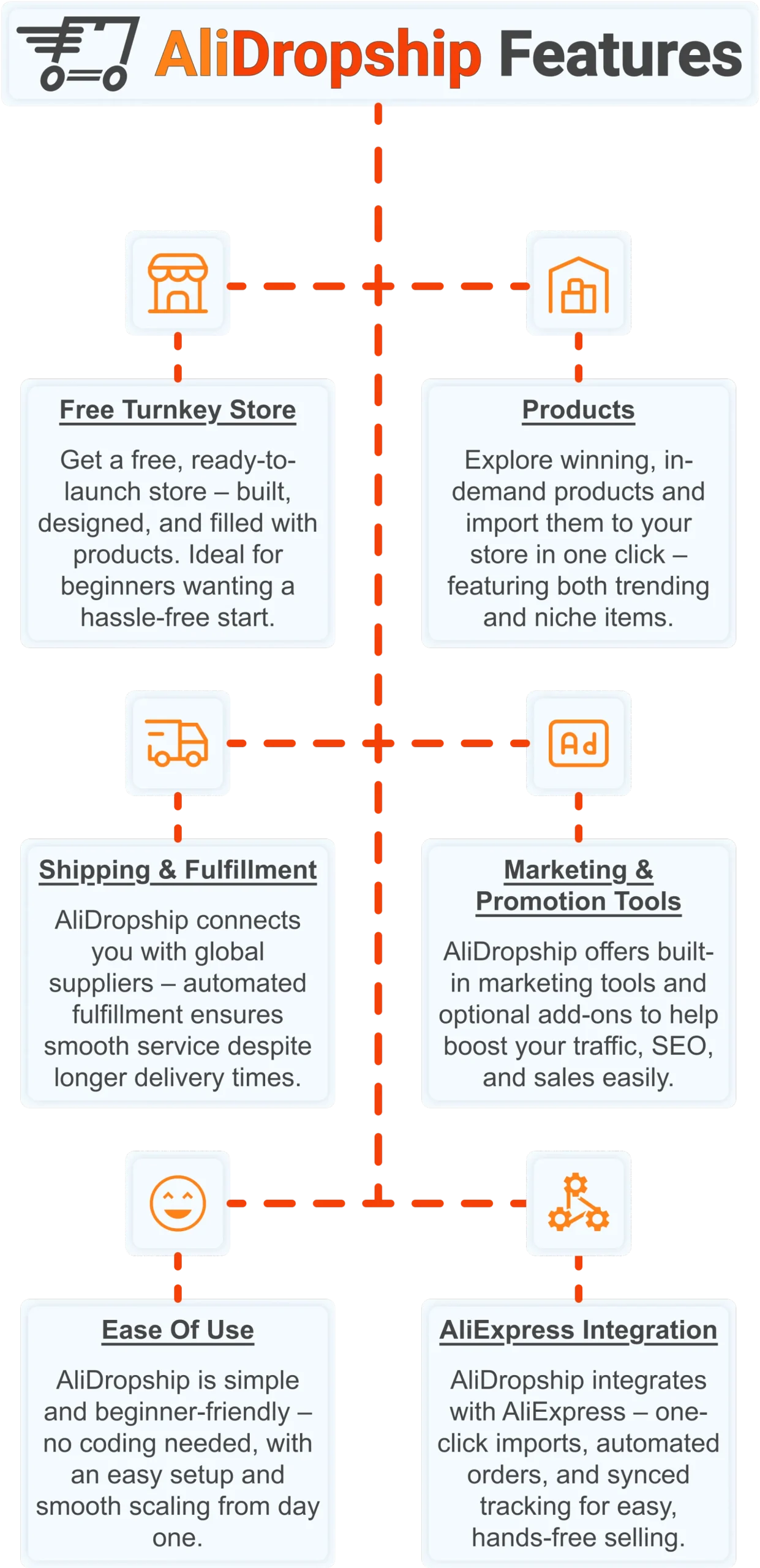
If you want the simplest possible way to start dropshipping – especially if you’re brand new – AliDropship remains one of the most beginner-friendly tools available in 2026. It brings together store creation, product imports, automation, and marketing into a single streamlined system designed to help you launch quickly and grow confidently.
Free turnkey store ️
Get a free turnkey store – built, designed, and filled with products. Ideal for beginners wanting a hassle-free start, the store comes fully optimized to attract customers right away, saving you time on setup. Plus, it includes professional design elements to give your business a polished, trustworthy look from day one. This ready-made foundation makes it easy to move seamlessly into product selection.
Products
Once your store is set up, you can explore winning, in-demand products and import them in one click – featuring both trending and niche items. This wide selection lets you cater to diverse customer interests and test what works best. Regular updates ensure you always have fresh products, keeping your store competitive and relevant. With great products in place, smooth shipping becomes the next essential step.
Shipping & fulfillment
AliDropship connects you with global suppliers, and automated fulfillment ensures seamless order processing despite international delivery times. Customers receive real-time tracking updates, which builds confidence and trust in your store. Once shipping is handled reliably, you can focus on promoting your store and attracting traffic.
Marketing & promotion tools
To maximize sales, AliDropship offers built-in marketing tools and optional add-ons that help boost traffic, SEO, and conversions. From email campaigns and discounts to social media integration, these tools empower you to reach and retain customers without needing prior marketing experience. With promotion strategies in place, managing your business becomes simpler and more efficient.
Ease of use
AliDropship is beginner-friendly – no coding needed, with an intuitive dashboard that guides you through every step. Easy setup and smooth scaling let you expand your store without stress. As your business grows, adding new features, products, and marketing campaigns remains hassle-free, giving you more time to focus on sales.
AliExpress integration
Finally, AliDropship integrates seamlessly with AliExpress, enabling one-click imports, automated orders, and synced tracking. Your inventory stays up-to-date with the latest products and prices, while automated order processing frees you from manual tasks. Combined with the turnkey setup, reliable shipping, and built-in marketing tools, this integration ensures your dropshipping business is fully equipped for growth and success.
Rover is a solid way to earn while doing something you love – but if you want income that grows beyond what you can personally deliver each day, a dropshipping store is the logical next step. Get your free AliDropship turnkey store today and start building income that scales.
Frequently asked questions
Can you actually make good money on Rover?
Yes, but the ceiling is lower than most people expect, with most part-time sitters landing somewhere between 300 and 800 dollars per month. Dog walkers typically take home 15 to 40 dollars per walk, while overnight stays bring in 25 to 75 dollars after Rover’s 20 percent platform fee. Full-time Rover dog sitters average around 45000 dollars annually according to ZipRecruiter, or roughly 3750 dollars per month. Income on Rover is capped by how many hours a sitter can physically work, since it does not grow while you sleep.
How much does Rover take from each booking?
Rover keeps 20 percent of every booking and the sitter keeps the remaining 80 percent, plus 100 percent of any tips. Sitters in California face a steeper structure, with some users reporting Rover collecting close to 40 percent of a transaction when platform and booking fees are combined. Getting started costs 35 dollars for a mandatory background check, which most people complete in under 30 minutes. Payment arrives via direct deposit two days after completing a service.
How does Rover compare to freelancing in terms of income potential?
Rover offers 300 to 800 dollars per month part-time for dog walking, while freelance writing or design work with equivalent effort typically earns 500 to 3000 dollars per month. Freelancers can take on more clients and raise their rates over time, while a dog walker is fundamentally limited by how many walks they can physically complete in a day. Rover does have a lower skill barrier, since sitters need no portfolio or technical background beyond passing a background check. Freelancing also carries no physical liability risk, unlike Rover where dog-related incidents are a real consideration.
What tax obligations do Rover sitters need to know about?
Sitters earning more than 600 dollars in a calendar year receive a 1099-NEC tax form and are responsible for self-employment tax, currently 15.3 percent, on top of regular income tax. Since nothing is withheld from Rover payments, sitters are advised to set aside approximately 25 to 30 percent of gross earnings for tax time. Legitimate business expenses like leashes and pet supplies used exclusively for Rover work may be deductible. Independent pet sitter insurance and bonding, which starts at around 300 dollars per year, is also recommended given the platform’s coverage limitations.
Is Rover a realistic path to full-time income?
No, Rover alone is not a realistic path to full-time income replacement for most people without extraordinary circumstances like living in a premium urban market or boarding dogs at maximum capacity. Earning 2640 dollars per month from boarding at 25 dollars per night would require hosting roughly 132 dogs in a single month with no days off. A dropshipping store with a tested product line and consistent traffic regularly generates 1000 to 5000 dollars or more per month in profit and can scale beyond that without requiring more physical time. The clearest path to 3000 to 5000 dollars per month or higher generally comes from a model that scales beyond what one person can physically deliver in a day.
 Previous post
