 ‧ Agnes Kazaryan ‧
March 20, 2026
‧ Agnes Kazaryan ‧
March 20, 2026  559 ‧
559 ‧
 0
0
Over 5 million online stores run on Shopify right now. That is a number that gets thrown around a lot in ecommerce circles – but it rarely comes with the follow-up question that actually matters: how does Shopify work, and is it the right choice for someone starting from scratch in 2026?
The platform is genuinely solid. It handles hosting, payments, store design, and checkout out of the box. It scales well. It has a massive app ecosystem. But it is also a subscription-based service with a fee structure that compounds the more you sell – and understanding that upfront changes the way you evaluate it against other ecommerce models.
Quick Answer: Shopify is a cloud-based ecommerce platform that lets you build and manage an online store without coding. You pay a monthly subscription starting at $39/month, plus transaction fees on every sale. It works well for product-based businesses – but your costs, ownership model, and realistic earning potential look very different depending on which business model you layer on top of it.
What is Shopify and how does it actually work?
Shopify is a SaaS (software as a service) ecommerce platform. That means it runs entirely in the cloud – you do not set up hosting, install software, or manage a server. You sign up, pick a plan, choose a theme, add your products, and you are essentially ready to sell.
When a customer lands on your store, browses a product, and clicks buy, Shopify handles the checkout flow, processes the payment, and logs the order in your dashboard. SSL security, payment gateway integration, and uptime reliability are all managed for you. Here is how Shopify works step by step:
- Sign up and choose a plan – The Basic plan starts at $39/month (or $29/month on annual billing). The Grow plan runs $105/month and the Advanced plan $399/month. Higher tiers unlock lower transaction fees and more reporting tools.
- Pick a theme and design your store – Free themes cover the basics well. Premium themes are a one-time purchase of $140–$350.
- Add products – Upload images, write descriptions, set prices, and manage inventory from the dashboard. Shopify tracks stock and alerts you when items run low.
- Set up payments – Shopify Payments is the built-in processor. Using it means no extra transaction fee. If you use a third-party gateway like PayPal or Stripe, Shopify adds an additional 0.6%–2% fee per sale depending on your plan.
- Publish and drive traffic – Once live, you bring in visitors through SEO, paid ads, social media, or email. None of that is included – it is all separate cost and effort.
Shopify also has an app store with over 16,000 apps as of 2026, covering everything from email marketing to upsell flows, review widgets, and loyalty programs. Most useful apps carry a monthly fee – expect to spend $50–$100/month on apps once you are running the store seriously.
How much does running a Shopify store actually cost?
This is where a lot of beginners get caught off guard. The monthly plan price is the starting point – not the full picture. Here is a realistic cost breakdown for a store doing moderate volume in 2026:
A realistic Shopify store costs $90–$150/month before you spend a single dollar on advertising or inventory. That is not a dealbreaker for every situation – but it is important to understand upfront, especially when you are comparing Shopify to ecommerce models with lower fixed overhead.
One note on the cost ceiling: These figures assume you use Shopify Payments. If you rely on a third-party payment processor, the per-sale surcharge adds up fast. A store doing $10,000/month on the Basic plan with a third-party gateway pays an extra $200/month in surcharges alone – on top of everything else. As your volume grows, moving to a higher plan to reduce per-sale fees becomes necessary, which raises your fixed monthly cost further.
How Shopify works for dropshipping – and where the model hits limits
Dropshipping is one of the most popular use cases for Shopify. The setup is straightforward: you list products in your store, a customer places an order, and a third-party supplier ships the product directly to that customer. You never hold inventory. What most beginners do not realise upfront is that Shopify itself does not source suppliers or automate fulfillment – you need a separate app for that. DSers, Zendrop, and AutoDS are the most common options, and each carries its own monthly subscription.
How Shopify dropshipping works in practice
Store setup
You build your Shopify store and connect a dropshipping app that links to a supplier database – typically AliExpress or a domestic warehouse network. The app imports product listings, syncs pricing, and pushes orders to your supplier automatically when a sale comes in.
The supplier relationship
Your customer pays you the retail price. You pay the supplier the wholesale price. The difference is your gross margin – before Shopify fees, app subscriptions, advertising costs, and returns. On AliExpress-sourced products, typical margins run 20%–40% depending on niche and how aggressively you price.
Fulfillment and shipping times
This is the friction point most new Shopify dropshippers hit early. When sourcing from AliExpress, international shipping times can range from 10 to 30 days. Customers compare their experience to Amazon Prime. Managing the expectation gap – and the returns that come from it – directly affects your review scores and repeat purchase rate.
Scaling
Shopify scales well technically – the platform handles high traffic without issues. The harder part of scaling a dropshipping store on Shopify is the economics. As your ad spend increases to drive more volume, your cost per acquisition rises. And Shopify’s per-sale fees mean your effective margin shrinks on every additional dollar of revenue if you stay on a lower plan.
What Shopify does well – and what it does not include
Shopify is genuinely excellent at checkout optimization. Its Shop Pay accelerated checkout consistently outperforms industry conversion averages. The platform is stable at scale – it processed over $9 billion in Black Friday/Cyber Monday sales in a recent season, which speaks to its infrastructure. For established brands that want complete control over their storefront and customer experience, it is hard to beat.
What Shopify does not include: supplier relationships, product sourcing, built-in dropshipping automation, or any kind of ready-made store structure. You are buying a blank canvas and a powerful set of tools. Everything you build on top of that – the niche, the products, the supplier network, the marketing – is entirely on you.
One note on setup time: New Shopify users consistently underestimate how long it takes to build a converting store from scratch. Picking a niche, finding reliable suppliers, testing products, writing descriptions, configuring apps, and setting up email flows realistically takes 60–120 hours of focused work before your first profitable sale. That timeline matters a lot when you are comparing your options.
Shopify vs other ecommerce platforms: How the models compare
Both Shopify and purpose-built dropshipping platforms like AliDropship let you run an ecommerce business. The difference is in what is included, what you own, and how the cost structure works over time.
These are two genuinely different approaches to ecommerce. Shopify is a powerful platform for merchants who want maximum design control and are willing to invest time and ongoing subscription costs. AliDropship is purpose-built for dropshipping – the automation, supplier integration, and product import tools are native rather than bolt-on additions.
Important: Neither platform eliminates the work of building a real business. Product selection, customer service, and marketing still require your ongoing attention regardless of which platform you choose.
What you can realistically earn from an ecommerce store in 2026
Income from ecommerce dropshipping varies enormously. The range you see in forums and YouTube content runs from a few hundred dollars a month to five-figure monthly revenue. Most stores that reach profitability do so gradually – meaningful income typically starts to appear after 60–90 days of consistent work.
Revenue is not profit. A store doing $5,000/month in sales on Shopify might net $1,000–$1,500 after platform fees, app costs, ad spend, and product costs. Profit margin discipline matters far more than top-line revenue at every stage of the business.
Earning potential: $30–$80/day in net profit is a realistic early target for a dropshipping store after 60–90 days of consistent effort – assuming you are testing products actively and managing your ad spend tightly.
Is Shopify the right choice, or should you consider something else?
Understanding how Shopify works is one thing. Deciding whether it is the right tool for your specific situation is a different question entirely. Here is an honest breakdown by reader profile.
When Shopify makes sense
Shopify works well if you already have a product – something you manufacture, source wholesale, or create yourself – and you need a polished, scalable storefront to sell it. It also makes sense for established businesses that need deep customization, multi-channel selling across Instagram, TikTok, and Amazon, and enterprise-level analytics. If design control and brand ownership are your top priorities and you have the budget for the platform plus a developer, Shopify delivers.
When Shopify is not the most efficient starting point
If you are starting from scratch with no product, no supplier relationships, and a limited budget, Shopify stacks overhead before you have validated a single product idea. You are paying $39–$100+/month for a platform while also needing a dropshipping app, a theme, and ad spend to drive any traffic. The fixed costs accumulate before a single dollar of revenue comes in.
The beginner case for a ready-made solution
The data on ecommerce dropshipping consistently shows that the biggest barrier for new sellers is not motivation – it is the gap between deciding to start and actually having a store ready to take orders. Every week spent on setup is a week not spent on product testing, marketing, and learning what customers actually want. A platform that hands you a functioning, product-loaded store from day one – with built-in supplier integration and no per-sale platform fees – changes that timeline significantly. You go from researching to selling in days rather than months.
Final thoughts: Choosing the right ecommerce model for you
Now that you understand how Shopify works – and the full cost and effort picture that comes with it – here is a simple framework by profile:
- Complete beginner: If you have never run an online store before and want to start generating income as quickly as possible, a turnkey dropshipping solution with built-in supplier integration is a faster path than building a Shopify store from scratch.
- Intermediate / part-time: If you have some ecommerce experience and want to test a niche without committing to a full Shopify subscription upfront, starting with a lower-overhead platform gives you more of your margin back in the early stages.
- Advanced / full-time goal: If you have validated products, an existing customer base, and the budget to invest in a premium storefront, Shopify’s design flexibility and multi-channel tools become genuinely worthwhile. At scale, its checkout performance and ecosystem justify the subscription cost.
The honest takeaway: Shopify is a great tool in the right context. It is not always the most efficient starting point for a brand-new dropshipper working with limited capital and time.
AliDropship: Your complete all-in-one solution for starting dropshipping in 2026
If you want the simplest possible way to start dropshipping – especially if you’re brand new – AliDropship remains one of the most beginner-friendly tools available in 2026. It brings together store creation, product imports, automation, and marketing into a single streamlined system designed to help you launch quickly and grow confidently.
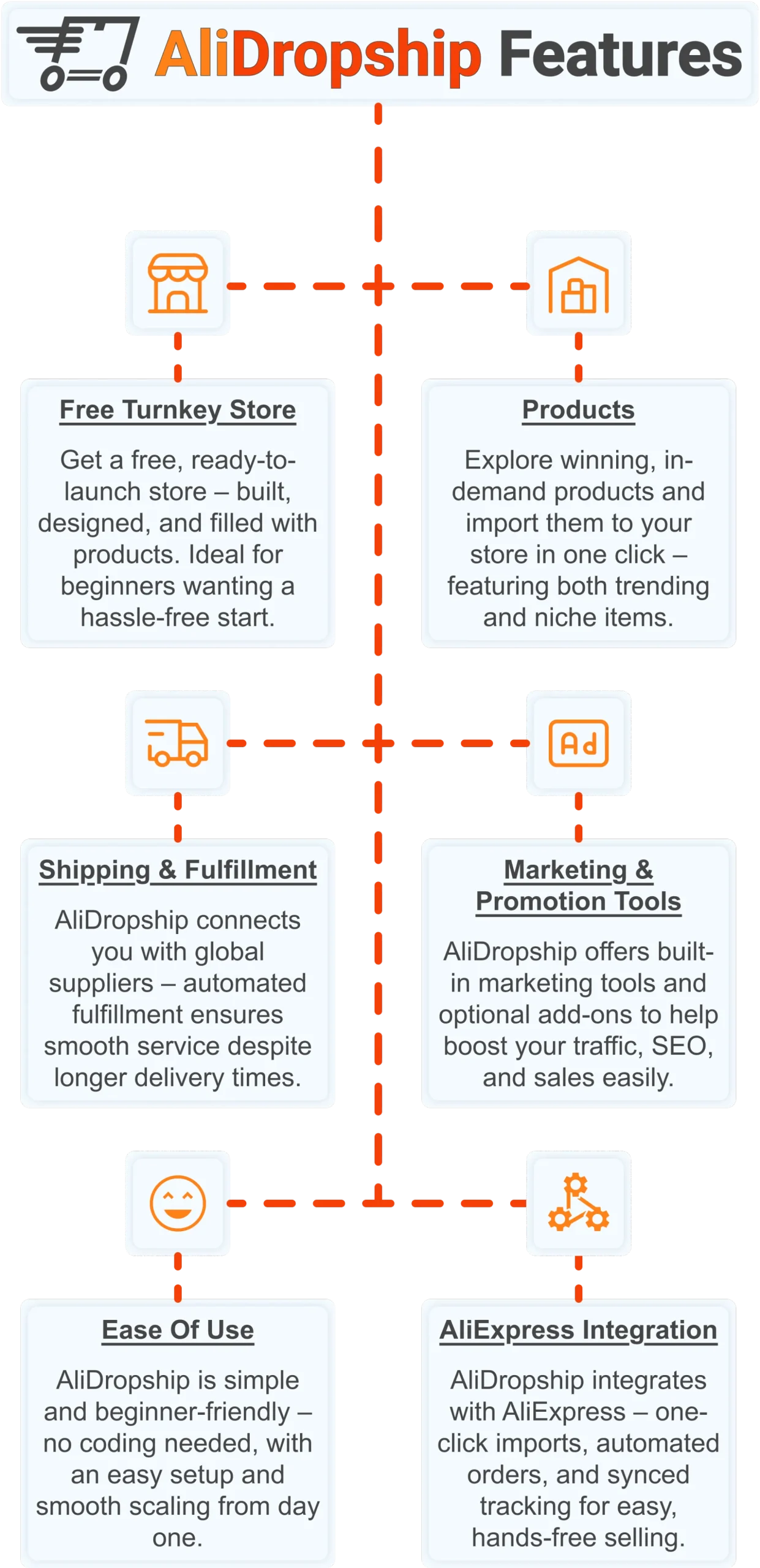
Free turnkey store ️
Get a free turnkey store – built, designed, and filled with products. Ideal for beginners wanting a hassle-free start, the store comes fully optimized to attract customers right away, saving you time on setup. Plus, it includes professional design elements to give your business a polished, trustworthy look from day one. This ready-made foundation makes it easy to move seamlessly into product selection.
Products
Once your store is set up, you can explore winning, in-demand products and import them in one click – featuring both trending and niche items. This wide selection lets you cater to diverse customer interests and test what works best. Regular updates ensure you always have fresh products, keeping your store competitive and relevant. With great products in place, smooth shipping becomes the next essential step.
Shipping & fulfillment
AliDropship connects you with global suppliers, and automated fulfillment ensures seamless order processing despite international delivery times. Customers receive real-time tracking updates, which builds confidence and trust in your store. Once shipping is handled reliably, you can focus on promoting your store and attracting traffic.
Marketing & promotion tools
To maximize sales, AliDropship offers built-in marketing tools and optional add-ons that help boost traffic, SEO, and conversions. From email campaigns and discounts to social media integration, these tools empower you to reach and retain customers without needing prior marketing experience. With promotion strategies in place, managing your business becomes simpler and more efficient.
Ease of use
AliDropship is beginner-friendly – no coding needed, with an intuitive dashboard that guides you through every step. Easy setup and smooth scaling let you expand your store without stress. As your business grows, adding new features, products, and marketing campaigns remains hassle-free, giving you more time to focus on sales.
AliExpress integration
Finally, AliDropship integrates seamlessly with AliExpress, enabling one-click imports, automated orders, and synced tracking. Your inventory stays up-to-date with the latest products and prices, while automated order processing frees you from manual tasks. Combined with the turnkey setup, reliable shipping, and built-in marketing tools, this integration ensures your dropshipping business is fully equipped for growth and success.
Frequently Asked Questions
How does Shopify work for someone starting an online store?
Shopify is a cloud-based ecommerce platform that lets you build and manage an online store without coding, handling hosting, payments, and checkout for you. You sign up, pick a plan starting at 39 dollars per month, choose a theme, add products, and set up payments before driving traffic through separate marketing efforts. Over 5 million online stores currently run on Shopify, reflecting its scale as a hosted solution. The platform also offers more than 16000 apps as of 2026, covering everything from email marketing to loyalty programs.
How much does it actually cost to run a Shopify store?
A realistic Shopify store costs 90 to 150 dollars per month before any advertising or inventory spend, once subscription fees, apps, and processing costs are included. The Basic plan starts at 39 dollars monthly, with Shopify Payments charging 2.9 percent plus 30 cents per sale, while third-party gateways add a further 2 percent surcharge. A store doing 10000 dollars per month in sales on the Basic plan using a third-party gateway pays an extra 200 dollars monthly in surcharges alone. Apps typically add another 50 to 100 dollars per month once a store is running seriously.
Does Shopify include built-in dropshipping tools?
Shopify itself does not source suppliers or automate fulfillment, so dropshippers need a separate app such as DSers, Zendrop, or AutoDS, each carrying its own subscription. On AliExpress-sourced products, typical margins run 20 to 40 percent depending on niche and pricing strategy. International shipping times from AliExpress can range from 10 to 30 days, creating an expectation gap compared to faster delivery standards customers are used to. New Shopify users typically need 60 to 120 hours of focused setup work, including niche research and supplier testing, before their first profitable sale.
How much can a Shopify dropshipping store realistically earn?
In the getting started phase of 0 to 60 days, most stores earn 0 to 500 dollars monthly while testing products and setup. Early traction between 60 and 180 days typically brings in 500 to 3000 dollars monthly as sellers optimize their approach. Scaling from 6 to 18 months can reach 3000 to 15000 dollars or more monthly with consistent marketing focus. A store doing 5000 dollars in monthly sales might net only 1000 to 1500 dollars after platform fees, app costs, ad spend, and product costs are subtracted.
When does it make more sense to use Shopify versus a turnkey dropshipping platform?
Shopify makes sense for sellers who already have a product and need a polished, scalable storefront with deep customization and multi-channel selling across platforms like Instagram and Amazon. For someone starting from scratch with no product or supplier relationships, Shopify stacks 39 to 100 dollars or more in monthly overhead before a single product idea is validated. A turnkey platform like AliDropship offers native AliExpress integration and no ongoing platform transaction fees, letting a beginner move from researching to selling within days rather than months. Neither platform removes the ongoing work of product selection, customer service, and marketing regardless of which one is chosen.
Now that you know exactly how Shopify works – and what a purpose-built alternative looks like – the next step is straightforward. Claim your free AliDropship turnkey store and start your ecommerce business today.
 Previous post
