 ‧ Agnes Kazaryan ‧
March 07, 2026
‧ Agnes Kazaryan ‧
March 07, 2026  14 ‧
14 ‧
 0
0
Investing used to mean calling a broker, paying steep commissions, and hoping for the best. In 2026, you can do it all from your phone in about five minutes. The best investment apps have made it genuinely easy for almost anyone to put their money to work – whether that’s $5 or $5,000.
But “easy to use” doesn’t mean every app is right for you. The market is crowded, the fee structures vary wildly, and not all platforms are as beginner-friendly as they claim. This guide cuts through the noise and gives you a clear, honest look at which investing apps are actually worth your time in 2026.
Quick answer: The best investment apps for beginners in 2026 include Robinhood (commission-free trading), Acorns (automated spare-change investing), and Betterment (hands-off robo-advisor). Your best pick depends on how actively you want to manage your money and what you’re hoping to achieve.
We’ll cover what each app does well, what it costs, and who it’s really for – plus a realistic look at what you can expect to earn. Let’s get into it.
What are investment apps and how do they work?
An investment app is a mobile or desktop platform that lets you buy, sell, and manage financial assets – stocks, ETFs, bonds, or cryptocurrency – without going through a traditional brokerage. You open an account, deposit money, and start investing directly from your phone.
Most of the best investment apps are built around three core ideas: low barriers to entry, simple interfaces, and automation. You don’t need a finance degree. You don’t need thousands of dollars. Many platforms let you get started with as little as $1 through fractional shares – meaning you can own a slice of a high-priced stock without buying the whole thing.
Some apps, like Robinhood and Webull, focus on active trading – you choose what to buy and when. Others, like Betterment and Wealthfront, use robo-advisors to manage a diversified portfolio for you based on your goals and risk tolerance. There are also hybrid options like Stash, which gives you control but nudges you toward smart choices with built-in educational tools.
Important note: Investment apps are regulated financial platforms. Legitimate apps are registered with the SEC and FINRA (in the US), and most are SIPC-insured up to $500,000 – meaning your assets are protected if the platform fails, though market losses are not covered.
How much can you realistically earn with investment apps?
This is where a lot of guides get dishonest. The reality is that investment returns depend heavily on what you invest in, how much you put in, and over what time frame. Nobody can guarantee returns, and short-term trading often produces losses for beginners.
That said, here’s a realistic breakdown based on common strategies and historical averages:
Index funds and robo-advisors tend to outperform active trading for most beginners over a 5–10 year period. Time in the market consistently beats timing the market.
One note on these figures: Past performance doesn’t guarantee future results. A $1,000 investment earning 8% annually becomes around $2,159 after 10 years – but markets can and do fall in the short term. Treat investing as a long-term strategy, not a quick income stream.
Top 5 best investment apps in 2026
These are the platforms that consistently rank highest for usability, value, and trust in 2026. Each one suits a different type of investor – so read past the headlines before you pick one.
Robinhood
Robinhood is probably the most recognisable name on this list. It pioneered commission-free trading and still offers one of the cleanest interfaces for buying stocks, ETFs, options, and crypto. If you want to pick your own investments and pay as little as possible in fees, Robinhood is hard to beat.
The app has had a controversial history – including its 2021 GameStop trading restrictions – but it remains one of the most widely used investing apps in the US and has since expanded its product range significantly, including retirement accounts (Robinhood IRA) and a cash management account.
- No commission fees on stocks, ETFs, and options
- Fractional shares from $1
- Robinhood Gold subscription (approx. $5/month) unlocks margin investing and higher interest on uninvested cash
- SIPC-insured up to $500,000
Earning potential: Entirely dependent on your investment choices. Commission-free trading means more of your returns stay in your pocket.
Best for: Self-directed investors who want to trade stocks and ETFs with minimal fees and a simple interface.
Acorns
Acorns is built around one clever idea: round up your everyday purchases to the nearest dollar and invest the spare change automatically. Spend $3.60 on a coffee and Acorns invests $0.40. Over time, those micro-investments add up – especially when combined with a diversified ETF portfolio that Acorns manages for you.
It’s one of the best investment apps for absolute beginners because you barely notice you’re investing. You can also set up recurring deposits to accelerate your savings. Acorns also offers retirement accounts (Acorns Later) and a checking account with automatic investment features.
- Automated round-up investing from everyday spending
- Pre-built diversified portfolios managed for you
- Plans from $3/month (Personal) to $5/month (Family)
- Retirement and checking accounts included in higher tiers
Earning potential: $10–$50/month in automatic contributions can grow to $3,000–$8,000+ over 10 years at average market returns.
Best for: Beginners who want to invest without thinking about it, or anyone who struggles to save consistently.
Betterment
Betterment is one of the original robo-advisors and still one of the best. You tell it your financial goals – retirement, a house deposit, an emergency fund – and it builds and manages a personalised portfolio for you. It automatically rebalances your holdings and uses tax-loss harvesting to reduce your tax bill.
There’s no minimum investment to get started, and the management fee is 0.25% per year (or $4/month on the Premium tier). For context, a traditional financial advisor typically charges 1% or more annually. Betterment is one of the smartest choices if you want professional-level portfolio management at a fraction of the cost.
- Goal-based investing with automated portfolio management
- Tax-loss harvesting to maximise after-tax returns
- 0.25% annual management fee – no minimum balance
- Betterment Premium ($4/month) unlocks unlimited advisor calls
Earning potential: Estimated 5–8% annual return depending on your portfolio risk level – higher for growth-focused portfolios.
Best for: Long-term investors who want their money professionally managed without paying full advisor fees.
Wealthfront
Wealthfront is Betterment’s closest rival and arguably stronger on the tax optimisation side. Its Path financial planning tool is genuinely useful – you connect your accounts and it gives you a clear projection of whether you’re on track for your goals. It also offers a high-yield cash account and the ability to invest in individual stocks alongside your managed portfolio.
The fee structure mirrors Betterment at 0.25% annually, with a $500 minimum investment. The automated tax-loss harvesting is available on all accounts – not just premium tiers – which gives it a slight edge for tax-conscious investors.
- Automated investing with daily tax-loss harvesting
- Path financial planning tool included free
- 0.25% annual fee – $500 minimum investment
- Stock-level tax-loss harvesting on accounts over $100,000
Earning potential: Similar to Betterment – 5–8% annually depending on risk profile and market conditions.
Best for: Tax-conscious investors and anyone who wants a detailed financial planning tool alongside their investment account.
Stash
Stash sits between a full robo-advisor and a DIY trading platform. It lets you choose your own investments from a curated list of stocks and ETFs, but it wraps the whole experience in financial education – short lessons, plain-English explanations, and nudges toward smarter habits.
You can start with as little as $5, and the Stock-Back card automatically invests a percentage of every purchase you make. It’s one of the best trading apps for people who want to learn investing properly rather than just handing their money to an algorithm.
- Fractional shares from $5
- Stock-Back debit card rewards you with fractional shares on purchases
- Built-in financial education and guided investing tools
- Plans from $3/month (Growth) to $9/month (Premium)
Earning potential: Depends on your investment choices – returns range widely. The educational element tends to improve long-term decision-making.
Best for: Beginners who want to learn while they invest and build good financial habits from scratch.
Key features to look for in the best investment apps
Not all investing apps are created equal. Before you sign up for anything, here’s what actually matters:
Fees and commissions
Commission-free trading is now the norm for stocks and ETFs, but that doesn’t mean apps are free. Look carefully at monthly subscription fees, management percentages, and any charges for moving money out. A 0.25% annual fee sounds small but adds up to $250 per year on a $100,000 portfolio.
Investment options
The best stock apps give you access to a range of assets – domestic and international stocks, ETFs, bonds, and ideally retirement accounts (IRAs, Roth IRAs). If crypto is important to you, check whether the app supports it before signing up. Not all do.
Security
Look for two-factor authentication (2FA), biometric login, and SIPC insurance as baseline requirements. For cash accounts, FDIC insurance up to $250,000 is standard. Any reputable investing app will list its security credentials clearly on its website.
Beginner tools
If you’re new to investing, built-in educational resources make a real difference. Apps like Stash and Public offer tutorials, glossaries, and plain-English explanations of what you’re buying. This matters more than most beginners realise – understanding your investments reduces panic selling during market downturns.
Customer support
Investing involves real money, and things occasionally go wrong. Check whether the app offers live chat, phone support, or email before committing. Community forums (check Reddit’s r/investing or r/personalfinance for user experiences) can also tell you a lot about how an app actually handles problems.
Risks of using investment apps
Investment apps lower the barrier to entry – but they can’t lower the inherent risks of investing itself. Here’s what to keep in mind before you put real money in.
Market risk
Every investment can lose value. Markets go up and down, and short-term volatility is normal. The risk is real whether you’re using a $15/month app or a full-service broker. Diversification (spreading money across different assets) reduces but doesn’t eliminate this risk.
Overtrading
Commission-free trading makes it psychologically easy to buy and sell frequently. This is actually a trap for most beginners – studies consistently show that frequent traders underperform investors who buy and hold. The best apps to invest money with are ones that encourage long-term thinking, not daily tinkering.
Platform risk
Less established apps can shut down, experience outages, or face regulatory action. Stick to platforms that are SEC and FINRA-registered, clearly display their SIPC membership, and have a proven track record. Trustpilot and app store reviews are useful data points but not the whole picture.
Lack of personalised advice
Even the best robo-advisors work from algorithms, not conversations. They don’t know that you’re planning a major life change, that you hate volatility, or that your risk tolerance shifts when markets crash. If your financial situation is complex, a human financial advisor remains valuable – ideally a fee-only fiduciary who isn’t paid on commission.
Key principle: Never invest money you can’t afford to leave untouched for at least 3–5 years. Investing apps are for building wealth over time, not solving short-term cash flow problems.
How to choose the best investment app for your needs
The “best” investing app is the one that fits how you actually think about money. Here’s a quick framework:
If you’re a complete beginner
Start with Acorns or Stash. Both keep decision-making minimal, offer educational support, and make it easy to build the habit of investing without requiring you to understand everything upfront. Don’t try to start with active stock trading – it’s genuinely harder than it looks and most beginners lose money in the first year.
If you want a set-and-forget approach
Betterment and Wealthfront are the clear choices. You answer a few questions about your goals and risk tolerance, deposit money, and the platform manages everything. Both charge around 0.25% annually – reasonable for what you get. Wealthfront wins on tax features; Betterment wins on flexibility and human advisor access.
If you want to pick your own investments
Robinhood is the most popular choice for DIY trading, but Webull and Public are strong alternatives with more research tools built in. Before you go this route, be honest with yourself about how much time you’ll actually spend researching. Most people who start active trading gradually migrate toward index funds anyway.
If crypto is part of your plan
Robinhood supports crypto alongside stocks. Coinbase is the most established dedicated crypto platform. Avoid any app that promises unusually high returns on crypto investments – this is a major red flag in 2026 and beyond.
Final thoughts – which investment app is right for you?
Investment apps have genuinely democratised wealth-building. You no longer need a financial advisor, a large lump sum, or specialist knowledge to start growing your money. What you do need is a clear idea of your goals, realistic expectations about returns, and the discipline to stay invested when markets get rocky.
Here’s a simple summary by reader profile:
- Complete beginner: Start with Acorns or Stash. Low commitment, good habits, minimal decisions required.
- Intermediate / part-time investor: Betterment or Wealthfront for automated management, or Robinhood if you want more control over what you hold.
- Advanced / full-time goal: Consider combining a robo-advisor for your core portfolio with a DIY platform for individual stock picks. Keep speculative positions to a small percentage of your total holdings.
Whatever app you choose, the most important decision is simply to start. Time in the market – even with small amounts – is the single biggest factor in long-term investment outcomes.
Important: Investing carries real risk. This article is for informational purposes only and does not constitute financial advice. Always do your own research or consult a qualified financial advisor before making investment decisions.
AliDropship: Your complete all-in-one solution for starting dropshipping in 2026
If you want the simplest possible way to start dropshipping – especially if you’re brand new – AliDropship remains one of the most beginner-friendly tools available in 2026. It brings together store creation, product imports, automation, and marketing into a single streamlined system designed to help you launch quickly and grow confidently.
Free turnkey store ️
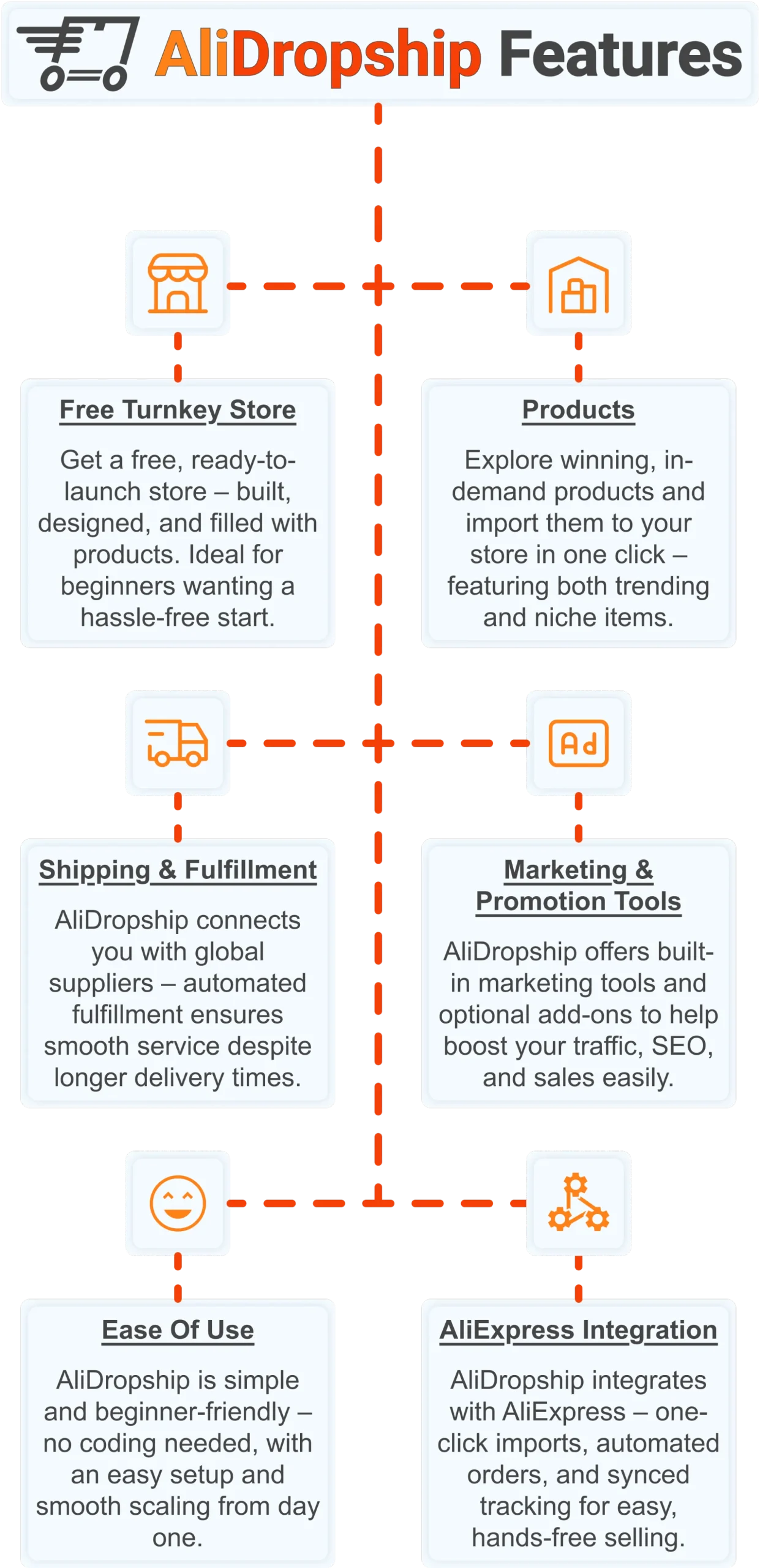
Get a free turnkey store – built, designed, and filled with products. Ideal for beginners wanting a hassle-free start, the store comes fully optimized to attract customers right away, saving you time on setup. Plus, it includes professional design elements to give your business a polished, trustworthy look from day one. This ready-made foundation makes it easy to move seamlessly into product selection.
Products
Once your store is set up, you can explore winning, in-demand products and import them in one click – featuring both trending and niche items. This wide selection lets you cater to diverse customer interests and test what works best. Regular updates ensure you always have fresh products, keeping your store competitive and relevant. With great products in place, smooth shipping becomes the next essential step.
Shipping & fulfillment
AliDropship connects you with global suppliers, and automated fulfillment ensures seamless order processing despite international delivery times. Customers receive real-time tracking updates, which builds confidence and trust in your store. Once shipping is handled reliably, you can focus on promoting your store and attracting traffic.
Marketing & promotion tools
To maximize sales, AliDropship offers built-in marketing tools and optional add-ons that help boost traffic, SEO, and conversions. From email campaigns and discounts to social media integration, these tools empower you to reach and retain customers without needing prior marketing experience. With promotion strategies in place, managing your business becomes simpler and more efficient.
Ease of use
AliDropship is beginner-friendly – no coding needed, with an intuitive dashboard that guides you through every step. Easy setup and smooth scaling let you expand your store without stress. As your business grows, adding new features, products, and marketing campaigns remains hassle-free, giving you more time to focus on sales.
AliExpress integration
Finally, AliDropship integrates seamlessly with AliExpress, enabling one-click imports, automated orders, and synced tracking. Your inventory stays up-to-date with the latest products and prices, while automated order processing frees you from manual tasks. Combined with the turnkey setup, reliable shipping, and built-in marketing tools, this integration ensures your dropshipping business is fully equipped for growth and success.
If you’re looking for an income stream with more control and faster results than passive investing, dropshipping with AliDropship is one of the most accessible ways to start in 2026. Claim your free store and $100 gift voucher today and see how quickly you can get started.
 Previous post
