 ‧ Agnes Kazaryan ‧
March 16, 2026
‧ Agnes Kazaryan ‧
March 16, 2026  721 ‧
721 ‧
 0
0
Most lists of creative business ideas are full of vague suggestions that sound exciting and pay almost nothing. This one is different. Whether you are looking for a low-cost side hustle or a serious income stream you can scale to full-time, 2026 has more genuinely accessible options than at any point before – and this guide gives you the honest version of each one.
You will find realistic earning ranges, typical timelines, and clear starting points for every idea covered. No fluff, no fake “six figures in 30 days” promises.
Quick Answer: The best creative business ideas in 2026 combine low startup costs with growing online demand. Options like dropshipping, print-on-demand, digital products, and content creation are all accessible to beginners and can generate $500–$3,000/month within 6–12 months of consistent effort.
What counts as a creative business idea?
A creative business is any venture that uses imagination, original thinking, or artistic skill to deliver something people are willing to pay for. That definition is broader than it sounds.
It covers the obvious stuff – handmade jewellery, photography, illustration – but it also includes things like curating a niche product collection for an online store, building a YouTube channel around a hobby, designing digital downloads, or crafting a brand aesthetic that turns a generic dropshipping store into something people actually remember.
What makes creative business ideas especially worth pursuing in 2026 is the infrastructure that now exists around them. Platforms like Etsy and Shopify give you a global customer base without a physical storefront. Tools like AI-assisted design, print-on-demand services, and automated ecommerce remove the production bottleneck that used to keep creative businesses small. And social media turns your process and personality into free marketing.
Global ecommerce revenue is projected to keep climbing past $6 trillion – and creative sellers who understand their niche and build a consistent online presence are well-positioned to capture a meaningful slice of that.
Why this works in 2026: Lower barriers to entry, global reach, and continued growth in remote shopping mean the ceiling for creative businesses has never been higher – and the floor has never been lower.
How much can you realistically earn from a creative business?
Earnings vary significantly depending on the model you choose, how much time you invest, and how quickly you find your audience. The table below gives you a realistic comparison across the most common creative business types.
These are realistic ranges, not guaranteed outcomes. Most creative businesses take 60–90 days before generating their first meaningful revenue, and 6–12 months before reaching consistent monthly income. The upper figures reflect what is achievable with sustained effort – not what a typical first month looks like.
One note on the ceiling figures: Getting to the top end of any range requires either full-time dedication or an established audience. Start with realistic expectations and build from there – consistency over time is what actually drives those numbers.
The best creative business ideas to start in 2026
Below you will find the most viable creative business ideas available right now, grouped by type. Each one includes a breakdown of what it involves, how to start, and what you can realistically expect to earn.
Online product businesses
Dropshipping
Dropshipping is one of the most accessible creative business ideas for beginners because it requires no inventory, no warehouse, and no upfront stock purchase. You set up an online store, list products from a supplier, and when a customer orders, the supplier ships directly to them. Your job is curation, marketing, and customer experience.
The creative element here is real. Choosing the right niche, building a brand aesthetic around it, and crafting product pages that convert – that is where imagination pays off. Stores built around a specific visual identity (think minimalist home decor, cottagecore accessories, or outdoor adventure gear) consistently outperform generic catch-all shops.
Getting started is straightforward with a platform like AliDropship, which connects your store to AliExpress suppliers and automates order processing. A well-run niche dropshipping store can generate $500–$3,000/month within the first 6 months.
Earning potential: $500–$5,000+/month with a focused niche and consistent marketing effort.
Print-on-demand
Print-on-demand (POD) lets you sell custom-designed products – t-shirts, mugs, tote bags, phone cases, wall art – without holding any stock. You upload your designs to a platform like Printful or Printify, connect it to your store or Etsy shop, and they handle printing and fulfilment every time someone orders.
The barrier to entry is low: you need design skills or a tool like Canva, a clear niche audience, and some basic marketing. The challenge is standing out. Sellers who go tight on their niche – dog breed owners, teachers, specific hobby communities – convert far better than those targeting broad generic themes.
Most POD sellers earn $100–$800/month in their first year, with top performers in established niches reaching $1,500+/month by year two.
Earning potential: $100–$1,500/month depending on design quality, niche selection, and number of active listings.
Etsy shop (handmade or vintage)
Etsy remains one of the strongest platforms for creative business ideas rooted in making physical products. Jewellery, candles, ceramics, stationery, wedding decor, and personalised gifts all sell consistently well. The platform has over 90 million active buyers and search intent is high – people arrive ready to spend.
The downside is that making physical products does not scale easily. Many successful Etsy sellers cap out at $1,000–$2,000/month before hitting a production ceiling. To go further, you either hire help, outsource production, or pivot to digital products or print-on-demand through the same shop.
Earning potential: $200–$2,500/month for a well-reviewed shop with 30–50+ active listings and strong product photography.
Digital and content-based businesses
Selling digital products
Digital products – templates, presets, printables, ebooks, courses, planners – are one of the best creative business ideas for people who want passive income. You create the product once and sell it indefinitely with no fulfilment costs. Platforms like Gumroad, Etsy Digital, and your own website all work as storefronts.
The most successful digital product sellers are highly specific about who they serve. A Notion template built for freelance designers sells better than a generic productivity template. A Lightroom preset pack for golden-hour portraits outperforms a general “photography presets” bundle. Niche down, price fairly (the $7–$47 range is the sweet spot for most digital downloads), and build an email list early.
Earning potential: $200–$3,000/month once you have 10–20 products live and a consistent traffic source driving buyers to them.
Content creation (YouTube, TikTok, blogging)
Content creation is slower to monetise than most lists admit. On YouTube, you need 1,000 subscribers and 4,000 watch hours before AdSense activates. On TikTok, the Creator Fund pays very little per view. The real money in content creation comes from sponsorships, affiliate commissions, and selling your own products once you have an audience.
That said, it genuinely compounds over time. A niche blog with solid SEO can earn $500–$2,000/month in affiliate commissions after 12–18 months of consistent publishing. A YouTube channel in the right niche (personal finance, tech reviews, DIY, cooking) can generate $1,000–$4,000/month once it crosses 50,000–100,000 subscribers.
Why this works in 2026: Audiences increasingly trust individual creators over brands. A genuine niche voice with consistent output builds a loyal following that converts at a higher rate than most paid advertising.
Earning potential: $300–$4,000/month at the 12–24 month mark, with meaningful income typically starting around month 9–12.
Freelance graphic design or photography
If you already have a design or photography skill, freelancing is one of the fastest ways to generate income from a creative business. Platforms like Upwork, Fiverr, and 99designs connect you to clients quickly, and local businesses – restaurants, real estate agents, small retailers – consistently need visual content.
Rates vary by experience and specialisation. A beginner designer on Fiverr might charge $25–$50 per logo. An experienced brand identity designer working with established businesses can charge $500–$2,000 per project. The key to scaling past the hourly ceiling is packaging your services (brand packages, monthly retainer deals) and building a client pipeline through referrals rather than relying on platforms alone.
Earning potential: $1,000–$6,000/month for established freelancers with a portfolio and repeat clients. Beginners can realistically reach $500–$1,000/month within 3–6 months.
Online tutoring or creative workshops
Teaching what you know is a scalable creative business idea, especially online. Platforms like Skillshare, Teachable, and Udemy let you create a course once and earn from it repeatedly. Live workshops via Zoom or in-person sessions command higher rates but require more scheduling effort.
Subject matter can be broad: watercolour painting, calligraphy, home baking, guitar, creative writing, pottery – if there is a community around it, there is a market for learning. The most successful online teachers pair their course with a YouTube channel or Instagram presence that drives students into the paid offering.
Earning potential: $300–$2,500/month for an established course creator with a small but engaged audience.
Lower-competition creative business ideas worth considering
If you want to avoid the most saturated markets, a few creative business ideas sit in niches that are genuinely underserved in 2026.
Niche subscription boxes
Subscription boxes are a strong creative business idea because they combine curation – a genuinely creative skill – with recurring revenue. The key is specificity. A general wellness box competes with hundreds of established brands. A box curated for indoor plant enthusiasts, sourdough bakers, or tabletop gaming fans occupies a far smaller, more loyal niche.
Getting started typically involves sourcing 4–6 products per box, setting up a Shopify or Cratejoy storefront, and building an initial subscriber base through social media and niche communities. With 50–100 subscribers at $25–$40 per box, you are looking at $1,250–$4,000/month in gross revenue before costs.
Important note: Margins on subscription boxes can be tight – factor in product costs, packaging, shipping, and platform fees carefully before projecting net profit.
Upcycling and reselling
Buying secondhand items, restoring or customising them, and reselling at a profit is a genuinely creative business idea with low startup costs. Platforms like eBay, Depop, Vinted, and Facebook Marketplace make it easy to both source and sell. Popular categories include vintage clothing, upcycled furniture, restored electronics, and customised sneakers.
Profitability depends on sourcing ability and the time invested in transformation. Sellers who develop a reliable sourcing route – estate sales, charity shops, local auctions – and a recognisable style or aesthetic can earn $500–$2,000/month working part-time.
Earning potential: $300–$2,000/month part-time, with strong margins on furniture and vintage clothing when sourced well.
Personalised products via ecommerce
Personalisation is one of the strongest trends in online retail right now. People pay a premium for products that feel made specifically for them – custom name necklaces, personalised pet portraits, monogrammed home goods, bespoke wedding stationery. The creative business idea here is to pick one personalised product category, master production (or outsource it), and build a focused brand around it.
Combining personalisation with a dropshipping model – using suppliers who offer custom engraving or printing on demand – removes the production bottleneck and lets you scale without a workshop of your own.
Why this works in 2026: Gift-giving occasions drive high-intent buyers to personalised products year-round. Search volume for personalised gifts peaks reliably at Valentine’s Day, Mother’s Day, and Christmas – three predictable revenue spikes per year.
Legal and ethical considerations for creative businesses
Most creative business ideas are entirely above board, but there are a few areas where people run into trouble – usually by accident rather than bad intent.
Intellectual property and copyright
If you are selling designs, the most common legal pitfall is using copyrighted or trademarked material without permission. Fan art, brand quotes, sports team logos, and popular characters all carry IP restrictions. Selling a product featuring a trademarked character without a licence is copyright infringement – even if you created the artwork yourself from scratch.
Key principle: If you did not create the original source material and do not hold a commercial licence to use it, do not put it on a product for sale.
Stick to original designs, licensed graphics from reputable sources (Creative Market, Adobe Stock with a commercial licence), or public domain artwork. When in doubt, check before you list.
Misleading claims and fake reviews
Whether you are selling handmade products, courses, or physical goods, honest representation is both legally required and commercially smart. Misrepresenting what a product is made from, where it ships from, or what results a course delivers can lead to chargebacks, platform bans, and in some jurisdictions, regulatory action.
Fake reviews carry similar risks. Platforms like Etsy, Amazon, and Trustpilot actively police review manipulation. Getting caught typically results in listing removal or permanent account suspension – far more damaging than any short-term boost a few dishonest five-star ratings might bring.
Important: Earn reviews legitimately by following up with buyers, making the process easy, and delivering a product that matches or exceeds what you promised.
Business registration and tax
Once your creative business starts generating consistent income, you will likely need to register as a sole trader or limited company (requirements vary by country) and declare your earnings. Many first-time sellers underestimate this step and face problems later.
The practical advice: open a separate bank account for business income from day one, keep records of every sale and expense, and consult a local accountant once you are earning $500+/month consistently. The admin is straightforward once you set it up – it is the ignoring it that creates problems.
How to choose the right creative business idea for you
Not every creative business idea is the right fit for every person. The best choice depends on your existing skills, available time, starting budget, and income goal. Here is a quick breakdown by reader profile.
Complete beginner
If you are starting from zero – no existing audience, no established skill, limited budget – the lowest-risk starting point is dropshipping or print-on-demand. Both require no upfront inventory investment, have clear platform support, and let you test product ideas quickly without financial exposure. A tool like AliDropship removes most of the technical setup so you can focus on finding what sells.
Expect 60–90 days before your first sale, and 4–6 months before consistent monthly revenue. That is normal – not a sign something is wrong.
Intermediate / part-time
If you already have some online experience, a small social following, or a creative skill you have been monetising informally, you are ready to layer income streams. A dropshipping store pairs well with a content channel – the channel drives organic traffic, the store converts it. Digital products fit naturally alongside freelance work, turning your expertise into passive income alongside your active client earnings.
Advanced / full-time goal
If your goal is replacing a full-time income within 12 months, focus matters more than variety. Pick one channel – likely dropshipping or a productised freelance service – and go deep rather than wide. Build systems early: email list, social presence, repeat customer incentives. Full-time ecommerce income ($3,000–$6,000+/month net) is achievable but requires treating the business like a business from the start.
The creative businesses that reach this level share a common trait: they committed to one model long enough to learn what actually drives their growth, rather than chasing the next trend every few months.
AliDropship: Your complete all-in-one solution for starting dropshipping in 2026
If you want the simplest possible way to start dropshipping – especially if you’re brand new – AliDropship remains one of the most beginner-friendly tools available in 2026. It brings together store creation, product imports, automation, and marketing into a single streamlined system designed to help you launch quickly and grow confidently.
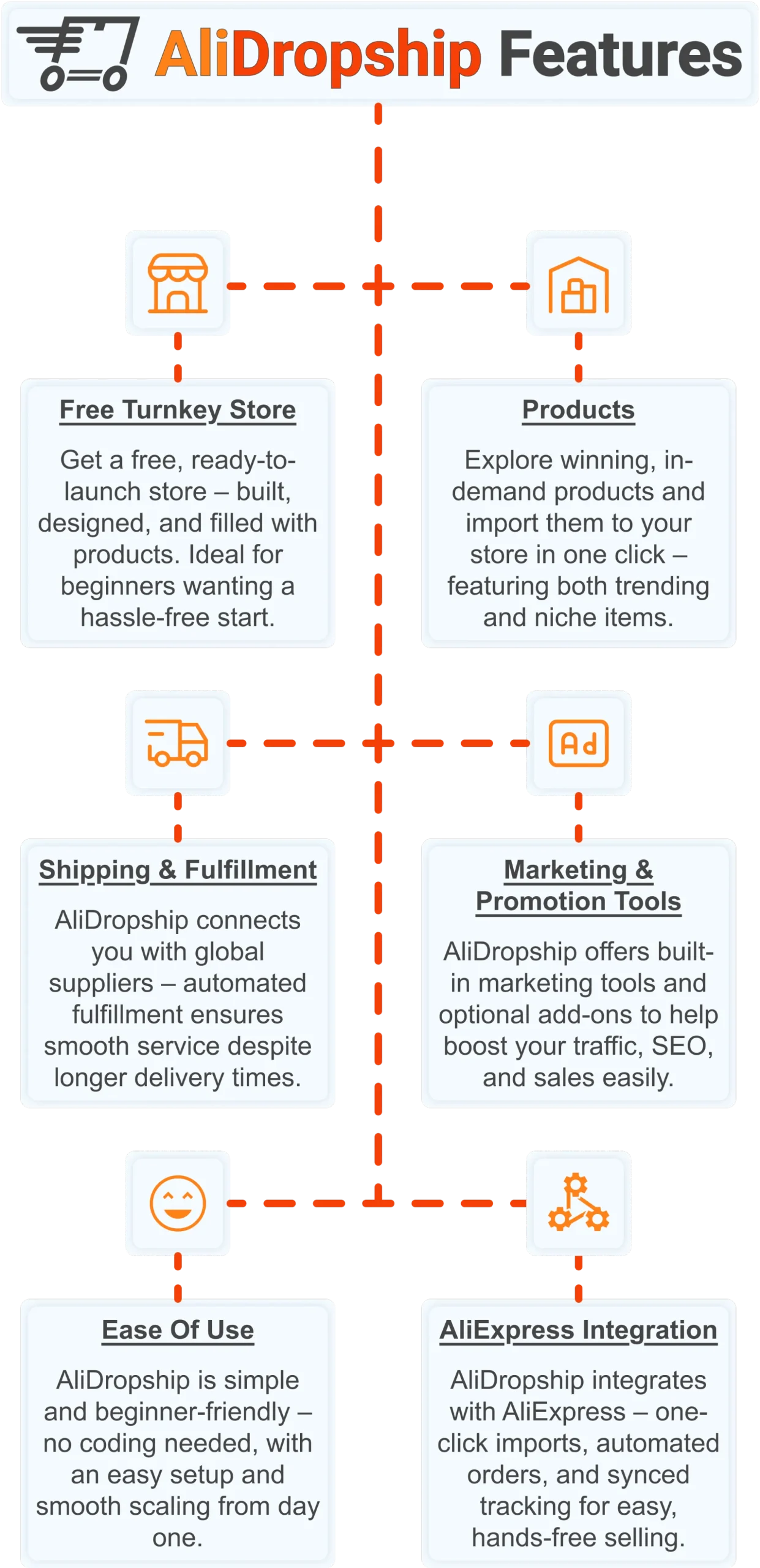
Free turnkey store ️
Get a free turnkey store – built, designed, and filled with products. Ideal for beginners wanting a hassle-free start, the store comes fully optimized to attract customers right away, saving you time on setup. Plus, it includes professional design elements to give your business a polished, trustworthy look from day one. This ready-made foundation makes it easy to move seamlessly into product selection.
Products
Once your store is set up, you can explore winning, in-demand products and import them in one click – featuring both trending and niche items. This wide selection lets you cater to diverse customer interests and test what works best. Regular updates ensure you always have fresh products, keeping your store competitive and relevant. With great products in place, smooth shipping becomes the next essential step.
Shipping & fulfillment
AliDropship connects you with global suppliers, and automated fulfillment ensures seamless order processing despite international delivery times. Customers receive real-time tracking updates, which builds confidence and trust in your store. Once shipping is handled reliably, you can focus on promoting your store and attracting traffic.
Marketing & promotion tools
To maximize sales, AliDropship offers built-in marketing tools and optional add-ons that help boost traffic, SEO, and conversions. From email campaigns and discounts to social media integration, these tools empower you to reach and retain customers without needing prior marketing experience. With promotion strategies in place, managing your business becomes simpler and more efficient.
Ease of use
AliDropship is beginner-friendly – no coding needed, with an intuitive dashboard that guides you through every step. Easy setup and smooth scaling let you expand your store without stress. As your business grows, adding new features, products, and marketing campaigns remains hassle-free, giving you more time to focus on sales.
AliExpress integration
Finally, AliDropship integrates seamlessly with AliExpress, enabling one-click imports, automated orders, and synced tracking. Your inventory stays up-to-date with the latest products and prices, while automated order processing frees you from manual tasks. Combined with the turnkey setup, reliable shipping, and built-in marketing tools, this integration ensures your dropshipping business is fully equipped for growth and success.
Of all the creative business ideas in this guide, dropshipping with AliDropship offers the clearest path from zero to first sale – with the lowest barrier to entry and the best ceiling for growth. Get your free turnkey store and a $100 voucher to start building your creative business today.
Frequently Asked Questions
What are the most profitable creative business ideas in 2026?
Dropshipping and freelance design or photography tend to offer the highest earning ceilings among creative business ideas. A dropshipping store can generate 500 to 5000 or more per month with a focused niche and consistent marketing. Established freelance designers can charge 500 to 2000 per project once they build a portfolio. Content creation can reach 300 to 4000 per month, though this typically takes 12 to 24 months to develop.
How much can you realistically earn from a creative business?
Earnings depend heavily on the business model chosen and the time invested. Etsy handmade shops typically earn 200 to 2500 per month with 30 to 50 active listings. Digital product sellers can reach 200 to 3000 per month once they have 10 to 20 products live. Most creative businesses take 60 to 90 days to generate their first meaningful revenue.
Is print on demand a good creative business idea for beginners?
Print on demand is one of the more accessible creative business ideas because it requires no inventory and a low barrier to entry. Sellers upload designs to a platform like Printful or Printify, which then handles printing and fulfilment for every order. Most print on demand sellers earn 100 to 800 per month in their first year. Top performers in established niches can reach 1500 or more per month by year two.
What legal issues should creative business owners avoid?
The most common legal pitfall is using copyrighted or trademarked material without a commercial licence, even on original artwork. Selling a product featuring a trademarked character without permission counts as copyright infringement. Fake reviews are also actively policed by platforms like Etsy and Amazon, and getting caught can result in permanent account suspension. Business owners are advised to consult a local accountant once they are earning 500 or more per month consistently.
Which creative business idea is best for a complete beginner?
Dropshipping or print on demand are generally the lowest risk starting points for a complete beginner with no existing audience or budget. Both models require no upfront inventory investment and let sellers test product ideas without financial exposure. A typical beginner should expect 60 to 90 days before their first sale. Consistent monthly revenue usually follows within 4 to 6 months of steady effort.
 Previous post
