 ‧ Agnes Kazaryan ‧
March 23, 2026
‧ Agnes Kazaryan ‧
March 23, 2026  792 ‧
792 ‧
 0
0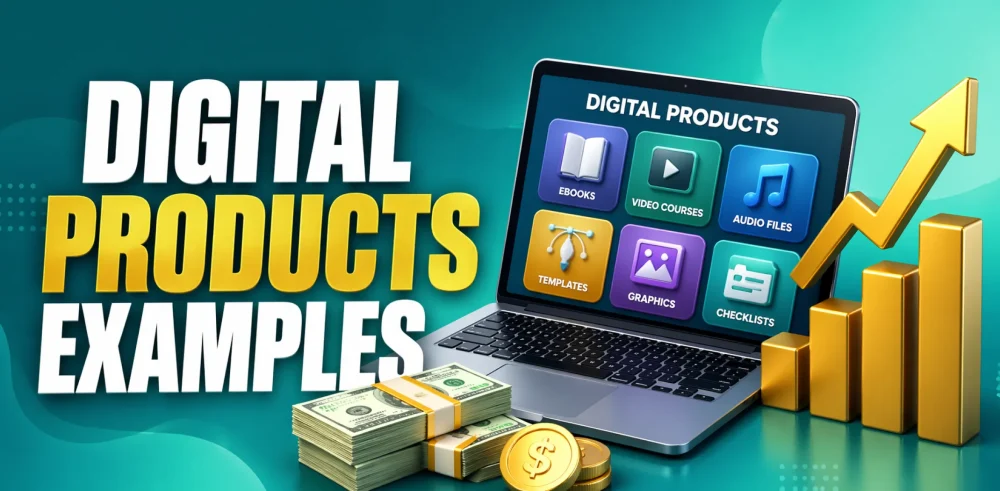
The global digital products market is on track to approach $920 billion by 2033 – and the sellers moving early are already capturing a meaningful share of that growth. If you have been wondering what digital products actually look like in practice, which ones earn real money, and how ordinary people are building income from them, this guide covers all of it.
Quick answer: Digital products are intangible goods delivered as files or access links – ebooks, online courses, templates, software, music, digital art, and more. They cost almost nothing to reproduce and can be sold to anyone in the world from a single store, repeatedly, with no extra effort per sale.
Below, you will find a breakdown of the most profitable digital products examples in 2026, honest earning figures, and a clear path to getting started – whether you want to create your own products or sell ready-made ones without doing any of the creation work yourself.
What are digital products?
A digital product is any item created, stored, and delivered in a digital format. There is no warehouse, no packing tape, no shipping label. The buyer pays, a file or access link arrives automatically, and the transaction is done – often within seconds.
The category is much broader than most people realize. It spans everything from a five-page PDF checklist to a $2,000 video course, from a pack of Lightroom presets to a full software subscription. What all digital products share is that they can be sold an unlimited number of times without any additional production cost. The margin on the hundredth sale is identical to the margin on the first. That is the core reason the model is so attractive.
In 2026, digital products have also become far more accessible to sell. You do not need to build a product yourself to enter this market. Platforms now offer ready-made catalogs of digital guides, templates, and resources that you can list in your own store immediately – the creation barrier has essentially been removed for sellers who want to start fast.
How much can you realistically earn?
Earnings in this space vary widely depending on what you sell, how you market it, and whether you created the products yourself or are reselling them. Here is an honest overview of what different approaches look like in practice.
The table shows wide ranges because digital product income is not linear – it compounds. A well-positioned ebook store earning $300/month in month two can reach $2,000/month by month six with consistent SEO and email traffic. The reselling model tends to grow faster because you are not bottlenecked by content creation time.
One note on the ceiling figures: The top-end numbers reflect sellers who have built an audience over 12–24 months and are running paid traffic alongside organic channels. Realistic first-year earnings for a new store sit between $200 and $1,500/month depending on niche selection and how much time you invest in promotion. Treat any figure above $2,000/month as a 60–90 day minimum to reach, not a starting point.
The best digital products examples in 2026
This is the section most people come here for. Below are the top categories of digital products with real-world examples, earning context, and an honest take on who each type suits best. Products are grouped by type to make it easier to spot where your own skills or interests might fit.
Information and education products
This is the largest and most established category. People pay for packaged knowledge because it saves them time, mistakes, and confusion. The format matters less than the outcome – buyers want a result, not just a reading experience.
Ebooks and PDF guides
Ebooks remain one of the most accessible digital products examples for beginners. They are relatively quick to produce, easy to price between $7 and $49, and sell well in niches like personal finance, fitness, self-improvement, and business skills. A focused 30–60 page ebook that solves one specific problem consistently outperforms a 200-page comprehensive guide – buyers want the shortcut, not the textbook.
Real example: food bloggers regularly turn their most popular recipes into downloadable cookbooks priced at $12–$25. These sell repeatedly with zero additional effort after the initial upload.
Earning potential: $200–$1,500/month with consistent SEO traffic and a small email list.
Online courses
Online courses are among the highest-earning digital products when executed well. Platforms like Teachable and Thinkific have made hosting straightforward, but the real challenge is positioning. In 2026, short and specific courses consistently outperform long, comprehensive ones. A course with a clear outcome and timeline – like launching your first store in 14 days – will outsell a broad introduction to ecommerce by a wide margin.
Startup costs typically run $100–$500 for a decent microphone, screen recording software, and a hosting plan. A well-positioned course in a business or tech niche can reach $1,000–$10,000/month once traffic systems are in place.
Earning potential: $500–$10,000/month depending on niche authority and marketing investment.
Workbooks and digital worksheets
Workbooks are the interactive cousin of ebooks. Instead of reading-only content, buyers fill them in – goal-setting workbooks, business planning worksheets, habit trackers with guided prompts. These sell particularly well in coaching, therapy, and personal development niches. They are also one of the easiest digital product types to create since the design can be done in Canva and the content is structured as guided questions rather than long-form writing.
Earning potential: $100–$800/month as a standalone product, significantly more when bundled with a course or membership.
Templates and design assets
Templates are one of the fastest-moving digital product categories right now because buyers want a done-for-you starting point, not a blank canvas. Designers, marketers, and small business owners consistently pay for templates that save them hours of work.
Notion and productivity templates
Notion templates are among the best-performing digital products examples on marketplaces like Gumroad and Etsy. Business owners use them to replace messy spreadsheets, manage projects, track content calendars, and organize client work. A well-designed Notion template can be built in under a week and priced anywhere from $9 to $49. Bundles of five to ten templates consistently outperform single-template listings.
Why this works in 2026: Notion’s user base has grown dramatically among freelancers and small teams, and the demand for plug-and-play organization systems is outpacing supply in most niches.
Social media templates
Instagram post packs, Pinterest pin templates, and YouTube thumbnail bundles are in constant demand because content creators need to publish consistently without spending hours on design each time. Platforms like Creative Market and Etsy are the primary sales channels, though a standalone store with good SEO can build solid recurring revenue too. Pricing typically runs $15–$45 for a pack of 20–30 templates.
Earning potential: $300–$2,500/month for a focused template shop with regular new releases.
Resume and business document templates
Resume templates, proposal templates, client contracts, and invoice designs are practical digital products that buyers purchase with clear intent – they need a specific document right now. This category tends to have lower price points ($5–$20) but very high conversion rates because purchase decisions are quick. Etsy is a strong marketplace for resume templates in particular, with top sellers moving hundreds of units per month.
Earning potential: $150–$1,200/month with a well-stocked template store.
Lightroom presets and photo filters
For photographers and visual content creators, Lightroom presets are a natural digital product. A set of 10–20 presets sells for $15–$60 and can be marketed through Instagram or Pinterest with before-and-after visuals. Sellers who build a recognizable editing style often develop a loyal following that buys every new release.
Earning potential: $200–$3,000/month for creators with an established visual brand.
Audio and music digital products
Audio is a consistently underrated digital product category. The barrier to entry is moderate – you need a decent microphone and editing software – but competition is much lower than in the oversaturated ebook or course markets.
Music, beats, and sound effects
Independent musicians sell beats, loops, and instrumental tracks to content creators, podcasters, and video producers. Licensing models vary – a basic license for a beat might sell for $30, while an exclusive license can command $500 or more. Sound effect packs (UI sounds, ambient noise, cinematic effects) sell well on platforms like AudioJungle and directly through creator stores.
Earning potential: $100–$2,000/month depending on catalog size and licensing strategy.
Meditation and guided audio content
Wellness audio – guided meditations, sleep sounds, breathwork sessions – has seen consistent growth as buyers look for accessible mental health tools. A 10-track meditation pack priced at $19–$39 requires a quiet recording space and a clear wellness angle. Niching down matters here: something like “meditation for founders” or “sleep sounds for anxious minds” consistently outperforms generic relaxation content because buyers feel the product was made specifically for them.
Earning potential: $200–$1,500/month with a targeted wellness niche.
Software, tools, and AI-powered products
This category has the highest earning ceiling of all digital products examples – and the highest barrier to entry. If you have development skills or can hire a developer, software products offer recurring subscription revenue that compounds month over month.
Plugins, scripts, and browser extensions
WordPress plugins, Chrome extensions, and automation scripts solve specific pain points for businesses and creators. A plugin that solves one recurring problem for a niche audience – a scheduling tool for coaches, say, or a review importer for ecommerce stores – can earn $1,000–$10,000/month through one-time purchases or monthly subscriptions. The key is tight problem definition. Broad tools compete with established players; niche tools face far less competition.
Earning potential: $500–$15,000+/month for tools with strong product-market fit.
AI prompt packs and toolkits
AI prompt guides are one of the newest and highest-margin digital product types in 2026. Buyers already pay for tools like ChatGPT and Midjourney – they want ready-made prompts that extract better results without trial and error. Prompt packs for marketing copy, image generation, or business automation sell for $15–$79 and require no technical creation skills beyond knowing the tools well. This category is growing fast because the underlying platforms are growing fast.
Why this works in 2026: As AI adoption accelerates across businesses and creative workflows, the demand for ready-to-use prompt systems is outpacing content supply in most niches.
Which type of digital product is right for you?
Every category above has real earning potential, but not every type is the right fit for every seller. Here is a side-by-side look at the main digital products examples by a few key criteria.
The pattern is clear: the faster the launch, the less creation is required. If you have a specific skill set and want to build something unique, ebooks or courses are worth the investment. If you want to start generating revenue quickly without spending weeks on content production, a ready-made digital products store is the most accessible entry point by a significant margin.
Tips for selling digital products successfully
Having a great digital product is only half the equation. How you position, price, and promote it determines whether it earns consistently or sits unnoticed. Here are the practices that separate sellers who grow from those who stall.
Niche down before you scale up
The most common mistake new digital product sellers make is targeting too broadly. A “fitness ebook” competes with thousands of listings. A “12-week strength program for women over 40 who train at home” targets a specific buyer with a specific problem and stands out immediately. Narrowing your niche also makes SEO, social media targeting, and email list building dramatically easier – you know exactly who you are talking to.
Price for value, not effort
Digital products are priced on the outcome they deliver, not the hours you spent creating them. A one-page checklist that saves a buyer three hours of research is worth more than a 100-page PDF full of information they could find for free. Test different price points – many sellers find that moving from $9 to $19 barely affects conversion rate but doubles revenue per sale. Higher-ticket products ($99–$299) often convert better than mid-range items when positioned correctly.
Build an email list from day one
Social media reach is borrowed. An email list is owned. Sellers who build consistent monthly revenue from digital products almost universally cite email as their primary sales channel. A simple lead magnet – a free shorter version of your paid product, a checklist, a mini-guide – placed on your store landing page converts visitors into subscribers you can market to repeatedly without ad spend.
Bundle products to increase average order value
A buyer purchasing a social media template pack is a natural candidate for a content calendar bundle. Offering a bundle at a 20–30% discount compared to buying items individually increases average order value without requiring new traffic. Bundles also reduce the decision fatigue of choosing between individual items, which can lift conversion rates by 15–25% on well-structured stores.
Use SEO to create compounding traffic
Unlike paid ads, SEO traffic builds over time and does not stop when your budget runs out. Targeting long-tail keywords around your product type – “notion template for freelancers,” “keto diet ebook for beginners,” “AI prompt pack for marketers” – attracts buyers who are already searching for exactly what you sell. A single well-ranked article or product page can drive consistent sales for 12–24 months with no ongoing cost.
Pro Tip: Before writing your first piece of SEO content, check what format Google is already ranking for that keyword. If the top results are listicles, write a listicle. Matching the search intent format is often more impactful than the quality of the content itself.
Legal and ethical considerations when selling digital products
The digital products space is legitimate, scalable, and well-regulated – but there are a handful of practices that can get sellers into trouble or damage long-term reputation. Knowing where the lines are saves you from costly mistakes.
Intellectual property and licensing
If you are selling templates, presets, or design assets, everything inside them must be either created by you or properly licensed for commercial use. Using stock images, fonts, or third-party elements without the correct commercial license in a product you sell is an infringement – even if the individual assets are labeled “free.” Always verify the license type before including any third-party asset in a paid product.
Key principle: Anything you sell must be either entirely yours or covered by a commercial-use license that explicitly permits resale in digital products.
Refund policies and buyer expectations
Because digital products are delivered instantly and cannot be “returned,” many sellers opt for a no-refund policy. This is legally permissible in most jurisdictions, but it creates friction with buyers. A more practical approach is a limited 14-day satisfaction guarantee with a clear request process. This increases buyer confidence, reduces chargebacks, and rarely results in more actual refunds – most buyers who have already downloaded a product simply do not request one.
Misleading income claims
If your digital product is an ebook or course about making money online, regulators in the US (FTC) and equivalent bodies elsewhere require that income claims be substantiated and that atypical results be disclosed. Phrases like “earn $10,000 per month following this simple system” without qualification are a regulatory red flag. Use real ranges, disclose that results vary, and back up specific figures with real data.
Important: Fabricated testimonials or income screenshots are not only unethical – they are a violation of consumer protection law in most markets. Build trust through real reviews, community feedback, and transparent positioning.
How to choose your approach – by reader profile
The right answer depends on where you are starting from and what you want the next 6–12 months to look like. Here is a practical breakdown by situation.
Complete beginner
If you are new to selling online and have no existing audience or product, the fastest path is a ready-made digital products store. You skip the creation phase entirely, launch in days rather than months, and learn the mechanics of driving traffic and converting buyers before investing time in building your own products. A store loaded with ready-made digital guides across multiple niches gives you immediate breadth and the data to figure out what your specific audience responds to.
Intermediate seller with some audience
If you already have a blog, YouTube channel, newsletter, or social following – even a small one – you are in a strong position to launch a focused digital product. A single ebook or template pack in your niche, priced at $19–$49, offered to your existing audience is often enough to generate $500–$2,000 in the first 30 days. From there, build out the catalog based on what buyers actually ask for.
Advanced seller targeting full-time income
At this level, the strategy shifts toward compounding assets: an evergreen course funnel, a membership site with recurring revenue, or a software tool with subscription pricing. These take 6–18 months to build to meaningful scale but generate income that does not require proportional time input once established. The digital products examples with the highest ceiling – software, premium courses, high-ticket coaching paired with digital resources – all live in this tier.
Wherever you are in that progression, the common thread is this: the digital products market in 2026 rewards speed of entry more than perfection of product. Sellers who start with something imperfect and iterate consistently outperform those who wait for ideal conditions.
Frequently asked questions
What are digital products and why are they profitable to sell?
Digital products are intangible goods delivered as files or access links, such as ebooks, online courses, templates, and software. The global digital products market is on track to approach 920 billion dollars by 2033. What all digital products share is that they can be sold an unlimited number of times without additional production cost, so the margin on the hundredth sale equals the margin on the first. Platforms now offer ready-made catalogs of digital guides and templates, removing the creation barrier for sellers who want to start fast.
How much can you realistically earn selling digital products?
Ebooks and PDF guides typically earn 200 to 2000 dollars per month with consistent marketing. Online courses have the highest ceiling among content-based products at 500 to 10000 dollars or more per month. Reselling ready-made digital guides can generate 300 to 5000 dollars or more monthly and tends to grow faster since sellers are not bottlenecked by content creation time. Realistic first-year earnings for a new store sit between 200 and 1500 dollars per month depending on niche selection and promotion effort.
What are the best digital product examples to sell in 2026?
Ebooks price well between 7 and 49 dollars, with a focused 30 to 60 page guide typically outperforming a 200 page comprehensive one. Notion templates can be built in under a week and priced from 9 to 49 dollars, with bundles of five to ten templates outperforming single listings. AI prompt packs sell for 15 to 79 dollars and require no technical creation skills beyond knowing the underlying tools well. Software plugins that solve one recurring problem can earn 1000 to 10000 dollars or more per month through one-time purchases or subscriptions.
What tips help digital product sellers grow their revenue?
Niching down dramatically improves SEO, social targeting, and email list building compared to broad, generic products. Testing different price points matters, since moving from 9 to 19 dollars often barely affects conversion rate but doubles revenue per sale. Bundling products at a 20 to 30 percent discount compared to individual pricing increases average order value and can lift conversion rates by 15 to 25 percent. Building an email list from day one gives sellers an owned channel they can market to repeatedly without ad spend.
What legal considerations apply to selling digital products?
Anything included in a template, preset, or design asset must be either created by the seller or properly licensed for commercial resale, even if individual elements are labeled free. A limited 14-day satisfaction guarantee is a more practical approach than a strict no-refund policy, since it increases buyer confidence without significantly raising actual refund requests. If a digital product is about making money online, the FTC and equivalent regulators require that income claims be substantiated and that atypical results be disclosed. Fabricated testimonials or income screenshots violate consumer protection law in most markets.
AliDropship: Your complete all-in-one solution for starting dropshipping in 2026
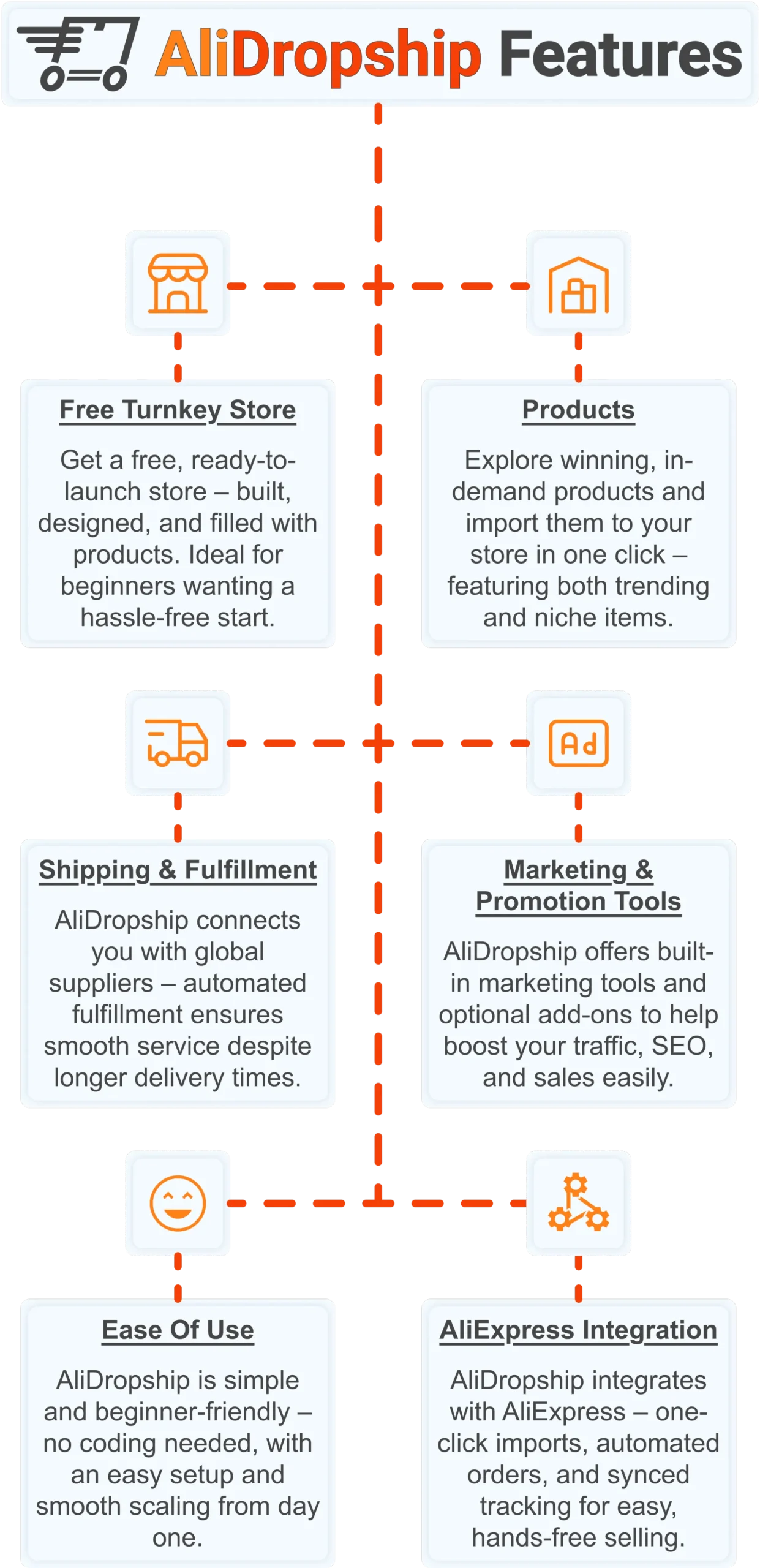
If you want the simplest possible way to start dropshipping – especially if you’re brand new – AliDropship remains one of the most beginner-friendly tools available in 2026. It brings together store creation, product imports, automation, and marketing into a single streamlined system designed to help you launch quickly and grow confidently.
Free turnkey store ️
Get a free turnkey store – built, designed, and filled with products. Ideal for beginners wanting a hassle-free start, the store comes fully optimized to attract customers right away, saving you time on setup. Plus, it includes professional design elements to give your business a polished, trustworthy look from day one. This ready-made foundation makes it easy to move seamlessly into product selection.
Products
Once your store is set up, you can explore winning, in-demand products and import them in one click – featuring both trending and niche items. This wide selection lets you cater to diverse customer interests and test what works best. Regular updates ensure you always have fresh products, keeping your store competitive and relevant. With great products in place, smooth shipping becomes the next essential step.
Shipping & fulfillment
AliDropship connects you with global suppliers, and automated fulfillment ensures seamless order processing despite international delivery times. Customers receive real-time tracking updates, which builds confidence and trust in your store. Once shipping is handled reliably, you can focus on promoting your store and attracting traffic.
Marketing & promotion tools
To maximize sales, AliDropship offers built-in marketing tools and optional add-ons that help boost traffic, SEO, and conversions. From email campaigns and discounts to social media integration, these tools empower you to reach and retain customers without needing prior marketing experience. With promotion strategies in place, managing your business becomes simpler and more efficient.
Ease of use
AliDropship is beginner-friendly – no coding needed, with an intuitive dashboard that guides you through every step. Easy setup and smooth scaling let you expand your store without stress. As your business grows, adding new features, products, and marketing campaigns remains hassle-free, giving you more time to focus on sales.
AliExpress integration
Finally, AliDropship integrates seamlessly with AliExpress, enabling one-click imports, automated orders, and synced tracking. Your inventory stays up-to-date with the latest products and prices, while automated order processing frees you from manual tasks. Combined with the turnkey setup, reliable shipping, and built-in marketing tools, this integration ensures your dropshipping business is fully equipped for growth and success.
Digital products are one of the smartest income opportunities in ecommerce right now – and AliDropship gives you the fastest path in. Get your free store and start selling digital products today.
 Previous post
