 ‧ Agnes Kazaryan ‧
March 17, 2026
‧ Agnes Kazaryan ‧
March 17, 2026  653 ‧
653 ‧
 0
0
More people than ever are turning hands-on skills into real income. According to a 2024 Etsy report, the platform had over 9 million active sellers worldwide – and a huge chunk of them started with nothing more than a spare room, a craft, and a willingness to try. If you have been searching for DIY business ideas that are actually worth your time, you are in the right place.
Quick answer: The best DIY business ideas in 2026 include handmade product selling, print-on-demand, home services, digital downloads, and dropshipping. Depending on your effort level and chosen model, realistic monthly earnings range from $200 to $5,000+ with consistent work over 60–120 days.
This guide breaks down the most practical options available right now, what each one realistically pays, and how to get started without spending a fortune. Whether you are looking for a weekend side hustle or a path to full-time income, there is something here that fits your situation.
What are DIY business ideas?
DIY business ideas are ventures where you build, create, or deliver something largely through your own skills and effort – without needing a massive upfront investment or a team behind you. The “do it yourself” element matters because it keeps startup costs low and gives you direct control over what you are selling from day one.
In 2026, the DIY business space has expanded well beyond craft fairs and Etsy shops. Makers are selling digital templates, running subscription boxes, offering local services, teaching skills online, and building ecommerce stores stocked with products they curate themselves. The common thread is that you are the engine – and that is a genuine advantage when you are starting with limited capital.
Consumer interest in handmade, independent, and small-batch products is at a genuine high. Google Trends data shows consistent year-on-year growth in searches for “handmade gifts,” “small business,” and “buy from makers.” There is a real market here, and it rewards people who show up consistently and treat their idea like a real business rather than a hobby.
How much can you realistically earn from a DIY business?
Here is an honest look at what different DIY business models typically pay, based on what sellers commonly report in communities like r/Entrepreneur and r/EtsySellers, as well as published platform data.
The ranges above are wide because outcomes vary significantly based on niche, consistency, and marketing. Most sellers do not hit the upper range in their first 90 days. A realistic expectation for a brand-new venture is $200–$800/month within the first 60–90 days, growing from there with consistent effort. “Full-time effort” here means 20–30 hours per week across building, promoting, and customer service.
One note on these figures: Dropshipping has the highest ceiling in this comparison because it removes the production limit that caps handmade and service-based businesses. You do not need to make anything yourself – fulfilment runs automatically while you focus on marketing.
Handmade and craft-based DIY business ideas
If you enjoy making things with your hands, selling handmade products is one of the most accessible DIY business ideas available. The barrier to entry is low, the platforms are established, and buyers genuinely seek out one-of-a-kind items they cannot find in chain stores. Here are the strongest options in this category for 2026.
Handmade jewellery and accessories
Jewellery is consistently one of Etsy’s top-selling categories. You do not need expensive equipment to start – resin casting, wire wrapping, and polymer clay work can all be done for under $100 in materials. The key to standing out is a clear niche: personalised name necklaces, birth flower rings, or minimalist everyday pieces tend to perform well with targeted social media content.
To get started, open an Etsy shop, shoot clean product photos using natural light and a plain background, and aim for 20–30 listings in your first month. Etsy SEO matters here – use specific, descriptive titles like “handmade sterling silver moon ring” rather than vague ones like “silver ring.” The more searchable your listings, the faster you build organic traffic.
Earning potential: $300–$1,500/month within 90 days with consistent listing activity and basic social promotion.
Candles and home fragrance
The home fragrance market has grown significantly since 2020 and shows no sign of slowing. Soy candles, wax melts, and room sprays are popular, repeatable purchases – meaning happy customers come back regularly. Starter kits from suppliers like CandleScience run $50–$150 and give you enough materials to list 15–20 products right away.
Focus on a specific angle: seasonal collections, locally inspired scents, or wellness-focused blends all attract dedicated buyers. Subscription boxes built around candles are also a natural next step once you have an established audience. Instagram and TikTok are the primary discovery channels for this category.
Earning potential: $400–$2,000/month once you have 30+ products listed and a consistent posting rhythm on social media.
Personalised gifts and custom orders
Custom gifts – engraved items, embroidered products, personalised prints – are in constant demand around birthdays, weddings, and holidays. If you own a Cricut, sublimation printer, or laser engraver, you already have a working product line waiting to happen. These tools pay for themselves quickly: a Cricut Maker costs around $350 and can produce items that sell for $15–$60 each.
Platforms like Etsy and Not On The High Street are well suited to this category. Keep your shop focused at launch – do not try to sell 10 different product types simultaneously. Pick one or two and execute them really well before expanding.
Earning potential: $500–$3,000/month during peak seasons with a well-optimised shop and consistent order fulfilment.
Digital and online DIY business ideas
Not every DIY business requires physical materials. Digital products and online services have some of the strongest margins available – you create something once and sell it repeatedly with no inventory, no shipping, and no production cost per unit. These DIY business ideas are especially strong for people starting with limited time or budget.
Selling digital downloads and templates
Canva templates, printable planners, wall art, social media graphics, and spreadsheet tools are all strong-selling digital products. Sellers on Etsy and Gumroad regularly report earning $500–$2,000/month from a small catalogue of well-designed downloads. The upfront work is real, but once a product is live it can sell indefinitely.
The most important factor is solving a specific problem. A “generic planner template” will struggle. A “weekly meal planning template for families of four” has a clear audience and a specific use case. Narrow your focus and your conversion rate will reflect it.
Why this works in 2026: Remote work and the creator economy have driven sustained demand for productivity tools, business templates, and aesthetic digital organisers – and that demand is still growing year on year.
Earning potential: $200–$2,500/month from a catalogue of 20–50 listings, depending on niche and platform traffic.
DIY tutorials and online courses
If you know how to do something well – woodworking, sourdough baking, macrame, electronics repair – there is an audience willing to pay to learn it from you. Platforms like Teachable, Skillshare, and YouTube let you package your knowledge into a sellable product with very little upfront cost.
Start with a free YouTube channel to build an audience, then convert engaged viewers into paid course buyers. A course priced at $49–$97 that sells to just 30 students per month generates $1,470–$2,910 in monthly revenue. That is a realistic target within 6–12 months for someone who posts consistently and engages their community actively.
Earning potential: $300–$4,000/month depending on audience size, pricing, and whether you combine YouTube ad revenue with course sales.
Print-on-demand products
Print-on-demand (POD) lets you design products – t-shirts, mugs, tote bags, phone cases – and sell them without holding any inventory. When a customer orders, the POD supplier prints and ships on your behalf. Platforms like Printful and Printify integrate directly with Etsy or your own store.
Margins are thinner than handmade products (typically $3–$10 per item), so volume matters. The businesses that do well in POD focus tightly on a niche – dog breed lovers, nurses, vintage car fans – and create designs that resonate strongly with that specific group rather than making generic content aimed at everyone.
Earning potential: $100–$1,500/month with a focused niche and 50+ designs live across multiple platforms.
Home services and skill-based DIY business ideas
If you are practically skilled and prefer working in person rather than online, home services are one of the highest-earning categories of DIY business ideas available today. The startup costs are typically low because your tools are likely already paid for – and demand for skilled tradespeople remains strong across most Western markets.
Furniture restoration and upcycling
Buying secondhand furniture, restoring it, and reselling it at a profit is a legitimate small business model with strong demand. A piece bought for $20 at a car boot sale, sanded, painted, and listed on Facebook Marketplace can sell for $120–$300. Skilled restorers who develop a recognisable aesthetic build loyal customer bases and often move into commissions and custom orders over time.
The core skills here are surface preparation, paint technique (chalk paint and milk paint are popular choices), and basic upholstery for sofas and chairs. All of these are learnable from free YouTube tutorials within a few weekends of practice.
Earning potential: $500–$2,500/month flipping 4–10 pieces per month depending on size, complexity, and your local resale market.
Home repair and handyman services
Tradespeople are in genuine short supply across most Western markets right now. If you can confidently handle flat-pack assembly, tiling, painting, minor plumbing fixes, or basic electrical work, there is consistent, well-paid work available. Platforms like TaskRabbit and Checkatrade connect you with local customers quickly, and word-of-mouth referrals tend to build fast once you have a few happy clients behind you.
Rates for handyman work typically run $25–$60/hour depending on your location and the task type. A busy weekend schedule of 10–15 billable hours generates $250–$900 per week without significant overhead costs.
Earning potential: $1,000–$5,000/month with a mix of repeat clients and platform bookings at full-time commitment.
Gardening and outdoor services
Lawn care, planting design, seasonal tidying, and vegetable garden setup are services homeowners consistently outsource. This is a low-equipment-barrier business – a mower, some basic tools, and reliable transport is enough to start. As you grow, adding services like fence painting or patio cleaning increases the revenue you earn per visit.
Local Facebook groups and Nextdoor are effective free marketing channels for this type of work. A single satisfied customer in a close-knit neighbourhood often leads to 3–5 referrals without you doing any additional marketing.
Earning potential: $800–$3,500/month during spring and summer with a regular client base of 10–15 properties.
Legal and ethical considerations for DIY businesses
Running a legitimate small business means understanding a few basics that some new sellers skip – and that can cause real problems down the line. These are not complicated, but they matter.
Register your business properly
In most countries, if you are earning regularly from a business activity, you are legally required to register as a sole trader or small business and declare your income. The threshold varies by country – in the UK it is anything above the personal allowance, in the US you need to file if you earn over $400 from self-employment. Check the rules for your country and register early. It is simpler than most people expect and it protects you legally.
Avoid misleading product claims
Do not overstate what your product does, uses, or contains. This applies especially to anything touching health or skincare – candles with “stress-relieving” claims, for example, can fall under cosmetic or wellness regulations depending on how they are worded. Keep your descriptions accurate and specific rather than making therapeutic or medical-adjacent claims that you cannot back up.
Key principle: The most sustainable DIY businesses are built on honest product quality and genuine customer relationships, not short-term tactics that generate complaints or chargebacks.
Respect intellectual property
A specific risk for craft-based and print-on-demand businesses is using copyrighted characters, logos, fonts, or brand imagery without a licence – which is copyright infringement regardless of how many units you sell. Use royalty-free resources, create your own designs, or purchase proper commercial licences. Etsy regularly removes listings and suspends shops for IP violations.
Important: Fan art of trademarked characters sits in a legal grey area that has resulted in real shop closures. It is not worth the risk when original designs can perform just as well.
Which DIY business idea is right for you?
The honest answer is that the best option depends entirely on your starting point. Here is a practical breakdown by reader profile so you can find the fastest path forward.
Complete beginner with no budget
Start with digital downloads or print-on-demand. Both have near-zero startup costs. Digital downloads on Etsy require only a free design tool like Canva and a few hours of your time. Print-on-demand through Printify or Redbubble is free to set up and requires no stock. Neither option requires you to carry inventory or handle shipping. These are genuinely the lowest-risk entry points for someone starting from scratch.
Someone with practical skills looking for a side income
If you already own tools and have hands-on skills – woodworking, sewing, electronics, garden design – the fastest path to income is usually a service-based business or handmade product selling. You can be earning within your first week rather than waiting for a platform algorithm to discover you. TaskRabbit, local Facebook groups, and Etsy are your fastest channels to first sale.
Intermediate seller ready to scale
If you already have an Etsy shop or service business and want to grow beyond what your hands and hours allow, this is exactly when ecommerce and dropshipping become relevant. They complement your existing work by giving you a scalable channel that does not depend on your production time. Many successful dropshippers started as Etsy sellers or craftspeople who hit a natural ceiling and needed a model that could grow without them.
Full-time income goal
To replace a salary, you almost always need either a combination of income streams or a business model with genuine scale. Dropshipping is the most realistic path to a full-time online income for someone without significant capital or a manufacturing background. With the right niche, a well-built store, and consistent marketing, $3,000–$8,000/month is achievable within 6–12 months of focused work. That is not a guarantee – it requires real effort – but it is a realistic target that thousands of sellers reach each year.
The DIY business ideas landscape in 2026 rewards people who are resourceful, consistent, and willing to learn as they go. Whatever your starting point, the tools and platforms available today make it more accessible than ever before.
AliDropship: Your complete all-in-one solution for starting dropshipping in 2026
If you want the simplest possible way to start dropshipping – especially if you’re brand new – AliDropship remains one of the most beginner-friendly tools available in 2026. It brings together store creation, product imports, automation, and marketing into a single streamlined system designed to help you launch quickly and grow confidently.
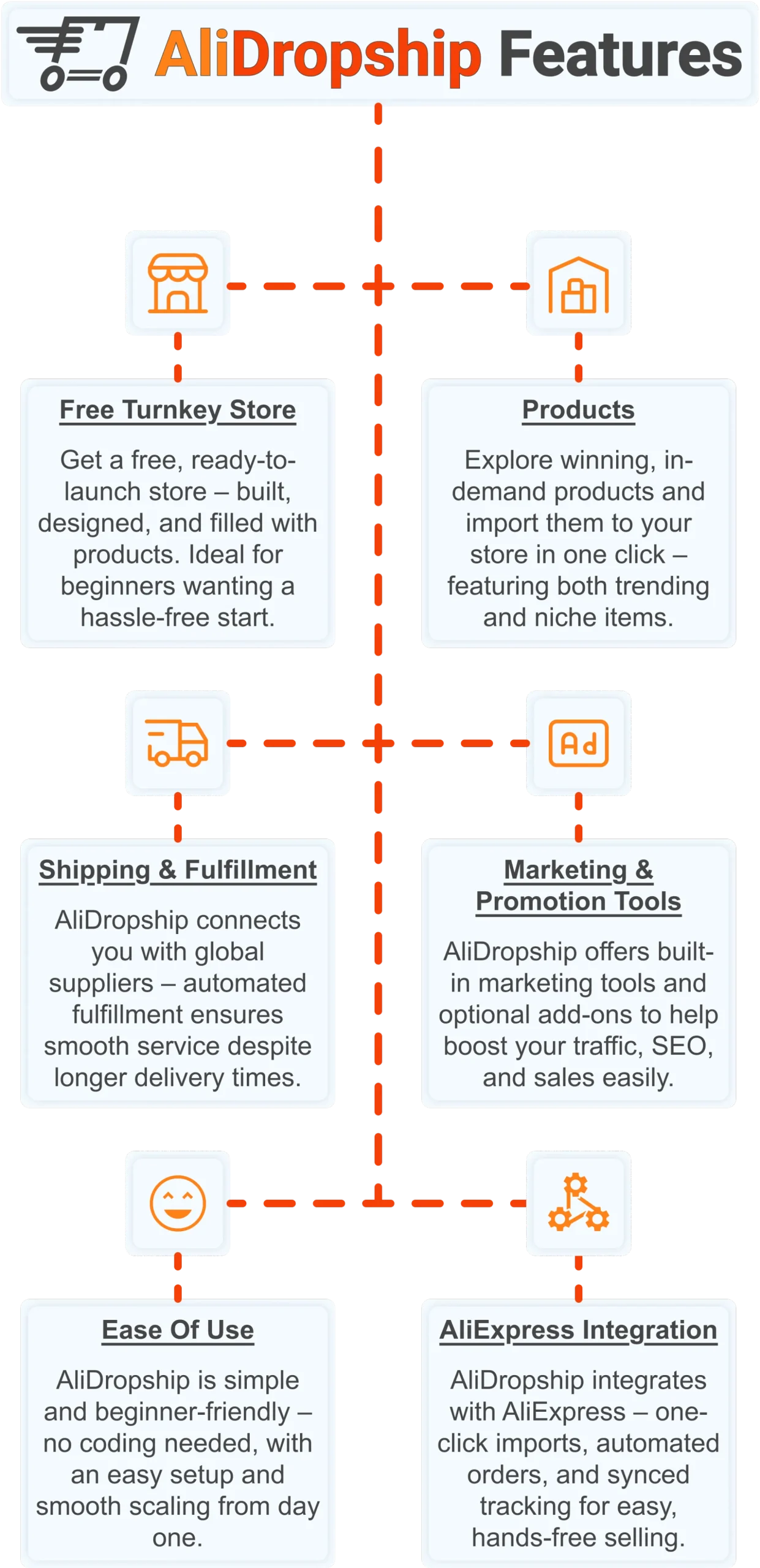
Free turnkey store ️
Get a free turnkey store – built, designed, and filled with products. Ideal for beginners wanting a hassle-free start, the store comes fully optimized to attract customers right away, saving you time on setup. Plus, it includes professional design elements to give your business a polished, trustworthy look from day one. This ready-made foundation makes it easy to move seamlessly into product selection.
Products
Once your store is set up, you can explore winning, in-demand products and import them in one click – featuring both trending and niche items. This wide selection lets you cater to diverse customer interests and test what works best. Regular updates ensure you always have fresh products, keeping your store competitive and relevant. With great products in place, smooth shipping becomes the next essential step.
Shipping & fulfillment
AliDropship connects you with global suppliers, and automated fulfillment ensures seamless order processing despite international delivery times. Customers receive real-time tracking updates, which builds confidence and trust in your store. Once shipping is handled reliably, you can focus on promoting your store and attracting traffic.
Marketing & promotion tools
To maximize sales, AliDropship offers built-in marketing tools and optional add-ons that help boost traffic, SEO, and conversions. From email campaigns and discounts to social media integration, these tools empower you to reach and retain customers without needing prior marketing experience. With promotion strategies in place, managing your business becomes simpler and more efficient.
Ease of use
AliDropship is beginner-friendly – no coding needed, with an intuitive dashboard that guides you through every step. Easy setup and smooth scaling let you expand your store without stress. As your business grows, adding new features, products, and marketing campaigns remains hassle-free, giving you more time to focus on sales.
AliExpress integration
Finally, AliDropship integrates seamlessly with AliExpress, enabling one-click imports, automated orders, and synced tracking. Your inventory stays up-to-date with the latest products and prices, while automated order processing frees you from manual tasks. Combined with the turnkey setup, reliable shipping, and built-in marketing tools, this integration ensures your dropshipping business is fully equipped for growth and success.
Of all the DIY business ideas available in 2026, dropshipping with AliDropship gives you the most scalable path from day one. Get your free turnkey store and start building an income that grows beyond your hours.
Frequently Asked Questions
What are the best DIY business ideas to start in 2026?
The best DIY business ideas in 2026 include handmade product selling, print on demand, home services, digital downloads, and dropshipping. Realistic monthly earnings range from 200 to 5,000 or more with consistent work over 60 to 120 days, depending on the model chosen. Etsy alone had over 9 million active sellers worldwide according to a 2024 report, showing strong ongoing demand for handmade and small batch products. Dropshipping tends to have the highest ceiling among these options since it removes the production limit that caps handmade and service based businesses.
How much can you realistically earn from a DIY business?
Earnings vary widely by model, with handmade crafts on Etsy typically generating 300 to 2,000 per month and print on demand generating 100 to 1,500 per month. Home services tend to pay more, ranging from 1,000 to 5,000 per month, while dropshipping can reach 500 to 8,000 or more per month. A realistic expectation for a brand new venture is 200 to 800 per month within the first 60 to 90 days of consistent effort. Full time effort in this context generally means 20 to 30 hours per week across building, promoting, and customer service.
What is the best DIY business idea for a complete beginner with no budget?
Digital downloads and print on demand are the strongest starting points for beginners with no budget, since both have near zero startup costs. Digital downloads on Etsy require only a free design tool like Canva and a few hours of time to create a listing. Print on demand through platforms like Printify or Redbubble is free to set up and requires no stock to be held. Neither option requires carrying inventory or handling shipping, which makes them genuinely low risk entry points.
How much can you earn from print on demand or handmade product sales?
A course or product priced strategically can add up quickly, but handmade jewellery specifically can earn 300 to 1,500 per month within 90 days with consistent listing activity and basic social promotion. Print on demand margins are thinner, typically 3 to 10 per item, so sellers usually need 50 or more designs live across multiple platforms to reach 100 to 1,500 per month. Candles and home fragrance products can generate 400 to 2,000 per month once a seller has 30 or more products listed with a consistent posting rhythm. Personalised gifts and custom orders can reach 500 to 3,000 per month during peak seasons with a well optimised shop.
What legal steps should a DIY business owner take before selling products?
In most countries, earning regularly from a business activity legally requires registering as a sole trader or small business and declaring income. In the United States specifically, a seller must file if they earn over 400 dollars from self employment, while thresholds vary in other countries like the United Kingdom. Sellers should also avoid misleading product claims, particularly for items touching health or skincare, since therapeutic sounding claims can trigger cosmetic or wellness regulations. Respecting intellectual property is equally important, since using copyrighted characters, logos, or brand imagery without a licence is copyright infringement regardless of how many units are sold.
 Previous post
