 ‧ Agnes Kazaryan ‧
March 15, 2026
‧ Agnes Kazaryan ‧
March 15, 2026  530 ‧
530 ‧
 0
0
Over 2.7 billion people bought something online last year. That is more than a third of the entire planet – browsing, clicking, and paying without ever setting foot in a physical store. If you have been wondering how does ecommerce work – what actually happens between a customer clicking “buy” and a parcel arriving at their door – you are in exactly the right place.
The short answer: ecommerce connects a seller’s online store to a payment system that processes the customer’s payment, which then triggers an automated fulfillment process that routes the order to a warehouse or supplier for picking, packing, and shipping – all tracked in real time.
Quick answer: Ecommerce works by listing products on an online storefront, accepting payment through a secure payment gateway, and routing the order to a supplier or warehouse for fulfillment – most of which happens automatically, with no manual input from the seller.
Whether you are trying to understand the mechanics out of curiosity, or you are actively looking to start an online business, this guide walks you through every layer of how ecommerce works – including how dropshipping removes most of the complexity for new sellers.
What is ecommerce and why does it matter in 2026?
Ecommerce – short for electronic commerce – is any commercial transaction carried out over the internet. That covers everything from buying a book on Amazon to purchasing a custom hoodie from a solo seller’s Shopify store. In 2026, it also includes digital products, subscription boxes, wholesale orders, and more.
What makes ecommerce different from traditional retail is automation. In a physical store, humans handle every step. Online, software manages the storefront display, checkout, payment capture, inventory updates, and fulfillment notifications – usually within seconds, and without the seller lifting a finger.
The global ecommerce market is well past $6 trillion annually and still growing. Mobile commerce accounts for the majority of traffic in most markets. Social commerce – buying directly through TikTok, Instagram, or Pinterest – is expanding fast. And with tools like AliDropship making it possible to launch a fully functional online store in a single day, the barrier to entry has never been lower.
How much can you realistically earn from an ecommerce store?
Before diving into the mechanics, it is worth setting honest expectations. Ecommerce can generate serious income – but the range is wide, and results depend heavily on effort, niche selection, and consistency. Here is a realistic breakdown by approach:
Dropshipping is the lowest-friction entry point into ecommerce because you never buy inventory upfront – suppliers ship directly to your customers. Private-label stores offer higher margins but require capital and longer runways to profitability.
One note on these figures: The high end assumes consistent paid traffic, a well-optimized product catalog, and reinvestment of early profits into marketing. Most new store owners earn $30–$80/day within the first 60–90 days if they follow a structured launch process and commit real hours in the early weeks.
The model that consistently gives beginners the fastest path to their first sale is dropshipping – specifically because it removes the two biggest obstacles: inventory costs and fulfillment complexity. The next sections explain exactly how it all works.
How ecommerce works: The core mechanics explained
To understand how ecommerce works at a systems level, you need to follow the journey of a single order – from the moment a customer lands on a product page to the moment a package arrives at their door. Every step involves a distinct piece of technology.
The online storefront
The storefront is the customer-facing layer – the website or app where products are browsed, compared, and added to a cart. In practice, this is built on an ecommerce platform such as WooCommerce, Shopify, or BigCommerce, which handles product listings, search, filtering, and the cart itself.
Product pages
Each product page combines visual assets, written descriptions, pricing, stock status, and a buy button. Search engine optimization matters a lot here – well-structured product pages with keyword-relevant titles and descriptions rank in Google and bring in organic traffic without ad spend.
Navigation and UX
Site structure affects both SEO and conversions. A store with clear category navigation, fast load times, and a mobile-optimized layout converts significantly better than a cluttered or slow alternative. Google’s Core Web Vitals metrics directly affect search rankings, making technical performance a commercial priority, not just a design preference.
The ecommerce payment gateway
When a customer clicks “proceed to checkout,” a payment gateway takes over. This is a service that securely transmits payment data between the customer’s bank and the seller’s merchant account.
How payment gateways work
The customer enters their card details – or selects PayPal, Apple Pay, or Klarna. The gateway encrypts that data and sends it to the card network (Visa, Mastercard). The card network checks the issuing bank for funds. The bank approves or declines. The gateway returns a response to the store in under two seconds. The whole exchange happens invisibly.
Popular payment gateways in 2026
Stripe remains the dominant choice for most ecommerce builds. PayPal adds consumer trust in markets where it is widely used. Klarna and Afterpay handle buy-now-pay-later transactions. For international stores, Adyen supports multi-currency processing across dozens of markets.
Security and compliance
All payment gateways operate under PCI DSS compliance. The seller’s store never stores raw card data – the gateway handles it in a separate, audited environment. For sellers, liability is offloaded to the gateway provider.
Important: Choosing a gateway with strong fraud detection – chargeback protection, 3D Secure, address verification – reduces financial risk significantly for new store owners.
Ecommerce order fulfillment
Once payment clears, the fulfillment process begins. Order fulfillment covers everything between a confirmed payment and a delivered package – picking, packing, labeling, shipping, and tracking.
In-house fulfillment
Larger brands manage their own warehouses, pick-and-pack operations, and carrier relationships. This gives maximum control over packaging and shipping speed, but requires capital, staff, and logistics infrastructure that puts it out of reach for most beginners.
Third-party logistics (3PL)
3PL providers like ShipBob and Amazon FBA store a seller’s inventory and handle fulfillment on their behalf. The seller ships bulk inventory to the 3PL warehouse; the 3PL picks, packs, and ships individual orders as they come in. This scales well but still requires upfront inventory investment and ongoing storage fees.
Dropshipping fulfillment
Dropshipping removes the inventory step entirely. When an order comes in, it is automatically forwarded to a supplier – on AliExpress or a domestic equivalent – who ships the product directly to the customer. The seller never touches the physical product. Margins are lower than private-label, but the capital requirement is near zero.
Why this works in 2026: Suppliers have invested heavily in global logistics infrastructure. Tracked shipping from Asian suppliers routinely delivers to the US and Europe in 10–18 days, with domestic US suppliers offering 3–5 day delivery for buyers who want it faster.
Inventory management and stock syncing
For stores holding inventory, ecommerce platforms sync product quantities in real time – reducing stock levels when an item sells, triggering reorder alerts when stock dips below a threshold, and preventing overselling by disabling the “add to cart” button when inventory hits zero.
For dropshipping stores, inventory management is supplier-side. Tools like AliDropship monitor supplier stock levels and automatically update your store’s listings to reflect availability – so you never accidentally sell a product a supplier has run out of.
Shipping, tracking, and last-mile delivery
After fulfillment comes logistics. Carriers like DHL, FedEx, UPS, and national postal networks handle the physical movement of packages. Most ecommerce platforms integrate with these carriers to auto-generate shipping labels, calculate live rates at checkout, and push tracking numbers to customers via automated email.
Earning potential: Offering tracked shipping with real-time updates is one of the most effective trust signals in ecommerce. Stores that send proactive shipping notifications see lower support volumes and higher repeat-purchase rates – affecting revenue without any additional ad spend.
Types of ecommerce business models
Not all ecommerce businesses are structured the same way. The model you choose determines your cost structure, your fulfillment approach, and how much capital you need to get started.
B2C (business to consumer)
The most common model – a business sells directly to individual shoppers. Amazon, eBay, and the majority of independent Shopify stores operate this way. B2C stores can use any fulfillment method: in-house, 3PL, or dropshipping.
B2B (business to business)
B2B ecommerce handles wholesale transactions between companies. Order values are higher, purchase cycles are longer, and buyers are more research-driven. B2B platforms often offer net payment terms, volume pricing, and custom quote flows not seen in consumer stores.
C2C (consumer to consumer)
Platforms like eBay, Etsy, and Facebook Marketplace enable individuals to sell to other individuals. The platform provides the infrastructure – listings, payments, dispute resolution – and takes a commission on each transaction.
D2C (direct to consumer)
D2C brands manufacture or source their own products and sell directly, bypassing retailers and distributors. This model produces the highest margins and strongest brand loyalty but requires significant upfront investment in product development and brand building.
Dropshipping
Technically a fulfillment method rather than a standalone business model, but dropshipping is distinct enough to treat separately. A dropshipping store is a B2C ecommerce business where the seller never owns inventory – acting as a marketing and customer service layer between the end customer and a third-party supplier. AliDropship was built specifically for this model and automates the most time-consuming parts of running a dropshipping store.
How to set up an online store: The practical steps
Understanding the theory is useful. Understanding the actual steps to launch is better. Here is what the setup process looks like in practice for a new ecommerce business in 2026.
Step 1 – Choose your niche and products
Niche selection is the single most important decision when launching an ecommerce store. A good niche has demonstrable demand (searchable keywords, active buyer communities), manageable competition, and products with healthy margins. Tools like Google Trends and the AliDropship product database help identify winning products before you invest time building a store around them.
Step 2 – Pick your platform and domain
For dropshipping-focused stores, WordPress with WooCommerce and the AliDropship plugin is the most flexible option – giving you full control over design, SEO settings, and plugin integrations. Shopify is the alternative for those who want a hosted solution with less technical setup. Register a domain that reflects your niche and feels brandable.
Step 3 – Connect a payment gateway
Set up at minimum two payment methods: a primary gateway like Stripe or PayPal, and a backup. Offering multiple options – card, PayPal, Apple Pay, and a buy-now-pay-later option if your average order value is above $50 – directly increases checkout conversion rates. Most ecommerce platforms integrate all major gateways through a settings panel without requiring any custom code.
Step 4 – Configure fulfillment and shipping
For a dropshipping store, this means connecting to your supplier network and setting up automated order forwarding rules. For a stock-holding store, this means integrating with a 3PL or setting up your own packing and shipping workflow. Either way, configure automated shipping notifications from day one – customers who receive tracking updates are far less likely to raise disputes or request refunds.
Step 5 – Drive traffic
A store with no traffic is a store with no sales. In 2026, the most effective traffic channels for new ecommerce stores are SEO (organic search), paid social (Meta and TikTok ads), and content marketing (review articles, comparison posts, how-to guides). Most successful store owners start with one channel and add others as revenue grows.
Legal and ethical considerations for ecommerce businesses
Running an ecommerce business means operating within a legal and ethical framework. Cutting corners here creates real financial and reputational risk.
What to avoid
Fake reviews are one of the most common grey-area tactics in ecommerce – and one of the most dangerous. Amazon and Google actively penalize stores caught manipulating review scores. Beyond platform consequences, fake reviews are considered deceptive advertising in most jurisdictions and can trigger regulatory action. The same applies to misleading product descriptions, inflated “original prices” on discount banners, and counterfeit or trademark-infringing products.
Key principle: Describe your products accurately, price them honestly, and let genuine customer experience build your reputation – it compounds faster than any short-term manipulation tactic.
What to do instead
Build a legitimate review pipeline by sending post-purchase email sequences that invite satisfied customers to leave honest feedback. Use clear, accurate product titles and descriptions. Set realistic delivery time expectations in your shipping policy. Publish a transparent returns policy – stores with clearly stated policies consistently outperform those without them on both conversion rate and trust metrics from platforms like Trustpilot.
On the legal side, register your business as a formal entity (LLC in the US, Ltd in the UK, or the equivalent in your jurisdiction), obtain an EIN or equivalent tax ID, and collect and remit sales tax in markets where you have nexus. These steps are straightforward and protect you from personal liability.
Final thoughts: Which ecommerce approach is right for you?
By now you have a solid picture of how ecommerce works at every layer – the storefront, the payment gateway, the fulfillment pipeline, the business models, and the legal framework. The last question is which approach fits your situation.
Complete beginner
If you are starting with limited capital and no prior ecommerce experience, dropshipping is the most practical entry point. It removes inventory risk, automates fulfillment, and lets you focus on learning marketing and product selection without a warehouse bill running in the background. AliDropship’s turnkey store offer – a fully built, product-loaded store plus a $100 promotional voucher – is designed precisely for this profile.
Intermediate / part-time
If you already have some online income and want to build a more scalable ecommerce asset, consider a niche dropshipping store with a defined brand identity. That means a custom domain, consistent visual branding, a focused product catalog of 50–200 items, and at least one active marketing channel. Most part-time operators at this level earn $500–$2,000/month within 3–6 months of consistent effort.
Advanced / full-time goal
If your goal is a full-time ecommerce income, plan for a 6–12 month runway before hitting consistent four-figure monthly profit. Advanced operators typically run multiple stores, test products systematically using paid traffic, and reinvest aggressively into winning products and ad campaigns. Some eventually transition to private-label once they have validated demand in their niche through dropshipping first.
Ecommerce in 2026 is not a get-rich-quick scheme – but it is one of the most accessible, scalable business models available to anyone with an internet connection and the willingness to learn. The infrastructure is mature, the tools are affordable, and the global customer base has never been larger.
AliDropship: Your complete all-in-one solution for starting dropshipping in 2026
If you want the simplest possible way to start dropshipping – especially if you’re brand new – AliDropship remains one of the most beginner-friendly tools available in 2026. It brings together store creation, product imports, automation, and marketing into a single streamlined system designed to help you launch quickly and grow confidently.
Free turnkey store ️
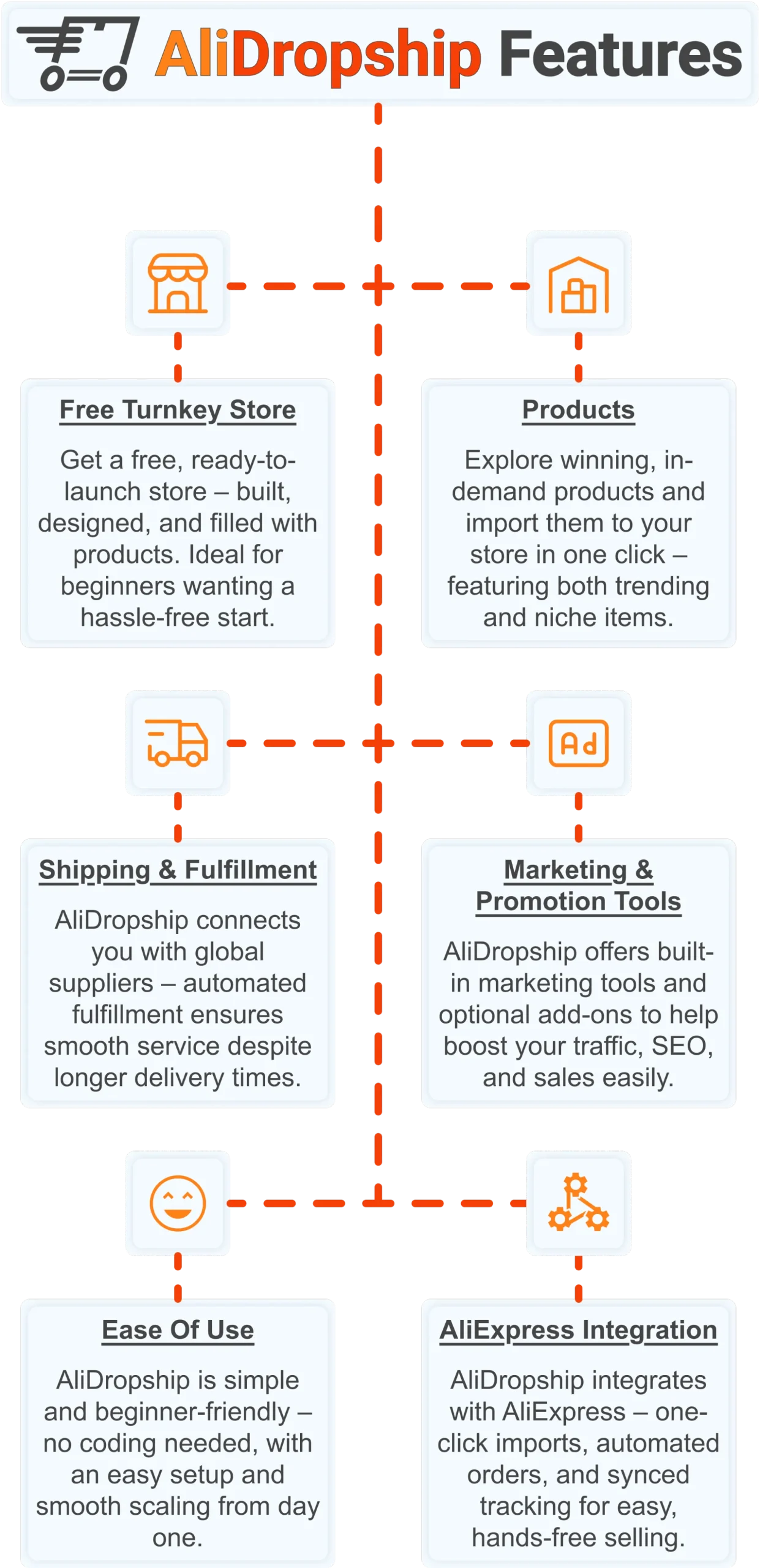
Get a free turnkey store – built, designed, and filled with products. Ideal for beginners wanting a hassle-free start, the store comes fully optimized to attract customers right away, saving you time on setup. Plus, it includes professional design elements to give your business a polished, trustworthy look from day one. This ready-made foundation makes it easy to move seamlessly into product selection.
Products
Once your store is set up, you can explore winning, in-demand products and import them in one click – featuring both trending and niche items. This wide selection lets you cater to diverse customer interests and test what works best. Regular updates ensure you always have fresh products, keeping your store competitive and relevant. With great products in place, smooth shipping becomes the next essential step.
Shipping & fulfillment
AliDropship connects you with global suppliers, and automated fulfillment ensures seamless order processing despite international delivery times. Customers receive real-time tracking updates, which builds confidence and trust in your store. Once shipping is handled reliably, you can focus on promoting your store and attracting traffic.
Marketing & promotion tools
To maximize sales, AliDropship offers built-in marketing tools and optional add-ons that help boost traffic, SEO, and conversions. From email campaigns and discounts to social media integration, these tools empower you to reach and retain customers without needing prior marketing experience. With promotion strategies in place, managing your business becomes simpler and more efficient.
Ease of use
AliDropship is beginner-friendly – no coding needed, with an intuitive dashboard that guides you through every step. Easy setup and smooth scaling let you expand your store without stress. As your business grows, adding new features, products, and marketing campaigns remains hassle-free, giving you more time to focus on sales.
AliExpress integration
Finally, AliDropship integrates seamlessly with AliExpress, enabling one-click imports, automated orders, and synced tracking. Your inventory stays up-to-date with the latest products and prices, while automated order processing frees you from manual tasks. Combined with the turnkey setup, reliable shipping, and built-in marketing tools, this integration ensures your dropshipping business is fully equipped for growth and success.
Now that you understand how ecommerce works from storefront to doorstep, the only step left is launching your own store. Get your free AliDropship turnkey store and start building your ecommerce business today.
Frequently Asked Questions
How does ecommerce work from click to delivery?
Ecommerce works by connecting an online storefront to a payment gateway that processes the customer transaction. Once payment clears, the order is automatically routed to a warehouse or supplier for picking, packing, and shipping. This entire process typically happens in under two seconds for payment approval, with tracking updates sent automatically. Over 2.7 billion people bought something online last year, showing how mainstream this automated system has become.
How does a payment gateway work in ecommerce?
A payment gateway securely transmits payment data between a customer bank and a seller merchant account. The customer enters card details or selects an option like PayPal or Apple Pay, and the gateway encrypts that data before sending it to the card network. The card network checks the issuing bank for funds and returns an approval or decline in under two seconds. All payment gateways operate under PCI DSS compliance, so sellers never store raw card data.
How much can you realistically earn from an ecommerce store?
Earnings vary widely depending on business model and effort level. Beginner dropshipping stores typically earn 300 to 1200 per month within months two to four. Established dropshipping stores can reach 2000 to 8000 per month by month six to nine. Most new store owners earn 30 to 80 per day within the first 60 to 90 days if they follow a structured launch process.
What is the difference between dropshipping and other ecommerce fulfillment methods?
Dropshipping removes the inventory step entirely, since orders are forwarded directly to a supplier who ships to the customer. Third-party logistics providers like ShipBob or Amazon FBA require sellers to send bulk inventory in advance and pay ongoing storage fees. In-house fulfillment gives brands full control but requires capital, staff, and warehouse infrastructure. Tracked shipping from Asian suppliers routinely delivers to the US and Europe in 10 to 18 days.
What ecommerce business model should a complete beginner choose?
Dropshipping is generally the most practical entry point for a complete beginner with limited capital. It removes inventory risk and automates fulfillment, which lets a new seller focus on marketing and product selection. Part-time operators running a niche dropshipping store often earn 500 to 2000 per month within 3 to 6 months. Advanced operators typically need a runway of 6 to 12 months before reaching consistent four figure monthly profit.
 Previous post
