 ‧ Agnes Kazaryan ‧
March 22, 2026
‧ Agnes Kazaryan ‧
March 22, 2026  549 ‧
549 ‧
 0
0
Affiliate marketing is one of the most accessible ways to earn money online – but “accessible” does not mean effortless. If you have been searching for how to get started in affiliate marketing, you have probably already run into walls of recycled advice, unrealistic income screenshots, and vague steps that leave you no closer to your first commission.
This guide cuts through that noise. You will get a clear, honest breakdown of what affiliate marketing actually involves, which platforms and niches work best for beginners in 2026, and exactly how to move from zero to your first payout.
Quick Answer: To get started in affiliate marketing, pick a niche you understand, join a beginner-friendly program like Amazon Associates or ShareASale, create content that helps people make purchasing decisions, and embed affiliate links naturally within that content. Most beginners see their first commission within 60–90 days of consistent effort.
The good news is that you do not need a massive audience, a website with millions of visitors, or a big budget. What you need is a clear strategy and the patience to build it the right way. Let’s walk through exactly how to do that.
What is affiliate marketing?
Affiliate marketing is a performance-based income model where you earn a commission every time someone makes a purchase – or completes a specific action – through a unique tracking link you share. You act as the connection between a brand and its potential customers, and the brand pays you a percentage of the sale for sending them that buyer.
The model works across almost every industry. Retailers, software companies, travel platforms, financial services, and education providers all run affiliate programs. You do not handle inventory, customer service, or product development. Your job is purely to connect the right people with the right product at the right moment.
In 2026, affiliate marketing remains one of the most scalable online income models available. Global affiliate marketing spend continues to grow year over year, and the channel now accounts for a significant share of ecommerce revenue for major retailers. The barrier to entry is lower than ever – and competition, while real, is beatable with the right niche and content approach.
How much can you realistically earn from affiliate marketing?
Income in affiliate marketing varies enormously depending on your niche, traffic volume, content quality, and how consistently you work. The figures below are realistic benchmarks based on publicly available data from affiliate communities on Reddit and platforms like ShareASale and CJ Affiliate.
These ranges reflect typical outcomes for affiliates who are actively publishing content and building an audience. They are not guaranteed results – the wide range at every level reflects the reality that niche selection and traffic quality matter enormously.
One note on the top figures: The $10,000+ monthly numbers represent affiliates operating at scale – usually with multiple content sites, strong SEO authority, or a large email list built over several years. For most beginners, a realistic first-year goal is $200–$500/month by month 9–12, assuming consistent weekly effort. Full-time income levels typically require 18–24 months of sustained work.
How to get started in affiliate marketing: Step by step
Learning how to get started in affiliate marketing is really about executing five core steps in the right order. Skipping ahead – publishing content before you have a niche, or signing up for programs before you have any traffic – is the most common reason beginners stall out early.
Step 1: Choose your niche
Your niche is the specific topic area your content will cover. A tight niche outperforms a broad one almost every time for beginners, because it is easier to build topical authority on a focused subject, easier to rank in search engines, and easier to attract a loyal audience that trusts your recommendations.
How to pick a profitable niche
A good affiliate niche sits at the intersection of three things: something you understand well enough to write about credibly, an audience that actively buys products online, and affiliate programs that pay decent commissions. Strong beginner niches in 2026 include personal finance tools, home fitness equipment, software and SaaS products, pet care, and sustainable home goods.
Why this works in 2026: Search engines increasingly reward content written with genuine subject-matter knowledge. Picking a niche you understand gives your content a natural depth that generic or outsourced content cannot easily replicate.
Avoid going too broad (like “health” or “technology”) or too narrow (like “left-handed ergonomic keyboards for architects”). Aim for something like “budget home gym equipment” or “personal finance apps for freelancers” – specific enough to stand out, wide enough to have consistent search demand.
Step 2: Join the right affiliate programs
Once you have your niche, find affiliate programs that match the products your future audience will want to buy. There are three types of programs worth knowing about as a beginner.
Amazon Associates
Amazon Associates is the most beginner-friendly program available. Almost any physical product you can think of is on Amazon, commission rates range from 1% to 10% depending on the category, and the brand trust means conversion rates are solid. The downside is that commission rates are lower than niche-specific programs, and cookies only last 24 hours.
Earning potential: $50–$400/month at beginner traffic levels, depending on niche and product price point.
ShareASale and CJ Affiliate
ShareASale and CJ Affiliate are affiliate networks – marketplaces that house hundreds of individual brand programs under one roof. You apply to each brand’s program separately, but manage all your links and payments from a single dashboard. These networks are ideal for finding mid-tier brands in your niche that offer better commission rates than Amazon – often 10%–25% on digital products or specialty goods.
Earning potential: $100–$1,000/month once you have consistent search traffic to review-style content.
Direct brand programs
Many software companies, online course platforms, and ecommerce brands run their own affiliate programs outside of networks. These often pay the highest commissions – SaaS products in particular can offer 20%–40% recurring commissions, meaning you earn every month a referred customer stays subscribed.
Finding these requires a bit of research: try searching “[your niche] + affiliate program” or checking a brand’s website footer for an affiliate or partner link.
Earning potential: $200–$3,000+/month for affiliates who build an audience of buyers in high-commission software or finance niches.
Step 3: Build a content platform
Affiliate marketing requires a place to publish content and embed your links. Most successful affiliates use a blog, a YouTube channel, or a combination of both. Social media alone – TikTok, Instagram, Pinterest – can work, but it carries platform risk and tends to convert at lower rates than search-intent content.
Starting a blog
A self-hosted WordPress blog on a domain you own is the gold standard for affiliate content. It gives you full control, long-term SEO value, and the ability to build an email list. A basic setup costs $3–$10/month for hosting. Focus your early content on comparison posts, best-of lists, and how-to guides – these formats attract buyers who are already close to making a purchase decision.
Starting a YouTube channel
YouTube is the second largest search engine in the world, and video reviews convert extremely well for physical products and software. You do not need professional equipment to start – a smartphone and decent lighting will carry you through your first 50 videos. Affiliate links go in the video description. Video content takes more time to produce and longer to build an audience, but once a video ranks it can generate passive income for years.
Email lists
An email list is the highest-converting traffic source in affiliate marketing. Building one from day one – even a small one – lets you recommend products directly to people who have already shown interest in your niche. Use a free tool like MailerLite or the free tier of ConvertKit to get started. Offer a simple lead magnet (a checklist, short guide, or template) to grow your list alongside your content.
Step 4: Create content that converts
Content quality is the single biggest variable separating affiliates who earn consistently from those who publish regularly and see nothing. Publishing more is not the answer – publishing smarter is.
Keyword research basics
Use free tools like Google Search Console, Ubersuggest (free tier), or the Keywords Everywhere browser extension to find search queries your target audience uses. Prioritize keywords with clear buyer intent – searches like “best [product] for [situation]”, “[product A] vs [product B]”, or “is [product] worth it” signal that the person is already considering a purchase. These convert far better than purely informational queries.
Writing reviews that earn trust
The most reliable affiliate content format is the honest, detailed product review. Cover what the product actually does well, what its limitations are, who it is right for, and who it is not. Reviews that acknowledge real downsides consistently outperform those that sound promotional. Readers can tell the difference, and so can Google’s quality algorithms.
Comparison and best-of posts
“Best [product category] in 2026” and “[Product A] vs [Product B]” posts are reliable traffic earners because they target people at the final stage of the buying decision. Structure these with a quick summary table at the top so mobile readers get value immediately, then deep-dive into each option. Include your affiliate links in both the table and the detailed sections, but never more than necessary – over-linking reads as spammy and can reduce trust.
Pro Tip: Update your best-performing comparison posts every 6 months with current pricing and new product options – fresh dates in titles and metadata improve rankings and click-through rates significantly.
Step 5: Drive traffic and optimize
Traffic is the lifeblood of affiliate marketing. Without it, even the best content earns nothing. In the early months, focus on one or two traffic sources rather than trying to be everywhere at once.
SEO (search engine optimization)
SEO is the primary traffic channel for most successful affiliate marketers. It is slow to start – expect 3–6 months before you see meaningful organic traffic – but it compounds over time and is essentially free. Focus on publishing helpful, thorough content targeted at specific buyer-intent keywords, building internal links between related posts, and earning a few external links from relevant sites in your niche.
Pinterest and social discovery
Pinterest is underrated for affiliate marketing in certain niches – home decor, fitness, recipes, personal finance, and parenting particularly. Pins can drive traffic for months or years after publishing, and Pinterest’s audience skews toward active shoppers. Create vertical images for each post and link them directly to your content. It is not a replacement for SEO, but a useful supplement while your domain authority builds.
Affiliate marketing niches with the best earning potential in 2026
Not all niches are created equal. Some offer higher commission rates, stronger buyer intent, or larger average order values that translate directly to higher earnings per click. Here is a comparison of the strongest niches for affiliate marketers starting out today.
SaaS and personal finance niches offer the highest earning potential per referral, but they also require credible, authoritative content to compete. Pet care and online courses are excellent beginner niches – lower competition in long-tail keyword spaces, engaged audiences, and decent commission structures that reward consistent publishing.
Legal and ethical considerations for affiliate marketers
Affiliate marketing has clear legal and ethical requirements that you need to follow from day one – not just to stay compliant, but because transparency consistently outperforms deceptive tactics in the long run.
FTC disclosure requirements
In the United States, the Federal Trade Commission requires that you clearly disclose any material connection to a brand whose product you are recommending – including affiliate relationships.
This means you must include a disclosure statement on any page that contains affiliate links. The disclosure needs to be visible before readers encounter the links, not buried in a footer. A simple sentence at the top of a post is sufficient: something like “This post contains affiliate links. If you purchase through these links, I may earn a commission at no extra cost to you.”
Key principle: Disclosure builds trust. Readers who know you earn commissions and still trust your recommendations are your most valuable audience – they buy more, return more often, and share your content.
What to avoid absolutely
Several tactics that show up in beginner affiliate advice forums are either against program terms, legally problematic, or both. Cookie stuffing – artificially dropping affiliate cookies on a user’s browser without a genuine click – is fraud and will result in permanent program bans.
Writing fake reviews for products you have never used violates FTC guidelines and destroys your credibility when readers discover it. Bidding on brand keywords in paid search is against the terms of most affiliate programs and will get you removed.
Important: Always read the terms and conditions of every affiliate program you join before promoting – prohibited promotional methods vary by program, and violations can mean losing unpaid commissions.
What to do instead
Build your affiliate business on genuine experience and honest assessment. If you have not used a product, be transparent about that. If a product has a significant flaw, include it in your review. Audiences reward authenticity with loyalty and clicks far more reliably than any short-term grey-area tactic ever will.
How to choose your approach based on where you are starting from
The right entry point into affiliate marketing depends on your current situation – your available time, your existing skills, and your income timeline. Here is a practical breakdown by reader profile.
Complete beginner
If you have no audience, no website, and no content experience, start with a single niche blog and the Amazon Associates program. Your first goal is not income – it is learning. Publish 20–30 pieces of content in your niche before evaluating results. Choose topics with clear buyer intent. Do not worry about design perfection; focus on publishing consistently. Expect your first meaningful commission check somewhere in months 3–6.
Intermediate / part-time
If you already have a blog, a YouTube channel, or a social following, add affiliate links to your existing content first. Audit your top-performing posts for buyer-intent keyword opportunities you have not yet monetized. Apply to 2–3 affiliate programs in your niche, prioritize the ones with the highest relevance to your audience, and test different link placements and CTA formats to find what converts best for your specific readers.
Advanced / full-time goal
If you are targeting full-time income from affiliate marketing, build a content operation – not just a blog. This means a consistent publishing schedule (2–4 posts per week), an email list you actively grow, and a content strategy that balances SEO-targeted posts with high-converting product comparisons. At this level, diversifying across multiple affiliate programs in adjacent niches reduces your income risk if any single program changes its commission structure. Most affiliates who reach $3,000–$5,000/month have been consistently publishing for 18–24 months.
Final thoughts: Choosing the path that matches your goals
Affiliate marketing is a legitimate, scalable income model – but it rewards patience and strategic thinking far more than hustle alone. The people who burn out early are usually the ones who picked a broad niche, joined too many programs at once, and published inconsistently while expecting fast results.
The people who succeed are the ones who picked a focused niche they genuinely understood, chose 1–2 programs with strong relevance to their audience, and published consistently for 6–12 months before drawing conclusions about what was or was not working.
Here is the simplest way to match your starting point to the right approach. If you are a complete beginner, start small: one niche, one platform, one program. If you are at the intermediate / part-time stage, monetize what you already have before building anything new. If your goal is advanced / full-time income, treat it like a content business from day one – with a schedule, a content calendar, and an email list that you build in parallel with your traffic.
And if the 6–18 month affiliate timeline feels too slow for where you are right now, it is worth knowing that other models like ecommerce and dropshipping can generate revenue faster – and the two approaches complement each other well. Affiliate content drives traffic; an owned store captures the full margin.
AliDropship: Your complete all-in-one solution for starting dropshipping in 2026
If you want the simplest possible way to start dropshipping – especially if you’re brand new – AliDropship remains one of the most beginner-friendly tools available in 2026. It brings together store creation, product imports, automation, and marketing into a single streamlined system designed to help you launch quickly and grow confidently.
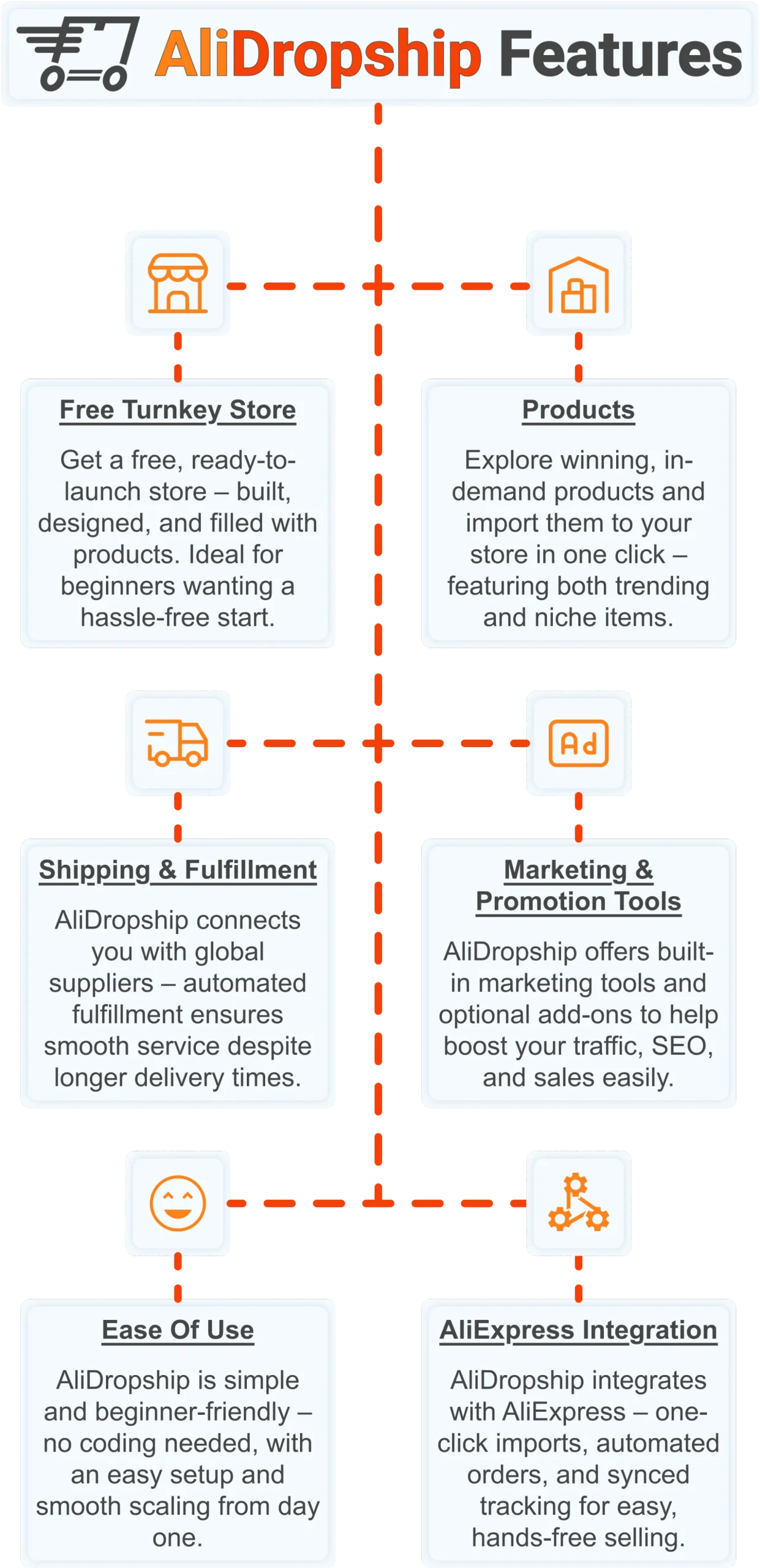
Free turnkey store ️
Get a free turnkey store – built, designed, and filled with products. Ideal for beginners wanting a hassle-free start, the store comes fully optimized to attract customers right away, saving you time on setup. Plus, it includes professional design elements to give your business a polished, trustworthy look from day one. This ready-made foundation makes it easy to move seamlessly into product selection.
Products
Once your store is set up, you can explore winning, in-demand products and import them in one click – featuring both trending and niche items. This wide selection lets you cater to diverse customer interests and test what works best. Regular updates ensure you always have fresh products, keeping your store competitive and relevant. With great products in place, smooth shipping becomes the next essential step.
Shipping & fulfillment
AliDropship connects you with global suppliers, and automated fulfillment ensures seamless order processing despite international delivery times. Customers receive real-time tracking updates, which builds confidence and trust in your store. Once shipping is handled reliably, you can focus on promoting your store and attracting traffic.
Marketing & promotion tools
To maximize sales, AliDropship offers built-in marketing tools and optional add-ons that help boost traffic, SEO, and conversions. From email campaigns and discounts to social media integration, these tools empower you to reach and retain customers without needing prior marketing experience. With promotion strategies in place, managing your business becomes simpler and more efficient.
Ease of use
AliDropship is beginner-friendly – no coding needed, with an intuitive dashboard that guides you through every step. Easy setup and smooth scaling let you expand your store without stress. As your business grows, adding new features, products, and marketing campaigns remains hassle-free, giving you more time to focus on sales.
AliExpress integration
Finally, AliDropship integrates seamlessly with AliExpress, enabling one-click imports, automated orders, and synced tracking. Your inventory stays up-to-date with the latest products and prices, while automated order processing frees you from manual tasks. Combined with the turnkey setup, reliable shipping, and built-in marketing tools, this integration ensures your dropshipping business is fully equipped for growth and success.
Affiliate marketing builds income over time – but if you want a business that starts earning from day one, AliDropship gives you a fully built store with products already loaded. Claim your free turnkey store and start selling today.
Frequently asked questions
How do you get started in affiliate marketing as a beginner?
Pick a niche you understand, join a beginner friendly program such as Amazon Associates or ShareASale, and create content that helps people make purchasing decisions. Most beginners see their first commission within 60 to 90 days of consistent effort. A tight niche like budget home gym equipment outperforms a broad one like fitness because it is easier to build topical authority and rank in search engines. Complete beginners should expect their first meaningful commission check somewhere in months 3 to 6.
How much money can a beginner realistically make in affiliate marketing?
Beginners working part time at 5 to 10 hours weekly during their first 6 months typically earn 0 to 300 dollars monthly. Intermediate affiliates working 10 to 20 hours weekly between 6 and 18 months can reach 300 to 2000 dollars monthly. Advanced affiliates working full time after 18 or more months can earn 2000 to 10000 dollars monthly or more. A realistic first year goal for most beginners is 200 to 500 dollars per month by month 9 to 12 with consistent weekly effort.
Which affiliate marketing niches have the best earning potential in 2026?
SaaS and software tools offer 20 to 40 percent recurring commissions, making them one of the highest earning niches, though the difficulty level is medium. Personal finance pays 30 to 150 dollars per lead but carries medium to high difficulty for beginners. Online courses and education pay 30 to 50 percent per sale and are rated low difficulty, making them a strong beginner option. Pet care products pay 6 to 12 percent per sale and are also considered a low difficulty niche for new affiliates.
What are the best beginner affiliate programs to join?
Amazon Associates is the most beginner friendly program, with commission rates ranging from 1 to 10 percent depending on category and a 24 hour cookie window. ShareASale and CJ Affiliate are affiliate networks offering access to hundreds of individual brand programs, often paying 10 to 25 percent on digital products or specialty goods. Direct brand programs, especially in SaaS, can pay 20 to 40 percent in recurring commissions for as long as a referred customer stays subscribed. Beginner earning potential ranges from 50 to 400 dollars per month on Amazon Associates up to 200 to 3000 dollars or more per month with direct SaaS programs.
What legal disclosure rules must affiliate marketers follow?
The Federal Trade Commission requires clear disclosure of any material connection to a brand whose product is being recommended, including affiliate relationships. This disclosure must appear on any page containing affiliate links and must be visible before readers encounter the links, not buried in a footer. Cookie stuffing, which means artificially placing affiliate cookies without a genuine click, is considered fraud and results in permanent program bans. Writing fake reviews for products never actually used also violates FTC guidelines and can destroy an affiliate credibility once readers discover it.
 Previous post
