 ‧ Agnes Kazaryan ‧
March 20, 2026
‧ Agnes Kazaryan ‧
March 20, 2026  562 ‧
562 ‧
 0
0
If you have been looking for a way to earn online without creating your own product, affiliate marketing is probably already on your shortlist. The pitch is simple: you recommend someone else’s product, a reader clicks your link, makes a purchase, and you earn a commission. No inventory, no customer support, no product development. Just content, links, and patience.
Here is the honest version most guides skip: the majority of people who try this quit inside their first 90 days. They pick the wrong niche, chase programs with poor commissions, or expect passive income to show up before they have published ten articles. This guide is built to help you avoid that trap. Below you will find a grounded, step-by-step walkthrough of how to start affiliate marketing in 2026 – from picking your niche to publishing your first piece of content to watching your first commission land.
Quick Answer: To start affiliate marketing, pick a niche you actually understand, sign up for 2–3 programs that fit it (Amazon Associates, ShareASale, or niche networks), publish content built around real search queries, and stay consistent for 60–90 days before you expect meaningful traffic or income.
What is affiliate marketing in 2026?
Affiliate marketing is a performance-based income model. You earn a commission every time someone takes a specific action – usually a purchase – through your unique tracking link. You sit between a potential buyer and a brand, and the brand rewards you for sending a paying customer their way.
Four players make the model work: the merchant (the brand selling the product), the affiliate network (the platform handling tracking and payouts, like Commission Junction or ShareASale), the affiliate (you), and the customer. Some brands skip the network entirely and run their own in-house programs, but the mechanics are identical.
The space is big and still growing. Influencer Marketing Hub estimates affiliate marketing is a $17 billion global industry in 2026, and it is no longer just for bloggers. YouTube creators, newsletter writers, podcast hosts, and TikTok accounts all use affiliate links as part of their monetization stack. The barrier to entry stays genuinely low – no product, no warehouse, no real startup budget needed.
Why this works in 2026: Search engines and social platforms still reward content that answers specific, real questions. When your content solves a problem and includes the right affiliate link, the commission potential is real – without you needing to be online around the clock.
How much can you realistically earn?
This is the question that pulls most people into affiliate marketing, and also the question that gets the most dishonest answers online. So let’s look at what the numbers actually show.
A survey from Authority Hacker puts the average affiliate marketer’s income at around $8,038 per month, but that average is badly skewed by top earners. The median for affiliates with less than two years of experience sits far closer to $500–$2,000 per month. In their first 90 days, beginners typically earn between $0 and $300 while they are still laying down content and building traffic.
These ranges are benchmarks, not guarantees. A beginner running a niche review blog should expect 60–90 days of publishing before Google starts sending steady traffic. Full-time affiliate income – meaning $3,000 or more per month – usually takes 12–18 months of focused, consistent effort.
One note on ceiling figures: The $10,000+/month results you see in public income reports almost always belong to affiliates who have been publishing for 3–5 years, built real domain authority, or run multiple sites at once. That is a long-term target, not a starting point.
Step 1: Pick a niche you can actually win in
Your niche is the category your content will revolve around. A good one sits at the intersection of three things: a topic you understand well enough to write about, a topic people are actively searching for, and a topic with affiliate programs that pay decent commissions.
How to evaluate a niche
Start by listing five to ten topics you already know or genuinely care about. Then sanity-check search volume using free tools like Google Keyword Planner or Ubersuggest. You are looking for topics that pull at least 1,000–10,000 monthly searches on related terms. If you can drop into a sub-niche with lower competition – “best coffee equipment for small apartments” instead of “best coffee” – that is usually where beginner affiliates gain traction fastest.
Solid niches in 2026 include personal finance, home office gear, software and SaaS tools, fitness and wellness, pet care, and sustainable living. Each of these has dozens of affiliate programs and audiences with real purchase intent.
Earning potential: $100–$800/month within your first 6 months if you commit to a specific sub-niche with clear buyer-intent keywords.
What to avoid in niche selection
Do not chase a niche just because the commissions look huge. Finance and insurance can pay $50–$200 per lead, but those spaces are owned by established publishers with years of domain authority. A beginner trying to rank for “best credit cards” will get buried. Go narrow instead – a specific audience with a specific problem, even if the payout per sale is smaller.
Step 2: Join the right affiliate programs
Once your niche is clear, the next move is finding programs that actually fit it. Affiliate programs fall into three broad buckets: individual brand programs, affiliate networks, and SaaS or subscription programs. Most beginner sites end up mixing two or three of them.
Amazon Associates
Amazon Associates is the friendliest on-ramp for new affiliates. It covers nearly every physical product category, and because shoppers already trust Amazon, conversion rates tend to run higher than average. The catch is the commission rates – they land between 1% and 10% depending on the category, so you need volume to earn real money. Still, for beginner niche sites, it is the fastest way to see your first commissions roll in.
Important note: Amazon Associates cookies last only 24 hours. If a buyer does not convert inside that window after clicking your link, you earn nothing. Keep this in mind when you write product content – urgency and clean calls to action matter more here than on most other programs.
ShareASale
ShareASale is a big affiliate network with thousands of merchants across just about every niche. Commission rates run from roughly 5% to 30%+ depending on the brand, and a lot of merchants offer longer 30–90 day cookie windows. Opening a free account gets you full access to their directory so you can scout what is available in your niche before you commit to a content plan.
Impact and CJ Affiliate
Impact and Commission Junction (CJ Affiliate) are two of the largest networks used by major brands – including Adidas, TripAdvisor, and a lot of SaaS companies. These networks usually work better once you already have some traffic, since many of their brands require an application and light vetting before they approve new affiliates.
Niche-specific and direct programs
Plenty of brands run their own in-house affiliate programs that never show up on a network. To find them, just search “[product or brand name] + affiliate program” in Google. SaaS companies in particular often offer recurring commissions – meaning you earn every month a referred customer keeps their subscription active. A single customer on a $99/month plan at 30% commission quietly pays you $29.70 every month they stay.
Earning potential: Recurring SaaS commissions of $200–$1,500/month are realistic inside 12 months for affiliates who publish consistent software review and comparison content.
Step 3: Build the platform you publish on
You need somewhere to publish your content and drop your affiliate links. The three go-to platforms for affiliate marketers are a self-hosted WordPress blog, a YouTube channel, or an email newsletter. Each has trade-offs, so pick based on how you prefer to create.
WordPress blog (best pick for most beginners)
A self-hosted WordPress site gives you the most control and the strongest long-term SEO upside. You own the content, you can rank in Google for hundreds of keywords, and you can embed affiliate links anywhere you want. Startup cost is low – around $3–$10 per month for shared hosting plus a domain. Use a free or low-cost theme built for content sites and spend the first 60 days focused purely on publishing.
YouTube channel
YouTube is a strong fit for product reviews, tutorials, and comparison videos. Affiliate links live in the description, and because YouTube functions as its own search engine, videos can keep pulling in passive traffic for months or years after they go live. The hurdle is that you need to be comfortable on camera – or at least with screen-recorded content – and building a subscriber base takes real time. A lot of successful affiliates pair a blog with a YouTube channel once they have found their rhythm.
Email newsletter
Email newsletters are underrated in affiliate marketing. A list of 2,000–5,000 genuinely engaged subscribers in a specific niche can generate $1,000–$3,000+ per month if you recommend products your audience actually needs. Tools like ConvertKit and Beehiiv make it easy to launch a free newsletter and grow it through social or SEO-driven lead magnets.
Important: Whichever platform you pick, commit to one first. Spreading yourself across a blog, a YouTube channel, and a newsletter at the same time as a beginner is the fastest way to produce mediocre content on all three.
Step 4: Create content that actually converts
Content is the engine of affiliate marketing. Without it there is no traffic. Without traffic there are no clicks. Without clicks there are no commissions. The good news is that content that converts follows a predictable set of formats – you do not have to invent anything.
Product review articles
Reviews are the backbone of affiliate content. A solid review covers what the product does, who it is for, what it costs, the main pros and cons, and how it stacks up against one or two alternatives. Google now rewards reviews that show real first-hand experience, so wherever you can, use the product yourself or work in real user feedback from communities like Reddit or Trustpilot.
Comparison articles (“X vs Y”)
Comparison posts target readers who are already close to buying and just need help choosing. “Bluehost vs SiteGround”, “Notion vs Obsidian”, “Ahrefs vs Semrush” – queries like these carry strong purchase intent and often rank faster than broad informational pieces. Structure them with a clear winner at the top and a quick summary table up front.
Best-of roundups (“Best X for Y”)
Roundup articles – “10 best project management tools for freelancers”, “best standing desks under $500” – let you stack multiple affiliate links into one piece and pick up a range of related search queries. They take real work to do well, but once they rank they tend to have long lifespans and steady organic traffic.
Tutorial and how-to content
Tutorials rank for informational queries and quietly build trust with your audience. The affiliate angle comes in naturally: you explain how to do something, then recommend the tools that make the job easier. A tutorial on “how to set up a podcast” can include affiliate links to a recommended microphone, recording software, and hosting platform without ever feeling forced.
Earning potential: A blog with 20–30 well-optimized articles can realistically generate $300–$1,500/month in affiliate commissions within 6–12 months, depending on niche competition and traffic volume.
Step 5: Drive traffic to what you published
Publishing content is step one. Getting real people to read it is the ongoing job. Affiliate marketers have two main traffic lanes to work with: organic search (SEO) and social or community traffic.
Search engine optimization (SEO)
SEO is the most powerful long-term traffic source for affiliates because it is largely passive. Once an article ranks, it keeps bringing in readers without you doing anything extra. The basics: target keywords with real search volume but manageable competition, write thorough pieces that actually answer the full question, earn backlinks by creating content other sites genuinely want to reference, and refresh your top articles every 6–12 months to keep them current.
Free tools like Google Search Console, Ubersuggest, and KeySearch are more than enough to start. Paid tools like Ahrefs and Semrush give you more depth, but they are not essential at the beginner stage.
Pinterest and social media
Pinterest gets overlooked by most beginners, but it works remarkably well for certain niches – home decor, recipes, DIY, fashion, and personal finance in particular. A well-designed pin can drive traffic to your blog for months or even years after you post it. For other niches, building a real presence on Reddit (by genuinely participating in relevant subreddits), in Facebook groups, or on TikTok can round out your SEO traffic while your site slowly earns domain authority.
Email list building
Every affiliate marketer should start building an email list from day one, no matter which platform they lead with. Offer a free resource – a checklist, a short guide, a template – in exchange for an email address, and then nurture that list with regular helpful content. An email list is an asset you own, unlike a social following that can vanish in a single algorithm change.
Earning potential: Affiliates who combine SEO traffic with an engaged email list of 3,000–5,000 subscribers typically earn $1,500–$4,000/month inside 18–24 months of consistent publishing.
Legal and ethical rules every affiliate marketer should follow
Affiliate marketing has a reputation problem in some corners of the internet, and honestly it is not all undeserved. There are affiliates who publish fake reviews, hide their relationship with brands, or promote products they have never touched just for the commission. That approach kills trust and, in plenty of jurisdictions, actually breaks consumer protection law. Here is what you need to know to stay on the right side of it.
FTC disclosure requirements
In the United States, the Federal Trade Commission (FTC) requires affiliates to clearly disclose any material connection to a brand when recommending their products. In practice, that means a plain-language disclosure at the top of every article or video that contains affiliate links. Something like “This article contains affiliate links. If you purchase through one of them, we may earn a commission at no extra cost to you” gets the job done. The disclosure has to be visible – not buried in a footer, not hidden behind a link.
Similar rules apply in the UK, EU, and Australia. If your content reaches international readers, a blanket disclosure at the top of every monetized piece is the safest call.
What to avoid absolutely
Key principle: Only recommend products you have a real reason to believe will help your audience. If a product is genuinely bad, say so – or skip reviewing it entirely.
Fake or inflated reviews are the most common ethical failure in affiliate marketing, and readers on Reddit and review sites like Trustpilot are getting sharper at spotting promotional content wearing a review costume. On top of the ethics problem, Google’s Helpful Content updates have specifically targeted thin, low-quality review content that does not reflect real product experience.
Also avoid cloaking affiliate links (disguising them as non-affiliate URLs) – most networks ban this in their terms of service and it can get your account terminated. Similarly, do not run paid ads that route traffic directly to a merchant without passing through your own content first. A lot of programs explicitly prohibit that in their affiliate agreements.
What to do instead
Be transparent about your experience with products. If you have not personally used something, say so and base your review on verified user feedback pulled from multiple sources. Build content that would still be useful if every affiliate link were stripped out. That standard – “is this genuinely helpful without the promotional element?” – is a reliable quality check for everything you publish.
Final thoughts: How to choose your path based on where you are now
Not every affiliate marketing path works for every person. Your starting point – skills, available time, budget, goals – should shape the approach you pick. Here is a quick breakdown by reader profile so you can find the closest match to your own situation.
Complete beginner (no site, no audience)
Start with a WordPress blog on a sub-niche topic you already know something about. Join Amazon Associates and one niche-specific network like ShareASale. Publish one article per week for your first three months, and aim most of that output at product reviews and comparison posts targeting clear buyer-intent keywords. Do not try to monetize your first five articles – get the writing rhythm right first, then layer the links in.
Intermediate (some content published, some traffic)
If you already have a blog or social presence with a small but real audience, your priority is getting off a single affiliate program. Add one or two high-commission recurring programs to your existing review content. Start building an email list if you have not already. Aim to double your content output, or improve your top-performing pages through regular updates and smarter internal linking.
Advanced (full-time income goal, 12–18 month horizon)
Serious affiliate marketers at this stage are usually running multiple niche sites at once, hiring writers, and building links actively. If a full-time income is the goal, treat the whole thing like a business – track your revenue per article, identify which content types convert best in your niche, and reinvest your early commissions into tools, outsourcing, and more content production.
Wherever you are starting, the most important thing is consistent action over a sustained period. Affiliate marketing rewards patience and volume. The people pulling $5,000+ per month from affiliate commissions are, almost without exception, people who published consistently for 12–24 months before they saw those numbers.
AliDropship: Your complete all-in-one solution for starting dropshipping in 2026
If you want the simplest possible way to start dropshipping – especially if you’re brand new – AliDropship remains one of the most beginner-friendly tools available in 2026. It brings together store creation, product imports, automation, and marketing into a single streamlined system designed to help you launch quickly and grow confidently.
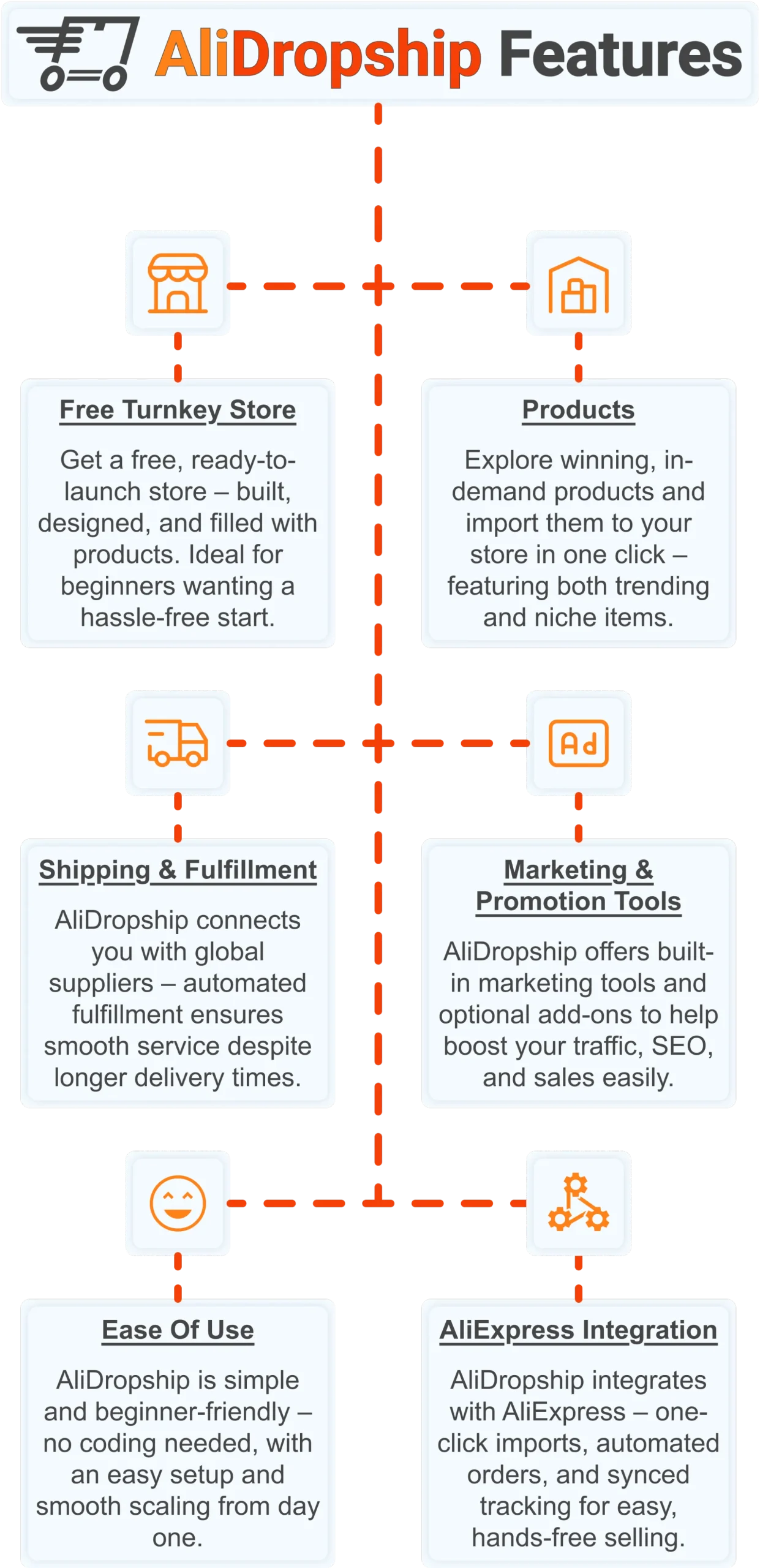
Free turnkey store ️
Get a free turnkey store – built, designed, and filled with products. Ideal for beginners wanting a hassle-free start, the store comes fully optimized to attract customers right away, saving you time on setup. Plus, it includes professional design elements to give your business a polished, trustworthy look from day one. This ready-made foundation makes it easy to move seamlessly into product selection.
Products
Once your store is set up, you can explore winning, in-demand products and import them in one click – featuring both trending and niche items. This wide selection lets you cater to diverse customer interests and test what works best. Regular updates ensure you always have fresh products, keeping your store competitive and relevant. With great products in place, smooth shipping becomes the next essential step.
Shipping & fulfillment
AliDropship connects you with global suppliers, and automated fulfillment ensures seamless order processing despite international delivery times. Customers receive real-time tracking updates, which builds confidence and trust in your store. Once shipping is handled reliably, you can focus on promoting your store and attracting traffic.
Marketing & promotion tools
To maximize sales, AliDropship offers built-in marketing tools and optional add-ons that help boost traffic, SEO, and conversions. From email campaigns and discounts to social media integration, these tools empower you to reach and retain customers without needing prior marketing experience. With promotion strategies in place, managing your business becomes simpler and more efficient.
Ease of use
AliDropship is beginner-friendly – no coding needed, with an intuitive dashboard that guides you through every step. Easy setup and smooth scaling let you expand your store without stress. As your business grows, adding new features, products, and marketing campaigns remains hassle-free, giving you more time to focus on sales.
AliExpress integration
Finally, AliDropship integrates seamlessly with AliExpress, enabling one-click imports, automated orders, and synced tracking. Your inventory stays up-to-date with the latest products and prices, while automated order processing frees you from manual tasks. Combined with the turnkey setup, reliable shipping, and built-in marketing tools, this integration ensures your dropshipping business is fully equipped for growth and success.
Frequently Asked Questions
How much money can a beginner make with affiliate marketing?
Beginners typically earn between 0 and 300 dollars per month during their first 90 days while they publish content and build traffic. The median income for affiliates with less than two years of experience falls between 500 and 2000 dollars per month. A survey from Authority Hacker found the average affiliate marketer earns around 8038 dollars per month, though that figure is skewed upward by top performers. Full time income of 3000 dollars or more per month usually takes 12 to 18 months of consistent effort to reach.
What is the best affiliate program for beginners to join?
Amazon Associates is often recommended as the easiest program for new affiliates because it covers nearly every physical product category and shoppers already trust the platform. Commission rates on Amazon range from 1 to 10 percent depending on category, so volume matters more than margin. ShareASale is another strong option, with commission rates from about 5 to 30 percent and cookie windows that often run 30 to 90 days. Many beginners join two or three programs at once to diversify their income sources.
How do I choose a profitable niche for affiliate marketing?
A strong niche sits at the intersection of a topic you understand, a topic people actively search for, and a topic with affiliate programs that pay decent commissions. Aim for sub niches that pull at least 1000 to 10000 monthly searches on related terms, since narrower topics are easier for beginners to rank for. Personal finance, home office gear, software, fitness, pet care, and sustainable living are considered solid niches in 2026. Avoid chasing high paying niches like finance or insurance early on, since those spaces are dominated by publishers with years of established authority.
How long does it take to see results from affiliate marketing content?
Most beginners need 60 to 90 days of consistent publishing before Google starts sending steady organic traffic to a new site. A blog with 20 to 30 well optimized articles can realistically generate 300 to 1500 dollars per month in commissions within 6 to 12 months. Results depend heavily on niche competition and how consistently new content gets published. Full time affiliate income generally takes 12 to 18 months of sustained effort to achieve.
Do affiliate marketers need to disclose their links to readers?
Yes, the Federal Trade Commission requires affiliates in the United States to clearly disclose any material connection to a brand when recommending its products. A visible disclosure at the top of an article or video, rather than one buried in a footer, satisfies this requirement. Similar disclosure rules apply in the United Kingdom, the European Union, and Australia. Cloaking affiliate links or hiding the relationship with a brand violates most network terms of service and can lead to account termination.
If you are already figuring out how to start affiliate marketing, you are clearly ready to build an online income – and a ready-made store puts that income fully in your hands from day one. Claim your free turnkey store and $100 voucher to get started today.
 Previous post
