 ‧ Agnes Kazaryan ‧
March 13, 2026
‧ Agnes Kazaryan ‧
March 13, 2026  650 ‧
650 ‧
 0
0
Most people searching for how to start an online store end up with two kinds of advice: a 47-step technical walkthrough, or a vague “just pick a niche and get started.” Neither is actually useful. The real answer is somewhere in between – and it is more achievable than most guides make it sound.
Quick answer: You can learn how to start an online store and go live within a week, even with zero prior experience. The core steps are choosing a business model, picking a niche, setting up your storefront, loading products, and driving your first traffic. The technical barrier in 2026 is lower than it has ever been.
This guide covers every stage in plain language – what each decision actually means, how long it takes, and what most beginners get wrong. Whether you are starting a side income or planning a full-time ecommerce business, the steps below are the same.
What is an online store and why start one in 2026?
An online store is a website where you list products – physical or digital – and accept payments from customers anywhere in the world. Unlike a physical shop, it has no fixed hours, no geographic limit, and no requirement for a warehouse or staff. You can run it from a laptop, often with one person, and serve customers in multiple countries simultaneously.
Global ecommerce revenue is on track to surpass $6.8 trillion in 2026, and a growing share of that is going to independent sellers rather than large retailers. Buyers are comfortable purchasing from smaller stores they have never heard of – provided the store looks professional, the products are clear, and the checkout is smooth. That threshold is easier to clear than it was five years ago.
The practical appeal is straightforward. Low startup costs, flexible hours, and the ability to automate most of the operational work make this one of the most accessible business models available. Order processing, inventory syncing, and even basic marketing can run on autopilot in 2026. The manual bottlenecks that used to slow new sellers down have largely been removed by tools that are either free or very low cost.
Why this works in 2026: Automation has replaced most of the repetitive work that used to make running an online store time-intensive. You can now launch, manage, and grow a store with far fewer hours than the same operation required three years ago.
How much can you realistically earn?
This is the first question most people ask – and the honest answer depends on your model, your effort, and how long you stay consistent. Here is a realistic breakdown across the most common approaches:
These figures reflect active, consistent sellers – not day-one results. Dropshipping is the easiest entry point for most beginners, while private label offers the highest ceiling but also the highest startup cost.
One note on the upper figures: The $10,000+ range is real but uncommon for new sellers in their first year. Most people starting from scratch earn $30–$80 per day within the first 3–6 months if they stay consistent and stick to one model rather than jumping between approaches. First meaningful revenue typically arrives within 60–90 days of launch with paid traffic. Organic-only stores take longer – usually 3–6 months before significant traffic builds.
Step 1 – choose your business model
Before you touch a platform or register a domain, decide how your store will actually work. Your business model determines your startup costs, your margins, your supplier relationships, and how much time you spend on logistics each week.
Dropshipping
With dropshipping, you list products in your store without holding any inventory. When a customer buys, the order goes directly to your supplier, who ships it to the customer. You never handle the product.
Startup costs are minimal – typically just your platform and domain – and you can test dozens of products without financial risk. Margins usually sit between 15–40%, and you are dependent on supplier reliability for delivery times and product quality.
Earning potential: $500–$5,000/month within the first 3–6 months with consistent marketing.
Print-on-demand
Print-on-demand works similarly to dropshipping but focuses on customized products – t-shirts, mugs, phone cases, wall art. You create the designs; the supplier prints and ships on demand. POD is a strong fit if you have design skills or a clearly defined audience. Margins are thinner than dropshipping, but the creative control and low overhead make it a legitimate starting point.
Earning potential: $200–$2,000/month depending on design output and niche specificity.
Private label
If you want to source products from a manufacturer and sell them under your own brand, private label gives you the highest margins and the strongest brand differentiation. The trade-off is the upfront investment – in inventory, packaging, and time. This model suits sellers who already have a product concept and are ready to invest $500–$2,000 or more before their first sale.
Earning potential: $1,000–$10,000+/month for established brands with repeat customer bases.
Digital products
Ebooks, templates, courses, presets, and software can all be sold with zero fulfillment cost after the initial creation. Margins are extremely high – often 80–95% – because there is no manufacturing or shipping involved. The challenge is that digital product stores depend heavily on content marketing and SEO to drive discovery, which takes time to build.
Earning potential: $300–$3,000/month for sellers with an established audience or solid SEO foundation.
Step 2 – pick a niche that actually has demand
Your niche is the specific segment of the market you serve. A store that sells “everything” will struggle to rank in search, build a loyal audience, or run targeted ads efficiently. A niche store – ergonomic accessories for remote workers, outdoor gear for weekend hikers, skincare for teenagers – has a clear audience, a clear message, and a much faster path to relevance.
How to validate a niche before you commit
Use Google Trends to check whether interest in your niche is stable or growing. Browse Reddit communities like r/entrepreneur and r/ecommerce to see what problems real buyers describe. Check AliExpress bestseller lists and Amazon Movers and Shakers for demand signals. If you can find a niche with consistent search volume, a clear buyer persona, and products that support at least 15–25% margins, you have a viable starting point.
Important note: Passion for a niche helps with consistency, but demand matters more. A niche you personally love but nobody is actively buying from will stall your store before it starts.
Avoid niches dominated by a single large brand or platform – electronics, branded fashion, and mass-market supplements are all difficult to compete in without significant capital. Instead, look for adjacent niches: not “yoga gear” but “yoga accessories for men over 50,” not “pet products” but “accessories for senior dogs.” Specificity is a competitive advantage, not a limitation.
Step 3 – choose the right platform
The platform you build on determines your design flexibility, payment options, app ecosystem, and ongoing monthly costs. Here are the main options most new sellers consider when figuring out how to start an online store in 2026.
WooCommerce
WooCommerce is a free, open-source plugin for WordPress. It gives you complete ownership of your store and data, no transaction fees, and extensive customization through plugins. The learning curve is steeper than hosted platforms, and you will need to manage your own hosting, security, and updates.
Best suited for sellers who want full control and do not mind a modest amount of technical setup upfront.
Shopify
Shopify is the most popular hosted ecommerce platform globally, with plans starting at $39/month. It handles hosting, security, and updates automatically and has a large app marketplace. The trade-offs are transaction fees on third-party payment processors (0.5–2% unless you use Shopify Payments) and less flexibility compared to WooCommerce.
Best for sellers who want a polished, fast setup without server management.
Wix and Squarespace
Both platforms offer drag-and-drop store builders with ecommerce features included. They are easier for complete beginners than Shopify or WooCommerce, but their product management tools and third-party integrations are more limited. Suitable for small catalogs and sellers who prioritize design ease over long-term scalability.
AliDropship (done-for-you WooCommerce store)
AliDropship provides a done-for-you WooCommerce-based store with the plugin pre-installed, products already loaded, and design already optimized. For sellers who want to skip the technical setup entirely and go straight to selling, this is the most direct path. There are no recurring platform fees – just a one-time setup – and the store is fully yours to own, customize, and scale.
Step 4 – set up your store the right way
Once you have chosen your platform, the setup process follows the same pattern regardless of which tool you use. Here is what actually needs to happen before you go live.
Domain and hosting
Register a domain name that is short, memorable, and relevant to your niche. Avoid hyphens and numbers. For hosted platforms like Shopify, hosting is included in your plan. For WooCommerce, budget $5–$15/month for a quality shared hosting provider like SiteGround or Hostinger. A decent .com domain costs $10–$15/year and is worth buying from day one rather than using a subdomain.
Design and branding
Choose a theme that matches your niche – prioritize fast load times, mobile responsiveness, and clean navigation over visual complexity. Set up your logo, color palette, and typography early. Consistency here builds trust with first-time visitors. Most platforms offer free themes that are more than adequate for a new store. Do not spend money on a premium theme until you have validated your niche.
Essential pages
Every online store needs the same core pages before launch: Home, Shop or product catalog, About, Contact, Shipping policy, Return policy, and Privacy policy. Skipping the legal pages is a common beginner mistake. It hurts customer trust and can create compliance problems in the US and EU. Most platforms provide policy templates – use them and customize where needed.
Payment setup
Connect at least two payment methods before launch – typically PayPal and a credit or debit card processor like Stripe. Offering multiple checkout options reduces cart abandonment, especially for international buyers who may not have PayPal. Test both payment flows yourself before sending any traffic to your store.
Step 5 – source and list your products
Product selection is where many new store owners lose momentum. The goal is not to list as many products as possible – it is to list the right products for your niche, with accurate descriptions, quality images, and competitive pricing.
Finding winning products
For dropshipping stores, tools like AliExpress, CJDropshipping, and DSers let you browse trending and bestselling items by category. Look for products with 4.5+ star ratings, 500+ orders, and multiple supplier options so you are not dependent on a single source. Avoid overly saturated items – generic phone cases, unbranded t-shirts – unless you have a clear differentiating angle.
Writing product descriptions that actually convert
Do not copy supplier descriptions verbatim. Rewrite every listing in your own voice, focusing on the benefit to the buyer rather than the technical specifications. Answer the question: why does this product make my life better or easier? Include at least 3–5 product images and wherever possible a lifestyle image showing the product in use. Copy is one of the few free levers that directly increases your conversion rate.
Pricing your products
A standard dropshipping markup is 2–3x the supplier cost for lower-priced items and 1.5–2x for higher-priced items. Factor in your platform fees, ad spend estimate, and payment processing costs before setting a final price. Running a margin calculation before you list each product takes two minutes and saves a lot of frustration later when you realize you are selling at a loss after fees.
Step 6 – drive traffic to your store
A perfectly built store with no visitors earns nothing. Traffic is the single most important variable in your store’s early growth, and there are two main routes: paid and organic. Most successful stores use both from the start.
Paid traffic
Facebook and Instagram ads remain the fastest way to get eyes on a new store. A starting budget of $10–$20/day is enough to test products and audiences. TikTok ads work increasingly well for younger demographics and lower cost-per-click. The goal in the first 30 days is not profit – it is data.
You are learning which products resonate, which audiences convert, and what your average cost per acquisition looks like. Do not expect consistent returns before you have spent $200–$500 on testing.
Organic traffic and SEO
Search engine optimization takes longer – typically 3–6 months before meaningful results – but the traffic it generates costs nothing per click once established. Focus on your product page titles and descriptions, a blog covering niche-relevant topics, and basic technical SEO: fast load times, mobile-friendly design, clean URL structure.
Long-tail keywords convert better than broad terms. “Best ergonomic mouse for small hands” outperforms “computer accessories” in both traffic quality and ranking difficulty.
Social media and content marketing
Build presence on one or two platforms where your target audience already spends time. For visual niches – home decor, fashion, fitness – Pinterest and Instagram drive strong organic traffic with consistent posting.
For broader audiences, a YouTube channel or TikTok account covering niche topics can generate thousands of visits per month without paid spend. Consistency matters more than volume: two high-quality posts per week outperform daily mediocre content every time.
Legal and ethical considerations when opening an online store
Most early ecommerce failures come from the same handful of avoidable mistakes. Knowing them before you launch saves months of wasted effort and real money.
Do not skip the legal foundations
Missing a return policy, an unclear privacy statement, or no visible contact information will cost you sales. Buyers – especially in the US and EU – check these pages before purchasing from an unfamiliar store. A store without them looks untrustworthy regardless of how good the products are. Most platforms include policy generators. Use them on day one, not as an afterthought.
Avoid grey-area supplier tactics
Fake reviews, inflated “was/now” pricing that does not reflect a real prior price, and misleading product claims all create short-term conversions and long-term problems – chargebacks, platform bans, and reputational damage. Build your store on genuine product quality and honest marketing. It is slower at the start, but the customer lifetime value you build is the actual business.
Key principle: Sustainable ecommerce is built on trust – with your customers, your payment processors, and your ad platforms. Shortcuts that undermine any of those relationships will catch up with you.
Register your business properly
If you are generating revenue, register as a sole trader or LLC depending on your country and situation. This is not optional once you start earning – it affects your ability to open a business bank account, accept payments reliably, and file taxes correctly. Many new sellers delay this step and end up with a messy financial situation later. Do it early, even if your store is small.
How to choose your approach based on where you are starting from
Not every starting point is the same. Here is how to match your situation to the right first move when figuring out how to start an online store that fits your actual life and goals.
Complete beginner (no ecommerce experience)
Start with a done-for-you dropshipping store. Your priority is learning – how products perform, how customers behave, how ads work – not building infrastructure from scratch. A turnkey store removes the technical setup so you can focus on the part that actually teaches you: running the business. Budget $200–$500 for your first month of ad testing. Do not expect profit until month 2 or 3. Your goal in month 1 is data, not revenue.
Intermediate seller (some experience, looking to scale)
If you have run ads before, sold on eBay or Amazon, or have experience with WordPress, your priority is building a store you fully own and control. A self-hosted WooCommerce store with AliDropship gives you all the flexibility of a custom setup without Shopify’s recurring platform fees. Focus on one winning product category and build your SEO content strategy from day one, not as an afterthought six months in.
Advanced / full-time goal
If your goal is a full-time income within 12 months, treat this as a real business from the start. That means a defined niche, a content and SEO plan, a paid traffic strategy with a testing budget, and a system for customer service and order management.
Stores that reach $3,000–$5,000/month consistently are the ones that did the foundational work early – niche research, legal setup, product validation – before scaling their ad spend. There is no shortcut past that stage, but there is a clear path through it.
Final thoughts: The right time to start is now
The ecommerce opportunity in 2026 is real and still growing. The platforms are more capable, the automation tools more powerful, and the global buyer base larger than at any point before. The technical barrier to starting an online store has dropped to the point where the main obstacle for most people is not skill or money – it is taking the first step.
The stores that succeed are not the ones with the biggest budgets or the most technical knowledge. They are the ones that picked a clear niche, built a professional storefront, listed products their audience actually wants, and stayed consistent long enough for their traffic to compound. That is a repeatable process, and it is one you can start this week.
Whatever your starting point, the framework above gives you a clear path. Choose your model, validate your niche, set up your store properly, and start driving traffic with a realistic budget. The rest is iteration.
AliDropship: Your complete all-in-one solution for starting dropshipping in 2026
If you want the simplest possible way to start dropshipping – especially if you’re brand new – AliDropship remains one of the most beginner-friendly tools available in 2026. It brings together store creation, product imports, automation, and marketing into a single streamlined system designed to help you launch quickly and grow confidently.
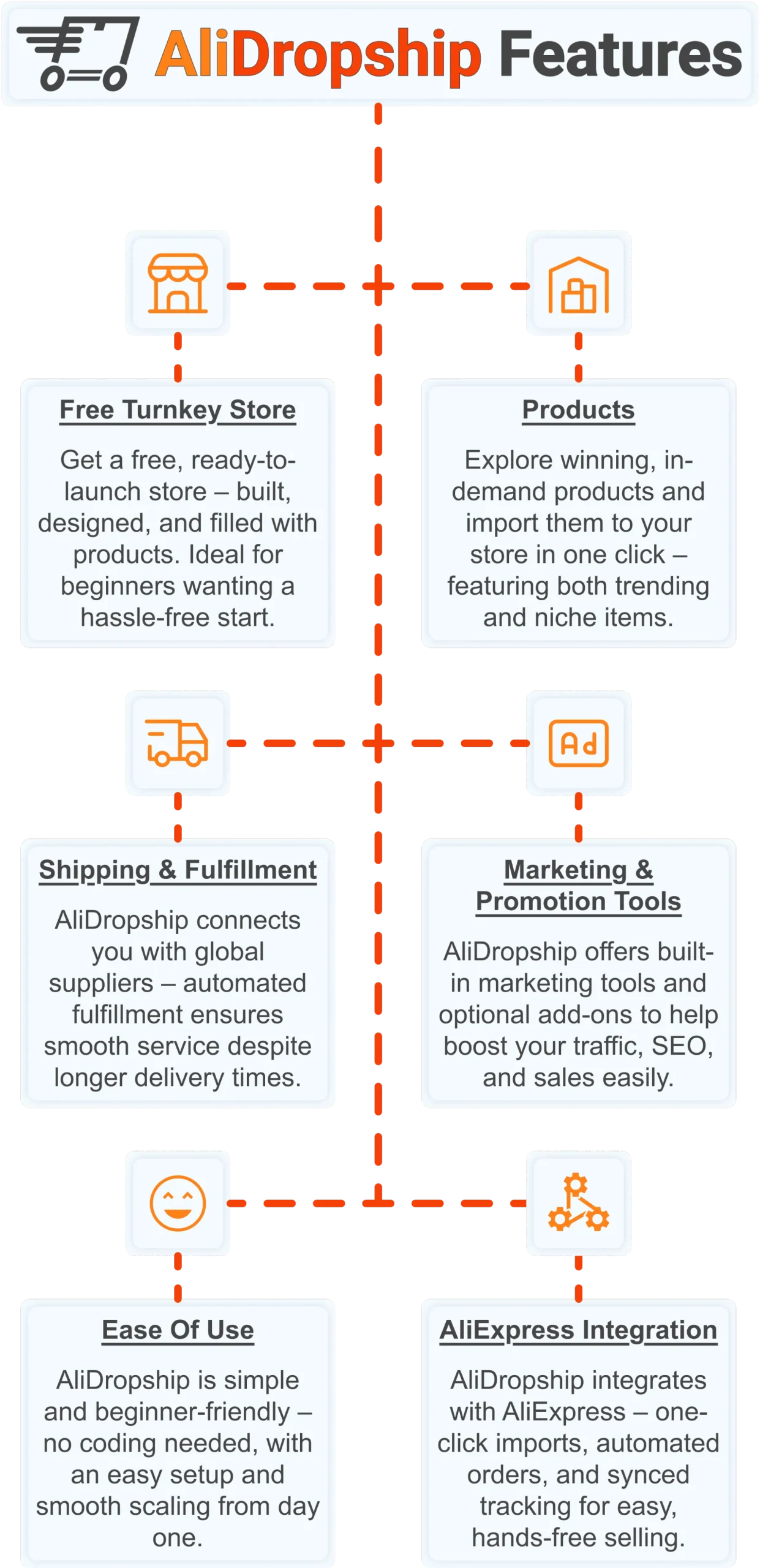
Free turnkey store ️
Get a free turnkey store – built, designed, and filled with products. Ideal for beginners wanting a hassle-free start, the store comes fully optimized to attract customers right away, saving you time on setup. Plus, it includes professional design elements to give your business a polished, trustworthy look from day one. This ready-made foundation makes it easy to move seamlessly into product selection.
Products
Once your store is set up, you can explore winning, in-demand products and import them in one click – featuring both trending and niche items. This wide selection lets you cater to diverse customer interests and test what works best. Regular updates ensure you always have fresh products, keeping your store competitive and relevant. With great products in place, smooth shipping becomes the next essential step.
Shipping & fulfillment
AliDropship connects you with global suppliers, and automated fulfillment ensures seamless order processing despite international delivery times. Customers receive real-time tracking updates, which builds confidence and trust in your store. Once shipping is handled reliably, you can focus on promoting your store and attracting traffic.
Marketing & promotion tools
To maximize sales, AliDropship offers built-in marketing tools and optional add-ons that help boost traffic, SEO, and conversions. From email campaigns and discounts to social media integration, these tools empower you to reach and retain customers without needing prior marketing experience. With promotion strategies in place, managing your business becomes simpler and more efficient.
Ease of use
AliDropship is beginner-friendly – no coding needed, with an intuitive dashboard that guides you through every step. Easy setup and smooth scaling let you expand your store without stress. As your business grows, adding new features, products, and marketing campaigns remains hassle-free, giving you more time to focus on sales.
AliExpress integration
Finally, AliDropship integrates seamlessly with AliExpress, enabling one-click imports, automated orders, and synced tracking. Your inventory stays up-to-date with the latest products and prices, while automated order processing frees you from manual tasks. Combined with the turnkey setup, reliable shipping, and built-in marketing tools, this integration ensures your dropshipping business is fully equipped for growth and success.
Frequently Asked Questions
How much does it cost to start an online store with dropshipping?
Startup costs for dropshipping are minimal, typically just the platform and domain fees, since inventory is never purchased upfront. A decent dot com domain costs 10 to 15 per year and is worth buying from day one. For WooCommerce, budget 5 to 15 per month for quality shared hosting from a provider like SiteGround or Hostinger. Most beginners should budget 200 to 500 for their first month of ad testing rather than expecting profit immediately.
How much can a new online store realistically earn in the first few months?
Dropshipping stores typically earn 500 to 5000 per month within the first 3 to 6 months with consistent marketing. Most people starting from scratch earn 30 to 80 per day within the first 3 to 6 months if they stay consistent with one model. First meaningful revenue typically arrives within 60 to 90 days of launch with paid traffic. Organic only stores take longer, usually 3 to 6 months before significant traffic builds.
Which ecommerce platform is best for a beginner starting an online store?
Shopify is the most popular hosted platform globally, with plans starting at 39 per month, and it handles hosting and security automatically. WooCommerce is free and open source, giving full ownership of the store and data with no transaction fees, but requires more technical setup. Wix and Squarespace are easier for complete beginners but have more limited product management tools. AliDropship provides a done for you WooCommerce based store with no recurring platform fees, just a one time setup cost.
How should a new online store price its products for a healthy margin?
A standard dropshipping markup is 2 to 3 times the supplier cost for lower priced items and 1.5 to 2 times for higher priced items. Margins for dropshipping usually sit between 15 and 40 percent depending on the product and niche. A viable niche should support products with at least 15 to 25 percent margins after accounting for fees. Running a margin calculation before listing each product takes about two minutes and prevents selling at a loss after fees.
How much paid ad budget is needed to test a new online store?
A starting budget of 10 to 20 per day is enough to test products and audiences on Facebook and Instagram. Most sellers should not expect consistent returns before spending 200 to 500 dollars on testing. The goal in the first 30 days is data collection, not profit, covering which products resonate and what the cost per acquisition looks like. TikTok ads often work well for younger demographics and can offer a lower cost per click during testing.
If you are ready to stop researching and actually start an online store, AliDropship gives you everything you need in one place – store, products, and automation included. Claim your free turnkey store today and get a $100 gift voucher to kick off your first month.
 Previous post
