 ‧ Agnes Kazaryan ‧
March 16, 2026
‧ Agnes Kazaryan ‧
March 16, 2026  763 ‧
763 ‧
 0
0
Most dropshippers are selling the exact same products as a hundred other stores. Same supplier. Same photos. Same packaging. The only thing they can compete on is price – and that’s a race to the bottom. Private label dropshipping fixes that problem. It lets you sell under your own brand name, with your own packaging and identity, while a supplier still handles all the storage and shipping. You get the low-risk model of dropshipping and the margins and loyalty of a real brand.
Quick Answer: Private label dropshipping is a business model where you sell products made by a third-party manufacturer under your own brand name, logo, and packaging – without ever holding inventory. The supplier ships directly to your customers, just like regular dropshipping.
In 2026, it’s more accessible than ever. Minimum order quantities have dropped. Overseas suppliers are easier to vet. And tools like AliDropship make it straightforward to build and run a branded store without technical skills or a big budget. If you’ve been wondering whether private label dropshipping is worth the extra effort compared to generic dropshipping, this guide gives you an honest, complete answer.
What is private label dropshipping?
Private label dropshipping combines two concepts. Dropshipping is a fulfillment model where you sell products you don’t physically hold – your supplier stores the inventory and ships orders directly to your customers. Private labeling is when those products carry your brand name, logo, and packaging rather than the manufacturer’s.
Put them together and you get a business where a supplier manufactures products to your specifications, applies your branding, and ships orders straight to your customers. You never touch the stock. You focus entirely on building the brand, driving traffic, and making sales.
It’s worth understanding where private label sits relative to the other models you’ll come across:
- Regular dropshipping – you sell the supplier’s branded products exactly as they come. No customization. Anyone can sell the same item.
- White label dropshipping – you add your logo to a generic product that multiple sellers can also brand. Quick and cheap, but not exclusive to you.
- Private label dropshipping – the product is manufactured to your specifications. Only you can sell it under your brand. More setup involved, but much higher long-term value.
The key distinction is exclusivity. With private label, no competitor can undercut you on your own branded product. That’s the foundation of a business worth building.
How much can you realistically earn with private label dropshipping?
Private label dropshipping typically earns more per sale than regular dropshipping – but it takes longer to set up and the early months require patience. Expect 60–90 days before you see consistent sales, assuming you’ve launched correctly and are actively marketing.
Private label profit margins typically run 20–40% higher than generic dropshipping, because customers pay more for products tied to a recognizable brand. The catch is that it takes real marketing effort and a few months of consistency to get there.
Important note: These figures are realistic for sellers who’ve found a winning niche, set up proper branding, and invest consistently in traffic. Don’t expect $300/day in month one. Treat the first 60–90 days as your testing and brand-building phase.
Private label vs white label: What’s the real difference?
This is one of the most common points of confusion for new sellers, and it matters because it affects your strategy, startup cost, and how defensible your business is long term.
With white label dropshipping, you take a finished generic product and apply your branding to it – usually just a logo on the packaging. The product itself is identical to what other sellers are also branding. You’re buying a commodity and adding a sticker. It’s quick to launch and cheap to start, but anyone else can do exactly the same thing with the same product.
With private label dropshipping, you work with the manufacturer to customize the actual product – the formula, the design, the materials, the features, or the packaging – so the end result is unique to your brand. No other seller can offer your exact product. That exclusivity is what lets you protect your pricing and build genuine customer loyalty.
Which should you choose? If you’re just starting out and want to get moving fast, white label is a reasonable entry point. But if you’re serious about building a business that’s worth something in 2–3 years, private label is the right direction. The extra setup pays off.
Best product categories for private label dropshipping in 2026
Not every product works well for private labeling. You want categories where branding genuinely increases perceived value, where customers buy repeatedly, and where there’s real room to differentiate. Here are the strongest options right now.
Health, beauty, and wellness
This is the top-performing category for private label sellers across the board. Skincare, supplements, hair care, and personal wellness products all carry high perceived value – customers are willing to pay significantly more for products tied to a brand they trust. Profit margins are strong, and the repeat purchase rate is excellent. If you go into supplements, make sure your supplier follows Good Manufacturing Practices (GMP) and can provide third-party testing certificates. That documentation protects you legally and builds customer trust.
Earning potential: $100–$400/day with a focused niche and consistent content marketing.
Home décor and lifestyle products
Candles, throw pillows, wall art, kitchen accessories – these items lend themselves naturally to brand storytelling. A cohesive aesthetic and a consistent visual identity can turn a home décor store into a brand that customers follow and recommend. The category is competitive, but well-branded stores regularly outperform generic sellers by a wide margin on average order value.
Earning potential: $60–$200/day once brand recognition builds, typically after 3–6 months.
Apparel and accessories
Clothing and accessories remain strong for private label dropshipping because fabric choice, design, and fit can all be customized. Sustainable materials – organic cotton, recycled fabrics, bamboo blends – command a meaningful price premium right now, and eco-conscious positioning is a genuine differentiator. Custom phone cases and tech accessories also perform well, given how frequently new devices launch and how easily you can differentiate on design.
Earning potential: $50–$180/day depending on niche tightness and marketing spend.
Pet products
Pet owners spend consistently and emotionally. Branded collars, pet supplements, grooming products, and accessories all work well in the private label model. The niche also has strong community dynamics – pet owners share recommendations freely on Reddit, TikTok, and Facebook groups, giving you organic reach if your product quality is genuinely good.
Earning potential: $40–$150/day with the right niche and community-led marketing.
How to start private label dropshipping: Step by step
The process looks more complicated than it is. Once you understand the sequence, you can move from idea to first sale in 4–8 weeks.
Step 1 – Pick a niche and validate your product idea
Start narrow. The most successful private label brands target a specific customer with a specific problem – not everyone everywhere. Use Google Trends to check search demand over time, and look at what’s already selling well on AliExpress and Amazon to understand what customers actually buy. Don’t just pick what you’re excited about; find the overlap between what excites you and what people are already looking for.
Step 2 – Find a private label supplier
AliExpress is one of the most accessible starting points – many suppliers offer private labeling options and don’t require large minimum order quantities. Alibaba is better for more customized products but typically involves higher MOQs. When evaluating suppliers, check four things: their track record of reviews from other sellers, their minimum order requirements, whether they offer custom packaging, and how quickly they process and ship orders. Always order samples before committing.
Important: Never trust a supplier based on a single listing or a few reviews. Look for sellers with long histories and detailed feedback on product consistency and after-sales support.
Step 3 – Develop your branding
Your brand is more than a logo. Before you contact suppliers about packaging, you need a clear brand identity – your name, visual style, color palette, and the tone you want to communicate. Think about who your customer is and what they care about. A supplement brand for athletes communicates very differently from a self-care brand for busy parents. Once your branding is defined, share detailed specifications with your supplier covering logo placement, packaging colors, any required text, and label dimensions.
Step 4 – Build your store
Your store needs to look like a brand, not a dropshipping catalogue. Clean product photography, a consistent color scheme, a clear brand story, and honest product descriptions all contribute to conversion rate. Tools like AliDropship make this process much faster – you get a ready-built, professionally designed store that’s already set up for AliExpress integration and automated order fulfillment.
Step 5 – Order samples and test before going live
This step is non-negotiable. Order samples of your branded product before you launch. Check the print quality on your logo, the packaging finish, the product itself, and how long the whole process takes from order to delivery. This is also your best source of authentic marketing material – photos and videos of a real unboxing experience.
Step 6 – Launch and market consistently
SEO-optimized product descriptions, social media content, email sequences, and paid ads all have a role to play. Start with one or two channels and do them well rather than spreading thin. TikTok organic reach is still underpriced for branded products. Email is the highest-ROI channel once you have a customer list. Content marketing (blog posts, YouTube, Instagram Reels) builds long-term organic traffic.
Legal and ethical considerations for private label dropshipping
Private label dropshipping is entirely legitimate – but there are rules you need to follow to stay on the right side of the law and protect your business.
Labeling and safety regulations
Different product categories come with different compliance requirements. Supplements sold in the US must comply with FDA regulations around labeling and claims. Cosmetics sold in the EU require registration under the EU Cosmetics Regulation. Children’s products need to meet specific safety standards. Before you launch in any regulated category, research the rules in your target market and confirm your supplier can provide the necessary certifications.
Key principle: You are the seller of record for your branded product. That means compliance responsibility sits with you, not your supplier.
Trademarks and intellectual property
Once your brand gains traction, register your trademark. A registered trademark gives you legal protection against competitors who might copy your branding and makes your business significantly more valuable if you ever want to sell it. Private label businesses with registered trademarks can sell for 36–60 times monthly profit on platforms like Empire Flippers – substantially more than a generic dropshipping store.
Important: Never copy another brand’s logo, product design, or packaging. This includes big brands but also smaller niche brands. IP disputes are expensive and avoidable.
Supplier agreements and documentation
Get everything in writing. Your supplier agreements, product specifications, branding files, and any exclusivity arrangements should all be documented. This protects you if a supplier ships the wrong product, discontinues a line, or starts selling your branded design to competitors.
How to choose your approach: A guide by experience level
Private label dropshipping isn’t the same journey for everyone. Here’s an honest breakdown based on where you’re starting from.
Complete beginner
If you’ve never run a dropshipping store before, start with regular dropshipping first. Use those first few months to learn how store management works, how to run ads, and how customers behave in your chosen niche. Once you’ve found a product or category that sells consistently, that’s your signal to move into private label. Jumping straight into private label with no experience is possible, but it’s slower and more expensive to learn.
Intermediate / part-time seller
If you already have a store with some sales history, you’re in the ideal position to transition. Look at your best-selling products and identify which ones could carry a branded version at a higher price. Start by white labeling one or two products, test the market response, and then move to full private label customization for anything that shows strong demand.
Advanced / full-time goal
If your goal is a scalable, sellable business, private label is the right model from day one. Focus on a tight niche, invest in proper branding from the start, build an email list aggressively, and look into trademark registration early. The businesses that sell for the highest multiples are ones with defensible brand identity, repeat customer rates above 20%, and documented supplier relationships.
AliDropship: Your complete all-in-one solution for starting dropshipping in 2026
If you want the simplest possible way to start dropshipping – especially if you’re brand new – AliDropship remains one of the most beginner-friendly tools available in 2026. It brings together store creation, product imports, automation, and marketing into a single streamlined system designed to help you launch quickly and grow confidently.
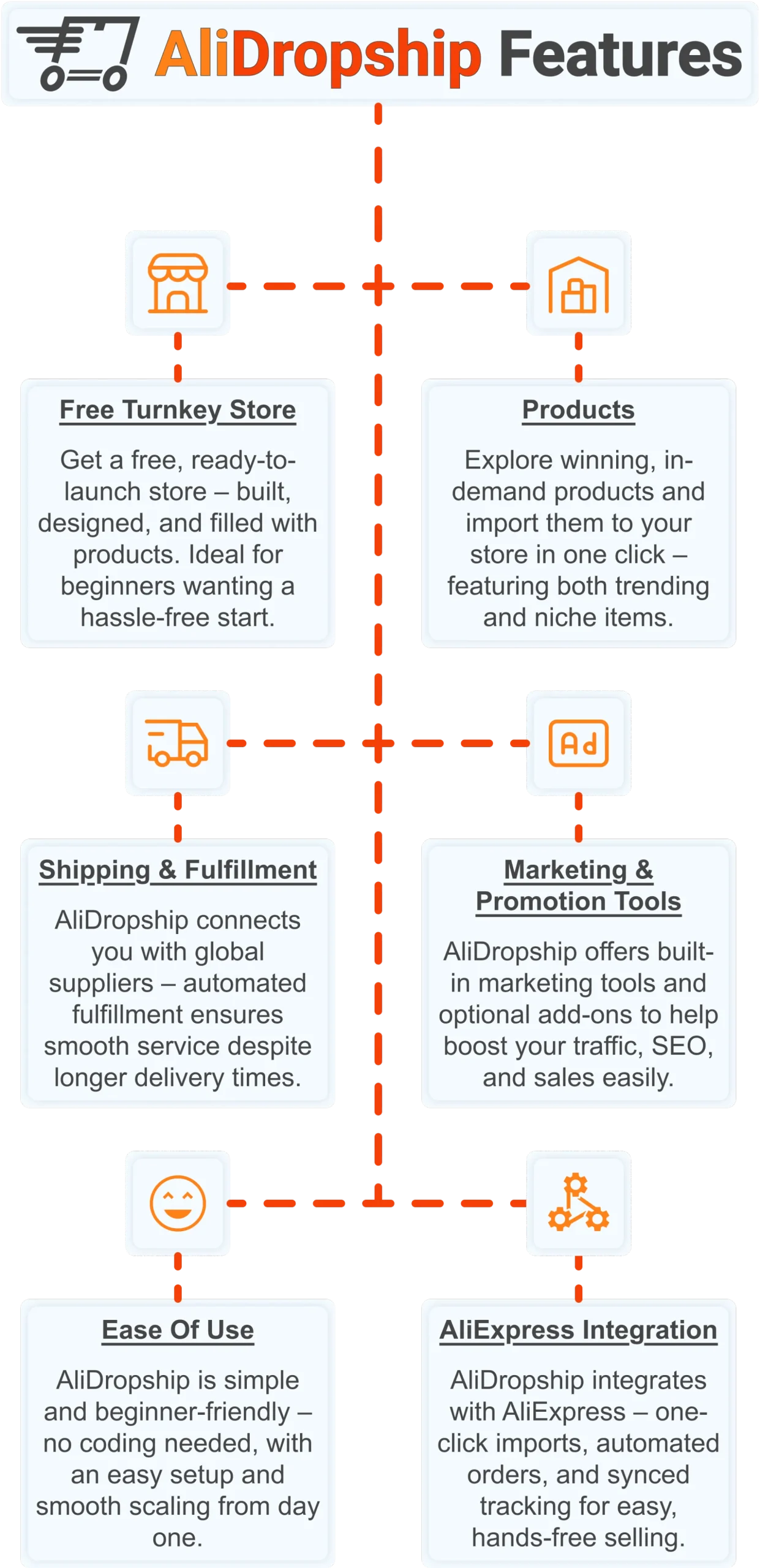
Free turnkey store ️
Get a free turnkey store – built, designed, and filled with products. Ideal for beginners wanting a hassle-free start, the store comes fully optimized to attract customers right away, saving you time on setup. Plus, it includes professional design elements to give your business a polished, trustworthy look from day one. This ready-made foundation makes it easy to move seamlessly into product selection.
Products
Once your store is set up, you can explore winning, in-demand products and import them in one click – featuring both trending and niche items. This wide selection lets you cater to diverse customer interests and test what works best. Regular updates ensure you always have fresh products, keeping your store competitive and relevant. With great products in place, smooth shipping becomes the next essential step.
Shipping & fulfillment
AliDropship connects you with global suppliers, and automated fulfillment ensures seamless order processing despite international delivery times. Customers receive real-time tracking updates, which builds confidence and trust in your store. Once shipping is handled reliably, you can focus on promoting your store and attracting traffic.
Marketing & promotion tools
To maximize sales, AliDropship offers built-in marketing tools and optional add-ons that help boost traffic, SEO, and conversions. From email campaigns and discounts to social media integration, these tools empower you to reach and retain customers without needing prior marketing experience. With promotion strategies in place, managing your business becomes simpler and more efficient.
Ease of use
AliDropship is beginner-friendly – no coding needed, with an intuitive dashboard that guides you through every step. Easy setup and smooth scaling let you expand your store without stress. As your business grows, adding new features, products, and marketing campaigns remains hassle-free, giving you more time to focus on sales.
AliExpress integration
Finally, AliDropship integrates seamlessly with AliExpress, enabling one-click imports, automated orders, and synced tracking. Your inventory stays up-to-date with the latest products and prices, while automated order processing frees you from manual tasks. Combined with the turnkey setup, reliable shipping, and built-in marketing tools, this integration ensures your dropshipping business is fully equipped for growth and success.
Private label dropshipping gives you the brand, the margins, and the long-term business that generic selling never will. Get your free turnkey store from AliDropship and start building your brand today.
Frequently asked questions
How much can you realistically earn with private label dropshipping?
Private label dropshipping typically earns 80 to 300 dollars per day once a store is established, compared to 10 to 40 dollars per day for regular dropshipping. Profit margins usually run 20 to 40 percent higher than generic dropshipping because customers pay more for branded products. Most sellers need 60 to 90 days before seeing consistent sales. Earnings vary by category, with health and wellness products reaching 100 to 400 dollars per day in a focused niche.
What is the difference between private label and white label dropshipping?
White label dropshipping means adding your logo to a generic product that other sellers can also brand, making it quick and cheap but not exclusive. Private label dropshipping means the manufacturer customizes the actual product, formula, or packaging so only you can sell that exact item. This exclusivity is what protects pricing and builds long-term customer loyalty. Private label businesses with registered trademarks can sell for 36 to 60 times monthly profit, far more than a generic store.
Which product categories work best for private label dropshipping?
Health, beauty, and wellness products are the top-performing category, earning 100 to 400 dollars per day with strong repeat purchase rates. Home decor and lifestyle products can bring in 60 to 200 dollars per day once brand recognition builds, typically after 3 to 6 months. Apparel and accessories generate 50 to 180 dollars per day, especially with sustainable materials that command a price premium. Pet products round out the top categories at 40 to 150 dollars per day thanks to strong community-driven marketing.
How long does it take to launch a private label dropshipping store?
The full process from choosing a niche to your first sale typically takes 4 to 8 weeks when following a structured sequence. This includes validating a product idea, finding a supplier, developing branding, building the store, and ordering samples before going live. Suppliers on AliExpress often support private labeling without large minimum order quantities, while Alibaba usually requires higher minimums for more customized products. Ordering samples before launch is a required step to check print quality and packaging finish.
Are there legal requirements to consider before starting private label dropshipping?
Yes, compliance requirements vary by product category and target market. Supplements sold in the United States must follow FDA labeling and claims regulations, while cosmetics sold in the EU require registration under the EU Cosmetics Regulation. The seller of record carries compliance responsibility, not the supplier. Registering a trademark also protects the brand legally and can significantly increase the resale value of the business.
 Previous post
