 ‧ Agnes Kazaryan ‧
March 20, 2026
‧ Agnes Kazaryan ‧
March 20, 2026  613 ‧
613 ‧
 0
0
Retail is going through the biggest shake-up in a generation. Physical stores are shrinking. Online sales are accelerating. And the tools you need to participate in this shift have never been more accessible. Retail digital transformation is not a trend for big corporations anymore – it is an open door for everyday people who want to build something real online.
Whether you are completely new to ecommerce or already running a small side hustle, understanding this shift is what separates people who earn from people who watch from the sidelines.
Quick Answer: Retail digital transformation is the process of replacing traditional retail methods with digital tools, platforms, and data-driven systems – covering everything from online storefronts and automated fulfillment to AI-powered analytics. For entrepreneurs, it creates a direct path into ecommerce models like dropshipping, where you can sell products online with no warehouse, no upfront inventory, and no technical background required.
This guide covers exactly what retail digital transformation means in practical terms, how much you can realistically earn by riding this wave, and which methods are genuinely worth your time in 2026.
What is retail digital transformation?
Retail digital transformation is the shift from traditional, physical-first retail operations toward digital-first systems that are faster, more data-driven, and far more scalable. In plain terms: it is what happens when a business stops relying on foot traffic, paper records, and manual processes and starts using digital tools to sell, market, and fulfill orders instead.
This covers a wide spectrum. At one end, you have major retailers replacing checkout staff with automated systems and using AI to predict stock demand weeks in advance. At the other end, you have a solo entrepreneur setting up a dropshipping store from a laptop and reaching buyers in 40 countries without ever touching the inventory.
Both are retail digital transformation in action. The scale is different. The principle is the same: digital infrastructure removes the friction that used to make retail expensive and slow.
Why this works in 2026: Global ecommerce revenue is on track to exceed $8 trillion this year, with a significant portion of that growth coming from independent online sellers rather than large retail chains. The barrier to entry has dropped dramatically – you no longer need a physical location, a large team, or significant startup capital to reach customers anywhere in the world.
For entrepreneurs, the most accessible entry point is ecommerce – specifically low-overhead models like dropshipping, where you run a digital storefront, a customer places an order, and your supplier ships directly to them. The digital infrastructure handles the rest. No warehouse. No upfront stock purchases. No shipping logistics on your end.
How much can you realistically earn?
Honest answer: the income potential is real, but it is not passive from day one, and it is not guaranteed. What you earn depends on the model you pick, the effort you put in during the first 60–90 days, and how quickly you apply what you learn from real sales data.
Here is a clear breakdown of the five most common ways people profit from the retail digital transformation shift right now:
Dropshipping and digital product stores offer the best balance of startup cost versus earning potential for most beginners. Consulting pays more but requires established skills and clients. Affiliate ecommerce is the most passive but the slowest to build meaningful daily income.
One note on the ceiling figures: Numbers like “$300/day” reflect what sellers with optimized stores achieve after sustained testing and refinement – typically 60–90 days of consistent daily work. Most beginners land in the $30–$80/day range within the first two to three months. Full-time effort means real daily work on product selection, marketing, and customer experience. It is not a set-it-and-forget-it model, at least not early on.
Building and running an online dropshipping store
Dropshipping is one of the clearest expressions of retail digital transformation at the individual level. You run a digital storefront. A customer places an order. Your supplier ships the product directly to them. You never touch the inventory. The digital tools handle the connection between buyer and supplier automatically.
It is not a get-rich-quick model. But it is one of the most accessible ways to launch a real online retail business with minimal startup cost – especially in 2026, when platforms like AliDropship provide a fully built, product-stocked store for free, including a $100 voucher toward your first marketing push.
Getting started in 2026
The fastest entry point is a turnkey dropshipping store – a fully configured ecommerce site ready to go live, built around a niche you choose. Home goods, fitness accessories, pet products, and tech gadgets are consistently strong performers. Once your store is live, the focus shifts entirely to driving traffic and learning which products generate real buyer interest versus casual browsers.
Your first 30 days are a learning phase. Month two and three is where results compound, assuming you have been applying what the data tells you.
Earning potential: $50–$200/day after 60–90 days of active optimization, with established sellers in strong niches reaching $300+/day.
How long before you see results
Realistic timelines vary by effort level and niche. Most sellers see their first profitable weeks within 60–90 days of launching, with consistent daily focus on marketing. Those who invest in paid Meta ads alongside organic channels (TikTok and Pinterest are strongest for most product niches right now) tend to see results faster. The first month is almost always a testing phase – and that is normal. Do not confuse slow initial results with a bad model.
Selling digital products as part of the digital retail shift
Digital products are one of the most overlooked opportunities inside the retail digital transformation story. Unlike physical goods, digital products – guides, templates, courses, design assets, printables – have zero fulfillment cost and instant delivery. Once created or acquired, every sale is close to pure margin.
Which digital product types perform best right now
The strongest categories in 2026 are business templates (spreadsheet frameworks, SOP documents, proposal kits), educational guides in high-demand niches like personal finance, fitness, and parenting, design asset bundles (Canva templates, social media kits), and niche toolkits for small business owners.
AliDropship’s digital products option gives you access to ready-made digital guides without having to create a single one yourself – which removes the biggest barrier most beginners face when considering this model.
Where to find buyers for digital products
Pinterest, TikTok, and niche Facebook groups are currently the most cost-effective channels for organic traffic to digital product stores. Paid Meta ads work well but require a consistent daily testing budget of at least $10–$20 to generate meaningful data. Building an email list from day one makes a significant difference to revenue per visitor over time – this is the one step most beginners skip and later regret.
Earning potential: $20–$150/day depending on product pricing and traffic volume. Stores with a consistent social presence and an email list can reach this range within three to four months.
Retail arbitrage and reselling in the digital era
Retail arbitrage – buying discounted products from physical or online retailers and reselling them at a markup on platforms like eBay, Amazon, or your own store – is one of the oldest forms of ecommerce. Digital transformation has made it meaningfully more efficient: mobile scanning apps let you check resale margins in seconds, and repricing tools automate your listings across multiple marketplaces without constant manual updates.
What makes retail arbitrage viable in 2026
The core advantage is fast cash flow with a low starting budget. You can begin with $200–$500 in sourcing capital and see returns within days. The limitation is scalability – you are still handling physical inventory, spending time sourcing and packing, and dealing with shipping logistics. Most serious arbitrage sellers treat it as a bridge strategy while building toward a more automated ecommerce model like dropshipping.
Earning potential: $30–$100/day with consistent sourcing effort, scaling toward $150+/day for sellers managing multiple marketplace accounts simultaneously.
Affiliate marketing in the ecommerce space
Affiliate marketing within the digital retail vertical means promoting other companies’ products or platforms and earning a commission on each sale or qualified lead you generate. It is the most passive of the methods covered here – but also the slowest to build meaningful daily income without an existing audience or content platform behind you.
How to approach ecommerce affiliate marketing in 2026
The most effective strategy is building content around buying-intent search queries – product review articles, comparison posts, “best of” lists – and monetizing them with affiliate links. YouTube and long-form blog content still generate the most reliable affiliate income in ecommerce niches, though short-form TikTok and Instagram Reels are growing as entry points.
Most affiliate marketers take six to twelve months to reach consistent daily income, which is why this model works best as a complementary revenue stream rather than a primary strategy for someone just starting out.
Earning potential: $10–$80/day for established content creators with an existing audience. Beginners should expect six or more months before seeing consistent daily earnings.
Ecommerce consulting and digital retail services
If you already have experience in marketing, web design, logistics, or retail operations, there is strong and growing demand from small and medium businesses navigating their own version of retail digital transformation. Many traditional retailers know they need to go digital – they just do not know where to start, and they are willing to pay someone who does.
How to find consulting clients in this space
LinkedIn, local business associations, and direct outreach to brick-and-mortar retailers in your area are the three most reliable channels for finding clients. The ideal client profile is a retail business owner who is aware they are losing ground to online competitors and motivated to change that. Charging a flat setup fee ($500–$2,000) for store creation plus a monthly retainer ($500–$1,500) for ongoing marketing and management is a model that works well and creates predictable recurring income.
Earning potential: $100–$500/day once you have two to three ongoing retainer clients in place. The ceiling here is skill-limited rather than market-limited – demand for this type of help is genuinely high right now.
Legal and ethical considerations in digital retail
Getting into ecommerce as part of the retail digital transformation opportunity is legitimate and potentially very rewarding. But there are real pitfalls that can damage your store’s reputation, get your accounts banned, or expose you to legal risk. Knowing what to avoid is as important as knowing what to pursue.
What to avoid absolutely
Fake reviews are one of the fastest ways to destroy a new ecommerce business. Platforms like Amazon, Trustpilot, and Google actively detect review manipulation, and stores caught doing this face permanent bans with no appeal process. Do not do it.
Misrepresenting product quality, origin, or delivery times in your listings violates consumer protection law in most jurisdictions and generates chargebacks, refund demands, and account suspensions. Honest product descriptions and realistic shipping estimates are not just ethical – they are better for your conversion rate and customer retention.
Dropshippers should also be careful when importing products from AliExpress. The one-click import process is convenient, but it is your responsibility to confirm that what you are selling does not infringe on trademarks or intellectual property. Stick to generic products or verified suppliers. Selling counterfeit goods – even unknowingly – creates serious legal exposure.
Key principle: If the marketing pitch requires hiding information from the customer, it is not a sustainable business model – it is a liability waiting to surface.
What to do instead
Build credibility from day one by being transparent about shipping timelines (especially if sourcing internationally), maintaining a clear returns policy, and responding to customer messages promptly. These habits compound over time into a store reputation that converts visitors and reduces refund rates.
For legal and tax compliance, register your business as a sole trader or LLC depending on your country, collect sales tax where required, and keep transaction records. Modern accounting tools make this straightforward and low-effort. The protection is well worth the minimal admin overhead.
How to choose the right method for your situation
Retail digital transformation creates genuine opportunity at every skill level. But not every method suits every person. Here is a clear breakdown by reader profile to help you identify the right starting point.
Complete beginner
If you are starting from zero – no ecommerce experience, no existing audience, limited budget – a turnkey dropshipping store is your cleanest entry point. It removes the technical setup barrier entirely and gives you a working store from day one. Spend your first 30 days learning one organic traffic channel (TikTok or Pinterest work well for most product niches) and, if budget allows, run a modest paid ads test on Meta. Expect to invest more time than money in the first two months.
Intermediate / part-time
If you have some familiarity with online marketing or have run a side hustle before, you are well-positioned to combine methods. A dropshipping store as your primary income channel, supplemented by affiliate content in the same niche, gives you two revenue streams that reinforce each other. Your content builds trust and drives traffic; your store converts that traffic into orders. Aim for $50–$100/day within 60 days at two to three hours of focused work per day.
Advanced / full-time goal
If your goal is replacing a full-time income – typically $150–$300/day – the fastest path is a scaled dropshipping operation with multiple winning products, a growing email list, and retargeting ads running consistently. At this level, the business requires real systems: a customer service workflow, a product testing budget, and a content strategy that builds over time. Most sellers reach this point after 90–180 days of data-driven, full-time effort. Running a small consulting practice on the side during this ramp-up period can accelerate your financial runway significantly.
AliDropship: Your complete all-in-one solution for starting dropshipping in 2026
If you want the simplest possible way to start dropshipping – especially if you’re brand new – AliDropship remains one of the most beginner-friendly tools available in 2026. It brings together store creation, product imports, automation, and marketing into a single streamlined system designed to help you launch quickly and grow confidently.
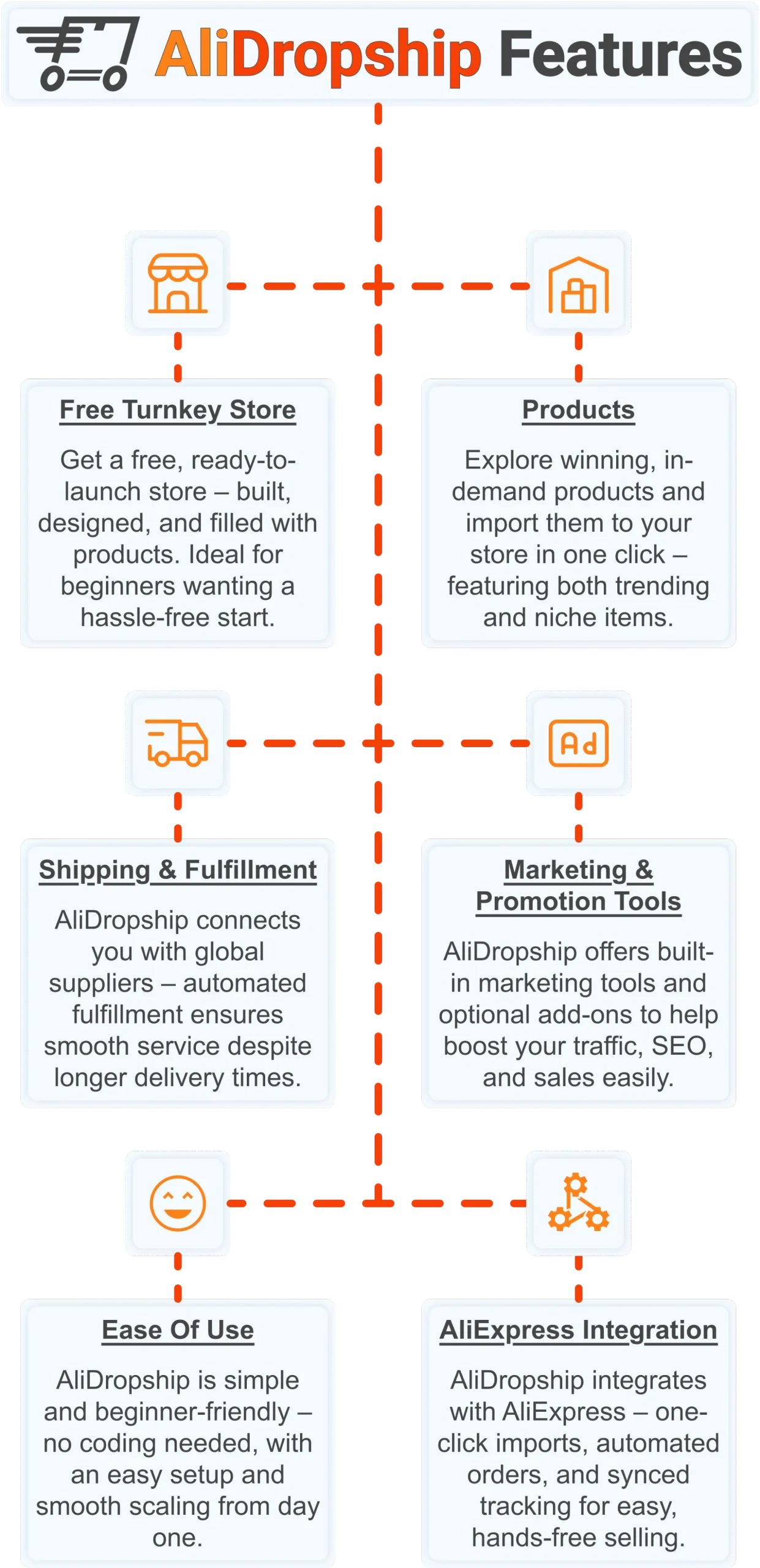
Free turnkey store ️
Get a free turnkey store – built, designed, and filled with products. Ideal for beginners wanting a hassle-free start, the store comes fully optimized to attract customers right away, saving you time on setup. Plus, it includes professional design elements to give your business a polished, trustworthy look from day one. This ready-made foundation makes it easy to move seamlessly into product selection.
Products
Once your store is set up, you can explore winning, in-demand products and import them in one click – featuring both trending and niche items. This wide selection lets you cater to diverse customer interests and test what works best. Regular updates ensure you always have fresh products, keeping your store competitive and relevant. With great products in place, smooth shipping becomes the next essential step.
Shipping & fulfillment
AliDropship connects you with global suppliers, and automated fulfillment ensures seamless order processing despite international delivery times. Customers receive real-time tracking updates, which builds confidence and trust in your store. Once shipping is handled reliably, you can focus on promoting your store and attracting traffic.
Marketing & promotion tools
To maximize sales, AliDropship offers built-in marketing tools and optional add-ons that help boost traffic, SEO, and conversions. From email campaigns and discounts to social media integration, these tools empower you to reach and retain customers without needing prior marketing experience. With promotion strategies in place, managing your business becomes simpler and more efficient.
Ease of use
AliDropship is beginner-friendly – no coding needed, with an intuitive dashboard that guides you through every step. Easy setup and smooth scaling let you expand your store without stress. As your business grows, adding new features, products, and marketing campaigns remains hassle-free, giving you more time to focus on sales.
AliExpress integration
Finally, AliDropship integrates seamlessly with AliExpress, enabling one-click imports, automated orders, and synced tracking. Your inventory stays up-to-date with the latest products and prices, while automated order processing frees you from manual tasks. Combined with the turnkey setup, reliable shipping, and built-in marketing tools, this integration ensures your dropshipping business is fully equipped for growth and success.
Retail digital transformation is happening whether you join it or watch it from the sidelines – and AliDropship gives you the fastest, most complete way to participate as an independent online seller. Claim your free turnkey store today and start building your digital retail business.
Frequently asked questions
What is retail digital transformation and how does it relate to ecommerce?
Retail digital transformation is the process of replacing traditional retail methods with digital tools, platforms, and data-driven systems, covering everything from online storefronts to AI-powered analytics. For entrepreneurs, it creates a direct path into models like dropshipping, where products can be sold online with no warehouse and no upfront inventory. Global ecommerce revenue is on track to exceed 8 trillion dollars this year. A significant portion of that growth is coming from independent online sellers rather than large retail chains.
How much can you realistically earn from retail digital transformation opportunities?
A dropshipping store can generate 50 to 300 dollars per day at scale after 60 to 90 days of active work. Digital product selling typically earns 20 to 150 dollars per day, while retail arbitrage can bring in 30 to 100 dollars per day with ongoing sourcing effort. Consulting or digital services pay the most at 100 to 500 dollars per day but require established skills and clients. Most beginners land in the 30 to 80 dollar per day range within the first two to three months.
How long does it take to see results from a dropshipping store?
Most sellers see their first profitable weeks within 60 to 90 days of launching, with consistent daily focus on marketing. The first month is almost always a testing phase, and slow initial results should not be confused with a bad model. Sellers investing in paid Meta ads alongside organic channels like TikTok and Pinterest tend to see results faster. Established sellers in strong niches can reach 300 dollars or more per day after sustained testing and refinement.
What digital products sell best as part of the retail digital shift?
The strongest categories include business templates such as spreadsheet frameworks and proposal kits, educational guides in niches like personal finance and parenting, and design asset bundles like Canva templates. Digital products carry zero fulfillment cost and instant delivery, making each sale close to pure margin. Stores with a consistent social presence and an email list can reach 20 to 150 dollars per day within three to four months. Paid Meta ads for digital products typically require a daily testing budget of at least 10 to 20 dollars to generate meaningful data.
How much can ecommerce consulting earn compared to running a dropshipping store?
Ecommerce consulting can generate 100 to 500 dollars per day once a seller has two to three ongoing retainer clients in place. A typical model charges a flat setup fee of 500 to 2,000 dollars for store creation plus a monthly retainer of 500 to 1,500 dollars for ongoing management. Dropshipping stores generate a lower range of 50 to 300 dollars per day at scale but require less specialized skill to start. Consulting pays more per day but depends on having established marketing, web design, or retail operations experience.
 Previous post
