 ‧ Agnes Kazaryan ‧
March 23, 2026
‧ Agnes Kazaryan ‧
March 23, 2026  734 ‧
734 ‧
 0
0
Global ecommerce sales are on track to exceed $6.8 trillion in 2025 – and the share of retail happening online keeps growing. If you have been thinking about how to start an ecommerce business, the timing has never been better. But most guides skip the honest part: what it actually takes to get going, how long before you see real money, and which model actually fits where you are right now.
This guide covers all of it. Whether you are starting with zero budget or looking to turn a side hustle into a full-time income, here is a clear, realistic breakdown of what ecommerce looks like in 2026 – and how to find the right path forward.
Quick Answer: You can start an ecommerce business in 2026 with as little as $0 upfront using dropshipping or print-on-demand. Most new store owners see their first consistent sales within 60–90 days of launch with focused, sustained effort.
What is an ecommerce business?
An ecommerce business is any business that sells products or services over the internet. That covers everything from a solo dropshipper running a niche store from a laptop to a large brand with warehouses and thousands of products. The defining feature is simple: browsing, buying, and payment all happen online.
What makes ecommerce genuinely attractive in 2026 is the low barrier to entry. You do not need a physical storefront, a warehouse full of stock, or years of retail experience. Platforms like WooCommerce, Shopify, and AliDropship have made it possible to launch a working store in a single day, source products without ever touching them, and sell to customers in dozens of countries from day one.
The core models you will encounter are:
- Dropshipping – you list products, take orders, and your supplier ships directly to the customer. No inventory needed.
- Print-on-demand – you design custom products (t-shirts, mugs, posters) and a fulfilment partner prints and ships them per order.
- Wholesale / private label – you buy products in bulk or manufacture your own brand and ship from your own stock.
- Digital products – you sell downloadable items like guides, templates, or courses. No shipping, instant delivery.
Each model has a different upfront cost, profit margin, and effort level. For most beginners in 2026, dropshipping and digital products offer the fastest route to a live store with real products and minimal financial risk.
How much can you realistically earn from an ecommerce business?
This is the question every new seller wants answered honestly. The short version: ecommerce income varies enormously depending on your model, your niche, and how consistently you put in the work. Here is a practical breakdown.
Dropshipping and digital products offer the best risk-to-reward ratio for beginners. Wholesale and private label have higher income ceilings but require meaningful upfront investment and inventory skills.
One note on the higher figures: The upper end of these ranges reflects established stores with optimized ads, a tested product catalogue, and repeat customers – not a store in its first month. A realistic goal for a new dropshipping store in the first 90 days is $30–$80/day in revenue, with net margins of 15–30% depending on your product category and ad spend. Full-time income ($3,000–$5,000+/month) typically takes 6–12 months of consistent effort.
The good news is that ecommerce has a compounding effect. Every product you optimize, every customer you retain, and every review you collect makes the next sale easier. The stores that succeed are not necessarily the ones with the biggest starting budget – they are the ones that stay consistent long enough for the flywheel to kick in.
How to start an ecommerce business: Step by step
Starting an ecommerce business does not need to be complicated, but it does need to be done in the right order. Here is a practical walkthrough of the process most successful online store owners follow.
Step 1: Choose your business model and niche
The first real decision is how you will source and fulfil your products. For most beginners in 2026, dropshipping is the most practical starting point – you do not need to hold stock, and you can test multiple product categories before committing to one.
Once you have chosen a model, narrow down your niche. A focused niche store – pet accessories, home gym equipment, sustainable kitchenware – consistently outperforms a general store. It is easier to market, easier to rank in search, and far more likely to build a loyal repeat customer base.
When evaluating a niche, look for consistent demand (check Google Trends and avoid purely seasonal spikes), products priced at $25–$150 (enough margin to cover ads and still profit), a passionate audience that is active on social media, and suppliers with strong reviews and reliable shipping times.
Step 2: Pick your platform and set up your store
Your ecommerce platform is the foundation everything else is built on. The main options in 2026 are Shopify, WooCommerce (WordPress), BigCommerce, and Wix. Each has trade-offs around monthly cost, customization, and how well they integrate with dropshipping tools.
Why this works in 2026: WooCommerce is the most flexible option for dropshippers who want full control. It pairs natively with AliDropship, meaning product imports, order automation, and supplier communication are handled from one dashboard – without monthly platform fees eating into your margins.
Before going live, your store needs: a clean mobile-responsive theme, a clear homepage with your value proposition above the fold, product pages with real photos and visible reviews, a secure checkout with at least two payment options (card and PayPal), and a shipping policy plus returns page – customers check these before buying.
Step 3: Source and import your products
Once your store is live, you need products in it. For dropshippers, AliExpress remains the dominant sourcing platform in 2026, with millions of products across virtually every category. The key is not finding products – it is finding the right ones: items with strong order history, at least 4.5-star ratings, and suppliers who respond quickly to messages.
Tools like AliDropship let you import products from AliExpress in a single click, automatically sync pricing and inventory, and route orders to your supplier without manual processing. This automation is what makes running a solo dropshipping store genuinely practical.
Important: Always order a test unit of your top products before running paid ads. Photos and ratings tell you a lot, but nothing replaces checking the actual product quality and shipping time from the buyer’s perspective.
Step 4: Drive traffic to your store
A live store with no traffic earns nothing. Traffic is the variable most new ecommerce owners underestimate – not because it is hard to get, but because organic channels take longer to build than most guides admit.
The main traffic sources for a new ecommerce store are paid ads (Facebook, Instagram, TikTok, Google) which are the fastest route but require a testing budget of at least $300–$500 to find what converts; SEO and content marketing which take 3–6 months to produce meaningful organic rankings but compound over time; TikTok organic which has shown remarkable reach for product demos and unboxings with zero ad spend; and email marketing which consistently delivers the highest ROI of any channel – start building your list from day one with a discount popup or lead magnet.
Step 5: Optimize for conversions and retention
Getting traffic is only half the equation. A store converting at 1% is leaving serious money on the table compared to one converting at 3% – and the difference usually comes down to trust signals, page speed, and how clearly your value proposition is communicated.
Quick wins that improve conversion rate for most new stores include adding genuine customer reviews, displaying a clear and low-risk return policy on every product page, using urgency features like low-stock indicators sparingly (and only when they are real), and reducing checkout friction through fewer steps, more payment options, and no forced account creation.
Retention is where the real money is. A customer who buys twice is worth far more than two one-time buyers. Email sequences, loyalty discounts, and personalized product recommendations are the tools that make repeat business happen consistently.
Ecommerce business models compared: Which one fits you?
Choosing the right model is one of the most important early decisions when you start an ecommerce business. The wrong model for your situation does not mean failure – but it does mean slower progress and more friction along the way.
Dropshipping has the most flexible entry point and the widest product range available from day one. It is not a get-rich-quick model – but it is a genuinely scalable business when run with the right tools and realistic expectations.
The honest reality is that all of these models work. The difference between a store earning $200/month and one earning $5,000/month is almost never the model itself – it is consistency, product-market fit, and how well the owner learns from their data over time.
Legal and financial considerations when starting an online store
This part of the process is easy to skip when you are focused on products and traffic. But getting the basics right from the start protects you from serious headaches further down the line.
Business registration and taxes
In most countries, you are legally required to register your business once you start generating income. In the US, most small ecommerce sellers operate as a sole proprietor or LLC. An LLC gives you personal liability protection and is relatively inexpensive to set up – typically $50–$500 depending on your state. If you are unsure which structure fits your situation, consult a local accountant or use a registered agent service.
Sales tax is the area that catches most new ecommerce sellers off guard. In the US, most states require you to collect sales tax from customers in states where you have “nexus” (a business presence). Platforms like Shopify and WooCommerce have built-in tax tools that handle most of this automatically – but it is worth understanding your obligations before you start generating significant revenue.
What to avoid absolutely
Some practices circulate in ecommerce communities as shortcuts. They are not. They carry real legal and reputational risk.
Fake reviews – buying or generating fabricated reviews violates platform terms of service and, in many jurisdictions, consumer protection law. Amazon and Google have both pursued legal action against sellers using review farms.
Misleading product descriptions – overstating what a product does, especially in health and wellness categories, can expose you to trading standards complaints and refund disputes at scale.
Trademark infringement – selling branded products without authorization, or using brand names in your store’s SEO copy, is a fast route to takedown notices and account bans.
Hidden fees at checkout – surprise shipping costs or mandatory add-ons at checkout are the single biggest driver of cart abandonment and negative reviews. Be transparent upfront, every time.
What to do instead
Build trust through transparency. Display real reviews – even mixed ones, because a store with only 5-star ratings looks suspicious. Be upfront about shipping times, especially if you are dropshipping from overseas suppliers with 10–20 day delivery windows. Customers will accept longer delivery times when they know about them in advance. They will not accept finding out after they have paid.
Key principle: An ecommerce business built on honest product presentation and reliable fulfilment will always outlast one built on shortcuts and inflated claims.
Which ecommerce path is right for you?
There is no single correct way to start an ecommerce business – but there is a best starting point depending on where you are right now.
Complete beginner
If you have never run an online store before, start with dropshipping on a platform that handles the technical heavy lifting for you. Focus on one niche, load 20–30 products, and spend the first 60 days learning how your traffic and conversion data behaves before scaling ad spend. Do not try to build a perfect store first – build a working one and improve it from real customer feedback.
Intermediate / part-time seller
If you already have some ecommerce experience but are running your store alongside a day job, the highest-leverage move is usually doubling down on your best-performing products rather than constantly adding new ones. Automate fulfilment and customer service as much as possible so the business does not require your constant attention. At this stage, email marketing and SEO content deliver the best long-term return for limited time investment.
Advanced / full-time goal
If your target is a full-time ecommerce income of $5,000–$15,000/month, the path typically runs through product testing at scale, building a brand rather than just a store, and owning your customer data through email and SMS lists. At this level, the difference between a good store and a great one is almost entirely in marketing sophistication – ad creative, audience segmentation, and retention systems.
Ecommerce as a whole continues to grow at roughly 10–15% per year globally, and the share of retail happening online is still expanding in most markets. The sellers who launch in 2026 and succeed will be the ones who invest in genuine product quality, real customer relationships, and a brand identity that people actually remember.
AliDropship: Your complete all-in-one solution for starting dropshipping in 2026
If you want the simplest possible way to start dropshipping – especially if you’re brand new – AliDropship remains one of the most beginner-friendly tools available in 2026. It brings together store creation, product imports, automation, and marketing into a single streamlined system designed to help you launch quickly and grow confidently.
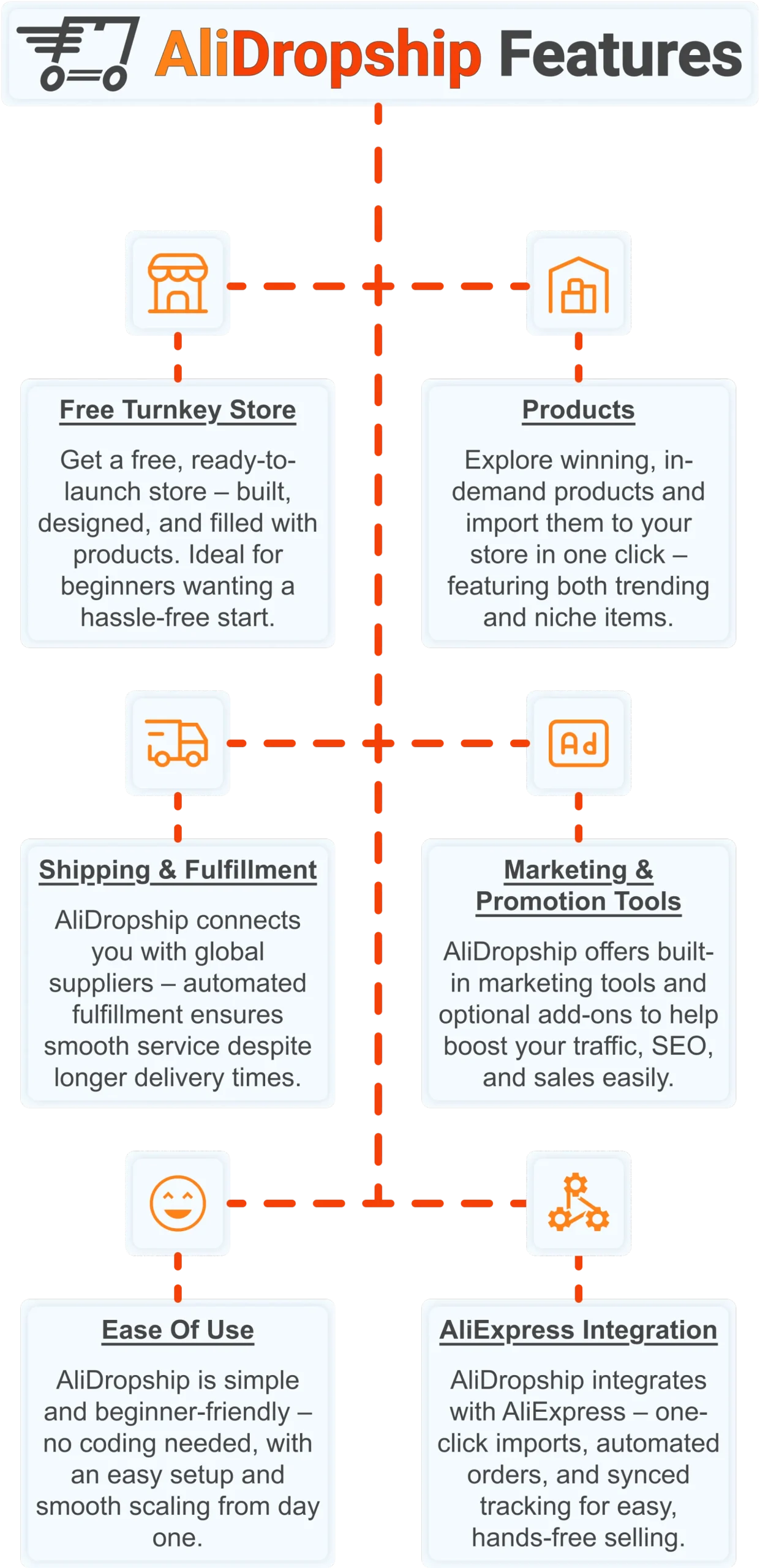
Free turnkey store ️
Get a free turnkey store – built, designed, and filled with products. Ideal for beginners wanting a hassle-free start, the store comes fully optimized to attract customers right away, saving you time on setup. Plus, it includes professional design elements to give your business a polished, trustworthy look from day one. This ready-made foundation makes it easy to move seamlessly into product selection.
Products
Once your store is set up, you can explore winning, in-demand products and import them in one click – featuring both trending and niche items. This wide selection lets you cater to diverse customer interests and test what works best. Regular updates ensure you always have fresh products, keeping your store competitive and relevant. With great products in place, smooth shipping becomes the next essential step.
Shipping & fulfillment
AliDropship connects you with global suppliers, and automated fulfillment ensures seamless order processing despite international delivery times. Customers receive real-time tracking updates, which builds confidence and trust in your store. Once shipping is handled reliably, you can focus on promoting your store and attracting traffic.
Marketing & promotion tools
To maximize sales, AliDropship offers built-in marketing tools and optional add-ons that help boost traffic, SEO, and conversions. From email campaigns and discounts to social media integration, these tools empower you to reach and retain customers without needing prior marketing experience. With promotion strategies in place, managing your business becomes simpler and more efficient.
Ease of use
AliDropship is beginner-friendly – no coding needed, with an intuitive dashboard that guides you through every step. Easy setup and smooth scaling let you expand your store without stress. As your business grows, adding new features, products, and marketing campaigns remains hassle-free, giving you more time to focus on sales.
AliExpress integration
Finally, AliDropship integrates seamlessly with AliExpress, enabling one-click imports, automated orders, and synced tracking. Your inventory stays up-to-date with the latest products and prices, while automated order processing frees you from manual tasks. Combined with the turnkey setup, reliable shipping, and built-in marketing tools, this integration ensures your dropshipping business is fully equipped for growth and success.
Starting an ecommerce business in 2026 is genuinely achievable – and with AliDropship, the technical side is already done for you. Get your free turnkey store and a $100 voucher and launch your online business today.
Frequently asked questions
How to start an ecommerce business in 2026?
You can start an ecommerce business in 2026 with as little as 0 dollars upfront using dropshipping or print on demand. Most new store owners see their first consistent sales within 60 to 90 days of launch with focused, sustained effort. Global ecommerce sales are on track to exceed 6.8 trillion dollars in 2025, with the share of retail happening online continuing to grow. Platforms like Shopify, WooCommerce, and AliDropship have made it possible to launch a working store in a single day without touching physical inventory.
How much can you realistically earn from an ecommerce business?
Dropshipping offers monthly earning potential of 500 to 5000 dollars or more, typically reaching consistent sales within 60 to 90 days. Digital products offer 300 to 3000 dollars or more per month once set up, scaling well over time with low ongoing effort. Wholesale and private label businesses can reach 2000 to 20000 dollars or more per month but require higher upfront capital and carry more risk. A realistic goal for a new dropshipping store in the first 90 days is 30 to 80 dollars per day in revenue, with net margins of 15 to 30 percent.
What steps are involved in starting an ecommerce business?
The process involves five main steps, starting with choosing a business model and niche, followed by picking a platform and setting up the store. Products priced at 25 to 150 dollars provide enough margin to cover advertising while still remaining profitable. Sourcing products with strong order history and at least 4.5 star ratings from reliable suppliers comes next, followed by driving traffic through paid ads, SEO, or TikTok organic content. Paid ads typically require a testing budget of at least 300 to 500 dollars to find what actually converts.
Which ecommerce business model has the lowest startup cost?
Dropshipping and digital products have the lowest startup costs, ranging from 0 to 300 dollars for dropshipping and 0 to 50 dollars for digital products. Print on demand also has a low entry point at 0 to 100 dollars, making it suitable for creatives and brand builders seeking passive income. Wholesale and private label models require significantly more capital, typically 1000 to 10000 dollars or more, since they involve buying inventory upfront. Dropshipping has the most flexible entry point and the widest product range available from day one among all the models compared.
What legal and financial steps should new ecommerce sellers take?
Most countries legally require business registration once a store starts generating income, with US sellers commonly operating as a sole proprietor or LLC costing 50 to 500 dollars depending on the state. Sales tax collection is required in US states where a business has nexus, though platforms like Shopify and WooCommerce include built in tax tools to help automate this. Fake reviews violate platform terms of service and consumer protection law in many jurisdictions, with Amazon and Google having pursued legal action against sellers using review farms. Being upfront about shipping times, especially for overseas dropshipping with 10 to 20 day delivery windows, helps prevent negative reviews and cart abandonment.
 Previous post
