 ‧ Agnes Kazaryan ‧
March 17, 2026
‧ Agnes Kazaryan ‧
March 17, 2026  726 ‧
726 ‧
 0
0
College is expensive. Between tuition, rent, groceries, and the occasional night out, most students are permanently stretched thin. The good news? In 2026, there are more legitimate, flexible ways for college students to make money than any previous generation ever had access to. Whether you have five spare hours a week or twenty, there is a method on this list that fits your schedule, your skills, and your financial goal.
This guide covers 20+ real, tested options – a mix of online income streams you can run from your dorm room and on-campus or local gigs that work around a busy class schedule. No vague advice, no “just start a blog” fluff. Just practical methods with honest income figures and clear starting points.
Quick answer: The best ways for college students to make money include freelancing, tutoring, selling online, campus jobs, and starting a small dropshipping store. Most students realistically earn $200–$600 per month from a single method, with online options offering the most flexibility and long-term scale.
What “making money as a college student” actually means
For most students, the goal is not to replace a salary. It is to cover living costs, reduce debt, or build a small financial cushion while keeping academics first. That shifts the question from “how do I earn the most?” to “how do I earn consistently without burning out?”
The best student income methods share three traits: flexible scheduling, low startup cost, and a learning curve that does not take months to climb. Some methods below can generate your first dollar within 24 hours. Others – like ecommerce or content creation – take 60–90 days to build momentum but offer far more earning potential over time.
It is also worth noting that many skills you develop while earning on the side – writing, sales, marketing, customer service – translate directly into career value. So even a modest side hustle serves a dual purpose: income now, resume credibility later.
How much can college students realistically earn?
Before diving into the methods, honest expectations matter. The internet is full of “$10,000 a month as a student” headlines – and while those outcomes exist, they are the exception. Here is a more grounded breakdown.
Most students who commit to one method consistently for 60–90 days start seeing $200–$600 per month. Stacking two compatible methods – like tutoring plus selling notes online – can push that to $800–$1,200 without dramatically increasing your workload.
One note on the top-end figures: The ceiling numbers above typically require full-time effort or a well-established audience. As a student, a realistic target in the first three months is $200–$600 per month – and that is a meaningful, achievable goal worth building toward.
Best ways for college students to make money online
Online methods are the go-to for most students because they require no commute, fit around class schedules, and often scale beyond what hourly campus work can offer. Here are the strongest options available right now.
Freelancing and skill-based services
Freelance writing and copywriting
If you can write a clear, organized essay, you can write for clients. Freelance writing covers blog posts, product descriptions, email newsletters, and social media copy. Platforms like Fiverr, Upwork, and PeoplePerHour let you create a profile and start bidding on projects the same day you sign up.
Starting rates for beginners fall around $0.03–$0.08 per word, but students with a specific subject niche – law, medicine, finance, tech – can charge $0.10–$0.20 per word within a few months of consistent work. You do not need a journalism degree. A strong writing sample and a niche are enough to land your first client.
Earning potential: $300–$1,200/month writing 2–4 hours per day on weekdays.
Graphic design and video editing
Design and video editing are among the most in-demand freelance skills in 2026. Small businesses constantly need social media graphics, YouTube thumbnails, short-form video edits, and logo work. Tools like Canva Pro and Adobe Express lower the barrier to entry for beginners, while more advanced students can use Adobe Premiere or DaVinci Resolve to charge higher rates.
Post your first five projects on Behance or a simple portfolio page, then pitch local businesses or list on Fiverr. Even basic logo design gigs start at $30–$100 per project.
Earning potential: $400–$1,500/month depending on skill level and volume.
Web development and coding
Students studying computer science – or those who have taught themselves HTML, CSS, and JavaScript – have a fast track to high freelance income. Simple WordPress sites for small businesses start at $300–$800, and more complex builds can reach $2,000–$5,000 per project. Platforms like Toptal and Upwork have active demand for developers at all levels.
Why this works in 2026: The number of small businesses needing an online presence continues to grow, and the gap between demand and affordable developer supply is still wide – especially for local service businesses.
Earning potential: $500–$2,000+/month part-time, depending on project scope.
Selling and ecommerce
Dropshipping
Dropshipping is one of the most practical ways for college students to make money online because it requires almost no startup capital and you never handle physical inventory. You set up an online store, list products from a supplier, and when a customer orders, the supplier ships directly to them. Your profit is the margin between your retail price and the supplier’s cost.
With platforms like AliDropship, you can launch a fully built store in a matter of days – not months. The learning curve is real, but the payoff is scalable in a way that hourly gigs simply are not. Students who stick with it for 60–90 days and invest in basic marketing typically see their first consistent monthly revenue in that window.
Earning potential: $500–$3,000+/month after the initial setup and marketing phase, with genuine potential to scale further.
Reselling on eBay, Poshmark, or Facebook Marketplace
Reselling is one of the fastest ways for college students to make money with minimal upfront investment. You source items cheaply – from thrift stores, garage sales, clearance sections, or even your own wardrobe – and resell them at a markup. Clothing, electronics, collectibles, and vintage items perform particularly well.
Many resellers start with just $20–$50 in initial inventory and reinvest profits from each sale. The model scales naturally as you develop an eye for what sells. Some students do this entirely on campus, buying and flipping items from other students directly.
Earning potential: $200–$800/month with 5–10 hours per week of sourcing and listing.
Selling digital products
If you have already created something useful – study guides, templates, Notion dashboards, Lightroom presets, resume formats – you can sell it repeatedly without making it again. Platforms like Gumroad, Etsy (digital downloads), and Payhip make it easy to upload a file and start selling within an hour.
Students who sell university-specific study notes or exam prep guides for popular courses tend to see the fastest traction because the audience is already right there on campus.
Earning potential: $100–$1,000+/month depending on product demand and how much you promote it.
Content creation
YouTube channel monetization
YouTube remains one of the most powerful long-term income channels for students in 2026. The barrier to entry is a smartphone and something worth saying – tutorials, campus life vlogs, product reviews, study-with-me videos, or commentary on your field of study. Once you hit 1,000 subscribers and 4,000 watch hours, you qualify for AdSense monetization.
Beyond ads, income also comes from sponsorships, affiliate marketing, and merchandise – often from channels with relatively modest audiences. A channel with 10,000 subscribers in a specific niche can earn $500–$2,000/month from brand deals alone.
Important note: YouTube is a slow burn. Expect 6–12 months before meaningful income arrives, but the compounding effect of a back catalogue makes it one of the best passive income foundations a student can build.
Earning potential: $100–$2,000+/month after the channel is established, varying by niche and consistency.
TikTok and Instagram content creation
Short-form video is still expanding fast in 2026. TikTok’s Creator Rewards Program pays eligible creators based on views, and Instagram’s Reels monetization works on similar mechanics. More importantly, brand sponsorships on both platforms are accessible to creators with as few as 5,000–10,000 engaged followers – a target most consistent creators can reach in 3–6 months.
Student content that consistently performs well includes study tips, campus lifestyle, budgeting advice, food, fitness, and relatable “student life” humor. A decent phone camera and good lighting are enough to compete.
Earning potential: $50–$1,500/month from platform payouts and brand deals, depending on niche and follower count.
Affiliate marketing
Affiliate marketing means earning a commission every time someone buys a product through your unique referral link. You do not create the product – you just recommend it through your blog, YouTube channel, social media, or email newsletter. Amazon Associates, ShareASale, and individual brand programs all offer commissions ranging from 3% to 50% depending on the product category.
For students, the best approach is to promote products genuinely relevant to your audience – textbooks, study tools, software, dorm essentials. Even modest traffic can generate $100–$500/month consistently once you have a small but engaged audience.
Earning potential: $100–$1,000+/month with an established audience and strategic product selection.
Online tutoring and academic services
Online tutoring platforms
If you excel in a subject – math, science, a foreign language, coding – you can tutor other students through platforms like Tutor.com, Wyzant, Chegg Tutors, or Superprof. Most platforms let you set your own hourly rate once you build a few reviews. Beginners typically start at $15–$25/hour and can move to $40–$60/hour in high-demand subjects like calculus, chemistry, and SAT/ACT prep.
Earning potential: $200–$800/month tutoring 5–10 hours per week.
Selling course notes and study materials
Platforms like Stuvia, Nexus Notes, and OneClass pay students for uploading lecture notes, summaries, and study guides. If your notes are well-organized and your course is popular, you can earn steady passive income with zero ongoing effort after the initial upload. Some students earn $50–$300/month per uploaded set of materials in high-enrollment courses.
Why this works in 2026: Large lecture courses at big universities mean thousands of students searching for better study materials than the official slides – and your organized notes could be exactly what they need.
Best ways for college students to make money on campus and locally
Not every student wants to build an online business. Sometimes you just need reliable weekly income that fits between classes. These campus and local options deliver exactly that.
Campus employment and work-study
Federal work-study jobs
If you qualify for federal financial aid in the US, your aid package may include a work-study component – subsidized part-time jobs on or near campus. Common positions include library assistant, lab technician aide, front desk receptionist, and campus tour guide. Hours are typically capped to protect your academic workload, and supervisors are used to student schedules.
Earning potential: $400–$800/month working 10–15 hours per week at minimum wage or slightly above.
Research assistant positions
Many university departments – especially in science, psychology, economics, and engineering – hire undergraduate research assistants. Pay ranges from $12–$20/hour, and some positions offer academic credit alongside pay. Beyond the income, a research role strengthens your CV significantly and often leads to strong faculty recommendations.
Check your university’s job board, email professors whose work interests you, or ask your department advisor. Positions are rarely advertised widely – a direct email to a faculty member goes a long way.
Earning potential: $300–$700/month for 8–12 hours per week, depending on department budget.
Campus ambassador roles
Brands actively recruit college students to represent them on campus – promoting apps, financial products, food services, and tech tools to their peers. Companies like Spotify, Red Bull, Amazon, and various fintech startups regularly run ambassador programs with hourly pay, commissions, or product perks. A quick search for “[brand name] campus ambassador program” turns up dozens of open opportunities at any given time.
Earning potential: $200–$600/month depending on the program structure and time invested.
Local gig economy and service work
Food and grocery delivery
DoorDash, Uber Eats, Instacart, and similar apps remain highly accessible for students with a car, a bike, or even an e-scooter in dense urban areas. You work whenever you want, pick up as many or as few orders as your schedule allows, and get paid weekly. Peak hours – lunch, dinner, and weekends – pay significantly more thanks to surge pricing.
Earning potential: $15–$25/hour during peak periods, which translates to $300–$700/month at 15–20 hours per week.
TaskRabbit and handyperson services
TaskRabbit connects people who need physical tasks done – furniture assembly, moving help, cleaning, yard work – with people available to do them. If you are reasonably handy and live near an urban area, you can build a small client base quickly. Moving season in August and September is especially lucrative, as students need help relocating into dorms and apartments.
Earning potential: $20–$50/hour depending on task type and your local market.
Babysitting and pet sitting
Platforms like Care.com, Rover, and Wag connect students with local families and pet owners. Babysitting rates in most US cities run $15–$25/hour, while dog walking through Rover averages $15–$20 per 30-minute walk. These roles are flexible, often scheduled in advance, and well-suited to students who want predictable income without the unpredictability of delivery gigs.
Earning potential: $200–$600/month working weekends and evenings.
In-person peer tutoring
Beyond the online platforms mentioned earlier, many universities have peer tutoring programs that pay students directly. You can also advertise on campus bulletin boards, Facebook groups, or student Discord servers – especially effective in the weeks before midterms and finals. Students offering help in popular STEM courses often find more demand than they can handle during exam season.
Earning potential: $15–$40/hour depending on subject and whether you work through a university program or independently.
Tips for maximizing your income as a student
Picking the right method is step one. Making it work consistently is step two. Here are the strategies that separate students who earn steadily from those who try something for two weeks and give up.
Start with what you already know
The fastest path to your first dollar is leveraging existing skills and knowledge. If you are studying accounting, offer bookkeeping help to local small businesses. If you have been gaming for years, try streaming or creating gaming content. If you speak two languages fluently, translation and tutoring pay well on platforms like ProZ and iTalki. Your existing knowledge base is worth more than you think – you just need to package and offer it.
Treat your side hustle like a scheduled class
Block time for it in your calendar. Set a weekly income target. Review your progress every Sunday. Students who approach their side income with the same structure they apply to coursework consistently outperform those who treat it as a spontaneous activity they pick up when they feel like it. Even 10 focused hours a week on the right method will compound significantly over a semester.
Stack two compatible income streams
The most financially comfortable students typically run two complementary streams. For example: a campus job that provides reliable baseline income (say, $400/month), paired with a scalable online method like freelancing or dropshipping that grows over time. The campus job covers immediate needs while the online stream builds toward something bigger. Avoid stacking too many methods at once – two focused streams beat five half-hearted ones.
Reinvest early earnings
The temptation to spend your first $200 from a side hustle is real. But students who reinvest even $50–$100 back into their earning method – buying a better microphone for YouTube, running a small ad campaign for their store, upgrading their Canva subscription for design gigs – tend to see their income accelerate significantly within 30–60 days. Think of early earnings as fuel, not just reward.
Use your student status as leverage
Being a student is a genuine competitive advantage in several markets. Parents looking for tutors prefer students from reputable universities. Local businesses value campus ambassador credibility. And in many freelance niches, your fresh academic perspective is appealing to clients tired of the same experienced freelancers. Do not downplay your student identity – use it strategically in your pitches and profiles.
Legal and ethical considerations
Most student income methods are completely straightforward, but there are a few areas worth knowing to protect yourself and your academic standing.
Academic integrity: Selling your own original study notes is generally fine. Writing essays or completing assignments for other students – sometimes marketed as “academic assistance” – is a serious violation of university academic integrity policies and can result in expulsion. The money is not worth the risk.
Key principle: Always disclose paid partnerships on social media. FTC disclosure guidelines apply even to micro-influencers, and platforms penalize fake reviews. Build your income the legitimate way – it is also the sustainable way.
Tax obligations: In the US, any freelance or self-employment income over $400 in a tax year is reportable to the IRS. If you earn through platforms like Fiverr, Upwork, or Etsy, keep records of your income from day one. Filing taxes as a self-employed person for the first time is straightforward with tools like TurboTax Self-Employed or FreeTaxUSA.
Financial aid impact: If you receive need-based financial aid, earned income above a certain threshold can affect your Expected Family Contribution. Check with your school’s financial aid office for the current income protection allowance before committing to a high-earning side hustle.
How to choose the right method for your situation
There is no single best answer – the right method depends on your schedule, skills, and how far you want to take it. Here is a practical breakdown by student profile.
Complete beginner with limited time (under 10 hours/week): Start with a campus job or work-study position – low mental overhead, reliable pay, no setup required. Pair it with selling lecture notes on Stuvia or uploading a single digital product to Gumroad. These low-effort additions can generate $50–$200/month with minimal ongoing time investment.
Student with a marketable skill (10–15 hours/week): If you can write, design, code, or speak a second language, prioritize freelancing on Fiverr or Upwork. The first few weeks are slow while you build reviews, but by month two or three, consistent freelancers with one strong niche typically earn $400–$900/month. Set aside two hours per week to market yourself – LinkedIn posts, Discord communities, or direct outreach to small local businesses.
Ambitious student aiming for long-term income (15–20+ hours/week): Dropshipping or ecommerce is your strongest move. It is the only method on this list with genuine scaling potential – from $500/month to $5,000+/month – without requiring you to trade hours directly for dollars indefinitely. With a platform like AliDropship handling the technical side, you can launch a real store in days and focus your energy on product selection and marketing.
Content creator at heart: If you genuinely love creating – writing, filming, podcasting – build your audience first and monetize second. Pick one platform (YouTube for depth, TikTok for speed of growth), post consistently for 90 days, and treat it like a long-term asset. The early months will feel slow, but the compounding effect of a content library is one of the best financial decisions a student in their early twenties can make. Pair it with affiliate marketing from day one to start earning while your audience is still small.
AliDropship: Your complete all-in-one solution for starting dropshipping in 2026
If you want the simplest possible way to start dropshipping – especially if you’re brand new – AliDropship remains one of the most beginner-friendly tools available in 2026. It brings together store creation, product imports, automation, and marketing into a single streamlined system designed to help you launch quickly and grow confidently.
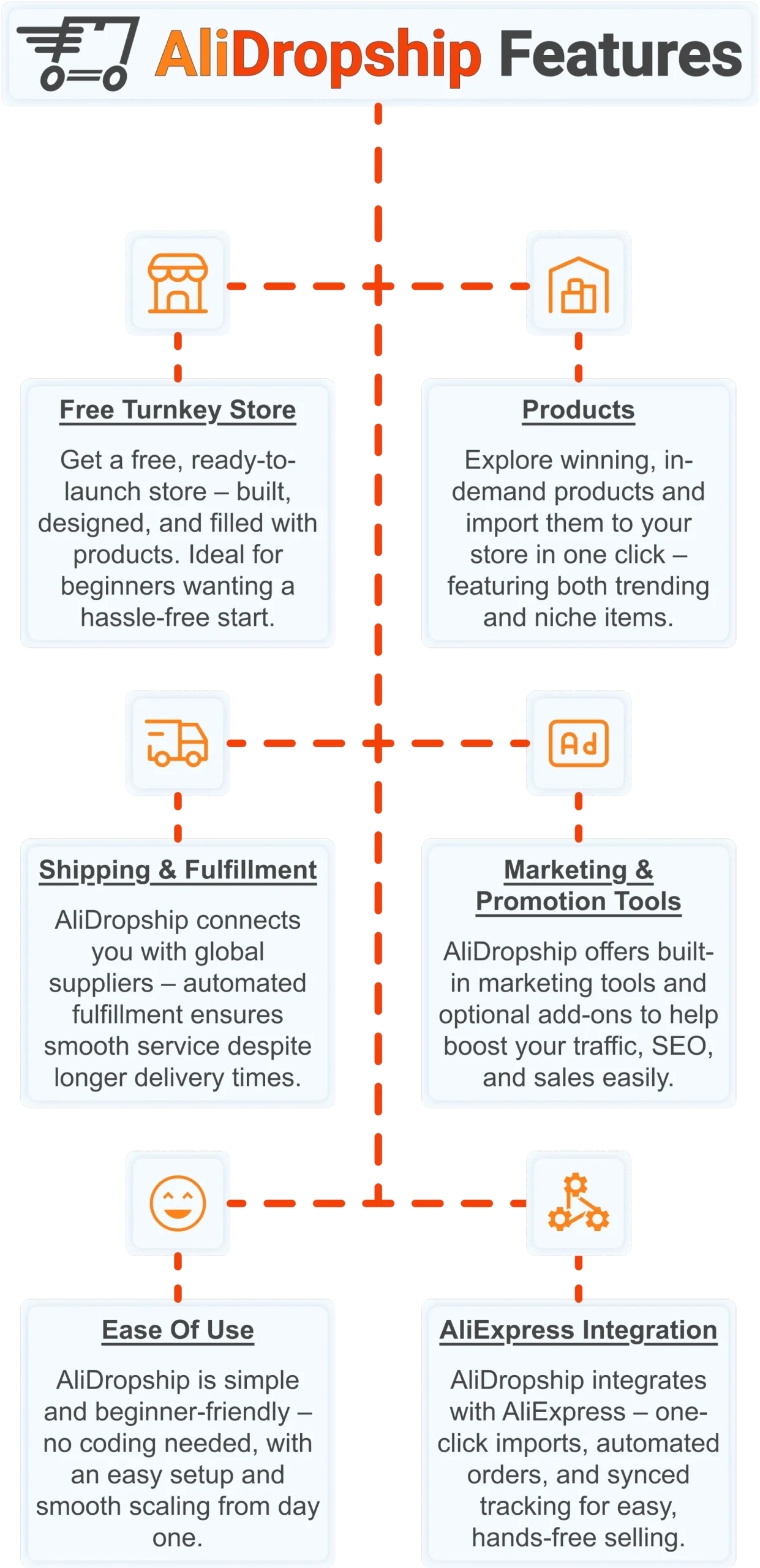
Free turnkey store ️
Get a free turnkey store – built, designed, and filled with products. Ideal for beginners wanting a hassle-free start, the store comes fully optimized to attract customers right away, saving you time on setup. Plus, it includes professional design elements to give your business a polished, trustworthy look from day one. This ready-made foundation makes it easy to move seamlessly into product selection.
Products
Once your store is set up, you can explore winning, in-demand products and import them in one click – featuring both trending and niche items. This wide selection lets you cater to diverse customer interests and test what works best. Regular updates ensure you always have fresh products, keeping your store competitive and relevant. With great products in place, smooth shipping becomes the next essential step.
Shipping & fulfillment
AliDropship connects you with global suppliers, and automated fulfillment ensures seamless order processing despite international delivery times. Customers receive real-time tracking updates, which builds confidence and trust in your store. Once shipping is handled reliably, you can focus on promoting your store and attracting traffic.
Marketing & promotion tools
To maximize sales, AliDropship offers built-in marketing tools and optional add-ons that help boost traffic, SEO, and conversions. From email campaigns and discounts to social media integration, these tools empower you to reach and retain customers without needing prior marketing experience. With promotion strategies in place, managing your business becomes simpler and more efficient.
Ease of use
AliDropship is beginner-friendly – no coding needed, with an intuitive dashboard that guides you through every step. Easy setup and smooth scaling let you expand your store without stress. As your business grows, adding new features, products, and marketing campaigns remains hassle-free, giving you more time to focus on sales.
AliExpress integration
Finally, AliDropship integrates seamlessly with AliExpress, enabling one-click imports, automated orders, and synced tracking. Your inventory stays up-to-date with the latest products and prices, while automated order processing frees you from manual tasks. Combined with the turnkey setup, reliable shipping, and built-in marketing tools, this integration ensures your dropshipping business is fully equipped for growth and success.
For college students who want income that scales beyond their campus schedule, dropshipping offers something no hourly gig ever can – a business that keeps earning while you study. Get your free turnkey store today and start building income that outlasts your degree.
Frequently asked questions
How much money can college students realistically make each month?
Most students who commit to one method consistently for 60 to 90 days start seeing 200 to 600 dollars per month. Freelancing in writing, design, or code can bring in 300 to 1500 dollars per month depending on effort. Stacking two compatible methods, like tutoring plus selling notes online, can push earnings to 800 to 1200 dollars without dramatically increasing workload. Dropshipping carries the highest ceiling on the list, with potential ranging from 500 to 3000 dollars or more per month after setup.
What freelancing options work best for college students?
Freelance writing pays 0.03 to 0.08 dollars per word for beginners, rising to 0.10 to 0.20 dollars per word for students who develop a niche in fields like law or finance. Graphic design and video editing gigs often start at 30 to 100 dollars per logo or project. Web development is one of the highest earning options, with simple WordPress sites starting at 300 to 800 dollars and complex builds reaching 2000 to 5000 dollars per project. Most freelancing students earning 2 to 4 hours per weekday can expect 300 to 1500 dollars per month.
Is dropshipping a good option for college students specifically?
Yes, dropshipping requires almost no startup capital since students never handle physical inventory and profit comes from the margin between retail price and supplier cost. A store can be launched in a matter of days using a platform like AliDropship rather than taking months to set up. Students who commit to 60 to 90 days of consistent effort and basic marketing typically see their first steady monthly revenue in that window. Earning potential ranges from 500 to 3000 dollars or more per month once the store is established.
What campus and local jobs pay well for students?
Federal work-study positions typically pay 400 to 800 dollars per month for 10 to 15 hours of weekly work at or slightly above minimum wage. Research assistant roles pay 12 to 20 dollars per hour and often strengthen a resume alongside the income. TaskRabbit and handyperson services can pay 20 to 50 dollars per hour depending on task type and local market, with moving season in August and September being especially lucrative. Food and grocery delivery apps typically generate 300 to 700 dollars per month at 15 to 20 hours per week during peak periods.
Are there legal or tax considerations for student side income?
In the United States, any freelance or self-employment income over 400 dollars in a tax year must be reported to the IRS. Writing essays or completing assignments for other students is a serious violation of academic integrity policies and can result in expulsion, unlike selling your own original study notes. FTC disclosure guidelines require students to disclose paid partnerships on social media, even as micro-influencers. Students receiving need-based financial aid should also check with their financial aid office, since income above a certain threshold can affect the Expected Family Contribution.
 Previous post
