 ‧ Agnes Kazaryan ‧
March 15, 2026
‧ Agnes Kazaryan ‧
March 15, 2026  802 ‧
802 ‧
 0
0
Most people searching for website business ideas already know they want to build something online. The hard part is figuring out which idea is actually worth your time. There are hundreds of models floating around – some are genuinely viable, others are outdated, and a few are only profitable for the people selling courses about them.
This guide cuts straight to what works. You’ll find the most proven website-based business models, honest earning estimates, and a clear breakdown of what each one actually requires – so you can pick a path and start moving.
Quick Answer: The best website business ideas in 2026 include dropshipping stores, niche affiliate sites, digital product shops, online courses, and freelance portfolio sites. Each has a different earning ceiling and learning curve – the right one depends on your budget, skills, and how much time you can commit.
The barrier to starting an online business has never been lower. You don’t need a warehouse, a big team, or a six-figure budget. But low barriers mean more competition – which is exactly why choosing the right model from the start matters so much. Let’s go through each one properly.
What are website business ideas?
Website business ideas are online ventures built around a domain and a digital presence – businesses that generate income primarily through the internet rather than through a physical location or in-person services. They range from fully automated ecommerce stores and content-driven affiliate sites to freelance portfolios, digital product shops, and subscription communities.
What makes them particularly attractive in 2026 is how accessible they’ve become. Global ecommerce is on track to account for more than 22% of all retail sales worldwide by 2027. The tools available to launch and run an online business – from store builders to email platforms to analytics dashboards – are more beginner-friendly than ever. Whether you’re starting from zero or looking to add a new income stream, the conditions right now are genuinely favorable.
The key difference between a website business and a standard side hustle is scalability. A side hustle typically trades your time directly for money. A website business – structured correctly – can generate revenue while you sleep, serve customers across multiple time zones, and grow without requiring proportional increases in your own effort. That’s the goal worth building toward.
How much can you realistically earn from a website business?
Earning potential varies widely depending on the model, the effort you put in, and how long you stick with it. The table below gives you a straight look at what each major category looks like in practice.
These figures reflect realistic ranges after 60–90 days of consistent effort – not day-one results. The upper end of each range typically requires a full-time commitment, an established audience, or both.
One note on the ceiling figures: The $10,000+ and $20,000+ numbers shown above are achievable but represent mature, optimized operations – not what most beginners see in their first few months. Most people building website businesses part-time earn $200–$800 per month in their first six months. Growth tends to accelerate once they find a reliable traffic or sales channel and double down on it.
Ecommerce and product-based website businesses
Selling physical or digital products online remains one of the most direct paths to building a sustainable website business. The ecommerce space is large enough to absorb thousands of new entrants every year – especially in underserved niches where established players haven’t bothered to compete seriously.
Dropshipping store
Dropshipping lets you sell physical products without holding any inventory. A customer places an order on your store, your supplier ships the product directly to them, and your margin is the difference between your retail price and the wholesale cost. You never touch the stock.
The model works particularly well for beginners because startup costs are minimal – you’re not buying inventory upfront. The main variables are product selection, supplier reliability, and your ability to drive traffic through SEO, paid ads, or social platforms.
Why this works in 2026: Global ecommerce sales are expected to surpass $7.9 trillion by 2027. Consumers are increasingly comfortable buying from unfamiliar online stores, which lowers the trust barrier for new entrants entering competitive product categories.
Earning potential: $500–$10,000+ per month after 60–90 days of consistent store optimization and marketing effort.
Print-on-demand store
Print-on-demand (POD) is a variation of dropshipping where your supplier prints custom designs onto products – T-shirts, mugs, phone cases, tote bags – only when an order is placed. You handle the designs and the storefront; the POD platform handles production and fulfillment.
This model suits creatively inclined entrepreneurs and is often stacked with other revenue streams. Many POD store owners also run an Etsy shop or social media account to drive traffic. Margins are thinner than standard dropshipping – typically 20–35% – but there’s no inventory risk since you only produce what actually sells.
Earning potential: $200–$2,500 per month for part-time operators; higher for stores with strong brand identity and a loyal repeat customer base.
Digital product shop
Selling digital products – templates, presets, ebooks, Notion dashboards, planners, spreadsheets, fonts – is one of the highest-margin website business ideas available. Once created, a digital product costs nothing to reproduce and can be sold an unlimited number of times with zero additional effort per unit.
The most successful digital product sellers operate in tight, specific niches: resume templates for tech workers, Lightroom presets for food photographers, financial planning spreadsheets for freelancers. Specificity drives conversions far more effectively than broad catalogs.
Platforms like Gumroad, Payhip, and Etsy make it easy to start without a custom site, though your own domain gives you more control over branding and margins over time.
Earning potential: $300–$8,000+ per month, depending on product quality, niche demand, and traffic volume.
Content and traffic-driven website businesses
These models are built on generating an audience first, then monetizing that audience through advertising, sponsorships, or affiliate commissions. They require patience – most content sites take 6–18 months to gain meaningful traction – but they can generate highly passive income once they’re established and ranking consistently.
Niche affiliate marketing website
An affiliate site earns commissions by recommending products or services, then sending readers to retailer or platform pages via tracked links. When someone clicks through and buys, you earn a percentage – typically 3–12% for physical products, and up to 30–50% for software or digital services.
Niche selection is everything here. A site reviewing “best budget espresso machines under $200” will outperform a generic “best coffee gear” site almost every time because it targets a specific search query with clear purchase intent. Topic authority, content depth, and backlink quality determine how well you rank in Google – and ranking is the engine that makes this model work.
Why this works in 2026: High-ticket affiliate programs in SaaS, finance, and online education have expanded significantly, giving content creators access to commission structures that were once reserved for major media publishers.
Earning potential: $200–$5,000+ per month for established sites with consistent organic traffic. New sites typically earn $0–$100 in their first six months while building authority.
Niche blog with display advertising
A monetized blog earns revenue by displaying ads from networks like Google AdSense, Mediavine, or Raptive. Revenue is driven entirely by page views – the more traffic your site receives, the more ad impressions you generate and the more you earn.
Mediavine requires a minimum of 50,000 monthly sessions to apply, and Raptive requires 100,000 – so this is not a fast path to income. But blogs that reach these thresholds in competitive niches like personal finance, food, travel, or parenting can earn $15–$40 per thousand page views (RPM), which translates to real monthly income at scale. Most successful bloggers combine display ads with affiliate links and digital product sales to diversify and increase revenue per visitor.
Earning potential: $50–$3,000+ per month for mid-sized blogs; significantly more for large content libraries in high-RPM niches.
YouTube-adjacent website
Many content creators build a companion website to their YouTube channel – housing written guides, downloadable resources, affiliate links, and course sign-ups. The website becomes a secondary revenue engine that captures traffic from Google search alongside YouTube’s own algorithm.
This model works especially well in tutorial-heavy niches: cooking, DIY, fitness, personal finance, and tech. A video covering “how to set up a home studio on a budget” can rank on YouTube for viewers and on Google for readers who prefer written guides – effectively doubling the reach of a single piece of content.
Earning potential: Websites supporting active YouTube channels commonly earn an additional $300–$2,000 per month through affiliate links, digital products, and display ads.
Service and expertise-based website businesses
If you have a marketable skill, a website can function as a 24/7 lead-generation machine – replacing the need for job boards, agencies, or referral networks. The difference between a freelancer’s website and a hobbyist’s portfolio is positioning. Specific beats general every time.
Freelance portfolio website
A freelance portfolio site lets you showcase your work, define your services, set your rates, and collect client inquiries directly. Writers, designers, developers, video editors, marketers, and consultants all use this model to attract higher-quality clients than they’d find on platforms like Upwork or Fiverr – where race-to-the-bottom pricing is the norm.
A site that positions you as “a conversion copywriter for B2B SaaS companies” will attract more qualified leads than one that says “I write stuff.” Niche positioning commands higher rates and shorter sales cycles – two things that matter a lot when you’re building a sustainable income.
Earning potential: $1,500–$6,000+ per month for established freelancers with a defined niche, a strong portfolio, and consistent inbound traffic. Rates vary significantly by industry and skill.
Online consulting or coaching website
Consultants and coaches use their website to establish credibility, attract leads, and book discovery calls. Unlike a freelance portfolio – which centers on deliverables – a coaching or consulting site centers on transformation: what problem does the client have before working with you, and where do they end up afterward?
Common niches include business strategy, career development, fitness and nutrition, financial planning, and executive leadership. The income ceiling is high because sessions are priced on outcomes rather than hours, and group programs or digital courses can multiply your time leverage substantially once your reputation is established.
Earning potential: $2,000–$15,000+ per month for full-time coaches and consultants with a defined methodology, client testimonials, and consistent lead generation.
Education and community-based website businesses
Knowledge is one of the most monetizable assets on the internet – if you can package it in a format people are willing to pay for. The models below require significant upfront effort but generate scalable, often recurring revenue once they’re up and running.
Online course platform
Creating and selling an online course lets you teach a skill or subject to an unlimited number of students without repeating yourself. You record the content once, publish it, and sell access indefinitely – a genuinely scalable model once the course is built.
Platforms like Teachable, Thinkific, and Kajabi make hosting and selling courses straightforward without any technical expertise. The most profitable course creators, though, tend to host on their own domain – maintaining full control over pricing, branding, and student relationships.
Topics that consistently sell well include software skills (Excel, coding, Photoshop), business skills (copywriting, bookkeeping, social media), and lifestyle niches (photography, yoga instruction, language learning). The sweet spot is a skill gap large enough that people are actively searching for help – but specific enough that your course feels like the obvious answer.
Earning potential: $1,000–$15,000+ per month for established course creators with a proven curriculum and reliable traffic. First-launch revenue is highly variable.
Paid membership or subscription community
A membership website charges recurring fees – monthly or annually – in exchange for exclusive content, community access, live sessions, or ongoing resources. It’s one of the most powerful business models online because revenue is predictable and compounds over time as your member base grows.
Successful membership sites are built around ongoing value – not static information. Members need a reason to stay each month. This typically means regular content drops, live Q&A sessions, an active community forum, or evolving tools. Tools like Circle, Memberful, and Mighty Networks make it possible to build a membership community without custom development. Pricing ranges from $9/month for lightweight newsletters to $99+/month for high-touch professional communities.
Earning potential: $500–$20,000+ per month, with revenue scaling proportionally to membership size and retention rate.
Legal and ethical considerations for website businesses
Running an online business comes with real legal and compliance responsibilities – and ignoring them is a fast way to get your store, site, or accounts shut down. These points apply across all of the website business ideas covered in this guide.
Key principle: Transparency with your audience is not just ethical – it’s legally required in most jurisdictions. Disclosing affiliate relationships, sponsored content, and business terms is non-negotiable.
What to avoid absolutely
- Buying fake reviews or using review manipulation tactics – this violates FTC guidelines and platform terms of service in virtually every market
- Copying content from other websites without attribution or licensing – exposes you to DMCA takedowns and search engine penalties
- Misleading income claims with no qualification or timeframe – subject to FTC enforcement action in the US and equivalent regulators elsewhere
- Selling counterfeit or replica goods through your store – carries significant legal and financial liability
- Operating without required disclosures or licenses in regulated niches such as financial advice, health claims, or legal guidance
What to do instead
- Include a clear affiliate disclosure on any page containing tracked links
- Use original content and properly licensed images and assets throughout your site
- Add a privacy policy and terms of service page – tools like Termly and iubenda make this straightforward
- Register your business as a legal entity once revenue becomes consistent – sole proprietor or LLC depending on your jurisdiction
- Keep records of affiliate and ad income organized from the start – tax compliance is much easier when you haven’t let it accumulate
How to choose the right website business idea for you
The best website business idea isn’t the one with the highest theoretical ceiling – it’s the one you can actually build and sustain given your current situation. Here’s how to think about it by reader profile.
Complete beginner
If you’re new to online business with limited technical knowledge and a modest budget, start with a model that handles the complex parts for you. Dropshipping – particularly through a platform that builds your store and imports products automatically – removes most of the technical friction. You focus on understanding your customers and driving traffic; the infrastructure is already in place.
Avoid starting with a membership site or online course on your first attempt. Both require an audience that already trusts you before they’ll pay for access – and building that trust takes time you can better spend learning the fundamentals of online commerce.
Intermediate / part-time operator
If you have some experience with online tools, content creation, or digital marketing, a niche affiliate site or digital product shop offers a strong risk-to-reward ratio. Both can be built part-time and scale without proportional increases in your workload. Focus on one traffic channel – organic search or a single social platform – before expanding.
Stacking models works well at this level. A dropshipping store paired with a content blog covering the same niche can compound your traffic and sales over time, with each channel feeding the other in a way that neither could achieve alone.
Advanced / full-time goal
If your goal is to replace a full-time income within 12–18 months, prioritize models with recurring revenue and high margins – membership communities, online courses, or a well-optimized ecommerce store with strong repeat purchase rates. These require the most upfront effort but generate the most durable income once they’re established.
At this level, the business model matters less than execution. A mediocre membership site run by a skilled marketer will outperform a great membership site run by someone who hasn’t figured out traffic yet. Traffic generation, customer retention, and overall experience are the real variables that determine your income ceiling – regardless of which website business idea you choose.
AliDropship: Your complete all-in-one solution for starting dropshipping in 2026
If you want the simplest possible way to start dropshipping – especially if you’re brand new – AliDropship remains one of the most beginner-friendly tools available in 2026. It brings together store creation, product imports, automation, and marketing into a single streamlined system designed to help you launch quickly and grow confidently.
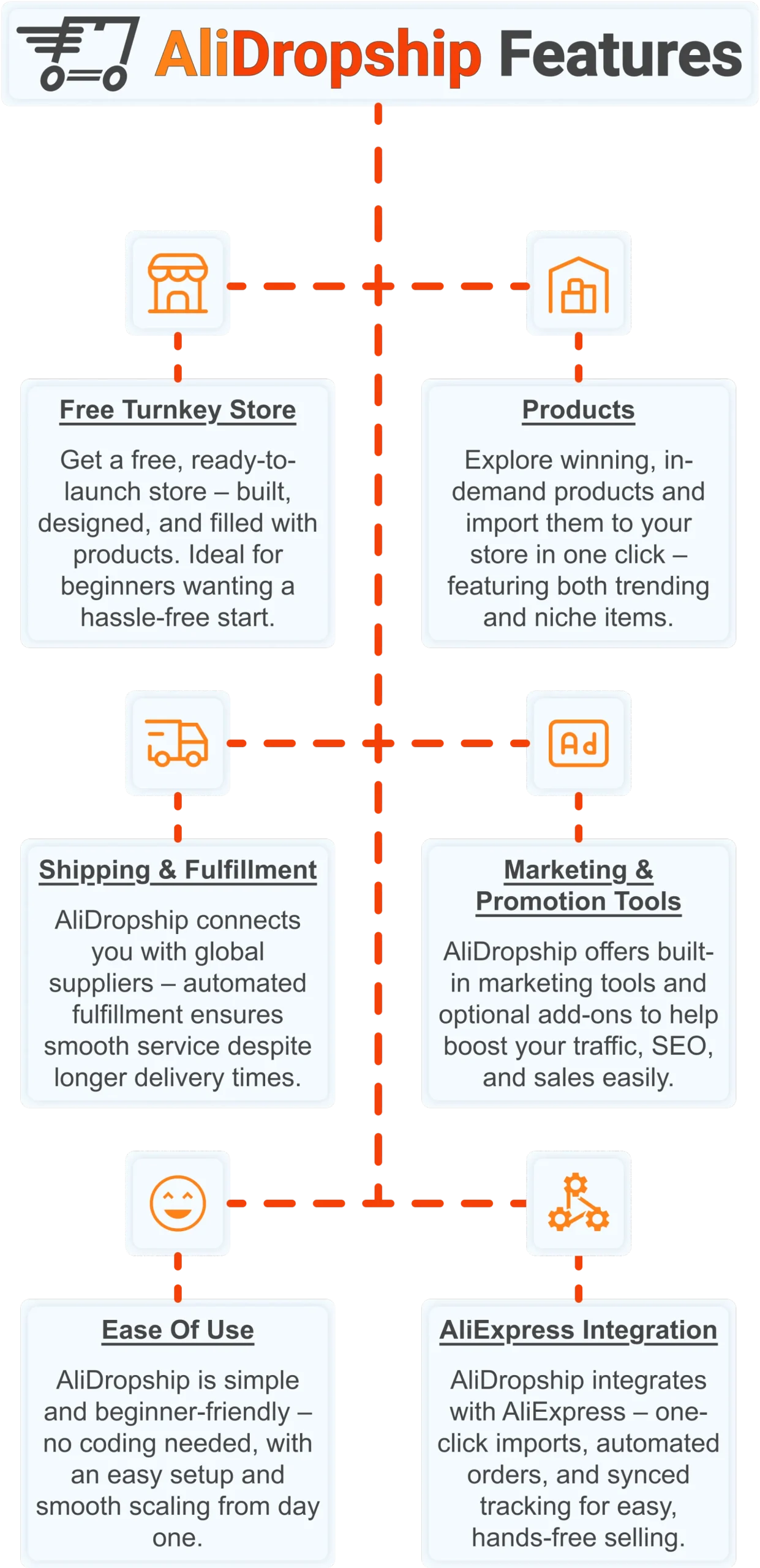
Free turnkey store ️
Get a free turnkey store – built, designed, and filled with products. Ideal for beginners wanting a hassle-free start, the store comes fully optimized to attract customers right away, saving you time on setup. Plus, it includes professional design elements to give your business a polished, trustworthy look from day one. This ready-made foundation makes it easy to move seamlessly into product selection.
Products
Once your store is set up, you can explore winning, in-demand products and import them in one click – featuring both trending and niche items. This wide selection lets you cater to diverse customer interests and test what works best. Regular updates ensure you always have fresh products, keeping your store competitive and relevant. With great products in place, smooth shipping becomes the next essential step.
Shipping & fulfillment
AliDropship connects you with global suppliers, and automated fulfillment ensures seamless order processing despite international delivery times. Customers receive real-time tracking updates, which builds confidence and trust in your store. Once shipping is handled reliably, you can focus on promoting your store and attracting traffic.
Marketing & promotion tools
To maximize sales, AliDropship offers built-in marketing tools and optional add-ons that help boost traffic, SEO, and conversions. From email campaigns and discounts to social media integration, these tools empower you to reach and retain customers without needing prior marketing experience. With promotion strategies in place, managing your business becomes simpler and more efficient.
Ease of use
AliDropship is beginner-friendly – no coding needed, with an intuitive dashboard that guides you through every step. Easy setup and smooth scaling let you expand your store without stress. As your business grows, adding new features, products, and marketing campaigns remains hassle-free, giving you more time to focus on sales.
AliExpress integration
Finally, AliDropship integrates seamlessly with AliExpress, enabling one-click imports, automated orders, and synced tracking. Your inventory stays up-to-date with the latest products and prices, while automated order processing frees you from manual tasks. Combined with the turnkey setup, reliable shipping, and built-in marketing tools, this integration ensures your dropshipping business is fully equipped for growth and success.
Of all the website business ideas out there, a dropshipping store remains one of the fastest ways to go from zero to your first online sale. Get your free AliDropship store today and start building real ecommerce income in 2026.
Frequently Asked Questions
What are the best website business ideas to start in 2026?
The best website business ideas in 2026 include dropshipping stores, niche affiliate sites, digital product shops, online courses, and freelance portfolio sites. Each model carries a different earning ceiling and learning curve depending on budget, skills, and available time. Global ecommerce is on track to account for more than 22 percent of all retail sales worldwide by 2027, which makes product based models especially favorable right now. Most beginners see realistic results within 60 to 90 days of consistent effort rather than on day one.
How much money can a website business realistically make?
Earning potential varies significantly by model, with dropshipping stores typically reaching 500 to 10,000 or more per month and affiliate marketing sites reaching 200 to 5,000 or more per month. Online course platforms can generate 1,000 to 15,000 or more per month, though that usually requires a proven curriculum and reliable traffic. Most people building website businesses part time earn 200 to 800 per month during their first six months. Growth tends to accelerate once a reliable traffic or sales channel is identified and doubled down on.
Which website business idea is best for a complete beginner?
Dropshipping is generally the strongest starting point for beginners because startup costs are minimal and there is no need to hold inventory. A platform that builds the store and imports products automatically removes most of the technical friction, letting a new seller focus on customers and traffic instead. Beginners should avoid starting with a membership site or online course, since both require an existing audience that already trusts them before they will pay. Global ecommerce sales are expected to surpass 7.9 trillion dollars by 2027, which supports strong long term demand for new entrants.
How does a niche affiliate marketing website make money?
An affiliate site earns commissions by recommending products or services and sending readers to retailer pages through tracked links. Physical product commissions typically range from 3 to 12 percent, while software and digital services can pay 30 to 50 percent per sale. Niche selection matters enormously, since a specific site targeting a clear purchase intent will consistently outperform a broad, generic one. Established affiliate sites with consistent organic traffic can earn 200 to 5,000 or more per month, though new sites often earn close to nothing during their first six months.
What legal requirements apply to running a website business?
Every website business must disclose affiliate relationships and sponsored content clearly, since transparency is legally required in most jurisdictions. Misleading income claims made without qualification or a timeframe can trigger FTC enforcement action in the United States and equivalent regulators elsewhere. A privacy policy and terms of service page should be added to every site, and tools like Termly and iubenda make this straightforward to set up. Businesses should also register as a legal entity, such as a sole proprietor or an LLC, once revenue becomes consistent.
 Previous post
