 ‧ julia.nenyukova ‧
March 12, 2026
‧ julia.nenyukova ‧
March 12, 2026  1088 ‧
 0
0
Grocery delivery is one of the fastest-growing corners of the gig economy right now, and Instacart sits right at the centre of it. If you’ve been asking yourself how much money you can make with Instacart before committing your time and your car, you’re asking exactly the right question. The platform doesn’t hand out a salary – your income depends on factors like your city, your hours, and how efficiently you move through orders.
Quick Answer: Most Instacart shoppers earn between $15 and $25 per hour before expenses. Weekly take-home ranges from roughly $200 to $600 depending on your location, hours worked, and how often customers tip. A small number of full-time, highly optimised shoppers report pushing past $800/week – but that requires treating it like a serious business, not just a casual side hustle.
So the money is there. But there’s a lot of nuance between the top-line figure and what actually lands in your bank account. This guide breaks all of it down honestly – the earnings potential, the real costs, and whether Instacart is actually the right move for you in 2026.
What is Instacart, and how does the shopper model work?
Instacart is a grocery delivery platform that connects customers with independent shoppers who pick and deliver their orders. The customer places an order through the Instacart app, a shopper accepts the batch, heads to the store, grabs everything on the list, and delivers it to the customer’s door. Simple in concept – slightly more involved in practice.
There are two ways to work with Instacart:
- Full-service shopper: You shop and deliver. This is the most common role and the one that gives you access to customer tips, which can significantly boost your earnings. You work as an independent contractor and set your own schedule.
- In-store shopper: You shop and pack orders inside a specific store, but someone else handles delivery. This role pays an hourly rate, typically $12–$16/hour, and you don’t receive tips. It’s more stable but lower-earning overall.
The full-service model is where most people land when they search for how much money you can make with Instacart – and it’s the one we’ll focus on throughout this guide. You’re classified as an independent contractor, which means full flexibility but also full responsibility for your expenses and taxes.
Important note: Instacart does not reimburse you for gas, mileage, or car maintenance. These costs come directly out of your earnings, so your gross pay and your actual take-home are two very different numbers.
How much can you realistically earn with Instacart?
Here’s where the honest conversation starts. Instacart’s own marketing tends to highlight the upper end of earner potential. Real-world reports on Reddit’s r/InstacartShoppers and across Trustpilot paint a more grounded picture – one where earnings vary enormously based on market, timing, and effort.
These figures represent gross earnings before gas, mileage, maintenance, and taxes. In high-cost-of-living markets like New York, San Francisco, or Chicago, base pay and tips tend to be higher – but so do your operating costs. In smaller markets, there’s simply less order volume to work with.
One note on the top-end figures: Shoppers reporting $1,000+/week are typically working dense urban markets during peak windows, have optimised their routes completely, and are consistently earning strong tips. For most people starting out, $300–$500/week is a more realistic target for full-time effort in a mid-sized city.
What actually affects how much money you make with Instacart?
If you want to understand how much money you can make with Instacart, you need to understand the variables that shape every single batch you take. None of these are fixed – and that’s both the appeal and the challenge.
Your location
This is the single biggest factor. Busy metro areas with high Instacart usage mean more batches, better batch pay, and customers who tip well. If you’re in a low-density or lower-income area, you’ll see thinner order queues and smaller average tips regardless of how hard you work.
When you work
Instacart peaks on weekends, weekday evenings, and around national holidays. Batch pay and volume both increase during surge windows. Working outside these windows – especially mid-morning on weekdays – means waiting longer between orders and earning less per hour of your time.
Batch selection
Not all batches are worth accepting. A long-distance delivery with a modest payout and a small order could eat 45 minutes and most of your profit margin after gas. Experienced shoppers develop a clear sense of which batches to take and which to let pass – this skill alone can meaningfully increase your effective hourly rate.
Tips
Tips are where full-service shoppers separate themselves. Instacart customers tip through the app, often before you’ve even started the order. Great communication – proactive substitution suggestions, delivery confirmation messages, no missing items – translates directly into higher and more consistent tips. On good batches, tips can equal or exceed the base batch pay.
Promotions and peak-pay bonuses
Instacart regularly runs peak-pay bonuses and completion incentives, particularly during busy periods. These can add $2–$5 per batch on top of regular pay and are worth factoring into your scheduling decisions.
How to earn more as an Instacart shopper
Knowing how much money you can make with Instacart is only half the picture. The other half is knowing how to push toward the upper end of that range. Here’s what consistent top earners actually do differently.
Work the peak windows
Schedule yourself around Friday evenings, Saturdays, and Sundays. These are consistently the highest-volume, highest-tip periods across most markets. If you can also be online during grocery rush hours – typically 5–8pm on weekdays – you’ll rarely sit waiting for batches.
Be ruthless about batch selection
A low-paying batch that takes you far out of your zone is time you could have spent on a better one. Set a minimum earnings-per-mile threshold and stick to it. Most experienced shoppers aim for at least $1.50–$2 per mile as a baseline.
Master your stores
The faster you move through a store, the more batches you complete per hour. Learn the layout of your three or four most common stores cold. Know where produce, dairy, and frozen sections are without having to search. This alone can shave 10–15 minutes per order.
Communicate proactively
If an item is out of stock, message the customer immediately with a suggested replacement. Don’t wait for them to notice at delivery. Customers who feel looked after tip better and leave stronger ratings – both of which affect your long-term earnings on the platform.
Track every expense
Use a mileage tracker like MileIQ or Stride from day one. Every business mile driven is potentially deductible at tax time, and those deductions add up fast. Shoppers who don’t track often discover they’ve earned significantly less net than they thought after expenses.
Why this works in 2026: Grocery delivery demand continues to grow year over year, and customers have become more accustomed to tipping generously for quality service. Shoppers who treat the role professionally – not casually – see the difference in their weekly earnings.
The real costs you need to factor in
This is the section Instacart’s recruitment materials tend to gloss over. Understanding how much money you can make with Instacart also means understanding where a chunk of that money goes.
Gas
This is your largest ongoing cost. Full-time shoppers in suburban or spread-out markets can spend $80–$150/week on fuel alone. Track your mileage carefully – the IRS standard mileage deduction for 2026 can offset a meaningful portion of this at tax time.
Vehicle wear and maintenance
High-mileage gig work accelerates tyre wear, oil consumption, and general mechanical wear on your car. Budget $50–$100/month for accelerated maintenance costs. If your car needs a major repair, your gig earnings can take a serious hit while it’s off the road.
Insurance
Standard personal auto insurance policies often exclude or limit coverage during commercial delivery activity. Check your policy carefully and ask your insurer about a rideshare or delivery endorsement. Operating without adequate coverage is a significant financial risk.
Taxes
As an independent contractor, no tax is withheld from your Instacart earnings. You’re responsible for self-employment tax (currently 15.3%) plus income tax on top. Set aside at least 25–30% of your gross earnings and make quarterly estimated tax payments to avoid a large bill at year end.
Phone and data
You’ll be running the Instacart Shopper app constantly. If you’re on a limited data plan, expect to upgrade. The app usage is moderate, but GPS navigation stacks up quickly over a full workweek.
Pros and cons: is Instacart worth it in 2026?
The honest answer to how much money you can make with Instacart only makes sense once you weigh it against the full picture of what the gig actually involves.
What works in your favour
- Genuine flexibility: You set your own schedule with no minimum hours. This makes Instacart a practical fit as a secondary income alongside a main job.
- Fast activation: You can go from application to first batch in a matter of days in most markets.
- Tips can significantly boost your pay: Unlike some gig platforms, Instacart customers tip well when service is strong – often $5–$15 per order.
- Physical activity included: You’re moving constantly, which some shoppers genuinely value over a sedentary job.
What works against you
- Inconsistent income: Your week-to-week earnings fluctuate with demand, competition, and customer behaviour. Financial planning gets harder without a predictable baseline.
- Your car absorbs the cost: Every kilometre driven is wear on your vehicle that Instacart doesn’t compensate for beyond the batch rate.
- No benefits: No health coverage, no sick pay, no pension contributions. These have real monetary value that isn’t reflected in your hourly rate.
- Market saturation in some areas: In cities with high shopper density, competition for batches is fierce – especially during non-peak windows.
Tax and legal considerations for Instacart shoppers
This is an area many new shoppers underestimate – especially when they’re focused on the exciting top-line question of how much money you can make with Instacart.
Key principle: Your gross earnings from Instacart are business income, not a wage. That distinction has significant implications for how you’re taxed and what protections you do – and don’t – have.
As an independent contractor, you are required to report all Instacart income on your tax return, including amounts below the $600 1099-NEC threshold. Instacart issues a 1099-NEC for shoppers earning over $600 in a calendar year, but you are legally obligated to report all income regardless.
Key deductions available to you include mileage (or actual vehicle expenses), phone data costs, insulated shopping bags, and a portion of your phone purchase if used primarily for work. Keep receipts and use an expense-tracking app from day one – retroactively reconstructing records is painful and often inaccurate.
Important: Make quarterly estimated tax payments to the IRS (due April, June, September, and January) to avoid underpayment penalties. If you’re earning more than $400/year from self-employment, you’re required to file Schedule SE.
On the insurance front, check whether your state has specific rules about delivery driver coverage requirements. Some states have moved to mandate minimum coverage levels for gig workers. Being underinsured while on an active delivery creates personal liability that could far exceed any earnings you’ve made on the platform.
Final thoughts – who should actually be doing Instacart in 2026?
The question of how much money you can make with Instacart doesn’t have one answer – it has three, depending on who you are and what you’re trying to achieve.
Complete beginner: If you have a reliable car, some free time, and you want income starting this week, Instacart is one of the fastest ways to activate earnings with zero upfront cost. Go in with realistic expectations – $200–$350/week working weekends and evenings is a solid first-month target. Use the income to fund a longer-term goal, not as a permanent solution.
Intermediate / part-time: If you’re already doing some gig work and want to add Instacart as a complementary income stream, it stacks well alongside other delivery platforms. The key is being strategic about market timing and not allowing it to cannibalise your top-earning hours on other platforms.
Advanced / full-time goal: If you’re targeting Instacart as a full-time income replacement, you need to treat it like a business from day one. Track every expense, optimise every shift, maintain a high customer rating, and build your market knowledge deliberately. In the right city, $50,000–$60,000 gross per year is achievable – but after self-employment tax and vehicle costs, your net will be considerably lower. Many full-time shoppers eventually pivot to other income models once they’ve built financial stability.
The gig economy is genuinely useful as a bridge, a supplement, or a learning ground. But it comes with a ceiling. If you’re ready to build income that isn’t capped by the hours you physically put in, it’s worth knowing what the alternatives look like.
AliDropship: Your complete all-in-one solution for starting dropshipping in 2026
If you want the simplest possible way to start dropshipping – especially if you’re brand new – AliDropship remains one of the most beginner-friendly tools available in 2026. It brings together store creation, product imports, automation, and marketing into a single streamlined system designed to help you launch quickly and grow confidently.
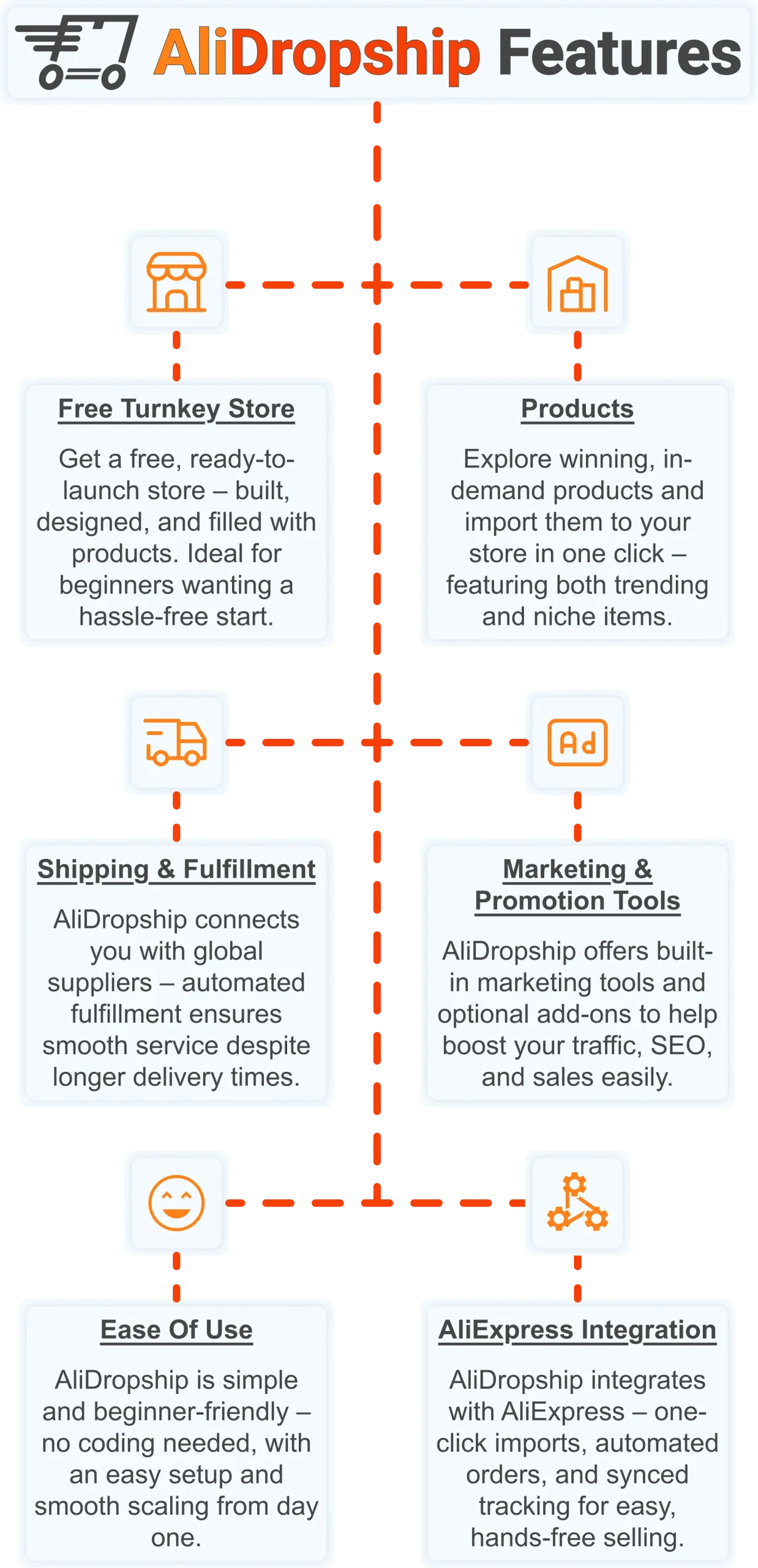
Free turnkey store ️
Get a free turnkey store – built, designed, and filled with products. Ideal for beginners wanting a hassle-free start, the store comes fully optimized to attract customers right away, saving you time on setup. Plus, it includes professional design elements to give your business a polished, trustworthy look from day one. This ready-made foundation makes it easy to move seamlessly into product selection.
Products
Once your store is set up, you can explore winning, in-demand products and import them in one click – featuring both trending and niche items. This wide selection lets you cater to diverse customer interests and test what works best. Regular updates ensure you always have fresh products, keeping your store competitive and relevant. With great products in place, smooth shipping becomes the next essential step.
Shipping & fulfillment
AliDropship connects you with global suppliers, and automated fulfillment ensures seamless order processing despite international delivery times. Customers receive real-time tracking updates, which builds confidence and trust in your store. Once shipping is handled reliably, you can focus on promoting your store and attracting traffic.
Marketing & promotion tools
To maximize sales, AliDropship offers built-in marketing tools and optional add-ons that help boost traffic, SEO, and conversions. From email campaigns and discounts to social media integration, these tools empower you to reach and retain customers without needing prior marketing experience. With promotion strategies in place, managing your business becomes simpler and more efficient.
Ease of use
AliDropship is beginner-friendly – no coding needed, with an intuitive dashboard that guides you through every step. Easy setup and smooth scaling let you expand your store without stress. As your business grows, adding new features, products, and marketing campaigns remains hassle-free, giving you more time to focus on sales.
AliExpress integration
Finally, AliDropship integrates seamlessly with AliExpress, enabling one-click imports, automated orders, and synced tracking. Your inventory stays up-to-date with the latest products and prices, while automated order processing frees you from manual tasks. Combined with the turnkey setup, reliable shipping, and built-in marketing tools, this integration ensures your dropshipping business is fully equipped for growth and success.
Frequently Asked Questions
How much money can you realistically make with Instacart per week?
Part-time full-service shoppers working 10 to 15 hours a week typically earn 150 to 375 dollars weekly, while full-time shoppers working 30 to 40 hours a week can earn 600 to 1,000 dollars a week. In-store shoppers earn a fixed hourly rate of 12 to 16 dollars with no tips, since someone else handles delivery. For most people just starting out, 300 to 500 dollars a week is a more realistic target for full-time effort in a mid-sized city. Shoppers reporting 1,000 dollars or more a week are typically working dense urban markets during peak windows with fully optimized routes.
What expenses cut into Instacart shopper earnings?
Gas is the largest ongoing cost, with full-time shoppers in suburban markets spending 80 to 150 dollars a week on fuel alone. Vehicle wear and maintenance typically run 50 to 100 dollars a month in accelerated costs from high-mileage gig work. As an independent contractor, shoppers must set aside at least 25 to 30 percent of gross earnings for self-employment tax, currently 15.3 percent, plus income tax. Instacart does not reimburse shoppers for gas, mileage, or car maintenance, so gross pay and actual take-home pay can differ significantly.
What factors most affect how much an Instacart shopper earns?
Location is the single biggest factor, since busy metro areas mean more batches, better batch pay, and customers who tip more generously. Working peak windows like Friday evenings, Saturdays, and Sundays significantly increases both batch volume and pay. Tips can equal or exceed the base batch pay on good orders, often ranging from 5 to 15 dollars per delivery. Peak-pay bonuses and completion incentives can add another 2 to 5 dollars per batch during busy periods.
Is Instacart shopping a good full-time income option in 2026?
In the right city, full-time Instacart shopping can generate 50,000 to 60,000 dollars gross per year, though net income is considerably lower after self-employment tax and vehicle costs. Full-time shoppers working 30 to 40 hours a week typically earn 600 to 1,000 dollars weekly before expenses. Treating the role like a real business, tracking every expense, and maintaining a high customer rating are essential for reaching the higher end of that range. Many full-time shoppers eventually pivot to other income models once they have built some financial stability.
What tax obligations do Instacart shoppers have?
Instacart shoppers must report all income on their tax return, including amounts below the 600 dollar threshold at which Instacart issues a 1099-NEC. Anyone earning more than 400 dollars a year from self-employment is required to file Schedule SE. Key deductions include mileage or actual vehicle expenses, phone data costs, and insulated shopping bags. Quarterly estimated tax payments are due in April, June, September, and January to avoid underpayment penalties from the IRS.
Unlike gig work, dropshipping lets you build income that grows while you sleep – not just while you drive. Claim your free store and $100 voucher to get started today.
 Previous post
