 ‧ Agnes Kazaryan ‧
March 15, 2026
‧ Agnes Kazaryan ‧
March 15, 2026  1701 ‧
 0
0
About 500 hours of video are uploaded to YouTube every single minute. Yet most new creators still have no idea which steps to take first – or how to actually turn a channel into consistent income. If you are researching how to start a YouTube channel and make money, the good news is the platform has never offered more ways to earn. The less glamorous news? It takes real work, a clear strategy, and patience measured in months – not days.
Quick answer: To start a YouTube channel and make money, pick a profitable niche, publish consistently, reach 1,000 subscribers and 4,000 watch hours to unlock the YouTube Partner Program, then layer in additional income streams like brand sponsorships, affiliate marketing, and digital products.
This guide covers every stage – from setting up your channel to hitting your first meaningful income milestone – with realistic numbers at each step so you know exactly what to expect.
What is a YouTube channel – and why start one in 2026?
A YouTube channel is your dedicated space on the world’s second-largest search engine, where you publish video content for a global audience. Unlike social platforms built around scrolling feeds, YouTube functions as a discovery engine – people actively search for answers, tutorials, reviews, and entertainment. That means your videos can keep attracting new viewers for years after you publish them.
In 2026, YouTube reaches over 2.5 billion logged-in users every month. One in three internet users watches tutorials or how-to videos on the platform every week. That scale translates directly into earning potential – YouTube has paid out more than $70 billion to creators in its Partner Program between 2021 and 2023 alone. The ceiling is extraordinary, but what matters more for a beginner is understanding the realistic floor.
Starting a channel costs almost nothing. A smartphone, decent lighting, and free editing software are enough to publish your first video. What you are actually investing is time – time to learn, create, and iterate. Channels that treat content creation like a business from day one grow significantly faster than those that treat it as a casual hobby.
Why this works in 2026: YouTube’s algorithm increasingly favors niche authority and watch time over sheer upload frequency, which means a focused small channel can outrank a larger generalist one in the same search results.
How much can you realistically earn from YouTube?
The honest answer depends heavily on your niche, your monetization mix, and how consistently you publish. Ad revenue alone – the method most people think of first – is rarely the biggest income stream for successful creators. The table below breaks down the main monetization methods so you can see which combination makes the most sense for your situation.
Most creators earning $2,000–$5,000/month from YouTube pull income from at least three of these streams at once. Ad revenue alone at that level would require hundreds of thousands of monthly views in a high-CPM niche – which takes serious time to build.
One note on the headline figures: The $50M/year earners you read about represent a tiny fraction of all active channels. A realistic first-year income target for a focused creator publishing weekly is $200–$800/month, rising to $1,500–$4,000/month in year two if you diversify. Full-time income – typically $3,000–$5,000/month – usually requires 12–24 months of consistent effort in a profitable niche.
Finance and technology channels earn the highest ad rates, with CPMs often ranging from $8–$18 per 1,000 views. Entertainment and lifestyle channels typically see $0.50–$2. Keep in mind that your actual RPM – what lands in your account after YouTube’s 45% cut – will always be lower than the advertised CPM figure.
How to start a YouTube channel: Step by step
The steps below take you from a blank Google account to a fully configured channel ready for its first upload. None of them require technical skills or any upfront budget.
Setting up your channel the right way
Choose your niche before you name anything
Your niche is the single most important decision you will make. It determines your audience, your ad rates, your sponsorship opportunities, and how quickly the algorithm figures out who to show your videos to. A niche that is too broad – “lifestyle” or “general tips” – makes it almost impossible for YouTube to recommend you to the right people. A niche that is too narrow may have an audience too small to monetize.
The sweet spot is a topic you can speak about with genuine knowledge, that has an active and searchable audience, and where existing channels are getting reasonable view counts. Before committing, search your main topic on YouTube and check whether mid-size channels under 50K subscribers are regularly hitting 50K–200K views per video. If the only big results are channels with millions of subscribers, the niche is saturated. If you can barely find any results, the audience may be too small.
Profitable niches in 2026 include personal finance, software tutorials, online business, health and fitness, parenting, language learning, and home improvement. These areas attract advertisers willing to pay premium CPMs and have audiences that actively buy products – which matters a lot when you get to affiliate marketing and sponsorships.
Create your Google account and YouTube channel
Go to YouTube.com and sign in with an existing Google account or create a new one. Click your profile icon, select “Create a channel,” and follow the prompts. Use a channel name that is memorable, easy to spell, and tied to your niche – but avoid names that lock you into a very specific sub-topic. You want room to grow.
Once the channel exists, head into YouTube Studio. This is your control room for everything: uploads, analytics, comments, and monetization settings. Spend some time here before you publish a single video so you know where each feature lives.
Set up professional channel branding
Your channel art is the first impression new visitors get. You need three things: a profile picture at 800 x 800 pixels, a banner image at 2560 x 1440 pixels showing your channel name and upload schedule in the safe zone, and a channel description that clearly explains what you cover and who it is for.
Use consistent colors, fonts, and a thumbnail style across all your videos. Thumbnails are arguably more important than titles for click-through rate. A uniform, high-contrast thumbnail style helps viewers recognize your content in the feed at a glance. Canva has solid free templates to get you started without any design experience.
Creating content that actually gets watched
Build a content strategy before you record
A content strategy is not a spreadsheet full of video ideas – it is a clear answer to three questions: who are you making videos for, what specific problem does each video solve, and how do those videos lead viewers to your next piece of content. Channels with a deliberate content strategy consistently outperform channels that upload whatever feels interesting that week.
Create a simple content calendar with at least 8–10 video ideas planned before you record the first one. This forces you to think about how your videos connect, which topics are genuinely searchable, and whether your niche can sustain a long publishing schedule. Evergreen topics – content that stays relevant for years – are far more valuable than trend-chasing videos that spike and die within a week.
Plan and shoot your first videos
You do not need a professional camera to start. Modern smartphones shoot 4K video and produce excellent audio when paired with a clip-on lavalier microphone ($20–$40). Natural window lighting or a simple ring light handles 90% of your visual quality needs. The most common beginner mistake is waiting for perfect equipment instead of just publishing.
Keep your first videos focused and specific. An 8–12 minute video that fully answers one clear question will outperform a 20-minute rambling overview every time. Open with a direct hook in the first 30 seconds – tell the viewer exactly what they will learn and why it matters. Watch time drops sharply in the first minute, so give people a reason to stay immediately.
Pro Tip: Record 3–5 videos before publishing any of them. This gives you a consistent posting schedule from day one without the pressure of scrambling to produce content each week.
Optimize every video for YouTube search
YouTube SEO is not complicated, but it is consistently overlooked by new creators. Your target keyword should appear in your video title, the first two lines of your description, and in at least one of your tags. Your description should be 200–300 words and naturally cover related terms a viewer might search.
Use YouTube’s autocomplete feature as a free keyword research tool – type your main topic into the search bar and note every suggestion that appears. These are real searches people are making right now. Tools like TubeBuddy or vidIQ can show you search volume and competition data for any term, helping you find topics where a new channel can realistically rank.
Chapters – timestamps in your description – improve watch time by letting viewers jump to the section they need. Cards and end screens drive traffic between your own videos, which signals to the algorithm that your content keeps people on the platform. That is one of the strongest ranking signals YouTube uses.
How to monetize your YouTube channel
Once your channel has an audience – even a small one – you have multiple ways to earn. The most successful creators stack several income streams rather than depending on any single source.
Ad revenue through the YouTube Partner Program
The YouTube Partner Program (YPP) is the gateway to ad revenue, and the requirements are specific: 1,000 subscribers and either 4,000 public watch hours in the past 12 months or 10 million public Shorts views in the past 90 days. You apply through the Earn tab in YouTube Studio, and YouTube typically reviews applications within 30 days.
Once approved, YouTube places ads on your videos and splits the revenue with you – 55% to creators on long-form videos and 45% on Shorts. Your actual RPM typically runs $1–$5 for most niches, with finance and business channels sometimes reaching $8–$18. Most channels at the 10,000–50,000 subscriber stage earn $100–$600/month from ads alone.
Important: Ad revenue fluctuates significantly with seasonality. CPMs spike in Q4 (October–December) and can drop by 40–60% in January. Build other income streams before depending on ad revenue as a primary source.
Brand sponsorships
Brand sponsorships are typically the highest-paying income stream for mid-size creators. A channel with 10,000–50,000 engaged subscribers in a specific niche can charge $200–$1,500 per sponsored video – often more than the same channel earns from ads in an entire month. Brands care more about audience trust and niche alignment than raw subscriber count.
You can find sponsors through YouTube’s built-in BrandConnect feature, influencer marketplaces like AspireIQ or Creator.co, or by reaching out to brands directly via email. When pitching a brand, lead with your audience demographics, average view duration, and niche relevance – not your subscriber count.
Earning potential: $200–$5,000 per sponsored video depending on channel size, niche, and deliverables.
Affiliate marketing
Affiliate marketing works by placing unique tracking links in your video descriptions. When a viewer clicks your link and makes a purchase, you earn a commission – typically 3–15% depending on the program. It requires no upfront investment, no audience size threshold, and can start earning from your very first video.
The most widely used affiliate programs for YouTube creators include Amazon Associates (2–10% commissions), ShareASale and CJ Affiliate (higher commissions on software and services), and individual brand programs. Tech, finance, software, and online business channels tend to see the highest affiliate revenue because the products being recommended carry higher price tags and commission rates.
Earning potential: $50–$2,000/month in the early stages, scaling to $5,000–$15,000/month for channels with strong evergreen search traffic in high-commission niches.
Channel memberships and Super features
Once you hit 1,000 subscribers and are part of the YPP, you can enable channel memberships – a monthly subscription ($3–$25/month) that gives paying members access to exclusive content, badges, and community perks. Super Chat and Super Thanks allow viewers to pay to have their comments highlighted during livestreams or on regular videos.
These features work best when you have a loyal, engaged community rather than a large passive audience. A channel with 5,000 highly engaged subscribers can earn more from memberships than a 50,000-subscriber channel whose viewers only watch without interacting.
Selling digital products and courses
Digital products – ebooks, templates, presets, courses, coaching packages – represent the highest-margin income stream available to YouTube creators. You create the product once and sell it indefinitely. A single well-positioned course in a profitable niche can generate $2,000–$10,000/month with a relatively modest channel audience.
The YouTube channel functions as your marketing engine: your free videos demonstrate expertise, build trust with viewers, and create a natural path to your paid products. Creators in SEO, finance, fitness, and business have built significant course revenue largely because their free content gave prospects a direct preview of their knowledge and teaching style.
Earning potential: $500–$10,000+/month once you have an engaged audience and a product aligned with what they actually want to buy.
Growing your YouTube audience consistently
Getting views on your first few videos is mostly about patience and iteration. Growing to a point where the algorithm actively recommends your content is about understanding what YouTube actually optimizes for.
How the YouTube algorithm works
YouTube’s algorithm is optimized for one thing above all: keeping people watching. It recommends content that has strong click-through rates (your thumbnail and title), high average view duration (how long people actually watch), and positive engagement signals (likes, comments, shares, saves). If your videos score well on these metrics, the algorithm will push them to new viewers beyond your existing subscribers.
The practical implication: prioritize watch time over upload frequency. One well-structured 10-minute video that people watch all the way through is worth more algorithmically than three rushed videos that viewers click away from after 90 seconds. Consistency matters – but quality consistency beats quantity every time.
Use YouTube Shorts as a growth accelerator
YouTube Shorts – vertical videos under 60 seconds – operate in a separate feed and can reach completely new audiences even if your main channel has zero subscribers. Many creators have grown from 0 to 10,000 subscribers significantly faster by publishing a mix of Shorts and long-form content, using Shorts to tease or summarize longer videos.
Shorts do not count toward the 4,000 watch hours threshold for ad revenue, but they do count toward the 10 million Shorts views alternative threshold. They also drive profile visits and long-form video traffic, which indirectly accelerates your path to monetization.
Engage with your community early
Reply to every comment in your first 100 videos. Not because the algorithm rewards it directly (though engagement is a factor), but because viewers who feel acknowledged become subscribers, and subscribers become the loyal audience that brands eventually pay to reach. Community Posts – the social-style updates you can publish between videos – are an underused tool for keeping your audience engaged even when you are not actively uploading.
Collaborations with other creators in adjacent niches can also drive significant channel growth. Guest appearances, reaction videos, or co-created content expose your channel to an already-engaged audience likely to be interested in your content. Most small-to-medium creators are open to collaboration – a direct, professional message outlining the mutual benefit is usually enough.
Legal and ethical considerations for YouTube creators
Monetizing a YouTube channel comes with responsibilities that catch many new creators off guard. Ignoring them can get your channel demonetized, suspended, or removed entirely.
Key principle: YouTube’s Community Guidelines and advertiser-friendly content policies apply to your entire channel – not just individual videos. One policy violation can affect monetization across all your content.
Disclosures and FTC compliance
In the US, the FTC requires creators to clearly disclose any paid partnerships, free products received, or affiliate relationships. This means verbally mentioning the sponsorship in the video itself – not just in the description. YouTube also has a built-in paid promotion disclosure checkbox in YouTube Studio that adds a visible label to your video. Use both. Failing to disclose properly can result in fines and serious reputational damage.
Copyright and content ownership
Using copyrighted music, footage, or images without permission is one of the fastest ways to get your channel flagged or your monetization stripped. YouTube Content ID is very effective at detecting copyrighted material. Use royalty-free music from YouTube Audio Library, Epidemic Sound, or Artlist. If you want to use a clip from another video as commentary or review, keep it brief and add clear transformative analysis – though this remains a grey area and is not a guaranteed safe harbor.
What to absolutely avoid
Fake engagement – buying subscribers, views, or likes – violates YouTube’s Terms of Service and can result in channel termination. YouTube’s systems are very good at detecting artificially inflated metrics. Similarly, using misleading titles or thumbnails that do not match the video content damages your watch time, audience retention, and algorithmic performance – and can result in strikes against your channel.
Avoid promoting products you have not genuinely used or researched, especially in health, finance, or investment categories. YouTube’s YMYL (Your Money, Your Life) content standards hold channels to a higher bar in these areas, and misleading recommendations can have real consequences for your viewers.
Final thoughts: Which approach is right for you?
YouTube is a legitimate income platform in 2026 – but the path to meaningful earnings looks very different depending on where you are starting from. Here is a practical breakdown by experience level.
Complete beginner
Start by picking one specific niche you can speak about with real knowledge. Publish your first 10 videos without worrying about monetization at all – your goal is to learn the platform, improve your production quality, and understand what your audience actually responds to. Focus on affiliate marketing and a simple digital product as your first income targets, since neither requires a large audience to get started.
Intermediate creator (some videos, under 1K subs)
At this stage, your priority is hitting the 1,000 subscriber and 4,000 watch hours thresholds. Double down on your top-performing videos – make more content in the same format and on the same topics. Add YouTube Shorts to accelerate discovery. Start building your email list now, before you are dependent on the platform algorithm, so you have a direct line to your audience regardless of how YouTube changes its rules.
Advanced creator (monetized, looking to scale)
If you are already in the YouTube Partner Program, your focus should shift to diversifying income beyond ad revenue. Develop a digital product, pitch brand sponsorships directly, and consider launching a channel membership if you have a loyal core audience. Many creators at this stage also use their YouTube traffic to drive sales for an ecommerce store – which can add $1,000–$5,000/month on top of existing channel revenue without requiring additional content creation.
YouTube’s trajectory in 2026 continues upward. Shorts are driving enormous discovery for new channels. AI-powered content tools are reducing production time significantly. And the platform’s advertiser base keeps expanding into new verticals. The creators who enter now – before their niche becomes saturated – are positioned better than those who wait another 12 months.
AliDropship: Your complete all-in-one solution for starting dropshipping in 2026
If you want the simplest possible way to start dropshipping – especially if you’re brand new – AliDropship remains one of the most beginner-friendly tools available in 2026. It brings together store creation, product imports, automation, and marketing into a single streamlined system designed to help you launch quickly and grow confidently.
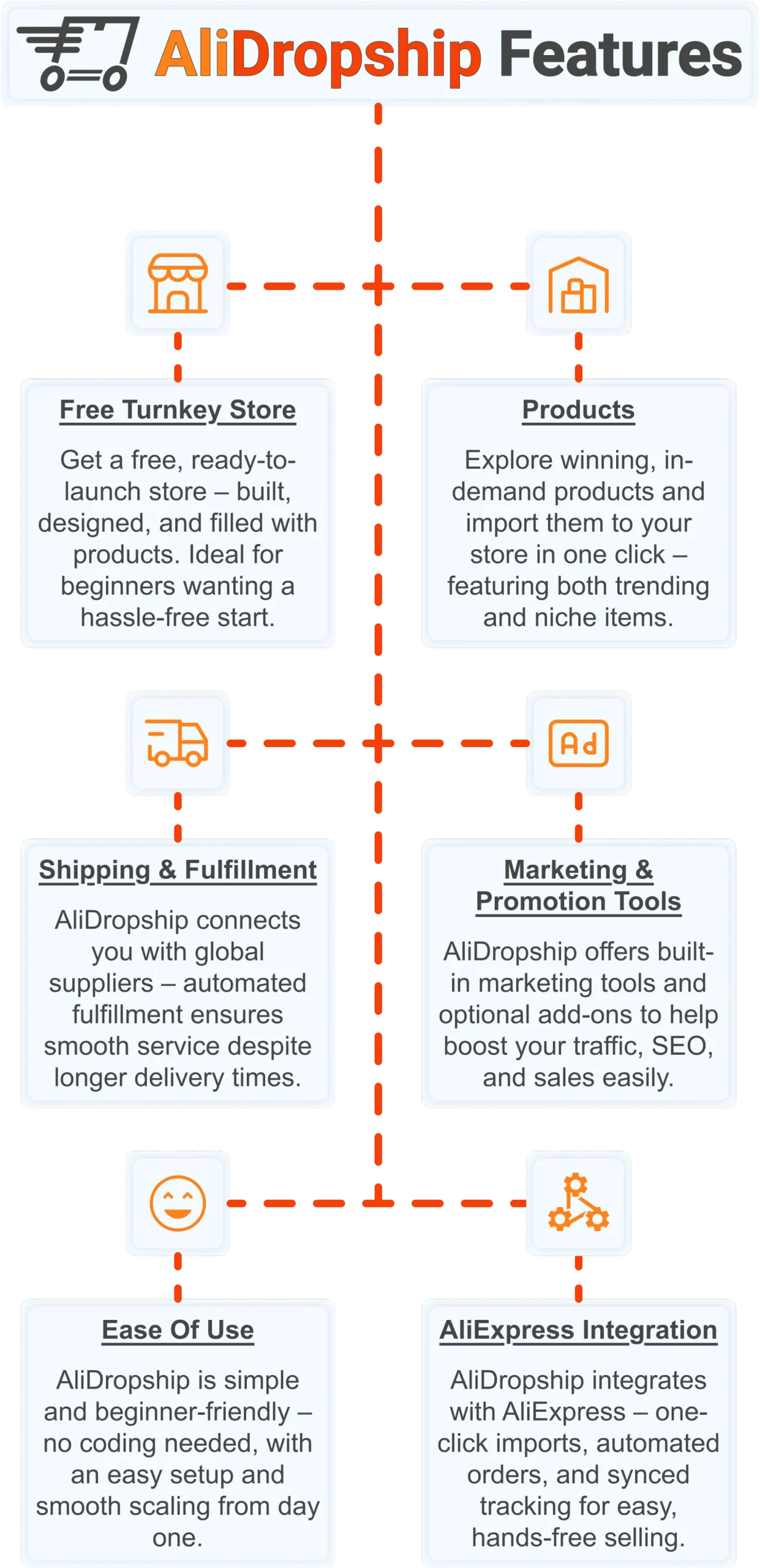
Free turnkey store ️
Get a free turnkey store – built, designed, and filled with products. Ideal for beginners wanting a hassle-free start, the store comes fully optimized to attract customers right away, saving you time on setup. Plus, it includes professional design elements to give your business a polished, trustworthy look from day one. This ready-made foundation makes it easy to move seamlessly into product selection.
Products
Once your store is set up, you can explore winning, in-demand products and import them in one click – featuring both trending and niche items. This wide selection lets you cater to diverse customer interests and test what works best. Regular updates ensure you always have fresh products, keeping your store competitive and relevant. With great products in place, smooth shipping becomes the next essential step.
Shipping & fulfillment
AliDropship connects you with global suppliers, and automated fulfillment ensures seamless order processing despite international delivery times. Customers receive real-time tracking updates, which builds confidence and trust in your store. Once shipping is handled reliably, you can focus on promoting your store and attracting traffic.
Marketing & promotion tools
To maximize sales, AliDropship offers built-in marketing tools and optional add-ons that help boost traffic, SEO, and conversions. From email campaigns and discounts to social media integration, these tools empower you to reach and retain customers without needing prior marketing experience. With promotion strategies in place, managing your business becomes simpler and more efficient.
Ease of use
AliDropship is beginner-friendly – no coding needed, with an intuitive dashboard that guides you through every step. Easy setup and smooth scaling let you expand your store without stress. As your business grows, adding new features, products, and marketing campaigns remains hassle-free, giving you more time to focus on sales.
AliExpress integration
Finally, AliDropship integrates seamlessly with AliExpress, enabling one-click imports, automated orders, and synced tracking. Your inventory stays up-to-date with the latest products and prices, while automated order processing frees you from manual tasks. Combined with the turnkey setup, reliable shipping, and built-in marketing tools, this integration ensures your dropshipping business is fully equipped for growth and success.
A YouTube channel builds your audience – a dropshipping store turns that audience into daily revenue. Get your free AliDropship store today and start building your online income alongside your channel.
Frequently asked questions
How do you start a YouTube channel and make money in 2026?
Pick a profitable niche, publish consistently, and work toward 1000 subscribers and 4000 watch hours to unlock the YouTube Partner Program. From there, layer in additional income streams like brand sponsorships, affiliate marketing, and digital products. YouTube reaches over 2.5 billion logged in users every month, giving new channels a large potential audience. Starting a channel costs almost nothing, since a smartphone, decent lighting, and free editing software are enough to publish a first video.
How much can you realistically earn from a YouTube channel?
A realistic first year income target for a focused creator publishing weekly is 200 to 800 dollars a month, rising to 1500 to 4000 dollars a month in year two. Full time income of roughly 3000 to 5000 dollars a month usually requires 12 to 24 months of consistent effort in a profitable niche. Ad revenue through the YouTube Partner Program typically runs 1 to 5 dollars in RPM for most niches, though finance and business channels can reach 8 to 18 dollars. Most creators earning 2000 to 5000 dollars a month pull income from at least three monetization streams at once.
What are the requirements for the YouTube Partner Program?
The YouTube Partner Program requires 1000 subscribers and either 4000 public watch hours in the past 12 months or 10 million public Shorts views in the past 90 days. Applications are submitted through the Earn tab in YouTube Studio, and YouTube typically reviews them within 30 days. Once approved, YouTube splits ad revenue with creators, giving 55 percent on long form videos and 45 percent on Shorts. Most channels at the 10000 to 50000 subscriber stage earn 100 to 600 dollars a month from ads alone.
How much do YouTube brand sponsorships and affiliate marketing pay?
Brand sponsorships typically pay 200 to 5000 dollars per sponsored video depending on channel size, niche, and deliverables. A channel with 10000 to 50000 engaged subscribers in a specific niche can charge 200 to 1500 dollars per sponsored video. Affiliate marketing commissions usually run 3 to 15 percent depending on the program, with Amazon Associates offering 2 to 10 percent. Affiliate earnings typically range from 50 to 2000 dollars a month in early stages, scaling to 5000 to 15000 dollars a month for channels with strong evergreen search traffic.
What legal rules should YouTube creators follow when monetizing content?
In the United States, the FTC requires creators to clearly disclose paid partnerships, free products received, or affiliate relationships, both verbally in the video and through YouTube Studio disclosure settings. YouTube Content ID actively detects copyrighted music, footage, or images used without permission, which can get a video flagged or demonetized. Fake engagement, such as buying subscribers or views, violates YouTube Terms of Service and can result in channel termination. YMYL content standards hold channels to a higher bar in health, finance, and investment categories, since misleading recommendations can have real consequences for viewers.
 Previous post
