 ‧ Agnes Kazaryan ‧
March 15, 2026
‧ Agnes Kazaryan ‧
March 15, 2026  627 ‧
627 ‧
 0
0
Let’s be straight with you: most “make money in college” articles list the same five ideas, slap on some vague income claims, and call it a day. This one won’t do that. Whether you need an extra $200 a month for groceries or you’re serious about building something real while you study, there are genuine ways to make money in college in 2026 – you just need to know which ones are worth your limited time.
The short version: part-time campus work is reliable but low-paying; freelancing pays more but needs a skill; and models like dropshipping can run in the background while you’re in class. This guide covers all of it with honest numbers so you can decide what actually fits your life.
Quick Answer: The best ways to make money in college in 2026 include campus jobs ($10–$16/hr), freelancing ($15–$75/hr), gig work ($12–$25/hr), selling products online, and passive income through dropshipping or content. Your realistic monthly take depends on hours and method – most students earn $200–$1,200/month from side work.
What does “making money in college” actually look like in 2026?
College finances have gotten tighter. Tuition, rent, food, and subscriptions add up fast – and student loans don’t cover the lifestyle gap. According to a 2024 Sallie Mae report, more than 70% of college students work while enrolled. The difference today versus five years ago is that remote and digital options have exploded. You no longer have to choose between a late shift at a campus café and failing your 8am exam. Plenty of students now run small side businesses entirely from their phones or laptops – fitting work into gaps between classes rather than scheduling their academic life around a shift.
That said, not every method is equal. Some take weeks to build up. Some pay almost nothing. And some require skills you either have right now or need to develop first. The breakdown below gives you an honest look at what each approach realistically pays and what it actually costs you in time and effort.
How much can you realistically earn?
These ranges reflect realistic student outcomes – not the top 5% of cases. Campus jobs are stable but capped. Freelancing scales with your skill and reputation. Dropshipping takes time to build but can run with minimal daily input once established.
Important note: Income from any of these methods is not guaranteed. Results depend heavily on how consistent you are, the demand for your niche or service, and how much time you actually put in during the first 60–90 days.
Part-time campus jobs: The reliable starting point
If you want something dependable from day one, campus jobs are the most accessible option. Most colleges prioritize student schedules by design, so shifts usually work around your classes rather than against them. Pay typically ranges from $10–$16/hr depending on your state and role.
Popular roles worth looking at
Library assistant – quiet, low-stress, and surprisingly good for squeezing in study time between tasks. Pay is modest but the environment is hard to beat.
Research assistant – if you’re in a STEM or social science field, assisting a faculty member on research is one of the most resume-building options available. Some roles come with academic credit on top of pay.
Resident assistant (RA) – an RA position often includes free or discounted housing in exchange for managing dorm life. The trade-off is that you’re on-call more than a regular job, but for students with high housing costs, it’s genuinely valuable.
Campus tour guide or admissions ambassador – good for extroverts. You’ll meet a lot of people and practice public speaking, which pays off in interviews later.
Dining hall staff – flexible hours, sometimes includes a free meal plan perk, and almost always hiring. Not glamorous, but reliable.
Earning potential: $300–$700/month working 15–20 hours per week at minimum to living wage rates.
Freelancing: The highest hourly rate for skilled students
Freelancing is where college students with any kind of digital skill can genuinely outpace their peers on hourly earnings. The barrier is that you need to build a portfolio and a reputation first – which usually takes a few weeks and a couple of lower-rate starter projects.
Skills that actually pay well
Writing and copywriting – blog posts, website copy, product descriptions. Platforms like Upwork and ProBlogger list steady work. Starting rates run $15–$25 per article; experienced writers can charge $80–$150 per piece.
Graphic design – if you know Canva, Illustrator, or Figma, businesses need logos, social posts, and ad creatives constantly. Fiverr and 99designs are common entry points.
Web development or no-code tools – even basic Webflow or Squarespace skills can earn $50–$150/hr. Demand is high and most small business clients don’t need a full developer.
Online tutoring – platforms like Chegg, Wyzant, and Preply let you list subjects you’re strong in. Math, science, standardized test prep (SAT/ACT/GRE), and foreign languages are consistently in demand. Average rates: $20–$60/hr.
Social media management – small local businesses often have no one running their Instagram or TikTok. A retainer of $200–$500/month per client is normal for a basic management package.
Earning potential: $400–$2,000/month depending on skill level, hours, and how many clients you juggle at once.
Why this works in 2026: The freelance economy has matured significantly. Clients have normalized working with remote contractors, and AI tools have lowered the bar for building a serviceable portfolio quickly.
Gig economy work: Flexible income when you need it
Gig apps are ideal when your schedule changes week to week. You turn the app on when you have time and off when you have an exam. The downside is that earnings are time-for-money by nature – stop working, stop earning.
Food delivery (DoorDash, Uber Eats, Grubhub) – most popular among students. A two-hour evening shift in a medium-density area can earn $25–$50 after expenses. Tip-heavy on weekends and around mealtimes.
Rideshare (Uber, Lyft) – requires a car and a clean driving record. Earnings are higher per hour than delivery, but vehicle wear and fuel cut into margins. Best in college towns during late nights and football weekends.
Pet sitting and dog walking (Rover, Wag) – lower hustle energy than delivery. Regular clients often tip well and rebook. Dog walking pays $15–$25 per 30-minute walk; overnight sitting can run $50–$80/night.
TaskRabbit and local odd jobs – furniture assembly, moving help, yard work, cleaning. Pays $20–$45/hr and often involves less app competition than delivery platforms in smaller college towns.
Earning potential: $300–$900/month working 10–20 hours per week. Highly variable based on location and time invested.
Selling products online: From handmade to print-on-demand
If you’re creative or entrepreneurially minded, selling products online can start small and grow into something meaningful. The key is picking a model that doesn’t require you to manage physical inventory.
Etsy and handmade goods – jewelry, art prints, candles, custom gifts. Works well if you already make things and want to sell them. Success depends heavily on product photography and SEO in your Etsy listings.
Print-on-demand (Printful, Redbubble, Printify) – you design, they produce and ship. Zero inventory risk. Margins are thin ($3–$8 per sale typically), so volume matters. Pair with a niche audience for better results.
Flipping – buy low at thrift stores, Facebook Marketplace, or clearance aisles; sell higher on eBay, Poshmark, or Depop. Works best if you have an eye for undervalued items in a specific category (electronics, vintage clothing, sneakers). Students in larger cities tend to have better sourcing options.
Digital products – Notion templates, study guides, cheat sheets, Lightroom presets. Create once, sell indefinitely. Gumroad and Etsy are popular storefronts. If you have a specific academic major with lots of study demand (pre-med, law, engineering), you’re already sitting on sellable material.
Earning potential: $200–$1,500/month once you’ve built traffic or a following. Slower to start, but digital products in particular have strong passive income potential.
Surveys, market research, and micro-tasks
These are the lowest-effort options – and the lowest-paying. They’re worth mentioning because they genuinely require zero skill and can fill dead time (waiting for class, commuting), but don’t expect to cover rent from them.
Survey platforms like Swagbucks, Survey Junkie, and Prolific Academic pay $1–$5 per survey, with Prolific generally offering better rates for academic research studies. UserTesting pays $10–$60 per test for evaluating websites and apps, and tests take 15–20 minutes. Focus groups (often run by local marketing agencies or university research departments) occasionally pay $50–$150 for a 90-minute session.
Earning potential: $30–$150/month treating it as a background activity. Not a primary income source, but genuinely zero-risk supplemental cash.
Monetizing skills and hobbies you already have
A lot of students underestimate the commercial value of things they already do for fun. Here are a few worth considering if you haven’t already.
Photography – if you shoot with anything better than a phone, you can license images through Shutterstock, Adobe Stock, or Getty. Alternatively, offer event photography (birthdays, campus events, headshots) at $50–$150/hr.
Fitness and coaching – certified or not, if you’ve put in the work and have a following or campus network, personal training or online coaching is a real option. Many student coaches start by charging $30–$60/session.
Music lessons – if you play an instrument above a beginner level, you can easily charge $25–$50/hr for private lessons to younger students in your area.
Gaming and streaming (Twitch, YouTube) – honest caveat here: building a monetized audience takes 6–18 months of consistent content. Don’t count on this for near-term income, but if you’re already gaming hours a day, streaming costs you nothing extra.
Earning potential: $200–$1,000/month depending on your skill level and how actively you market yourself locally or online.
Dropshipping as a college side business: What it actually involves
Dropshipping gets brought up in almost every “make money in college” article, and there’s a reason for that – the model genuinely suits student life. You sell products through an online store; when someone buys, the supplier ships directly to them. No inventory to store in your dorm room, no packing boxes, no upfront stock purchases.
How it works in practice
You set up an online store, pick a niche (pet supplies, home decor, fitness gear, etc.), and import products from suppliers. When a customer orders, the order goes straight to the supplier who handles fulfillment. Your job is to drive traffic and manage the customer experience.
The first 60–90 days are the hardest. You’re building the store, learning what products resonate, and figuring out marketing – usually through organic social content or paid ads. Most new dropshippers see their first consistent sales somewhere between week 6 and week 12. After that, with the right setup, the day-to-day running time can drop to 30–60 minutes.
What it’s not
It’s not passive income from day one. It requires real work upfront – picking a niche, writing product pages, testing audiences. Margins are typically 20–40%, which means a store doing $3,000/month in sales might net $600–$1,200 after product costs. That’s a real number – not a “six figures overnight” claim – and it’s achievable for a consistent student working at it seriously.
Earning potential: $0–$2,500+/month after an initial build-and-test period of 60–90 days. Results vary widely based on niche, marketing, and consistency.
Why this works in 2026: Supplier networks have matured, fulfillment times from quality AliExpress suppliers have improved, and beginner-friendly platforms like AliDropship have removed most of the technical friction.
Legal and ethical things to keep in mind
Most students don’t think about the legal side of making money until they have to. Here are a few basics worth knowing before you start.
Tax reporting – in the US, any income above $400 from self-employment (freelancing, gig work, selling products) is technically taxable. This doesn’t mean you’ll owe much – standard deductions cover a lot – but you should track your earnings and report them. The IRS receives 1099 forms from platforms like Upwork, PayPal, and Venmo for payments above $600.
Campus employment rules – international students on F-1 visas have strict limits on off-campus work. Always check your visa conditions before taking on freelance or gig work off-campus.
Dropshipping product sourcing – stick to legitimate suppliers. Avoid counterfeit branded goods entirely. Selling fake designer items is illegal, and platforms like Etsy and eBay will permanently ban your account if caught.
Intellectual property – if you create digital content, use licensed images and music. Tools like Canva Pro and Epidemic Sound exist specifically to give you legally usable assets.
Key principle: Earn money in ways you’d be comfortable explaining to a future employer. The shortcuts that seem clever now tend to create real problems later.
How to choose your method: By reader profile
Not every approach is right for every student. Here’s a quick breakdown by where you are right now.
Complete beginner – no skills or time to spare
Start with a campus job for stable baseline income. Layer in surveys and micro-tasks to fill dead time. If you want to build toward something bigger, spend 30 minutes a day learning one freelance skill (writing, design, or basic coding) while your job pays the immediate bills.
Intermediate – some digital skills, 10–15 hours available per week
Freelancing is your highest-ROI move. Pick one platform (Upwork or Fiverr), create a focused profile, and take your first 3–5 jobs at a slightly lower rate to build reviews. Simultaneously, consider setting up a dropshipping store in a niche you understand – it’ll take 4–6 hours of setup time initially but can run with minimal daily input after the first few weeks.
Advanced – serious about building income, willing to treat it like a business
Dropshipping or selling digital products gives you the best long-term upside. Combine with freelancing for immediate cash flow while the store builds momentum. Set a 90-day target: $500/month from freelancing + first dropshipping sales. Reinvest early earnings into marketing rather than spending them.
The most important thing is to actually start. Analysis paralysis kills more side hustles than competition ever does. Pick one method from this guide, commit to 30 days of genuine effort, and measure what happens before adding another.
AliDropship: Your complete all-in-one solution for starting dropshipping in 2026
If you want the simplest possible way to start dropshipping – especially if you’re brand new – AliDropship remains one of the most beginner-friendly tools available in 2026. It brings together store creation, product imports, automation, and marketing into a single streamlined system designed to help you launch quickly and grow confidently.
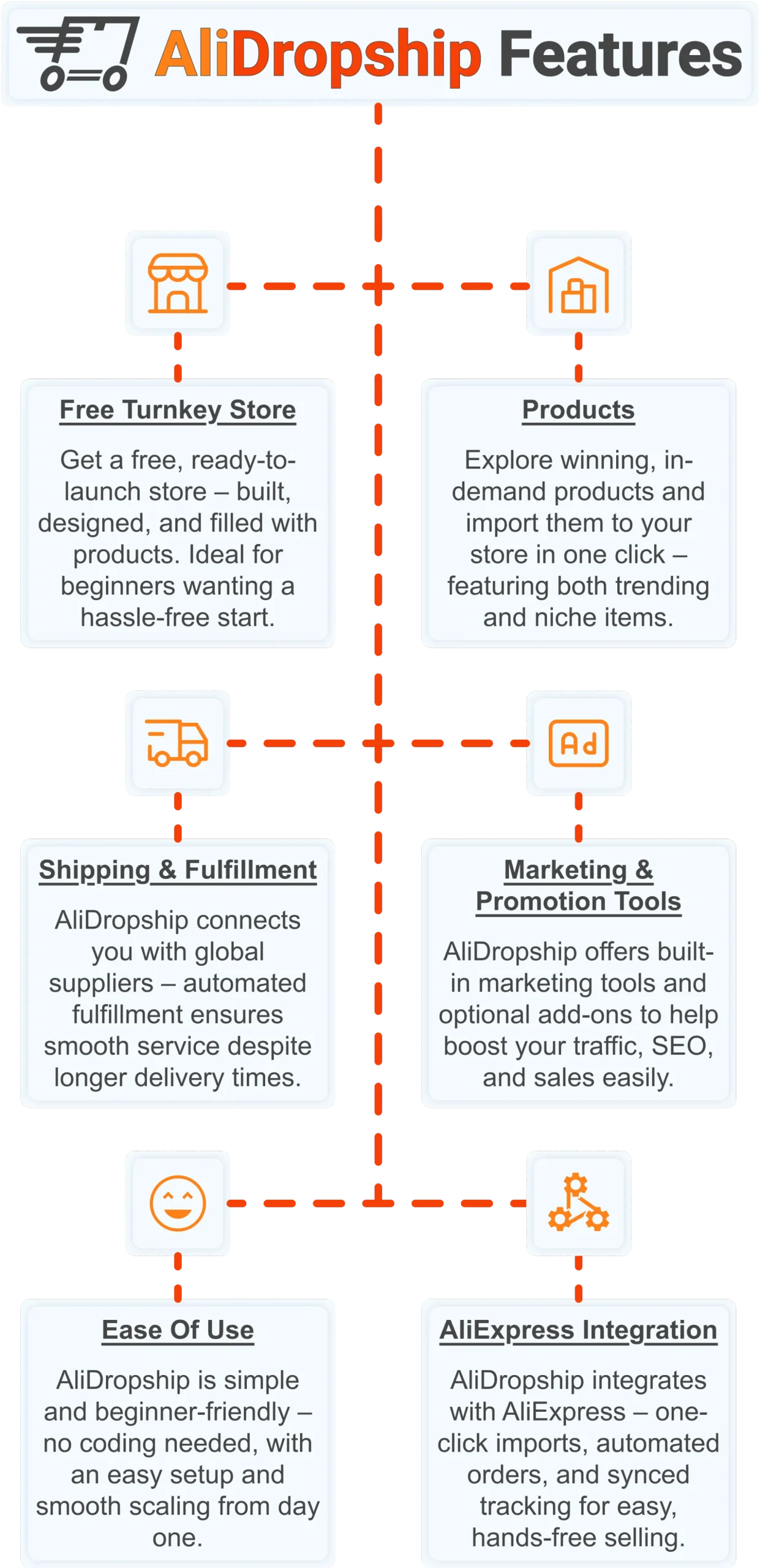
Free turnkey store ️
Get a free turnkey store – built, designed, and filled with products. Ideal for beginners wanting a hassle-free start, the store comes fully optimized to attract customers right away, saving you time on setup. Plus, it includes professional design elements to give your business a polished, trustworthy look from day one. This ready-made foundation makes it easy to move seamlessly into product selection.
Products
Once your store is set up, you can explore winning, in-demand products and import them in one click – featuring both trending and niche items. This wide selection lets you cater to diverse customer interests and test what works best. Regular updates ensure you always have fresh products, keeping your store competitive and relevant. With great products in place, smooth shipping becomes the next essential step.
Shipping & fulfillment
AliDropship connects you with global suppliers, and automated fulfillment ensures seamless order processing despite international delivery times. Customers receive real-time tracking updates, which builds confidence and trust in your store. Once shipping is handled reliably, you can focus on promoting your store and attracting traffic.
Marketing & promotion tools
To maximize sales, AliDropship offers built-in marketing tools and optional add-ons that help boost traffic, SEO, and conversions. From email campaigns and discounts to social media integration, these tools empower you to reach and retain customers without needing prior marketing experience. With promotion strategies in place, managing your business becomes simpler and more efficient.
Ease of use
AliDropship is beginner-friendly – no coding needed, with an intuitive dashboard that guides you through every step. Easy setup and smooth scaling let you expand your store without stress. As your business grows, adding new features, products, and marketing campaigns remains hassle-free, giving you more time to focus on sales.
AliExpress integration
Finally, AliDropship integrates seamlessly with AliExpress, enabling one-click imports, automated orders, and synced tracking. Your inventory stays up-to-date with the latest products and prices, while automated order processing frees you from manual tasks. Combined with the turnkey setup, reliable shipping, and built-in marketing tools, this integration ensures your dropshipping business is fully equipped for growth and success.
Dropshipping is one of the most realistic ways to make money in college without trading hours for dollars – and AliDropship gives you everything you need to get started today. Claim your free store and a $100 gift voucher to launch your dropshipping business right now.
 Previous post
