 ‧ Agnes Kazaryan ‧
March 21, 2026
‧ Agnes Kazaryan ‧
March 21, 2026  556 ‧
556 ‧
 0
0
Most people searching for small business ideas from home are not looking for a side hustle that pays for coffee. They want something real – a way to replace or supplement a salary, work on their own terms, and build something that actually compounds over time. The good news is that in 2026, that is more achievable than it has ever been.
The harder truth is that not every idea you see promoted online is worth your time. This guide cuts through the noise and gives you an honest look at the models that genuinely work – what they pay, how long they take, and who each one is best suited to.
Quick Answer: The best small business ideas from home in 2026 include dropshipping, freelancing, digital product sales, local service businesses, and content creation. Most people earn $300–$1,500/month within the first 60–90 days, with higher income coming after 6–12 months of consistent effort.
Before diving into the individual options, it helps to understand what separates a genuine home business from a time sink. The models that work share a few things: low barriers to entry, scalable income, and a clear path from zero to consistent earnings. The ones below all tick those boxes – though they do it in very different ways.
What are small business ideas from home?
A home-based small business is any income-generating activity you run from your own space – no office lease, no commute, no dependency on a single employer. In 2026, that covers a wide spectrum: selling physical or digital products online, offering services to clients remotely, creating content that earns through ads and sponsorships, or running automated systems that generate income in the background.
What makes these models genuinely viable right now is access. Platforms like Shopify, Etsy, Fiverr, YouTube, and AliDropship have removed most of the old barriers. You no longer need a business degree, a warehouse, or a marketing budget to start something real. What you do need is a clear niche, consistent effort, and the right tool for whichever model you choose.
Why this works in 2026: Remote work infrastructure, global ecommerce growth, and low-cost automation tools have made it easier than ever to build a legitimate home business with minimal upfront cost – and the customer base shopping online is larger than ever before.
How much can you realistically earn from a home business?
Income from home-based businesses varies enormously depending on the model, the hours you put in, and how quickly you learn. Here is a realistic comparison of the most popular options:
These figures reflect realistic ranges for people putting in part-time to full-time effort over 60–90 days. The ceiling numbers are achievable but not typical in the first few months – most people starting from scratch should plan for 3–6 months before seeing consistent income.
One note on the top figures: Income ranges like $5,000+/month for dropshipping represent stores that have been running for 6–12 months with optimised product selection and ad spend. New stores typically earn $30–$80/day in the first 60–90 days if set up well and actively marketed.
Ecommerce and product-based home businesses
Selling products online is one of the most scalable small business ideas from home because the income is not capped by your available hours. Once your store is running and converting, it can earn around the clock – even while you are doing something else.
Dropshipping
Dropshipping removes the biggest barrier to selling physical products: inventory. You list products in your online store, customers buy them, and your supplier ships directly to the buyer. You never handle the stock, which means no warehousing costs and no upfront product investment.
With a platform like AliDropship, you can launch a fully functional store connected to AliExpress suppliers in a matter of days. The learning curve is manageable, and the model scales well – once your store is running and converting, income becomes increasingly passive as you layer on automation and paid traffic.
Earning potential: $30–$80/day within the first 60–90 days for a well-configured store, scaling to $500–$5,000+/month after 6–12 months of consistent optimisation.
Print-on-demand
Print-on-demand (POD) works similarly to dropshipping but focuses on custom-designed products – t-shirts, mugs, phone cases, tote bags, and similar items. You create the designs, upload them to a POD platform like Printful or Printify, connect your Etsy or Shopify store, and the supplier handles printing and shipping on each order.
There is zero inventory risk, which is appealing. The downside is that margins are thinner than standard dropshipping, and success depends heavily on design quality and niche focus. If you have a creative eye or are comfortable using tools like Canva, this is a low-cost way to start selling physical products from home.
Earning potential: $200–$800/month for a focused niche store with consistent design output over 3–6 months.
Selling on Etsy or Amazon Handmade
If you make physical goods – candles, jewellery, art prints, home decor, soaps – platforms like Etsy and Amazon Handmade give you built-in traffic without needing to build your own audience from scratch. You list your products, manage orders, and ship from home.
The trade-off is competition. Standing out requires strong product photography, smart keyword use in your listings, and consistent quality. But for people who already have a craft they love, these marketplaces offer a genuine path to steady home-based income.
Earning potential: $300–$1,500/month for a focused product range with good reviews and consistent listings updated over 3–6 months.
Service-based home businesses
Service businesses are the fastest small business ideas from home to generate income because there is no product to build, no store to set up, and no inventory to manage. You sell your time and skills directly to clients – and in many cases, you can land your first paying client within a few weeks.
Freelance writing and copywriting
If you can write clearly and persuasively, freelance writing is one of the fastest home businesses to launch. Companies constantly need blog posts, product descriptions, email sequences, social media content, and ad copy. Platforms like Upwork, Fiverr, and ProBlogger connect writers with paying clients every day.
Income scales with your niche and experience. Generalist writers often start at $15–$30 per article. Specialist copywriters in finance, SaaS, or health can command $100–$500 per piece within 12–18 months. The ceiling is high if you are willing to niche down and build a portfolio.
Earning potential: $500–$2,500/month part-time within 3–6 months for a writer with a defined niche and consistent output.
Virtual assistant services
Virtual assistants (VAs) handle administrative tasks for businesses remotely – calendar management, inbox management, data entry, customer support, social media scheduling, and more. It is one of the most accessible small business ideas from home because it requires no specific technical background to get started.
Rates typically start at $15–$25/hour for general VAs and rise to $35–$60/hour for specialists in areas like bookkeeping, project management, or tools like HubSpot or Asana. Platforms like Belay, Zirtual, and Upwork are good starting points for finding your first clients.
Earning potential: $800–$2,000/month part-time, rising significantly as you specialise and move to retainer-based clients.
Online tutoring and coaching
If you have genuine expertise in a subject – academic, professional, or personal development – you can monetise it through online tutoring or coaching. Academic platforms like Tutor.com, Preply, and Wyzant connect you with students, while coaching can be self-run via Zoom with clients you find through social media or referrals.
Rates depend heavily on the subject and your credentials. Maths and science tutors typically charge $25–$60/hour. Executive and business coaches can charge $100–$300/hour or more once they have a track record. The key is packaging your expertise clearly and being consistent about outreach in the early months.
Earning potential: $600–$2,500/month for a tutor or coach with 5–15 regular weekly clients.
Social media management
Small businesses know they need a social media presence, but most do not have the time or confidence to manage it well. That gap creates consistent demand for home-based social media managers. You handle content creation, scheduling, community engagement, and basic analytics for clients – all from your laptop.
You do not need a marketing degree to start. You need a clear understanding of how 2–3 platforms work, familiarity with scheduling tools like Buffer or Later, and the ability to communicate a brand’s voice consistently. Build a portfolio with 2–3 starter clients – even at a reduced rate – and use those results to pitch higher-paying work.
Earning potential: $500–$2,000/month managing 3–5 client accounts on a part-time basis.
Digital and content-based home businesses
Digital businesses are appealing because the product costs almost nothing to replicate once it exists. Create it once, sell it indefinitely. That is the core appeal – and for the right person with the right niche, it genuinely delivers.
Selling digital products
Digital products – templates, ebooks, courses, Notion dashboards, Lightroom presets, Canva kits – are attractive because you create them once and sell them repeatedly with no fulfilment cost. Platforms like Gumroad, Teachable, and Etsy Digital make it straightforward to list and sell.
The challenge is the upfront effort. Creating a high-quality digital product that people genuinely want takes real research, time, and iteration. But once it is live and you have found your audience, even a $27 template selling ten times a month adds up in a meaningful way month after month.
Earning potential: $100–$1,500/month within 3–6 months for a creator with a clear niche and at least one strong, well-validated product.
Blogging and affiliate marketing
Blogging combined with affiliate marketing is one of the most passive home business models available – but it is also one of the slowest to build. You write content that ranks in search engines, recommend products with affiliate links, and earn a commission on sales. Amazon Associates, ShareASale, and niche affiliate programmes are the main income sources.
Realistically, a new blog takes 9–18 months to generate meaningful traffic. But once it does, the income is largely passive and scales without proportionally more work. The blogs that succeed are tightly focused on a specific niche and publish consistently useful content over a sustained period of time.
Earning potential: $200–$2,000/month after 12–18 months for a niche blog with 20,000+ monthly visitors and a solid affiliate strategy.
YouTube and short-form video
YouTube remains one of the strongest long-term home business platforms, but it requires real patience. Ad revenue does not kick in until you hit 1,000 subscribers and 4,000 watch hours. Most successful channels supplement ad income with sponsorships, affiliate links, and digital product sales alongside their video content.
Short-form video on TikTok and Instagram Reels is faster to grow but harder to monetise directly. The creators who turn it into a business typically use it as a traffic channel leading to something else – a course, a store, a Patreon, or a service they offer elsewhere.
Earning potential: $50–$500/month from YouTube ads within the first year, growing significantly when combined with sponsorships and affiliate income after 18–24 months of consistent output.
Legal and ethical considerations for home businesses
Starting a home business is exciting, but a few legal and ethical basics will protect you from problems down the line – and keep your business credible and sustainable.
What to register and declare
In most countries, you are required to register your business and declare income above a certain threshold, even as a sole trader working from home. In the US, income above $400 from self-employment is generally taxable and needs to be reported. In the UK, income above £1,000 falls under the trading allowance, after which you need to register for Self Assessment.
Important: Operating without proper registration does not avoid tax liability – it just creates risk. Most registrations are free or low cost and take less than an hour to complete online.
What to avoid
Fake reviews on your own products or services, misleading income claims in your marketing, and selling counterfeit or copyright-infringing items are the three most common pitfalls for new home business owners. Beyond being unethical, they carry real consequences – account bans, legal action, and lasting reputational damage that can be very difficult to recover from.
Key principle: Build your business on real results, honest marketing, and products you would genuinely recommend to someone you care about.
Zoning and home business rules
If your business involves customers visiting your home, making noise, or displaying exterior signage, check your local zoning laws before you start. Most purely online businesses have no restrictions. But anything with a physical element – a workshop, storage, or client visits – may require a home occupation permit depending on your municipality.
How to choose the right home business for you
With so many options available, the paralysis of choice is real. Here is a straightforward way to narrow things down based on where you are starting from right now.
Complete beginner
If you have no existing skills to sell and limited time, start with dropshipping. The AliDropship model is designed for exactly this scenario – you get a fully built store, product selection handled, and an automated system that does most of the heavy lifting. Your main job is learning how to drive traffic, which you can do gradually through free social media content before scaling with paid ads when you are ready.
Alternatively, if you prefer service work, general virtual assistant roles require the least technical background and are consistently in demand across all industries.
Intermediate / part-time
If you have 10–20 hours per week and some transferable skills, freelancing is your fastest path to consistent income. Writing, design, social media management, and bookkeeping all convert well to freelance work. Build your client base for 6–12 months, then reinvest some of that income into a dropshipping store as a parallel passive income stream running alongside your services.
Advanced / full-time goal
If you are aiming for full-time home-based income within 12 months, the most reliable route is combining two models: an active income stream (freelancing or coaching) that pays the bills right away, alongside a scalable model (dropshipping or digital products) that compounds over time. The people who make this work are consistent, strategic, and willing to reinvest early earnings rather than spend them immediately.
The home business landscape in 2026 is genuinely growing – more platforms, more tools, and more customers shopping online than ever before. The window for getting in early on a well-chosen model is still wide open. The people building real income today started in exactly the same place you are now.
AliDropship: Your complete all-in-one solution for starting dropshipping in 2026
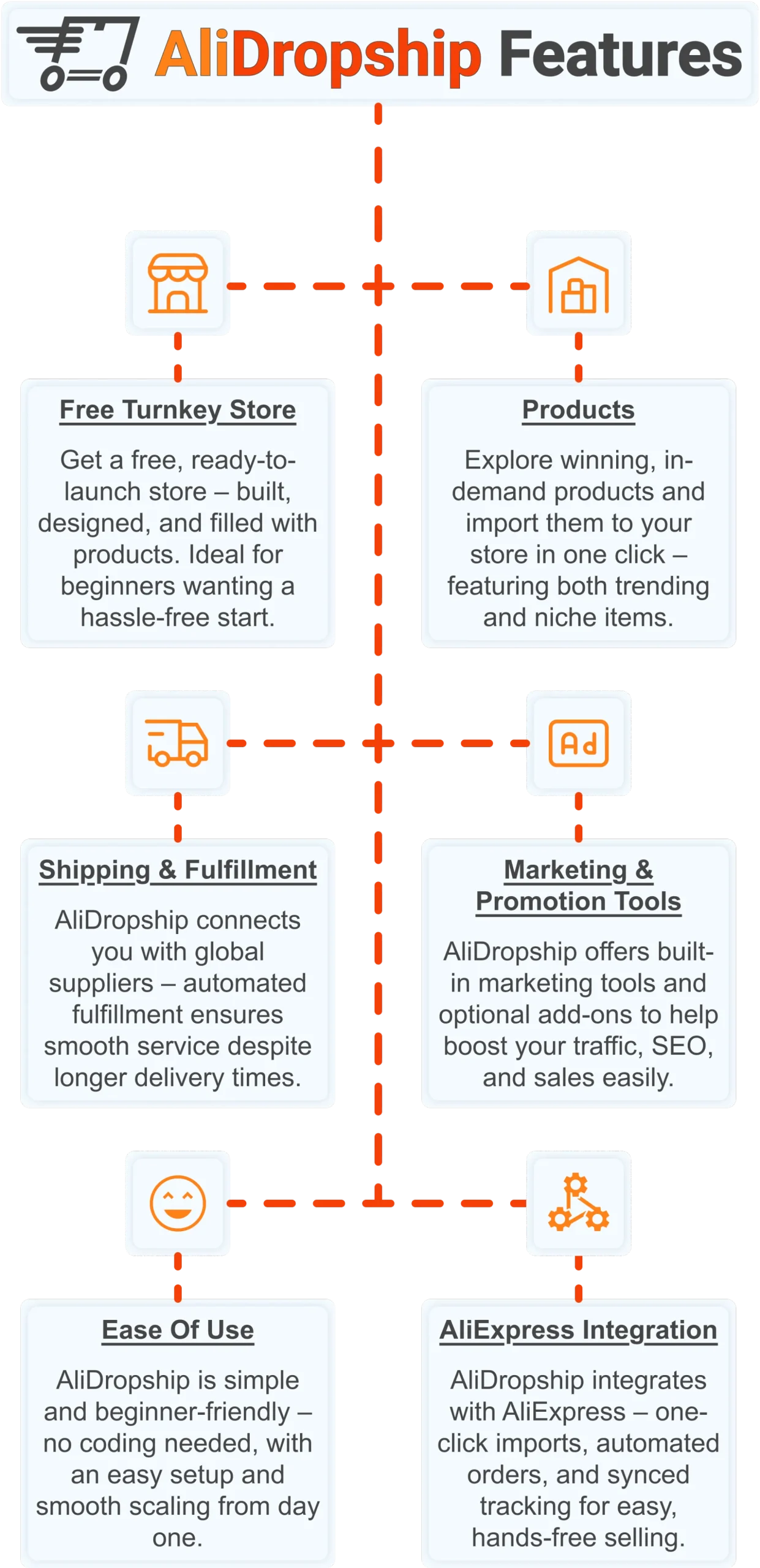
If you want the simplest possible way to start dropshipping – especially if you’re brand new – AliDropship remains one of the most beginner-friendly tools available in 2026. It brings together store creation, product imports, automation, and marketing into a single streamlined system designed to help you launch quickly and grow confidently.
Free turnkey store ️
Get a free turnkey store – built, designed, and filled with products. Ideal for beginners wanting a hassle-free start, the store comes fully optimized to attract customers right away, saving you time on setup. Plus, it includes professional design elements to give your business a polished, trustworthy look from day one. This ready-made foundation makes it easy to move seamlessly into product selection.
Products
Once your store is set up, you can explore winning, in-demand products and import them in one click – featuring both trending and niche items. This wide selection lets you cater to diverse customer interests and test what works best. Regular updates ensure you always have fresh products, keeping your store competitive and relevant. With great products in place, smooth shipping becomes the next essential step.
Shipping & fulfillment
AliDropship connects you with global suppliers, and automated fulfillment ensures seamless order processing despite international delivery times. Customers receive real-time tracking updates, which builds confidence and trust in your store. Once shipping is handled reliably, you can focus on promoting your store and attracting traffic.
Marketing & promotion tools
To maximize sales, AliDropship offers built-in marketing tools and optional add-ons that help boost traffic, SEO, and conversions. From email campaigns and discounts to social media integration, these tools empower you to reach and retain customers without needing prior marketing experience. With promotion strategies in place, managing your business becomes simpler and more efficient.
Ease of use
AliDropship is beginner-friendly – no coding needed, with an intuitive dashboard that guides you through every step. Easy setup and smooth scaling let you expand your store without stress. As your business grows, adding new features, products, and marketing campaigns remains hassle-free, giving you more time to focus on sales.
AliExpress integration
Finally, AliDropship integrates seamlessly with AliExpress, enabling one-click imports, automated orders, and synced tracking. Your inventory stays up-to-date with the latest products and prices, while automated order processing frees you from manual tasks. Combined with the turnkey setup, reliable shipping, and built-in marketing tools, this integration ensures your dropshipping business is fully equipped for growth and success.
Of all the small business ideas from home covered in this guide, dropshipping with AliDropship offers the most complete, beginner-ready package available in 2026. Get your free turnkey store and start building your home business today.
Frequently asked questions
What are the best small business ideas from home in 2026?
The best small business ideas from home in 2026 include dropshipping, freelancing, digital product sales, local service businesses, and content creation. Most people earn 300 to 1500 dollars per month within the first 60 to 90 days, with higher income coming after 6 to 12 months of consistent effort. Dropshipping offers the highest earning potential among home business models, reaching 500 to 5000 dollars or more per month. The models that work share low barriers to entry, scalable income, and a clear path from zero to consistent earnings.
How much can you realistically earn from a home based dropshipping business?
A well configured dropshipping store can earn 30 to 80 dollars per day within the first 60 to 90 days of launch. Income can scale to 500 to 5000 dollars or more per month after 6 to 12 months of consistent optimization and ad spend. With a platform like AliDropship, a fully functional store connected to AliExpress suppliers can be launched within days. Income becomes increasingly passive over time as automation and paid traffic are layered onto a converting store.
What service based home businesses pay the most for beginners?
Virtual assistant rates typically start at 15 to 25 dollars per hour for general tasks, rising to 35 to 60 dollars per hour for specialists in bookkeeping or project management tools. Freelance writers often start at 15 to 30 dollars per article, while specialist copywriters in finance or health can command 100 to 500 dollars per piece within 12 to 18 months. Online tutors typically charge 25 to 60 dollars per hour for maths and science, while executive coaches can charge 100 to 300 dollars per hour with a track record. Social media managers handling 3 to 5 client accounts part time can earn 500 to 2000 dollars per month.
How long does it take to earn meaningful income from digital products or blogging?
Selling digital products can generate 100 to 1500 dollars per month within 3 to 6 months for a creator with a clear niche and at least one well validated product. Blogging combined with affiliate marketing typically takes 9 to 18 months to generate meaningful traffic before income becomes largely passive. A niche blog with 20000 or more monthly visitors and a solid affiliate strategy can earn 200 to 2000 dollars per month after 12 to 18 months. YouTube ad revenue does not begin until a channel hits 1000 subscribers and 4000 watch hours, typically earning 50 to 500 dollars per month in the first year.
What legal requirements apply to running a small business from home?
In the US, income above 400 dollars from self employment is generally taxable and needs to be reported, even for a sole trader working from home. In the UK, income above 1000 pounds falls under the trading allowance, after which registration for Self Assessment is required. Fake reviews, misleading income claims in marketing, and selling counterfeit or copyright infringing items are the three most common pitfalls that carry real legal and reputational consequences. Businesses involving customers visiting the home, noise, or exterior signage may require a home occupation permit depending on local zoning laws.
 Previous post
