 ‧ Agnes Kazaryan ‧
March 13, 2026
‧ Agnes Kazaryan ‧
March 13, 2026  1228 ‧
 0
0
Finding high demand products with low competition feels like chasing a myth – until you realise that thousands of dropshippers are quietly building income around exactly these gaps right now.
The secret is not stumbling onto some hidden treasure. It is knowing where to look, what signals to trust, and how to move fast once you spot the opportunity.
Quick answer: High demand products with low competition are items with consistent or growing buyer intent that have not yet been saturated by big-brand sellers or mass dropshippers. In 2026, the most reliable categories include niche home goods, functional pet accessories, wellness tools, and hobby-specific gear – all of which are low cost products with high profit margin when sourced correctly.
This guide breaks down which product types to target, how to validate them before you spend a cent, and how to position your store to compete in niches where the field is still open. Before diving into the product list, it helps to understand what actually makes a product “low competition” – because the answer is more nuanced than just picking something nobody sells yet.
What are high demand products with low competition?
A high demand, low competition product sits at the intersection of two measurable forces: strong buyer intent and weak seller presence. Demand is easy to confirm – Google Trends, Amazon Best Sellers, and TikTok Shop trending pages all surface what people are actively searching for and buying.
Competition is more layered. Low competition does not just mean “few sellers.” It means few sellers who are doing it well – with optimised listings, strong reviews, and real ad spend behind them.
In practical terms, you are looking for product categories where the top AliExpress listings have under 500 reviews, where Google search results return thin affiliate pages rather than authority retailers, and where there is no dominant brand name buyers associate with the product.
When all three signals align, you have found a real gap.
Why does this matter in 2026 specifically? Consumer purchasing has fragmented dramatically. People are no longer just shopping on Amazon. TikTok Shop, niche Shopify stores, and Instagram storefronts have pulled buyer attention toward smaller, more specialised sellers – creating more entry points for independent dropshippers than existed three years ago.
Important: Low competition is temporary by definition. Products move through a cycle: obscure, trending, saturated. Your job is to enter during the trending phase – early enough to build sales history and reviews before the market floods.
How much can you realistically earn?
Earnings from dropshipping high demand, low competition products vary widely depending on niche selection, pricing strategy, and how much effort you put into traffic generation. Here is a realistic breakdown across different approaches.
Most dropshippers who commit to a focused niche see their first consistent sales within 60–90 days. The $150–$400/day range is achievable for part-time operators within 4–6 months, provided they are targeting genuinely underserved categories and reinvesting early profits into paid traffic or SEO content.
One note on the ceiling figures: The $1,000+/day numbers require treating this as a full-time business with real marketing investment. Do not use that figure to set first-quarter expectations. Use $30–$80/day as your realistic early benchmark and build from there.
Most of the product categories below carry margins of 40–65% when sourced at AliExpress wholesale pricing – meaning you are not spending $5 in ads to make $6 in revenue.
High demand products to sell with low competition in 2026
The categories below are not guesswork. They are drawn from cross-referencing Google Trends data, AliExpress order volumes, TikTok Shop trending pages, and Reddit community discussions in dropshipping and ecommerce forums. Each one represents a segment where demand is proven and seller saturation is still low enough for a well-positioned newcomer to compete.
Home and kitchen niche products
Home goods remain one of the most reliable categories for dropshipping because people buy them year-round, they photograph well for social media, and there is almost always a sub-niche that has not been over-targeted yet. The key is to avoid the obvious – skip generic coffee mugs and phone stands. Go deeper.
Compact organisation tools
Under-sink organisers, drawer dividers for specific room types (craft rooms, bathroom vanities, laundry areas), and cable management boxes are all showing steady Google Trends growth in 2026. These items cost $3–$8 to source and retail comfortably at $22–$38, giving margins of 55–70%.
Competition is fragmented across dozens of unbranded sellers, which means a store with a clean product page and a few real customer photos can rank and convert better than most.
Earning potential: $40–$90/day with consistent SEO or Pinterest traffic targeting home organisation keywords.
Specialty kitchen prep tools
Avocado slicers, herb strippers, mango splitters, and similar single-function kitchen gadgets consistently go viral on TikTok and Instagram Reels because they are visually satisfying to watch in use. Source price is typically $2–$6 and retail sits at $15–$28. The category has pockets of saturation (garlic presses, for example, are over-competed), but unusual produce-specific tools still have wide-open space.
Why this works in 2026: Short-form video discovery has replaced traditional search for impulse kitchen buys. A single viral TikTok showing the product in action can generate hundreds of orders without any paid spend.
Minimalist wall decor
Mass-market wall art is saturated. But hyper-specific aesthetic niches – dark academia prints, solarpunk illustrations, retro travel posters for specific cities – are not. Dropshippers who build stores around a single visual identity and curate 30–50 products around it consistently outperform general art stores.
Sourcing cost for canvas prints and metal wall art on AliExpress runs $5–$15; retail pricing of $35–$70 is standard and expected by buyers in this category.
Pet accessories with functional appeal
The global pet care market continues to grow faster than overall ecommerce. Pet owners are not particularly price-sensitive when it comes to their animals, which means margins hold even when you price competitively. The most important filter here is functional appeal – products that solve a visible problem perform far better than novelty items that spike and crash.
Slow feeder bowls and puzzle feeders
Recommended by vets to reduce bloat and anxiety in dogs, slow feeder bowls have moved from niche pet store item to mainstream recommendation – yet most dropshipping stores selling them still use stock photos and generic descriptions. Differentiate with real pet photos, specific breed call-outs in your copy, and a focused store identity, and you can capture significant organic traffic. Source price: $4–$9. Retail: $18–$35.
Cat enrichment products
Window-mounted bird feeder attachments for cats, wall-mounted cat shelves, and interactive wand toys with replaceable parts are all high-search, low-competition items as of 2026. Cat owner communities on Reddit and Facebook are extremely vocal about enrichment and will share products they love – making word-of-mouth a real traffic channel beyond paid ads.
Earning potential: $60–$130/day for a focused pet accessories store targeting functional, vet-approved products.
Wellness and self-care tools
Consumer interest in personal wellness tools – especially ones usable at home without a gym membership or clinic visit – has not slowed down. This category rewards sellers who present products with credibility and context rather than just listing specs.
Facial massage and lymphatic drainage tools
Gua sha stones, ice rollers, and silicone facial massage wands are examples of wellness tools that have demonstrated staying power beyond trend cycles. The key differentiator in 2026 is educational content. Stores that pair these products with how-to guides, routine videos, or ingredient-compatible skincare bundles convert at 2–3x the rate of bare-listing competitors. Source cost: $2–$7. Retail: $16–$40.
Posture and ergonomic aids
Posture corrector straps, lumbar support cushions designed for specific chair types, and under-desk foot hammocks are all seeing sustained Google Trends interest driven by remote work culture.
The average source price is $5–$12, and retail pricing of $28–$55 is well within what buyers expect to pay. Competition is moderate but mostly generic – a store built around “remote worker wellness” as an identity can dominate with targeted content.
Why this works in 2026: Remote and hybrid work is permanent for a large share of the global workforce. The ergonomic home office niche has a stable, repeat buyer base – not a passing trend.
How to validate high demand products before you commit
Spotting a potential product is step one. Validating it before you build a store around it is what separates profitable dropshippers from those who spin up stores and wonder why nobody buys. Here is a practical validation framework that takes under an hour per product category.
Step 1 – Check Google Trends
Enter your product idea into Google Trends and set the timeframe to 5 years. You want to see one of two things: a steady upward trend, or a seasonal pattern with consistent peaks. What you do not want is a spike that peaked 18 months ago and has since flatlined – that is a product cycle that has already passed. Cross-reference with the past 90 days at a regional level to confirm the trend is current.
Step 2 – Audit AliExpress order volumes and review counts
Search your product on AliExpress and sort by orders. If the top results have 2,000–10,000 orders and 200–800 reviews, you are looking at a validated product that is not yet dominated by a single supplier with an unbeatable moat. If the top listing has 50,000+ orders and 4,000+ reviews, competition downstream will be much harder – buyers will recognise the product and price-compare aggressively.
Step 3 – Search TikTok and Instagram
Search the product name on TikTok and filter by “This month.” If you see videos with 50,000–500,000 views from non-brand accounts (regular users or small creators, not major retailers), the product is in its discovery phase. That is your entry window. If brand accounts with millions of followers are dominating results, the trend has already been captured by well-resourced players.
Step 4 – Check Google Shopping competition
Search the product on Google Shopping. If the top results are a mix of AliExpress, Wish, and small unbranded Shopify stores, competition is fragmented and winnable. If you see Walmart, Target, Amazon, and established direct-to-consumer brands on page one, the search intent for that term is too competitive for a new store to break into organically.
Pro tip: Run all four checks before committing to any product. Products that pass each step typically carry source costs of $3–$12 and retail at $18–$55, giving margins of 50–65%.
Legal and ethical considerations when sourcing these products
Most high demand, low competition products are completely legitimate to dropship. But there are pitfalls in this space that can get your store banned, your payment processor suspended, or your account flagged – sometimes all three at once. Understanding the lines before you cross them saves you from building a store only to have it shut down.
Key principle: If a product mimics a branded item closely enough that a buyer might confuse the two, do not sell it – regardless of how it is listed on AliExpress.
- Avoid counterfeit or branded lookalikes. Some AliExpress listings use brand names or logos without authorisation. Importing or reselling these products is a legal liability in most jurisdictions, and payment processors like Stripe and PayPal will terminate accounts found processing these transactions.
- Check health and safety compliance for wellness products. Certain wellness tools – especially those making therapeutic claims – may require specific certifications to sell in the US, EU, or UK. Research your target market’s requirements before listing anything positioned as a medical or health device.
- Do not manipulate reviews. Fake reviews create legal exposure in markets with consumer protection regulations, and they undermine the trust that makes niche stores profitable long-term.
- Be accurate in your product descriptions. Exaggerating the capabilities of a product – especially in the wellness or ergonomic category – can constitute false advertising. Stick to what the product demonstrably does, and let real customer results speak for the rest.
The good news is that the genuinely high demand, low competition products in the niches outlined above carry none of these complications. They are functional, non-branded, legally straightforward items that sell on merit.
How to choose your approach based on where you are right now
Not every niche or strategy in this guide is the right fit for every reader. Here is a breakdown by experience level and availability so you can identify your best starting point.
Complete beginner
If you have never run a dropshipping store before, start with a single niche from the home goods or pet accessories categories. These have the widest product range, the most forgiving learning curve, and the most content available online to help you understand your buyer.
Focus on building 5–10 well-optimised product pages before worrying about traffic. Quality over quantity at the listing stage makes a meaningful difference in your early conversion rate.
Intermediate – part-time operation
If you have some ecommerce experience and a few hours per week to invest, the wellness tools and hobby niche categories are your best opportunities. These require slightly more product knowledge and content investment to compete, but they reward that investment with higher average order values and more loyal repeat customers.
Build a content strategy around the niche – even a basic blog or Pinterest presence – to generate organic traffic alongside any paid campaigns.
Advanced – full-time goal
If you are targeting $150+/day as a realistic near-term goal and have budget to invest in paid traffic, pick one of the niche categories above, validate two or three hero products using the framework in this guide, and build a brand identity around them.
Run TikTok Spark Ads or Meta catalogue ads alongside SEO-optimised product pages. At this level, the margin structure in these niches – particularly ergonomic home office and niche hobby gear – supports profitable paid acquisition with room to scale.
Final thoughts – finding and acting on the right products
High demand products with low competition are not rare. They are everywhere, if you know how to look. The categories in this guide – home organisation, pet accessories, wellness tools, hobby gear – all have proven demand and manageable competition in 2026. The difference between dropshippers who profit from them and those who do not is almost always speed and specificity.
Go one level deeper than the obvious category. Use the four-step validation framework before committing. Enter during the trending phase. And build a store with a clear identity rather than a generic catalogue.
- Complete beginner: Start with home goods or pet accessories – the widest product range, the most forgiving learning curve.
- Intermediate / part-time: Move into wellness tools or hobby gear – higher margins, more loyal customers, better long-term returns.
- Advanced / full-time goal: Pick one niche, validate two or three hero products, build brand identity, and run paid traffic alongside organic content.
The window on any specific product is temporary. The skill of finding and acting on high demand, low competition products is not.
AliDropship: Your complete all-in-one solution for starting dropshipping in 2026
If you want the simplest possible way to start dropshipping – especially if you are brand new – AliDropship remains one of the most beginner-friendly tools available in 2026. It brings together store creation, product imports, automation, and marketing into a single streamlined system designed to help you launch quickly and grow confidently.
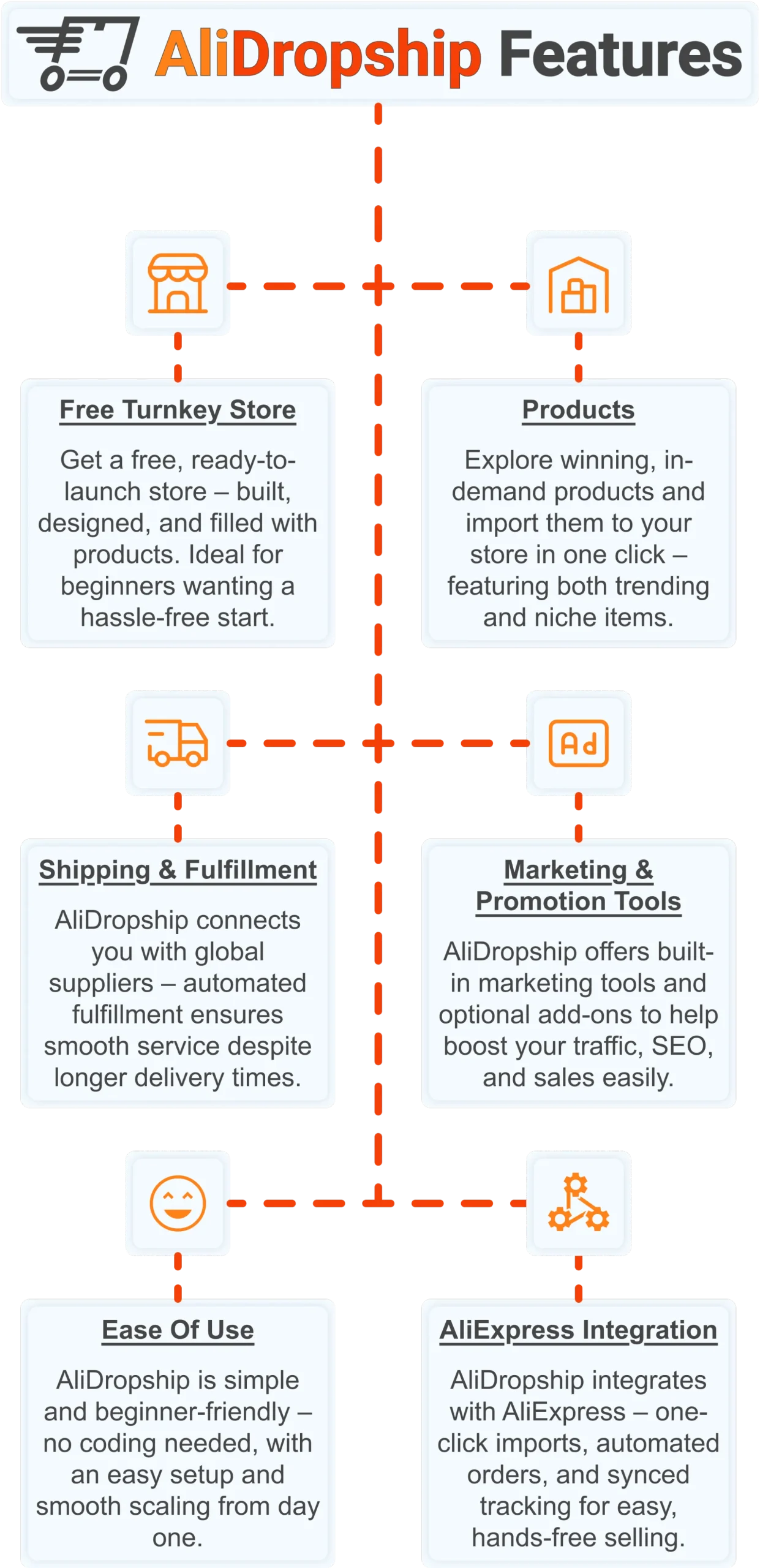
Free turnkey store ️
Get a free turnkey store – built, designed, and filled with products. Ideal for beginners wanting a hassle-free start, the store comes fully optimized to attract customers right away, saving you time on setup. Plus, it includes professional design elements to give your business a polished, trustworthy look from day one. This ready-made foundation makes it easy to move seamlessly into product selection.
Products
Once your store is set up, you can explore winning, in-demand products and import them in one click – featuring both trending and niche items. This wide selection lets you cater to diverse customer interests and test what works best. Regular updates ensure you always have fresh products, keeping your store competitive and relevant. With great products in place, smooth shipping becomes the next essential step.
Shipping & fulfillment
AliDropship connects you with global suppliers, and automated fulfillment ensures seamless order processing despite international delivery times. Customers receive real-time tracking updates, which builds confidence and trust in your store. Once shipping is handled reliably, you can focus on promoting your store and attracting traffic.
Marketing & promotion tools
To maximize sales, AliDropship offers built-in marketing tools and optional add-ons that help boost traffic, SEO, and conversions. From email campaigns and discounts to social media integration, these tools empower you to reach and retain customers without needing prior marketing experience. With promotion strategies in place, managing your business becomes simpler and more efficient.
Ease of use
AliDropship is beginner-friendly – no coding needed, with an intuitive dashboard that guides you through every step. Easy setup and smooth scaling let you expand your store without stress. As your business grows, adding new features, products, and marketing campaigns remains hassle-free, giving you more time to focus on sales.
AliExpress integration
Finally, AliDropship integrates seamlessly with AliExpress, enabling one-click imports, automated orders, and synced tracking. Your inventory stays up-to-date with the latest products and prices, while automated order processing frees you from manual tasks. Combined with the turnkey setup, reliable shipping, and built-in marketing tools, this integration ensures your dropshipping business is fully equipped for growth and success.
Frequently Asked Questions
What are high demand products with low competition?
High demand products with low competition are items with strong, proven buyer intent that have not yet been saturated by big-brand sellers or mass dropshippers. In 2026, reliable categories include niche home goods, functional pet accessories, wellness tools, and hobby-specific gear. A useful signal is when top AliExpress listings for a product have under 500 reviews, indicating the market is not yet dominated. These products typically carry margins of 50 to 65 percent when sourced and validated correctly.
How much can you earn selling high demand products with low competition?
Earnings depend heavily on niche selection and effort level, ranging from 20 to 50 dollars per day for a general niche store up to 400 to 1000 dollars or more per day for a full brand-building approach. Most dropshippers who commit to a focused niche see consistent sales within 60 to 90 days. A realistic early benchmark is 30 to 80 dollars per day while building traction. Most product categories in this space carry margins of 40 to 65 percent when sourced at AliExpress wholesale pricing.
Which home and kitchen products have high demand and low competition?
Compact organisation tools, such as under-sink organisers and cable management boxes, cost 3 to 8 dollars to source and retail at 22 to 38 dollars, giving margins of 55 to 70 percent. Specialty kitchen prep tools, like avocado slicers and herb strippers, source for 2 to 6 dollars and retail between 15 and 28 dollars, and they often go viral on short-form video platforms. Minimalist wall decor in hyper-specific aesthetic niches also performs well, with sourcing costs of 5 to 15 dollars and retail pricing of 35 to 70 dollars. These categories remain fragmented across small unbranded sellers, leaving room for new stores to compete.
How do you validate high demand products before committing to a niche?
A practical validation framework takes under an hour per product category and includes 4 key steps. First, check Google Trends over a 5 year timeframe to confirm the pattern is steady rather than a spike that has already passed. Second, audit AliExpress order volumes, since listings with 2000 to 10000 orders and 200 to 800 reviews suggest an opportunity that is not yet dominated by one supplier. Third, search TikTok and Instagram for videos with 50000 to 500000 views from non-brand accounts, which signals the product is still in its discovery phase.
What legal risks should sellers consider with low competition pet and wellness products?
Selling counterfeit or branded lookalike products is a legal liability in most jurisdictions, and payment processors including Stripe and PayPal will terminate accounts found processing these transactions. Certain wellness tools, especially those making therapeutic claims, may require specific certifications in the US, EU, or UK before they can legally be sold. Manipulating reviews creates legal exposure in markets with consumer protection regulations and undermines long-term store trust. Exaggerating product capabilities, particularly for ergonomic or wellness items, can also constitute false advertising under current rules.
The high demand products with low competition in this guide are exactly the kind of items AliDropship is built to help you source, list, and sell – without the technical complexity. Claim your free turnkey store and start selling in-demand products today.
 Previous post
